
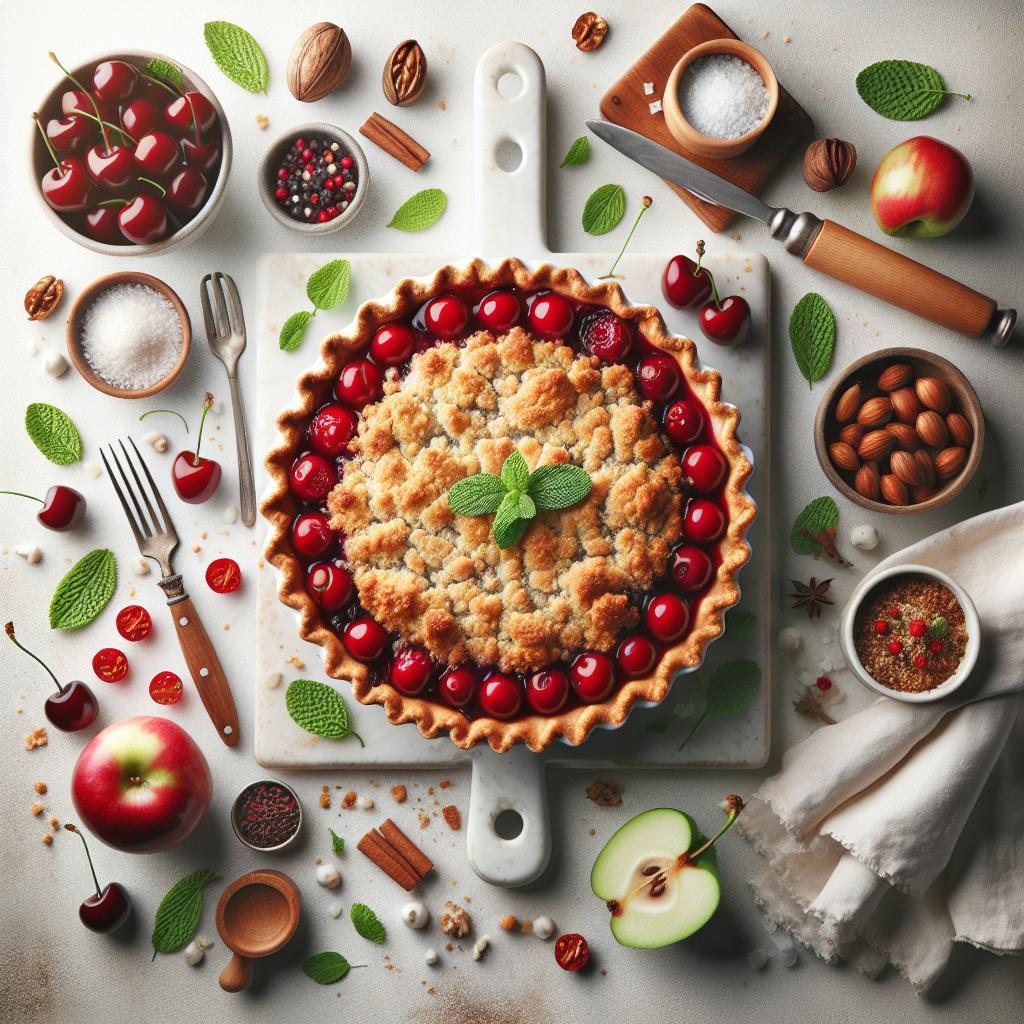

When a golden, buttery crumb meets bright, ruby cherries, the result is a dessert that satisfies both texture and flavor. This guide teaches precise techniques to achieve a flaky crust, vibrant filling, and a crunchy streusel finish so every slice performs like a bakery piece.
- Why This Recipe Works
- Prep and Cook Time
- Yield & Difficulty
- Ingredients
- Instructions
- Tips for Success
- Serving Suggestions
- Nutritional Information
- Resources and Further Reading
- FAQ
- What makes a cherry crumb pie different from a traditional cherry pie?
- Which cherries should I use?
- How can I keep the crumb topping crisp?
- Can I prepare this pie ahead of time?
- How do I troubleshoot a runny filling?
- Final Notes
- Key takeaway: Cold fat and minimal handling yield a flaky crust.
- Key takeaway: Balance sugar and acid to keep a glossy, non-watery filling.
- Key takeaway: Proper chilling and oven placement preserve crumb texture.
Why This Recipe Works
This recipe separates process into three focused elements: crust, filling, and crumb topping. Each element receives targeted technique to control moisture, texture, and bake behavior.
Understanding ingredient function helps you troubleshoot on the fly. For example, cherries vary widely in water content, and that affects thickening strategy.
Prep and Cook Time
Preparation: 30 minutes active time, with a 1-hour dough chill. This schedule gives time for efficient mise en place and dough relaxation.
Cooking: 50 minutes at 375°F (190°C), plus a 2-hour cool-down for the filling to set. The full process yields dependable results when you follow timing and temperature.
Yield & Difficulty
Yield: One 9-inch pie, about 8 generous slices. That portioning aligns with standard pie-serving sizes for calorie and nutrition estimates.
Difficulty: Medium. The project suits home bakers who can manage dough handling, temperature control, and attentive baking.
Ingredients
The ingredient list below separates components so you prep each element without cross-contamination. Keep cold ingredients chilled until use to protect texture.
Use the exact amounts for predictable chemistry; small swaps work, but adjust liquid or starch accordingly.
- For the Filling:
- 5 cups fresh sweet cherries, pitted and halved
- 1 cup granulated sugar
- 2 tablespoons cornstarch
- 1 tablespoon fresh lemon juice
- 1 teaspoon vanilla extract
- 1/4 teaspoon almond extract (optional)
- For the Flaky Pie Crust:
- 2 1/2 cups all-purpose flour, sifted
- 1 teaspoon salt
- 1 tablespoon granulated sugar
- 1 cup (2 sticks) unsalted butter, cold and cubed
- 6-8 tablespoons ice water
- For the Crumb Topping (Streusel):
- 1 cup all-purpose flour
- 3/4 cup packed light brown sugar
- 1/2 cup rolled oats
- 1 teaspoon ground cinnamon
- 1/4 teaspoon salt
- 7 tablespoons unsalted butter, melted
Instructions
Work deliberately and keep ingredients cold where indicated. Temperature control and minimal handling are the two biggest levers to predictable flakiness.
Follow the sequence: make dough, chill, prepare filling, top with streusel, then bake. Each step reduces a single failure mode: sogginess, shrinkage, or burnt topping.
Prepare the Pie Crust
In a large bowl, whisk together flour, salt, and sugar. Add cold, cubed butter and cut it in until the mixture shows pea-size butter pockets; these pockets create steam channels for layers.
Sprinkle ice water a tablespoon at a time and toss until the dough barely holds together. Overworking develops gluten and reduces flakiness, so stop as soon as cohesive dough forms.
Chill and Roll
Divide the dough, form two disks, wrap tightly, and refrigerate for at least one hour. Chilling firms the butter and relaxes the dough so it rolls without shrinking aggressively.
Roll one disk into a 12-inch circle on a floured surface and fit into a 9-inch pie plate, leaving about a 1-inch overhang. Trim excess and flute the edge or crimp as desired.
Make the Cherry Filling
Combine cherries, sugar, cornstarch, lemon juice, and extracts in a bowl and toss gently to coat evenly. For best results, taste and adjust sugar depending on cherry sweetness and acidity.
If cherries are particularly juicy, consider briefly macerating and draining half the excess liquid; reserve a tablespoon or two of syrup to return for flavor without excess moisture. For technical context, cornstarch gelatinizes during baking and thickens juices, a process well documented for fruit fillings (cornstarch).
Assemble and Top
Pour the cherry mixture into the prepared crust and level it gently with a spoon. Make the crumb topping by mixing flour, brown sugar, oats, cinnamon, and salt, then add melted butter and toss until clumps form.
Scatter the crumb topping evenly over cherries. If you prefer a decorative lattice, roll the second disk and weave strips, then sprinkle crumbs into gaps for hybrid texture.
Chill the assembled pie for 15 minutes to firm the crust and topping; this step limits spreading and helps the pie hold shape during the initial oven heat spike.
Bake and Cool
Place the pie on a baking sheet to catch any overflow and bake at 375°F (190°C) for 45–55 minutes until the topping is golden and the filling bubbles. If the edges brown too quickly, shield with foil during the last 10–15 minutes.
Cool the pie for at least two hours on a wire rack to allow the filling to set. Slicing too soon yields runny centers; patience delivers clean slices and better texture.
Tips for Success
Ingredient handling: Keep butter and water ice-cold. Cold fat produces discrete pockets that steam and separate layers during baking, which yields flakiness.
Filling balance: Adjust sugar and cornstarch to match cherry juiciness. Tart cherries need more sugar; very juicy fruit needs more thickener.
For texture variation, add toasted nuts to the crumb mix or swap some oats for finely chopped almonds. These small changes add crunch and a toasted flavor profile without altering bake chemistry significantly.
Serving Suggestions
Serve slices warm, topped with high-quality vanilla ice cream or lightly sweetened whipped cream. The contrast between hot filling and cold cream amplifies perceived sweetness and mouthfeel.
Garnish sparingly with whole cherries or a mint sprig for presentation. For a restrained finish, drizzle a teaspoon of dark chocolate over the plate rather than the pie to avoid soggy spots.
Nutritional Information
Estimated per-serving values depend on portion size and ingredient choices. Use the table below as a reference and adjust if you substitute butter or sugar alternatives.
| Nutritional Information (Per Serving) | Calories | Protein | Carbohydrates | Fat |
|---|---|---|---|---|
| Slice of Cherry Crumb Pie | 350 kcal | 4 g | 50 g | 15 g |
For substitutions like a gluten-free crust, use a tested commercial blend and know that hydration may differ. Replace cornstarch with an equal amount of arrowroot if you prefer a clearer filling, but test for thickening strength.
Resources and Further Reading
Learn more about fruit characteristics and baking science through reliable references. These sources offer context on ingredient behavior and traditional recipes.
Explore background on the dessert form at Cherry pie, the general pastry category at Pie, and topping technique at Streusel. These entries clarify terminology and history relevant to this recipe.
FAQ
What makes a cherry crumb pie different from a traditional cherry pie?
Cherry crumb pie finishes with a buttery streusel instead of a top crust or full double crust. That topping adds a crunchy contrast to the juicy fruit below and concentrates sweetness on the surface.
Which cherries should I use?
Use firm, ripe cherries for best texture. Mixing tart and sweet varieties balances acidity and sugar; frozen cherries work but may require extra thickener due to released juices.
How can I keep the crumb topping crisp?
Bake uncovered to allow moisture to escape and avoid excess syrup on top. Chill the assembled pie before baking and avoid over-piling crumbs, which can trap steam and soften the surface.
Can I prepare this pie ahead of time?
Yes. Bake fully, cool, then wrap and refrigerate. Reheat gently in a moderate oven to revive crispness, and add fresh ice cream when serving for the best experience.
How do I troubleshoot a runny filling?
Allow a longer cool-down period to let starch fully gel. Next time, increase cornstarch by 1/2 tablespoon for very juicy fruit or briefly macerate and drain excess liquid before adding starch.
Final Notes
Follow temperature, timing, and handling guidance for consistent results. Small adjustments based on cherry type and oven behavior let you iterate toward a personal best pie.
With careful chilling, correct thickener ratios, and attentive baking, you can achieve a golden crumb, a flaky crust, and a glossy, set cherry filling every time.
See also: Cherry Pie