

Savor the Flavor: Beef Keema Perfectly Paired with Rice
Beef keema is a concentrated, spiced minced-beef preparation designed to deliver maximum flavor from a compact ingredient list. The method focuses on toast, browning, and moisture control to create a rich, saucy crumb that sits well with steamed rice.
- Introduction and Culinary Context
- Prep and Cook Time
- Yield
- Difficulty Level
- Ingredients
- Instructions
- Chef’s Notes: Tips for Success
- Serving Suggestions
- Nutrition Snapshot
- Q&A
- FAQ
- What exactly is beef keema?
- Why pair it with basmati rice?
- Can I substitute the protein?
- How do I control the spice heat?
- What are good make-ahead and storage practices?
- The Conclusion
- Flavor focus: Toast whole spices then bloom powdered spices for layered aroma.
- Texture balance: Fluffy basmati rice contrasts the keema’s saucy crumb.
- Time-smart: Finish prep and cook in under an hour with efficient sequencing.
- Versatility: Adjust protein or veg for dietary needs while keeping technique constant.
Introduction and Culinary Context
Keema refers to minced meat cooked with a spice base and aromatics, a technique common across South Asia and beyond. For background on ground-mince traditions see minced meat and the regional roots in cuisine of the Indian subcontinent.
This guide gives seven expert steps to produce consistent, restaurant-quality beef keema. Each step explains the why and offers practical timing to keep the cooking flow efficient and repeatable.
Prep and Cook Time
Preparation Time: 15 minutes. Measure spices, chop aromatics, and rinse rice before heating the pan to maintain tempo at the stove. Good mise en place shortens active cook time and reduces error.
Cooking Time: 35 minutes. This covers sweating onions, reducing tomatoes, browning the beef, and a short simmer to marry flavors. The combined workflow keeps the pot moving and prevents overcooking.
Yield
This recipe yields about 4 hearty servings, suitable for a family meal or meal prep. Portion one cup of cooked basmati rice per adult for a balanced plate with keema as the protein anchor.
Store leftovers in shallow containers to cool rapidly and keep quality. Reheat gently with a splash of warm water or low-sodium broth to restore mouthfeel.
Difficulty Level
Difficulty: Medium. The technique requires basic knife skills and an understanding of spice timing. Controlling pan temperature and avoiding burnt spices are the primary challenges.
Key skills to practice: keeping pan heat high for browning, gentle steaming for rice, and tasting-adjusting salt and chili at the finish. These habits build reliable results fast.
Ingredients
Use chilled, lean ground beef for clean rendering; excess fat will change the sauce texture and require draining. Measure spices precisely; errors in spice ratios are the most common cause of unbalanced keema.
Core ingredients: 500g lean ground beef, 1 large onion, garlic, ginger, 2 medium tomatoes, 1 green chili (optional), cumin seeds, ground coriander, turmeric, chili powder, garam masala, frozen peas, salt, fresh coriander, 1 1/2 cups basmati rice, 2 1/4 cups water, and a tablespoon of ghee or butter for the rice.
Instructions
Work in a hot, heavy skillet to achieve the Maillard reaction on the beef. Use a wide pan so steam escapes and meat browns instead of stewing.
Follow these sequential steps to maintain rhythm at the range. Timing below assumes a single cook and one burner allocated to rice while another hosts the keema.
- Rinse and soak rice in cold water for 20 minutes, then drain. Soaking shortens cooking time and helps grains separate when steamed.
- Heat oil over medium. Toast cumin seeds 30 seconds until aromatic but not dark. Toasting releases essential oils and deepens flavor.
- Sauté onions until deep golden, about 8 minutes. Proper onion color builds sweetness and base depth for the finished keema.
- Add garlic, ginger, and chili and sauté 2–3 minutes until fragrant. Keep heat moderate to avoid scorching garlic; burnt garlic tastes bitter.
- Add ground coriander, turmeric, and chili powder, then add tomatoes. Cook until oil separates and the tomato reduces, about 7 minutes. This concentrates flavor and prevents a raw-tomato note.
- Add the ground beef, break it into even pieces, and brown thoroughly for about 8 minutes. Let juices evaporate to concentrate flavor; if needed brown in two batches to avoid crowding.
- Stir in peas and garam masala, then simmer 4–5 minutes to marry flavors. Taste and adjust salt or chili at this point for final balance.
- Cook rice concurrently: Bring 2 1/4 cups water to a boil, add soaked rice, salt, and ghee. Reduce to low, cover, and cook 15 minutes without lifting the lid. Rest 5 minutes off heat, then gently fluff.
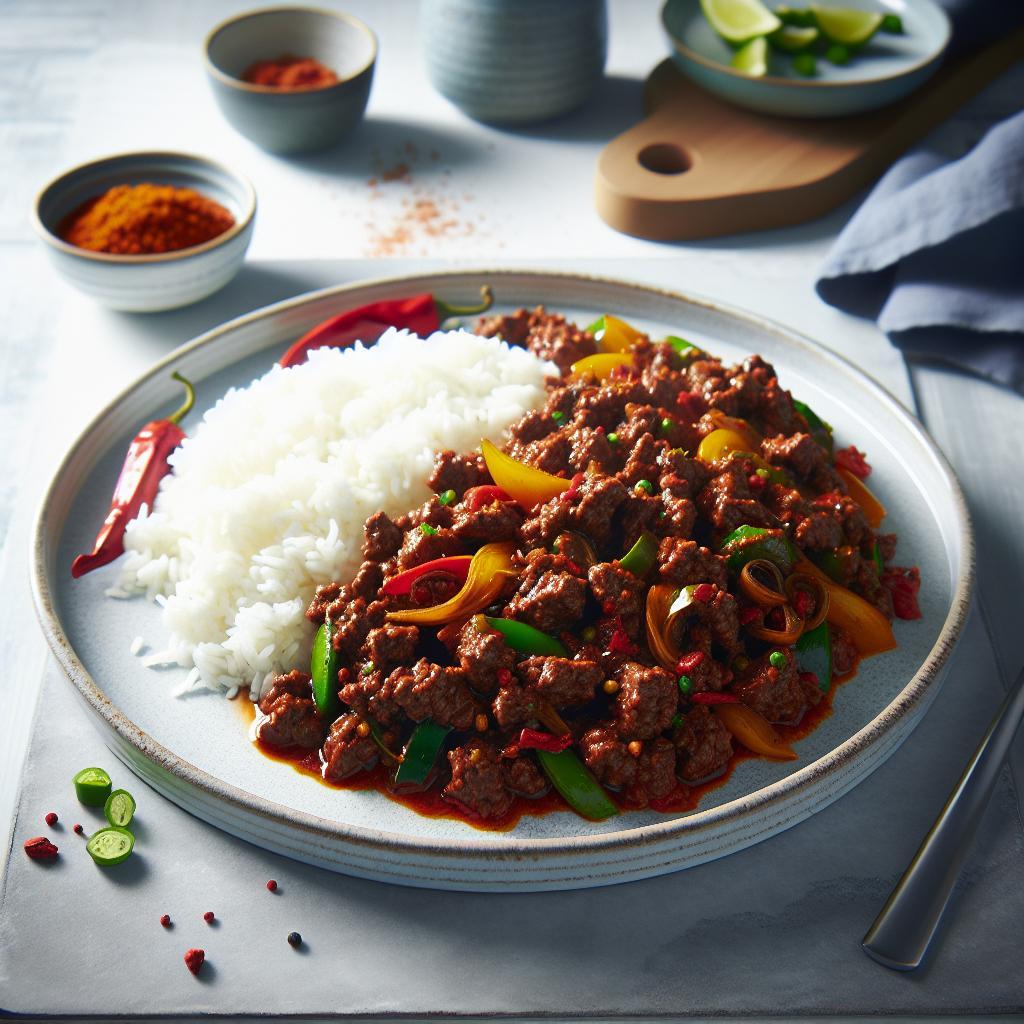
- Plate by placing keema beside or on top of rice and garnish with fresh coriander and a lemon wedge if desired. Serve hot and provide yogurt or raita to cool the palate.
Rice technique
Soak basmati before cooking to reduce starch and encourage long, separate grains. For background on the rice variety see basmati, which has the aroma and grain length suited to saucy dishes.
Cook on low with a single, uninterrupted steam phase to avoid broken rice and pasty texture. Finish by gently fluffing with a fork; aggressive stirring releases starch and collapses the contrast with the keema.
Browning the beef
Keep pan temperature high and brown in batches if necessary to prevent steaming. Overcrowding lowers surface temperature and yields grey, stewed meat rather than flavorful crumbs.
Deglaze with a few tablespoons of water if fond sticks to the pan; scraping and incorporating that fond adds concentrated savory flavor to the keema. Use a wide spatula to turn and expose fresh surfaces for even color.
Chef’s Notes: Tips for Success
Spice balance: Toast whole spices at the start, then add powdered spices mid-sweat so they bloom without burning. This sequence preserves volatile oils and builds complexity in the finished dish.
Use aged basmati for length and aroma and add fresh herbs at the end to keep brightness. If you grind a pinch of fresh coriander or cumin seed, the aroma will noticeably improve.
For meal prep, cool the keema rapidly and store in shallow containers. Reheat gently; adding a splash of warm water or low-sodium broth restores succulence.
Serving Suggestions
Serve the keema over warm basmati rice, garnished with fresh coriander and a lemon wedge for acidity. A cooling raita or plain yogurt tames heat and adds a creamy contrast to the spiced meat.
For texture contrast, scatter toasted slivered almonds or roasted cashews and add a cucumber-onion salad or warmed flatbread. These sides create balance and keep the meal interesting across bites.
Nutrition Snapshot
The plate balances protein from beef with carbohydrates from rice and fiber from peas; use lean ground beef to limit saturated fat. Estimated per-serving values are approximate and depend on exact portion sizes.
Typical values per serving: ~420 kcal, 33 g protein, 45 g carbohydrates, and 11 g fat. Adjust portioning and ingredients for specific dietary needs.
Q&A
This section addresses practical questions cooks ask when preparing beef keema with rice. The answers focus on substitutions, timing, and storage to help you adapt the recipe to your pantry.
Refer to the instructions for timing and sequencing; the same technique applies when you swap proteins or adjust spice levels. For background on garam masala and its role in layering spices see garam masala.
FAQ
What exactly is beef keema?
Beef keema is minced beef cooked with aromatics, spices, and often vegetables like peas or potatoes. The technique emphasizes spice layering and controlled moisture to produce a saucy but textured dish.
Why pair it with basmati rice?
Basmati provides a fragrant, non-sticky base that soaks up sauces without masking flavor. Its long grains and subtle nutty notes complement spiced meat dishes like keema.
Can I substitute the protein?
Yes. Use lean ground turkey, lamb, or plant-based textured protein depending on dietary requirements. Adjust cooking time and fat management when switching proteins to keep texture consistent.
How do I control the spice heat?
Adjust chili powder and fresh chilies to taste, and add heat gradually during cooking. A squeeze of lemon or a dollop of yogurt at the table will also reduce perceived heat.
What are good make-ahead and storage practices?
Store keema and rice separately in airtight containers for up to 3 days in the refrigerator. Reheat gently and add a tablespoon of water or broth if the keema dries during storage for best texture.
The Conclusion
Controlled spice layering, proper browning, and rice technique deliver a reliable, vibrant beef keema-and-rice plate. The seven-step approach reduces guesswork and produces consistent results on weeknights or for guests.
Apply these principles across proteins and grains to expand your repertoire and produce restaurant-quality results at home. For related techniques see internal guides on beef recipes and rice techniques to deepen skill and confidence.

See also: Beef Keema
See also: beef keema