
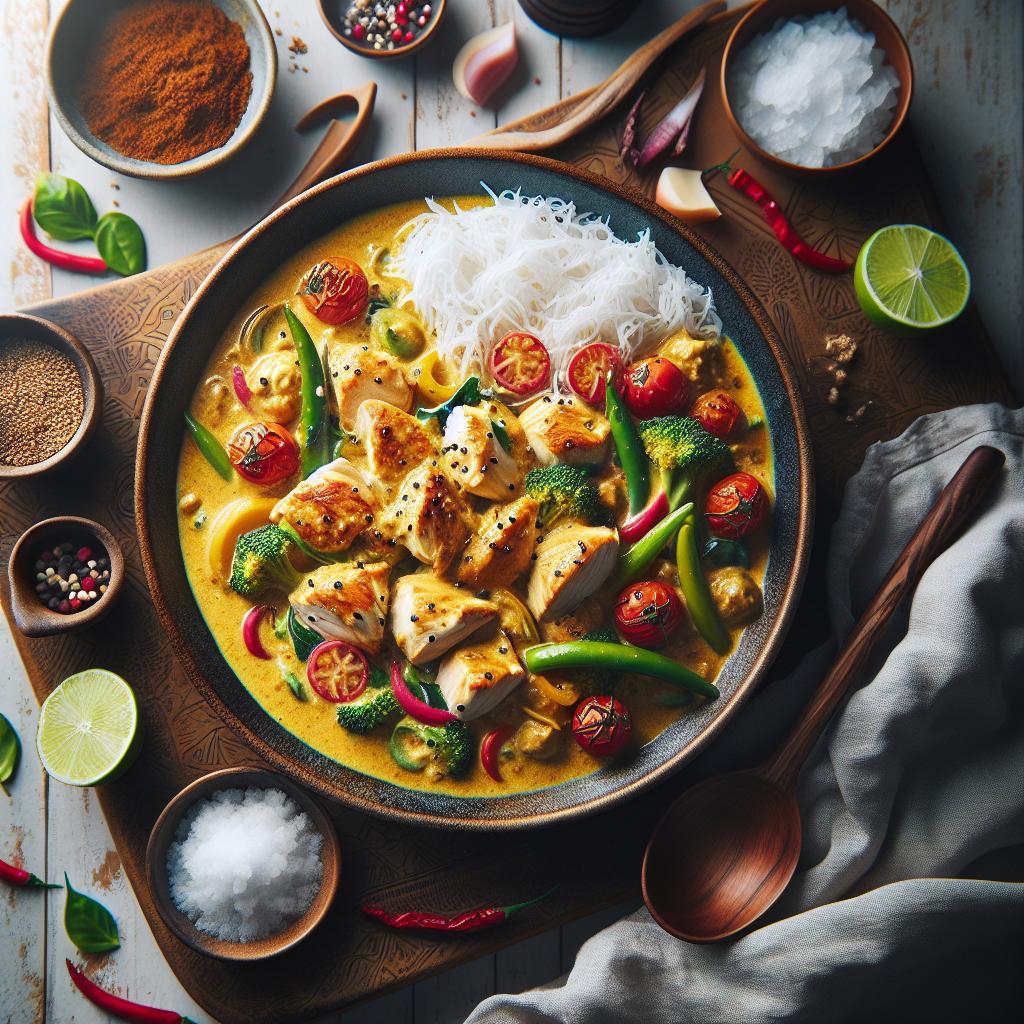

Coconut Curry: 7 Pro Steps for Creamy Chicken
Coconut curry here means a creamy, balanced coconut chicken curry that uses timing, spice layering, and texture control to reach restaurant-quality results at home. This guide emphasizes technique and measurable steps so cooks reproduce a silky sauce and tender thighs reliably.
- Coconut Curry: 7 Pro Steps for Creamy Chicken
- Prep and Cook Time for Coconut Curry
- Yield and Portions for Coconut Curry
- Difficulty Level: Practical Skills Required
- Ingredients for Coconut Curry
- Instructions: Step-by-Step Coconut Curry
- Tips for Success with Coconut Curry
- Serving Suggestions for Coconut Curry
- Nutrition: Per-Serving Estimates
- FAQ
- What makes a coconut curry different from tomato-based curries?
- Which spices should I prioritize for authentic flavor?
- How can I avoid a greasy or split sauce?
- Can I substitute proteins or make this vegetarian?
- Any quick tip to boost aroma and depth?
- Insights and Final Notes on Coconut Curry
- Layer spices: bloom spices early, then finish with garam masala to preserve aroma and heat balance.
- Control texture: choose thighs and simmer gently to avoid split coconut milk and keep the sauce glossy.
- Timing: sear, simmer, and rest—each phase refines flavor without extra fat.
- Finish with acid: a squeeze of lime brightens the coconut base and lifts the dish.
This recipe integrates coconut milk science and classic curry technique, and it references culinary chemistry where relevant to troubleshooting. For background on coconut milk composition and its behavior when heated consult coconut milk.
Prep and Cook Time for Coconut Curry
Plan about 15 minutes of active prep and roughly 35 minutes of cooking, for a total near 50 minutes under normal stove conditions. These timings assume searing, controlled simmering, and a short rest to settle the sauce.
Allow extra time when scaling the recipe or adding dense vegetables; longer simmers reduce and concentrate the coconut base and spices. A gentle simmer avoids fat separation and preserves creaminess.
Yield and Portions for Coconut Curry
This version yields 4 hearty servings when served with rice or flatbread. Increase chicken and coconut milk proportionally to keep sauce coverage consistent across servings.
Portioning matters for nutrition and presentation; a ladle per serving over basmati gives classic balance. For rice pairing specifics review the aromatic profile of basmati rice.
Difficulty Level: Practical Skills Required
Medium difficulty: the recipe relies on even browning, spice blooming, and controlled simmering rather than advanced knife work. Home cooks comfortable managing pan temperature and timing will succeed.
Key skills include proper sear technique and recognizing when the sauce has finished reducing. Understanding the Maillard reaction will help you maximize savory depth during browning.
Ingredients for Coconut Curry
Gather all ingredients before you start; mise en place prevents rushed seasoning and an uneven final texture. Accurate spice amounts and room-temperature chicken help the pan perform predictably.
Use full-fat coconut milk for the creamiest sauce, or split with low-sodium stock for a lighter finish. For a reference on turmeric characteristics see turmeric.
- 1.5 lbs boneless chicken thighs, cut into bite-sized pieces
- 1 tbsp coconut oil
- 1 large onion, finely chopped
- 4 cloves garlic, minced
- 1 tbsp fresh ginger, grated
- 2 tsp ground cumin
- 2 tsp ground coriander
- 1 tsp turmeric
- 1 tsp garam masala
- 1/2–1 tsp red chili powder (adjust heat)
- 1 can (14 oz) full-fat coconut milk
- 1 tsp brown sugar
- Salt, to taste
- Fresh cilantro, chopped for garnish
- Juice of 1/2 lime
- Optional aromatic: cinnamon stick or green cardamom pod
Instructions: Step-by-Step Coconut Curry
Start with a hot, heavy-bottomed pan and enough oil to coat the surface; preheat prevents sticking and promotes even browning. Sear the chicken in batches to avoid crowding the pan so each piece develops color.
- Heat the oil and sweat the onion: Sauté chopped onion over medium until translucent and golden, about 7 minutes.
- Add garlic and ginger: Cook 1–2 minutes until fragrant, taking care not to brown aggressively.
- Bloom the spices: Add cumin, coriander, turmeric, garam masala, and chili; stir 1–2 minutes to release oils and lift aroma.
- Brown the chicken: Add pieces and sear until edges show color, about 4–6 minutes total in batches.
- Simmer in coconut milk: Add the coconut milk and optional whole spices, lower heat, cover, and simmer gently 18–20 minutes until tender and the sauce has thickened slightly.
- Finish and rest: Uncover, stir in brown sugar, reduce 3–5 minutes if needed, then season with salt and lime. Remove from heat and rest a few minutes before serving.
After simmering, taste and adjust salt and acid; small corrections restore balance without changing texture. If the sauce appears split, remove from heat and whisk in a tablespoon of cool coconut milk or water to re-emulsify.
Tips for Success with Coconut Curry
Small technique choices create large improvements: select thighs for succulence and toast whole spices briefly to intensify aroma. Use medium heat during spice blooming to avoid bitter notes.
Adjust spice intensity gradually and taste at key points: after blooming, after simmer, and after acid addition. For a silkier texture, you can strain and blend part of the sauce before returning it to the pot.
- Choosing thighs: They tolerate simmering and retain moisture better than breasts.
- Toast whole spices: Light toasting releases volatile oils responsible for aroma.
- Texture control: Add warm stock to thin the sauce without shocking the emulsion.
- Make ahead: Refrigerate overnight; flavors meld and often taste more cohesive the next day.
Serving Suggestions for Coconut Curry
Serve the curry over fluffy rice or with warm flatbreads to absorb the sauce and present contrasting textures. Basmati rice complements aromatic curries and keeps the plate balanced.
Garnish with chopped cilantro, toasted coconut flakes, or thinly sliced red chili for visual contrast. A lime wedge at the table allows guests to dial acidity to their taste.
Nutrition: Per-Serving Estimates
Nutrition per serving is an estimate based on common ingredient choices and typical portion sizes. Adjust portion sizes and ingredient swaps to meet specific dietary goals.
Typical values per serving: approximately 420 kcal, 35 g protein, 8 g carbohydrates, and 27 g fat when using full-fat coconut milk and thighs. Track changes if you swap ingredients or alter proportions.
| Nutrition | Per Serving |
|---|---|
| Calories | 420 kcal |
| Protein | 35 g |
| Carbohydrates | 8 g |
| Fat | 27 g |
FAQ
What makes a coconut curry different from tomato-based curries?
The defining characteristic is the coconut milk base, which supplies natural sweetness and a silky mouthfeel instead of tomato acidity. That difference changes how you balance spices and heat perception.
Which spices should I prioritize for authentic flavor?
Prioritize cumin, coriander, and turmeric early, then finish with garam masala to add complexity without masking fresh aromatics. Toasting whole spices briefly extracts essential oils and sharpens flavor.
How can I avoid a greasy or split sauce?
Keep the simmer gentle and avoid rapid, sustained boiling. If separation occurs, remove from heat and whisk in a small amount of cool liquid to re-emulsify the sauce.
Can I substitute proteins or make this vegetarian?
Yes. Swap chicken for shrimp late in the cook or use roasted vegetables and paneer for a vegetarian option. Adjust cook times so proteins stay tender and vegetables retain texture.
Any quick tip to boost aroma and depth?
Lightly toasting dry spices or blooming ground spices in oil intensifies flavor rapidly. Finish with fresh acid and herbs to lift the final profile and add perceived complexity.
Insights and Final Notes on Coconut Curry
Mastering a reliable coconut curry requires attention to three elements: spice activation, controlled simmering, and acid balance. When those elements align, the dish yields layered flavor and a smooth, luxurious texture.
Use full-fat coconut milk selectively, taste late in the cook, and finish with acid and fresh herbs to lift the dish. Reheat gently to preserve texture for leftovers and maintain the silky sauce.

See also: curry and coconut milk for more background on the base and techniques.
See also: coconut curry