
There’s a clear chemistry when garlic roasts: the sharp edge softens and sugars caramelize, giving hummus a richer, sweeter profile. This recipe shows how controlled heat, the right technique, and precise blending produce a creamy, aromatic roasted garlic hummus that holds up as a dip or spread.
- Unlock Flavor with the Perfect Roasted Garlic Selection
- Mastering the Art of Roasting Garlic for Deep, Sweet Aroma
- Crafting Creamy Hummus: Balancing Texture and Taste
- Elevate Your Dip with Fresh Herbs and Zesty Additions
- Prep and Cook Time
- Yield
- Difficulty Level
- Ingredients
- Instructions
- Tips for Success
- Serving Suggestions
- FAQ
- Roast garlic at 400°F for 35–45 minutes for spreadable cloves.
- Blend chickpeas, tahini, lemon, and roasted garlic until silky, adding cold water to adjust texture.
- Garnish with olive oil, smoked paprika, and toasted pine nuts for contrast and aroma.
- Store refrigerated for up to 5 days or freeze in portions for 3 months.
Unlock Flavor with the Perfect Roasted Garlic Selection
Choose firm bulbs with tight skins and no green shoots to avoid bitterness and off-flavors. Fresh, heavy heads usually indicate plump, moist cloves that roast evenly.
When you roast, the sugars in garlic caramelize, producing a nutty, mellow profile that blends well with chickpeas and tahini. For background reading on garlic chemistry, see garlic.
Mastering the Art of Roasting Garlic for Deep, Sweet Aroma
Preheat the oven to 400°F (200°C). Slice the top off each bulb to expose the cloves, drizzle with olive oil, wrap in foil, and roast on a baking sheet for 35–45 minutes.
Test for doneness by pressing a clove; it should be soft and easily spreadable. Roast time varies with bulb size, so check at the 30-minute mark and then every 5–10 minutes.
Crafting Creamy Hummus: Balancing Texture and Taste
Start with well-rinsed canned chickpeas or home-cooked ones. For more background on the ingredient, refer to the chickpea entry which covers varieties and cooking methods.
Combine roasted garlic, chickpeas, tahini, lemon juice, salt, and a touch of cumin. Blend thoroughly and add ice-cold water one tablespoon at a time until the hummus achieves a silky, scoopable texture.
Elevate Your Dip with Fresh Herbs and Zesty Additions
Fresh parsley, cilantro, or mint add brightness and cut through richness. A light sprinkle of smoked paprika or a few toasted pine nuts brings aroma and textural contrast.
Drizzle high-quality olive oil just before serving for gloss and mouthfeel. For core context about the overall dish, see hummus on its regional variations and history.
Prep and Cook Time
Plan roughly one hour from start to finish. Most of that time is passive while garlic roasts and flavors meld.
Active hands-on time sits near 25 minutes for prep and blending. Resting and cooling the garlic speeds handling and improves texture.
- Prep: 15 minutes
- Roasting garlic: 35–45 minutes
- Blending & assembling: 10–15 minutes
- Total: 60–75 minutes
Yield
This recipe yields about 2 cups, which serves 6–8 as part of a mezze spread. Adjust ingredient quantities proportionally for larger batches.
If you plan to serve a crowd, double the recipe and roast extra garlic heads. Hummus keeps well, so you can make it ahead without loss of flavor.
Difficulty Level
Easy to intermediate: techniques involve basic roasting and blending skills. A food processor yields the best, silkiest results.
Beginner cooks will find the steps repeatable, while experienced cooks can fine-tune texture and seasoning to taste.
Ingredients
The following lineup focuses on balance: fat for mouthfeel, acid for brightness, and salt for flavor lift. For a primer on sesame paste, check tahini.
- 2 whole heads garlic, fresh, tops trimmed
- 2 tablespoons extra virgin olive oil, divided
- 1 can (15 oz) chickpeas, drained and rinsed
- 3 tablespoons tahini
- 3 tablespoons fresh lemon juice
- 1/2 teaspoon salt, or to taste
- 1/4 teaspoon ground cumin (optional)
- 2–4 tablespoons ice-cold water
- Fresh parsley or cilantro, finely chopped (for garnish)
- Smoked paprika, for dusting
- Toasted pine nuts or sesame seeds (optional)
Instructions
Follow the steps in order to get consistent, spreadable roasted garlic and a stable hummus emulsion. Keep ingredients cold or room temperature as noted for best texture.
- Preheat your oven to 400°F (200°C). Trim the top 1/4 inch from each garlic head to expose the cloves slightly.
- Place garlic on foil, drizzle each head with 1 tablespoon olive oil, then wrap tightly and set on a baking sheet.
- Roast 35–45 minutes, until cloves are deep golden and soft; test by pressing a clove through the skin.
- Cool and squeeze out cloves into a small bowl; discard skins. Warm garlic blends more easily, but avoid very hot cloves that can dilute tahini.
- In a food processor, combine roasted garlic, chickpeas, tahini, lemon juice, salt, and cumin if using. Pulse to combine.
- Blend until smooth, scraping down sides as needed. Add ice-cold water one tablespoon at a time until the hummus achieves a silky, spreadable consistency.
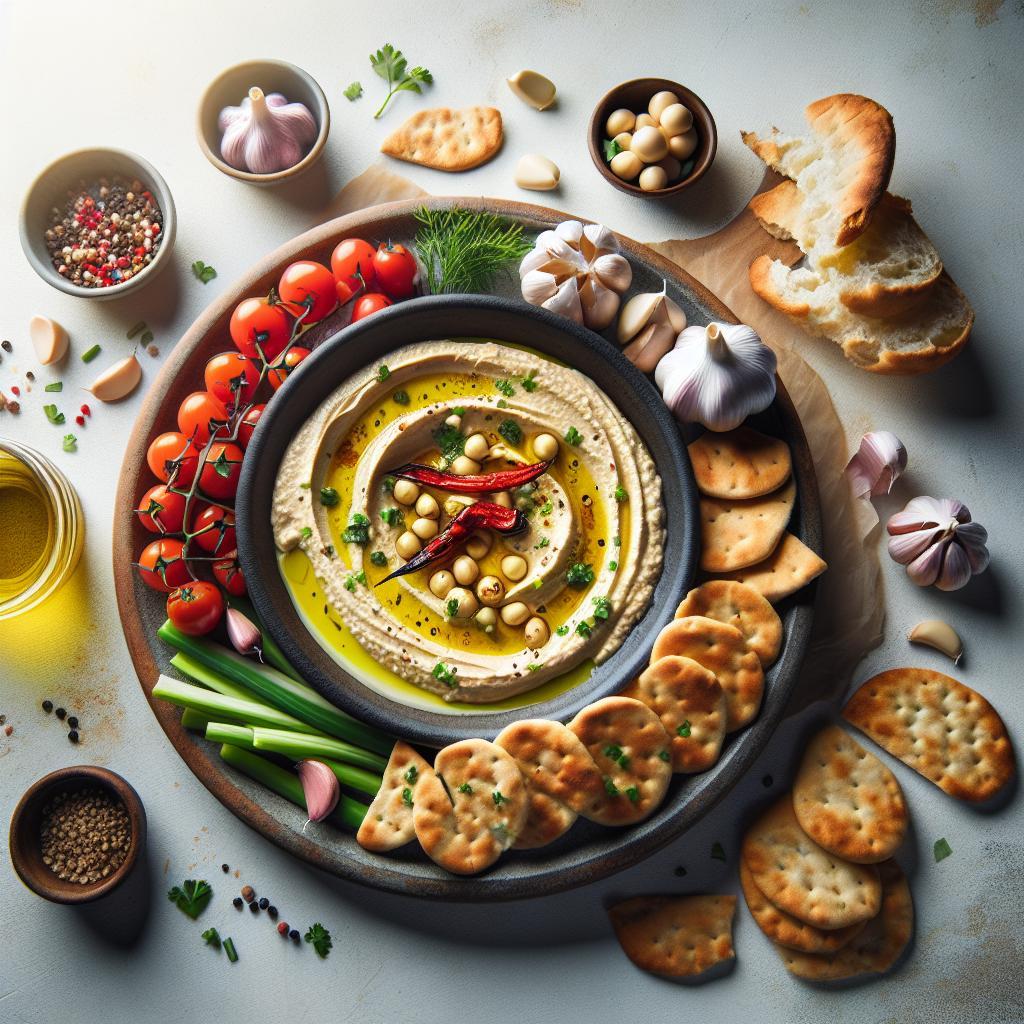
- Taste and adjust, adding more lemon or salt to brighten the flavor. Transfer to a serving bowl and finish with olive oil and garnishes.
Use a high-speed processor for the smoothest result. If the hummus seems chalky, add a little more cold water and blend longer.
Let the hummus rest 5–10 minutes before serving to let flavors integrate. Resting also firms texture slightly for cleaner plating.
Tips for Success
Small technique choices change the final texture and flavor. Cold water lightens the hummus; warm liquids risk a runny result.
- Use ice-cold water to lift and lighten texture without thinning too much.
- Peel extra cloves and freeze in an airtight container for fast hummus later.
- Cook dried chickpeas with baking soda for very soft skins if you prefer ultra-smooth hummus.
- Adjust acidity with lemon, not salt; acidity brightens without masking garlic’s sweetness.
Serving Suggestions
Serve roasted garlic hummus on a mezze platter with warm pita, sliced vegetables, olives, and pickles. The contrast of textures improves the eating experience.
This hummus also works as a sandwich spread, a topping for roasted vegetables, or a creamy element in grain bowls. For more serving ideas, try our internal easy hummus variations page.
| Nutritional Info (per 1/4 cup) | Calories | Protein (g) | Carbs (g) | Fat (g) |
|---|---|---|---|---|
| Roasted Garlic Hummus | 120 | 5 | 14 | 6 |
Store hummus in an airtight container. It stays fresh for up to 5 days refrigerated and freezes well in small portions for up to 3 months.
Thaw overnight and whisk or blend briefly to restore creaminess before serving. For a deeper tahini primer, visit our internal tahini guide.

FAQ
What makes roasted garlic so different in hummus?
Roasting converts sharp sulfur compounds into sweeter, milder ones through caramelization. The result blends into hummus without the bite raw garlic can produce.
This process creates a buttery texture and deep aroma that complements tahini and lemon without overpowering them.
How long should I roast garlic for hummus?
Roast at 400°F (200°C) for 35–45 minutes depending on bulb size. Check starting at 30 minutes for even, golden softness.
If bulbs brown too quickly, lower the oven to 375°F and extend the time by 5–10 minutes to avoid charring.
Can I use raw garlic instead?
Yes. Raw garlic will add a brighter, more pungent note. Use far less raw garlic than roasted—typically one small clove—to avoid overpowering the hummus.
Alternatively, combine one roasted head with a small raw clove for a balanced profile with a subtle bite.
How can I make hummus extra-smooth?
Remove loose skins from chickpeas and blend longer at high speed. Use ice-cold water and a generous pulse-scrape routine to emulsify fully.
Pressure-cooked or well-simmered chickpeas yield the smoothest texture. If you cook from dried, add a pinch of baking soda during the simmer to soften skins faster.
How long does roasted garlic hummus keep?
Keep it airtight in the refrigerator for up to 5 days. Flavor often improves after a day as the garlic mellows into the hummus.
Freeze in portioned containers for up to 3 months. Thaw overnight and re-blend for peak texture before serving.
By following these steps and variations, you’ll consistently produce a roasted garlic hummus that’s creamy, balanced, and suitable for everyday meals or entertaining. Small technique changes yield reliable improvements in flavor and texture.
See also: Roasted Garlic