
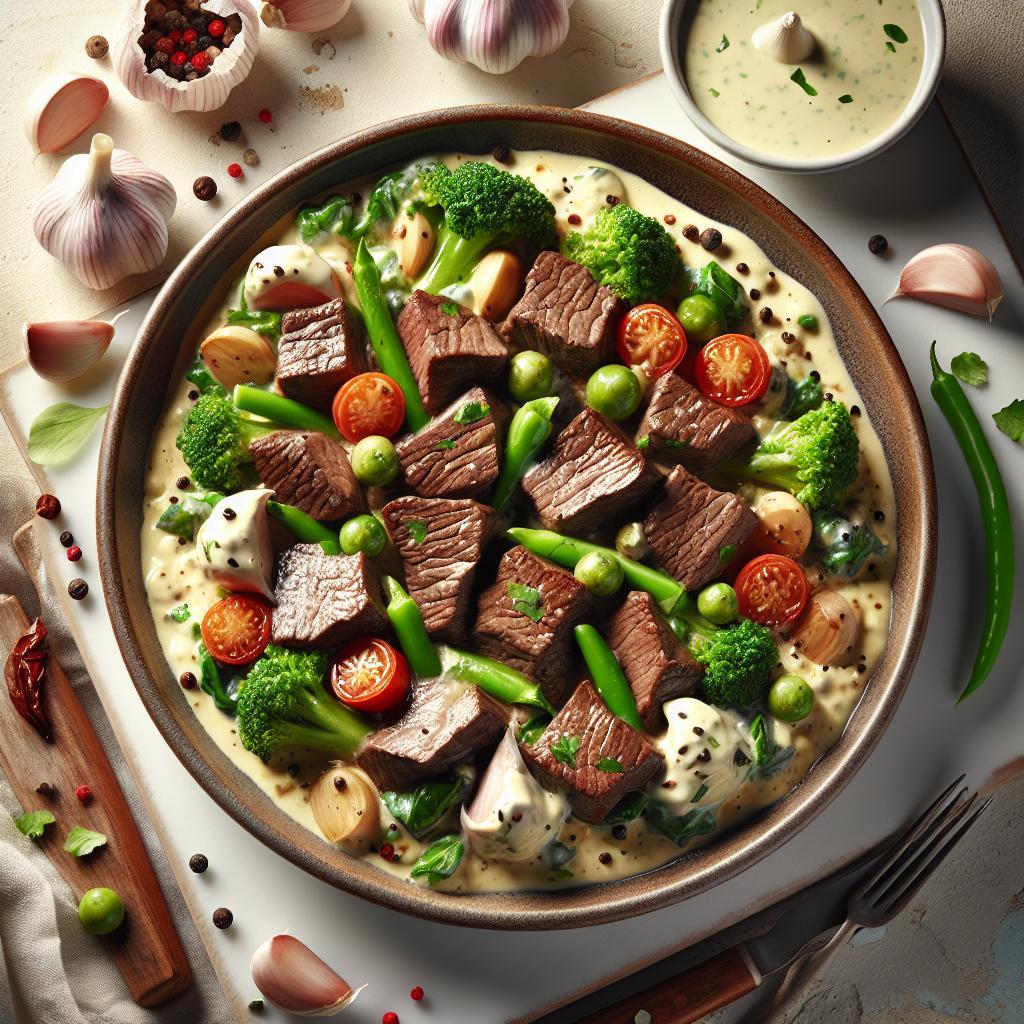

Garlic beef seared to a thin crust and finished in a glossy garlic cream sauce offers reliably luxurious results with controlled technique. This guide breaks the method into seven practical steps so home cooks can reproduce consistent texture and balanced flavor every time.
- Garlic Infused Beef Delights and Creamy Sauce Mastery
- Prep and Cook Time
- Yield and Difficulty
- Ingredients
- Key Technique Overview
- Instructions
- Tips for Choosing the Perfect Cut of Beef
- Chef’s Notes: Practical Success Strategies
- Serving Suggestions to Elevate Your Garlic Beef Experience
- Nutritional Snapshot
- FAQ
- Fast, repeatable method: Thin-sliced beef, hot sear, gentle cream reduction.
- Balanced aromatics: Fresh garlic and shallot layered to prevent bitterness.
- Texture control: Thin cuts, staged heat, and fond integration for silky sauce.
Garlic Infused Beef Delights and Creamy Sauce Mastery
Start with quality meat and a plan for the sauce. Choose a tender, well-marbled cut and slice it thin so each piece cooks fast and stays tender; thin slices anchor the technique for consistent garlic beef.
Build flavor by maximizing fond and using gentle heat when you introduce dairy. Learn basic ingredient properties from sources like garlic and beef to guide selection and treatment.
Prep and Cook Time
Plan on roughly 15 minutes of preparation and 25 minutes of cooking for this garlic beef recipe. These windows let you sear properly and reduce the sauce without rushing the emulsion.
Set mise en place: mince garlic and shallot, measure cream and broth, and have a thermometer or timer ready. Good prep reduces stress and prevents overcooking during the sear.
Yield and Difficulty
This recipe yields four hearty portions when served with a starch that soaks up sauce. Portion size varies when the beef becomes a component of a composed plate.
Difficulty rates as medium; the tasks are straightforward but demand temperature control and timing. With two or three practice runs you’ll internalize the searing window for reliable garlic beef results.
Ingredients
All measurements assume four servings and scale linearly. Use the freshest aromatics and a high-fat cream to help the sauce emulsify and maintain a glossy finish.
Ingredients: 500g thin-sliced sirloin, 4 cloves garlic minced, 1 shallot minced, 2 tbsp olive oil, 1 tbsp unsalted butter, 1 cup heavy cream (35% fat), 1/2 cup low-sodium beef broth, 1 tsp Dijon mustard, salt and pepper to taste, fresh thyme and parsley for garnish.
Key Technique Overview
Success hinges on three control points: dry beef surface for crust, high initial heat for Maillard reaction, and moderate heat for the cream stage to preserve emulsion. Managing these points produces consistent garlic beef every time.
Use a wide skillet to prevent overcrowding; overcrowding produces steam that inhibits caramelization. Work in batches and keep the pan hot between batches to maintain fond development.
Instructions
Follow the steps in order; timing affects texture more than any single ingredient. Work hot for the sear, then reduce heat for the sauce to preserve mouthfeel and avoid breaking the emulsion.
Step 1: Pat beef slices dry and season lightly with salt and pepper to promote crust formation. Thin slices (about 1/4 inch) minimize cooking time and improve sauce adhesion in the final assembly.
Step 2: Heat oil over medium-high until it shimmers, then sear beef in a single layer for 1.5–2 minutes per side. Work in batches and transfer seared beef to a resting plate while you build the sauce.
Step 3: Lower heat to medium and add butter; sweat the minced shallot and garlic until translucent and fragrant, about 2–3 minutes. Avoid browning the garlic to prevent bitter tones in the sauce.
Step 4: Deglaze with beef broth, scraping up browned bits to dissolve fond into the liquid. Simmer briefly, then add heavy cream and Dijon mustard; stir and keep the heat moderate so the sauce thickens gently without breaking.
Step 5: Return the beef to the skillet, nestling slices into the sauce and warming through for 1–2 minutes. Taste and adjust seasoning with salt and pepper, then finish with chopped parsley and thyme sprigs.
Serve immediately so the sauce stays glossy and the beef remains tender. If needed, reheat gently with a splash of broth to restore texture for leftovers.
Tips for Choosing the Perfect Cut of Beef
Choose cuts with enough marbling to remain tender during a short sear; sirloin, ribeye, and striploin perform well because they balance flavor and tenderness. Marbling melts quickly and keeps thin slices juicy.
Ask a butcher to slice the meat thinly or partially freeze the roast yourself before cutting. Aim for uniform thickness so every piece finishes in the same searing window and the garlic beef cooks evenly.
Chef’s Notes: Practical Success Strategies
Control the sauce emulsion by keeping the heat at medium once dairy is introduced. Rapid boiling splits the sauce and separates fat from liquid, creating a grainy texture instead of a silky coating for the garlic beef.
Temper cold cream by mixing a small amount of warm pan liquid into the cream before adding it to the skillet. This reduces thermal shock and helps preserve a stable emulsion.
For deeper garlic flavor, roast whole garlic cloves briefly before mincing to add a caramelized, mellow note. For a dairy-free variation, use full-fat coconut milk and replace butter with olive oil to approximate mouthfeel without dairy.
Make the sauce ahead and reheat gently with the beef for faster service without sacrificing texture. Use a low simmer and a splash of broth to revive the sauce if it tightens during refrigeration.
Serving Suggestions to Elevate Your Garlic Beef Experience
Pair garlic beef with buttery mashed potatoes or creamy polenta so the starch absorbs the sauce; both bases keep the beef and sauce as the plate’s focal point. Link to complementary recipes like mashed potatoes and polenta for plating ideas and further technique notes.
Contrast richness with bright, quick-steamed greens such as garlic-sautéed spinach or green beans. Acidic sides, like a lemon arugula salad, cut the fat and refresh the palate for repeated bites of garlic beef.
Nutritional Snapshot
Per serving, this garlic beef preparation is high in protein and fat and low in carbohydrates. Adjust portion sizes and side choices to match dietary goals while preserving technique.
Estimated values: approximately 420 kcal, 38 g protein, 4 g carbs, and 28 g fat per serving. Exact figures depend on cut selection and portion control.
FAQ
The following frequently asked questions address common execution points and practical substitutions for the garlic beef technique. Use the answers directly at the stove to troubleshoot quickly.
What cut of beef gives the best results?
Select tender, moderately marbled cuts like sirloin, ribeye, or striploin for predictable tenderness with a quick sear. Marbling compensates for the rapid cook time by melting and keeping slices juicy.
If you need background on grading and cuts, consult general resources like beef for context on common retail cuts and their characteristics.
How can I prevent the sauce from breaking?
Keep heat moderate after adding cream and never let the sauce reach a vigorous boil. Stir frequently and reduce gently until the sauce coats the back of a spoon to protect the emulsion.
Tempering the cream with warm pan liquid before adding it stabilizes the emulsion and reduces the risk of separation during the final reduction.
Can I substitute the cream for a lighter option?
You can use evaporated milk or a blend of lower-fat cream and a touch of butter, but expect a thinner mouthfeel. For non-dairy options, full-fat coconut milk preserves texture though it alters flavor profiles.
Adjust Dijon mustard or acid to balance the substituted base. For technical notes on cream behavior, see cream.
How long can leftovers keep and how should I reheat?
Store beef and sauce separately in airtight containers in the refrigerator for up to 3 days. Reheat gently on low with a splash of broth to maintain tenderness and emulsified texture for the garlic beef.
Avoid prolonged high-heat reheating, which tightens proteins and dries the meat. Warm through slowly and finish with fresh herbs to refresh the dish.
What vegetarian swap replicates the umami?
Large mushrooms such as portobello or cremini provide meaty texture and umami when properly seared and finished in the cream sauce. Brown them deeply before adding the sauce so they hold texture and flavor.
Enhance umami with a small splash of soy sauce or a pinch of mushroom powder, then offset saltiness with acid or fresh herbs. For context on polenta as a base, see polenta.
See also: For quick reference on mustard varieties, consult Dijon mustard for flavor and usage notes relevant to the sauce.
See also: garlic beef