
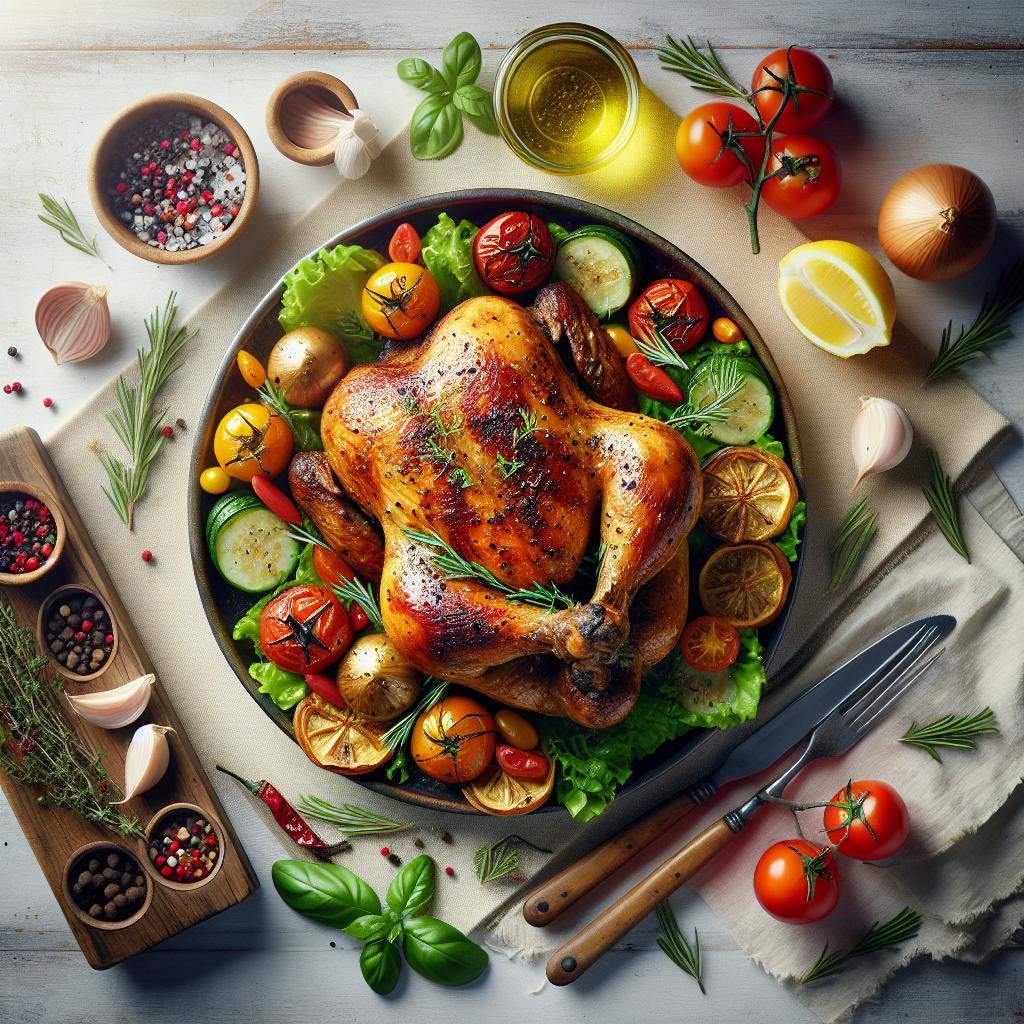

There is something universally comforting about a golden, crispy roast chicken that fills a kitchen with warm aroma. Behind that simple pleasure lies measurable food science and practical technique that deliver crisp skin, evenly cooked meat, and layered flavor.
- High initial heat crisps skin while finishing at lower heat preserves juiciness.
- Brining increases moisture retention and seasoning depth in the meat.
- Maillard browning produces complex savory compounds that define roast flavor.
- Resting and carryover ensure juices redistribute for tender slices.
Introduction: Why science matters for roast chicken
Roasting a whole chicken is a controlled transformation of proteins, water, and fats. Each decision—temperature, fat choice, seasoning—changes the final texture and taste in predictable ways.
Understanding the chemical and physical processes lets you repeat excellent results reliably. That approach turns luck into technique, and technique into repeatable flavor.
Core timing and yield
Prep time: 30 minutes active. Optional brine: 4–12 hours. Roast time: 1 hour 15 minutes to 1 hour 30 minutes depending on bird size and oven.
Yield: Serves 4 to 6. Difficulty: Medium. These estimates assume a 4–5 pound chicken and a calibrated oven for accurate heat control.
Ingredients
The ingredient list below focuses on components that interact with heat and contribute to texture and aroma. Use a consistent chicken size (4–5 lb) for timing accuracy.
Keep major functional items on hand: salt for brining, a fat source for conduction and browning, fresh aromatics for volatile oils, and a thermometer for verification.
- 1 whole chicken, about 4 to 5 pounds, patted dry
- 4 cups water (for brine)
- ¼ cup kosher salt (for brine)
- 2 tablespoons granulated sugar (optional, for brine)
- 4 sprigs fresh thyme
- 4 cloves garlic, smashed
- 1 lemon, halved
- 3 tablespoons unsalted butter, softened
- 2 tablespoons olive oil
- Freshly ground black pepper, to taste
- 1 teaspoon smoked paprika
- 1 teaspoon dried oregano
For herb background and aroma chemistry, thyme contributes thymol and other volatiles that enhance savory notes. Read more on thyme chemistry and uses.
How the science works (Key reactions)
The signature transformation in roast chicken skin and browned areas is the Maillard reaction, where amino acids and reducing sugars react at elevated temperatures to form hundreds of flavor compounds.
These compounds provide roasted, savory, and nutty notes. For a technical overview, see Maillard reaction and its role in culinary browning.
Water loss, heat transfer, and texture
High heat at the start encourages rapid surface moisture evaporation, producing a dry skin surface that browns efficiently. Meanwhile, gradual conduction moves heat into muscle fibers without over-drying the interior.
Understanding conduction and evaporation gives you control: manipulate heat and surface moisture to tune crispness versus juiciness.
Technique: Practical, science-backed steps
Apply a sequence of steps that manage moisture, salt distribution, fat contact, and heat profile. Each step has a measurable effect on texture and flavor.
Below, the numbered instructions match the recipe timing and explain the rationale so you can adjust with confidence.
Brining and seasoning
Create a basic brine by dissolving ¼ cup kosher salt and optional sugar in 4 cups cold water. Submerge the bird for 4–12 hours to allow osmotic and protein changes that improve moisture retention and seasoning depth.
For technical background on brining concepts, consult brining studies and summaries that explain salt’s effect on muscle proteins.
Preheat and initial roast (high heat)
Preheat the oven to 425°F (220°C) to jump-start skin drying and browning. Place the bird breast-side up on a rack to expose skin to hot air and promote even airflow.
After 25–30 minutes, reduce heat to 375°F (190°C) to slow internal cooking and let the center approach safe temperatures without excessive external drying.
Roasting to temperature
Use an instant-read or probe thermometer and target 165°F (74°C) in the thickest thigh flesh. Temperature is the reliable endpoint; visual cues alone can mislead.
For general roasting principles and oven effects on roast quality, see roasting (cooking).
Resting and carryover
Remove the chicken and tent loosely with foil. Rest for 15 minutes to allow carryover cooking and redistribution of juices. This step raises final internal temperature slightly and stabilizes juices for carving.
Proper resting converts surface moisture into retained juices and reduces drip loss when carving.
Recipe instructions (step-by-step)
Follow the practical sequence below. Each step builds on the previous to control moisture, flavor, and texture.
Read all steps before starting, and use a thermometer to verify doneness at the end.
- Brine: Dissolve salt (and sugar if using) in 4 cups cold water. Submerge the chicken fully and refrigerate 4–12 hours. This improves moisture retention and even seasoning.
- Dry thoroughly: Remove, rinse briefly, then pat very dry with towels. Dry skin is essential for efficient browning via the Maillard reaction.
- Preheat oven: Heat to 425°F (220°C) to start. High initial heat produces rapid surface evaporation and accelerates browning.
- Season and fat: Rub softened butter under and over the skin, add olive oil, then season with smoked paprika, black pepper, oregano, and a light sprinkle of salt. Stuff cavity with thyme, garlic, and lemon halves.
- Rest before roasting: Let the bird sit 20 minutes at room temperature to reduce temperature gradient between surface and core for more even cooking.
- Roast: Place breast-side up on a rack in a shallow pan. Roast 60–90 minutes total, reducing the oven to 375°F after roughly 30 minutes. Insert thermometer into the thigh, avoiding bone, and remove at 165°F (74°C).
- Rest and carve: Tent and rest 15 minutes, then carve. Spoon pan juices over carved slices for added richness.
[WARNING]Pro-Caution: Use a calibrated thermometer and follow recommended internal temperature guidelines to prevent foodborne illness. For official safety standards and handling, see food safety.
Tips for success
Small adjustments yield large differences. Test variations methodically so you can isolate what changes flavor or texture.
Keep notes: record bird size, oven model and calibrated temps, brine duration, and rest time to reproduce the best result.
- Try herb butter under the skin to transport aromas into the meat while limiting surface burning.
- Brush with a light oil instead of butter if you want the crispiest skin without extra browning from dairy fats.
- Ensure the surface is completely dry before seasoning to prevent rubbery or steamed skin.
- If short on time, use a dry salt rub; it seasons but will not match brine-induced moisture retention.
- Pre-brine overnight for convenience and deeper seasoning penetration.
[TIP]Expert Insight: If you want predictable skin crispness, pat the bird dry, leave it uncovered in the refrigerator overnight, then roast. The extended surface drying reduces surface water and improves Maillard browning.
Serving suggestions and presentation
Carve on a warm platter and spoon pan juices over the slices to enhance mouthfeel and flavor. Fresh herb sprigs and thin lemon slices add visual contrast and a bright aromatic lift.
Serve with roasted root vegetables or a crisp green salad. For pairing, moderate-bodied white wines or light-bodied reds complement the roast without overpowering delicate chicken flavors.
Nutrition (approximate per serving)
Calories and macronutrients vary by portion and added fat. Use the table below only as a guideline for planning.
| Nutrient | Per Serving (approx.) |
|---|---|
| Calories | 350 kcal |
| Protein | 45 g |
| Carbohydrates | 1 g |
| Fat | 16 g |

FAQ
How does brining actually help the chicken stay moist?
Brining allows salt to penetrate muscle tissue and partially denature proteins. That process enables the meat to retain more water during cooking, reducing dry texture after roasting.
The practical result: a juicier bite and more evenly seasoned meat throughout the bird.
Why start at a high oven temperature then lower it?
High initial heat dries and browns the surface quickly, promoting crisp skin and flavor from Maillard reactions. Lowering the temperature afterward reduces the rate of moisture loss while the interior reaches a safe endpoint.
This two-stage profile balances exterior crispness with interior tenderness.
What is the most reliable way to check doneness?
An instant-read thermometer in the thickest thigh muscle, avoiding the bone, is the most reliable method. Target 165°F (74°C) as the safe internal temperature for poultry.
Visually, golden skin and clear juices help, but temperature measurement prevents guesswork.
Can I substitute herbs and aromatics safely?
Yes. Aromatics such as rosemary, sage, and thyme contain volatile oils that infuse the meat with distinct notes during roasting. Choose combinations that complement your side dishes and personal preference.
Varying herbs changes the aromatic profile without altering core cooking principles like heat and moisture control.
Does butter make the skin better than oil?
Butter adds flavor and helps carry herb aromas, but its milk solids brown more quickly. Oil promotes crispness and tolerates higher surface temperatures without burning.
Combine both strategically: a thin brush of oil for crisping, plus herb butter under the skin for flavor delivery.
Mastering a roast chicken is a matter of repeatable steps informed by heat, moisture management, and seasoning science. Apply the methods above and adjust small variables to make the dish reliably excellent.
See also: Roast Chicken