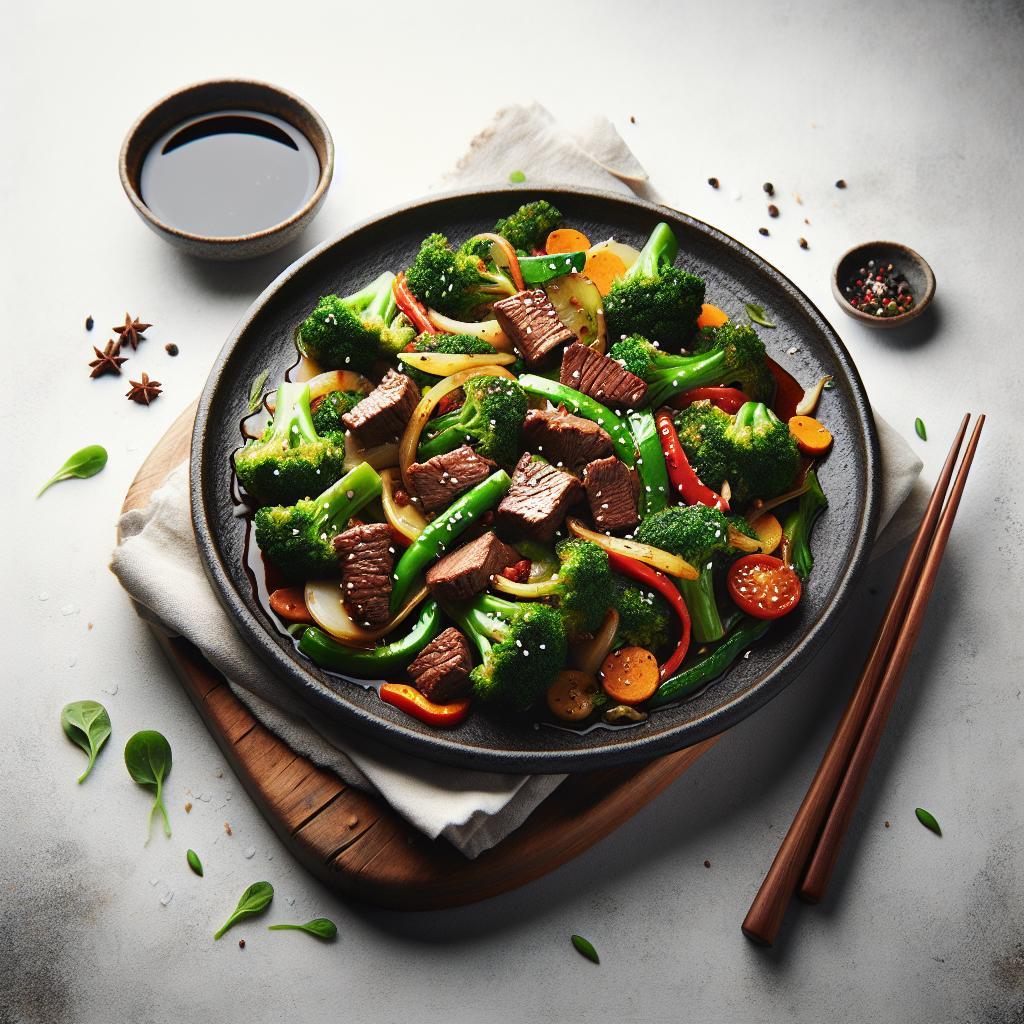

Beef stir-fry delivers fast, restaurant-style dinners by combining thinly sliced beef with crisp broccoli and a glossy, cornstarch-thickened sauce. This version focuses on timing, heat control, and texture to produce reliably tender beef and a clingy glaze every time.
- Exploring Beef Varieties for Beef Stir-Fry Tenderness
- Quick Facts for Beef Stir-Fry
- Ingredients for Beef Stir-Fry
- Step-by-Step Instructions for Beef Stir-Fry
- Chef’s Notes and Tips for Beef Stir-Fry
- Pro-Cautions for Beef Stir-Fry
- Serving Suggestions for Beef Stir-Fry
- Nutrition and Variations for Beef Stir-Fry
- Related Techniques and Background for Beef Stir-Fry
- FAQ
- Ready in 25 minutes: Fast prep and high-heat cooking preserve color and texture.
- Tender beef: Slice against the grain and use a short marinade to protect juiciness.
- Glossy sauce: A cornstarch slurry gives that restaurant-style sheen and cling.
- Work in batches: Avoid overcrowding to keep the pan hot and promote caramelization.
Exploring Beef Varieties for Beef Stir-Fry Tenderness
Pick a cut that sears quickly and slices thinly for the best beef stir-fry results. Flank, sirloin, and eye of round are common, affordable choices that work well when cut against the grain.
Buy well-chilled meat and remove silverskin for cleaner slices and more even cooking. For technical context on meat cuts, consult beef on Wikipedia.
Quick Facts for Beef Stir-Fry
This beef stir-fry completes in about 25 minutes: roughly 15 minutes to prep and 10 minutes to cook. The method scales easily for 2 to 6 servings without changing technique.
Keep mise en place finished before heating the pan since the sequence runs fast once the wok is hot. A screaming-hot pan gives sear and flavor instead of steam.
Prep and Cook Time
Preparation: 15 minutes. Slice beef thinly, blanch broccoli, and measure the sauce to keep the process smooth. Chilling the beef 20–30 minutes makes slicing cleaner.
Cooking: 10 minutes. Sear beef quickly, stir-fry aromatics, then finish with the sauce and slurry to glaze the dish.
Yield
Serves 4 as a main with rice or noodles. Increase protein and vegetables proportionally for larger groups to keep flavor balance.
Leftovers keep one day refrigerated. Reheat briefly over medium heat to avoid drying the beef and to preserve the sauce’s texture.
Difficulty Level
Easy–Medium: The method requires attention to timing and pan temperature but uses straightforward steps. Beginners benefit from practicing thin slicing and hot-pan control.
After a few tries, you can vary vegetables and sauces while retaining the same sear-and-toss approach for consistent beef stir-fry outcomes.
Ingredients for Beef Stir-Fry
Use the ingredients below for balanced flavor and a glossy finish. Cornstarch serves both in the marinade and as a finishing slurry to improve sauce adhesion.
Substitutions work well: tamari for gluten-free soy, low-sodium broth to control salt, and hoisin or mushroom-based sauces for depth when oyster sauce is unavailable.
- 12 ounces beef (flank steak or sirloin), thinly sliced against the grain
- 4 cups fresh broccoli florets
- 3 tablespoons vegetable oil, divided
- 3 cloves garlic, minced
- 1 tablespoon fresh ginger, finely grated
- ¼ cup low-sodium soy sauce
- 2 tablespoons oyster sauce (or hoisin for vegetarian)
- 1 tablespoon cornstarch
- ½ cup beef broth (or water)
- 1 teaspoon toasted sesame oil
- 1 teaspoon brown sugar
- 1 teaspoon cornstarch mixed with 2 tablespoons water (slurry)
- Optional garnish: toasted sesame seeds and sliced scallions
Step-by-Step Instructions for Beef Stir-Fry
Follow the sequence below to preserve texture and pace. Prep everything in small bowls to move quickly once the pan is hot for a consistent beef stir-fry every time.
Keep the slurry separate and add it at the end to achieve that glossy restaurant glaze. Work in batches if needed to avoid lowering pan temperature.
- Marinate the Beef: Toss thin beef strips with 1 tablespoon soy sauce, 1 teaspoon cornstarch, and a pinch of black pepper. Rest 10 minutes to tenderize and season the surface.
- Blanch the Broccoli: Boil water and blanch florets 1–2 minutes until bright green. Shock in ice water to halt cooking and preserve crunch, then drain well.
- Prepare the Sauce: Whisk remaining soy sauce, oyster sauce, beef broth, brown sugar, and sesame oil. Keep this nearby for quick access while cooking.
- Sizzle the Beef: Heat 2 tablespoons oil in a wok or heavy skillet until shimmering. Add beef in a single layer and sear 1 minute without stirring to build crust. Toss and finish 1–2 minutes until nearly done, then remove to rest.
- Stir-Fry Aromatics and Broccoli: Add remaining oil, then garlic and ginger; cook 20 seconds. Add broccoli and stir-fry 1–2 minutes so the florets pick up aromatics but stay crisp.
- Combine and Thicken: Return beef to the pan, pour in the sauce, then the cornstarch slurry. Stir until the sauce thickens and glazes the ingredients, about 1–2 minutes.
- Final Touch: Remove from heat and garnish with sesame seeds and scallions. Serve hot over rice or noodles to catch the sauce.
Chef’s Notes and Tips for Beef Stir-Fry
Cut Against the Grain: Slicing against the grain shortens muscle fibers and yields a tender bite. Use a very sharp knife and chill the steak briefly for cleaner slices.
High Heat Matters: A screaming-hot pan gives caramelization rather than steam. Preheat the wok or skillet for several minutes and add oil only when the pan is hot.
When you cook in batches, each piece gets even heat and builds flavor. Overcrowding reduces temperature and yields steamed rather than seared beef.
Pro-Cautions for Beef Stir-Fry
Do not add wet ingredients too early; extra water drops the pan temperature and causes steaming. Always drain blanched vegetables thoroughly and add them after aromatics have sizzled.
Use a thermometer only if unsure: oil should shimmer and the pan should give an audible sizzle when ingredients hit the surface. That sound is a reliable cue for correct heat.
Serving Suggestions for Beef Stir-Fry
Serve this beef stir-fry over steamed jasmine or brown rice to soak up the sauce. For a lighter plate, use cauliflower rice or quick-cooked soba noodles.
Add a crisp side like cucumber salad or an Asian slaw to introduce acid and contrast. Garnish with sesame seeds and scallions for texture and visual appeal.
Nutrition and Variations for Beef Stir-Fry
This dish balances protein and vegetables with moderate carbohydrates from rice. Use reduced-sodium soy and broth to keep sodium in check while preserving umami.
Swap vegetables freely: snow peas, snap peas, or bell peppers work well. For gluten-free options, use tamari and check oyster sauce labels for hidden wheat.
| Nutrient | Per Serving |
|---|---|
| Calories | 320 kcal |
| Protein | 28g |
| Carbohydrates | 15g |
| Fat | 15g |
For ingredient science on thickening agents and gelatinization, see cornstarch. For equipment differences and care, consult the wok reference.
Related Techniques and Background for Beef Stir-Fry
Stir-frying depends on rapid heat transfer and uniform bite-sized pieces to cook food evenly and quickly. The method uses high heat, continuous motion, and short cook times to protect texture.
Further reading on the technique is available at the stir-frying entry, and botanical notes on the vegetable selection are in the broccoli article.
For practical recipes and related options on this site, see our internal collections: Beef Stir-Fry recipes and Stir-fry techniques. These internal pages expand on variations and step photos.
FAQ
What cut of beef is best for stir-fry?
Flank steak and sirloin give a good balance of flavor and fast cooking. Eye of round works when marinated and sliced thinly, but avoid very fatty cuts for this method.
Slicing thin and against the grain reduces chew and makes the beef stir-fry feel more tender even with leaner cuts.
How do I keep broccoli crisp and bright?
Blanch florets 1–2 minutes and shock them in ice water to stop cooking. Drain thoroughly and stir-fry briefly on high heat so florets stay crunchy and vibrant.
Draining well is essential; excess water causes steaming and dulls color while reducing surface temperature for browning.
Can I prepare components ahead of time?
Yes. Marinate and slice beef up to 2 hours ahead and keep refrigerated. Chop vegetables and mix the sauce in advance to speed the final assembly.
Store components separately so you reheat only what needs warming and avoid soggy vegetables before tossing in the hot pan.
What should I do if my pan steams the food instead of searing?
Heat the pan longer, remove excess moisture from ingredients, and avoid overcrowding. Work in batches and ensure oil shimmers before adding protein.
The correct indicator is an immediate sizzle and rapid browning; if you hear no sizzle, increase heat and wait before adding food.
How do I make the sauce gluten-free?
Replace soy sauce with tamari and use a gluten-free oyster sauce or mushroom-based alternative. Cornstarch is naturally gluten-free and still thickens effectively.
Check labels on packaged sauces for hidden wheat and choose certified gluten-free products when needed for strict diets.
See also: explore the beef stir-fry recipe index on this site for variations and step-by-step photos.
See also: beef stir-fry