

Step into the shimmering world where invisible waves meet controlled engineering — welcome to infrared burners. These devices deliver focused radiant heat that often outperforms conventional burners in speed, uniformity, and energy use.
- Infrared Burner Magic: Mastering the Art of Efficient Heat
- How Infrared Works
- Prep and Cook Time
- Yield
- Difficulty Level
- Ingredients (Equipment & Materials)
- Instructions
- Tips for Success
- Maintenance and Safety
- Serving Suggestions
- Performance Data Snapshot
- Q&A
- What exactly is an infrared burner?
- How does infrared radiation differ from convective heat?
- Why does infrared feel so effective for searing?
- Are infrared burners energy-efficient?
- Where else are infrared systems used?
- In Summary
- Direct radiant transfer: Infrared targets surfaces rather than heating air.
- Fast response: Emitters heat quickly and cut preheat time significantly.
- High emissivity: Engineered surfaces maximize usable infrared output.
- Broad applications: From searing steaks to industrial curing, infrared scales well.
Infrared Burner Magic: Mastering the Art of Efficient Heat
Infrared burners convert energy into electromagnetic radiation that we sense as heat at surfaces. Their efficiency comes from focused delivery, which reduces wasted convective heating of ambient air.
Design choices — emitter material, wavelength tuning, and reflectors — determine performance and suitability for cooking or industrial processes. Modern units use materials engineered for specific emissivity and temperature ranges to match application needs.
How Infrared Works
Infrared devices emit electromagnetic energy in wavelengths just longer than visible light; this radiation transfers energy directly to surfaces. For a technical overview, consult the infrared page on Wikipedia for wavelength ranges and basic properties.
At working temperature, an emitter behaves like a controlled radiator; its output follows established thermal-radiation laws. See black-body radiation for the theoretical basis that links temperature to emitted spectrum.
Physics of Radiation (Key Concepts)
Infrared heat operates primarily by radiative transfer, not convection. That means energy travels as photons to the target surface, which absorbs and converts it to sensible heat.
Materials and surface finish govern absorption and reflection of infrared waves; matte, dark, and rough surfaces absorb more. For broader context, review thermal radiation principles and their role in engineering designs.
Prep and Cook Time
Infrared cookers and heaters reach operating temperature faster than many conventional systems, often in minutes. Typical food searing or small-scale heating tasks require 5–10 minutes of preheat, while full-load industrial cycles vary by equipment and throughput.
Because the radiation penetrates surface layers, effective cooking or processing times shorten and become more consistent. Operators should benchmark a given emitter and vessel combination to establish reliable cycle times for their workflow.
Yield
For culinary use, a well-configured infrared burner delivers even searing across the contact area and reliably finishes medium to large portions. In a standard kitchen setup, expect consistent results for roughly 4–6 servings per burner, depending on pan size and heat settings.
In industrial contexts, yield translates to throughput and process consistency rather than servings. Proper emitter selection and system tuning often increase output by reducing rejects and shortening cycle time.
Difficulty Level
Using infrared burners effectively requires intermediate technical understanding. Users must match emitter type and wavelength to the target material and control temperature precisely to avoid over- or under-processing.
Installation and calibration call for hands-on skill but not necessarily specialist certification for most consumer units. Industrial installations typically require trained technicians for safe operation and integration with process controls.
Ingredients (Equipment & Materials)
Infrared burner unit: Choose ceramic, metal, or quartz emitter based on response time and spectrum. Ceramic emitters provide steady, even output; quartz units heat faster and produce shorter-wavelength infrared.
Fuel or power: Natural gas, propane, or electric supply must match the unit specifications and include regulation valves or controllers. Also include reflective panels and heat-retentive cookware where appropriate to shape output and optimize absorption.
Instructions
Choose the right emitter: Match emitter material to the task and desired wavelength band. Consider surface emissivity of target materials and reference manufacturer specifications for recommended distances and operating temperatures.
Install and connect safely: Secure mounting, correct clearance, and verified gas or electrical connections prevent failures. Always follow local codes and documented procedures for venting and controls when installing fixed systems.
Tips for Success
Adjust distance between emitter and surface to control intensity; small drops in gap sharply raise radiative flux. Use reflectors or diffusers to tune distribution across larger surfaces and ensure repeatable results.
Clean emitters regularly to preserve emissivity and performance; residue reduces output and alters the spectrum. For step-by-step upkeep, review our internal guide on Maintenance Best Practices to extend service life and keep efficiency high.
Maintenance and Safety
Routine inspection prevents common failures: check connections, look for cracks in ceramic emitters, and verify control calibration. Record operating hours and set preventive replacement intervals for high-use installations.
Safety measures must include flame arrestors for gas systems, thermal cutouts, and clear operating procedures for personnel. Maintain ventilation and use heat-resistant PPE when servicing or cleaning hot components.
Serving Suggestions
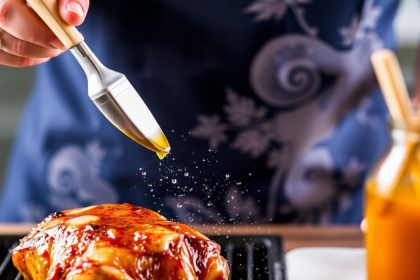
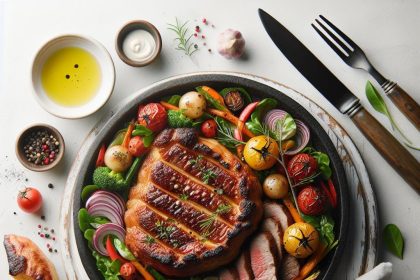
For culinary use, infrared searing produces strong Maillard reactions and deep crusts while keeping internal moisture. Pair seared proteins with quick-roasted vegetables or bright acidic sauces to balance the intensified flavors created by radiant searing.
For craft or industrial applications, adjust dwell time and emitter zoning to achieve homogeneous curing or drying. Use process controls and temperature sensors to close the loop on quality and reduce cycle variability.
Performance Data Snapshot
Energy efficiency: Infrared systems often convert a high share of input energy to usable surface heat. Practically, this reduces standby losses and cuts preheat requirements compared with convective systems.
Control and speed: Infrared emitters respond quickly to setpoint changes, enabling tighter process control and faster transitions. This responsiveness delivers measurable gains in throughput and product consistency.
Q&A
Q&A: Unveiling the Science Behind Infrared Burner Magic
What exactly is an infrared burner?
An infrared burner is an emitter that converts fuel or electric input into infrared radiation designed to heat surfaces efficiently. The device emphasizes radiative transfer over convective heating to target specific areas with controlled energy.
How does infrared radiation differ from convective heat?
Infrared radiation travels as electromagnetic waves and deposits energy at the surface it strikes, rather than heating the air first. For a technical comparison, see the electromagnetic radiation entry, which frames how infrared sits within the spectrum and how it interacts with matter.
Why does infrared feel so effective for searing?
Infrared creates rapid surface heating that encourages quick browning and crust formation while preserving interior moisture. The direct radiative coupling to food surfaces results in intense, localized heat that conventional burners struggle to match.
Are infrared burners energy-efficient?
Yes, they can be more efficient because they limit energy lost to the environment and heat the target directly. Efficiency gains depend on system design, control strategy, and how well the emitter spectrum matches the target’s absorption.
Where else are infrared systems used?
Beyond cooking, infrared heaters serve in drying, curing, paint baking, and surface treatment processes that need fast, uniform heating. Engineers often combine infrared modules with conveyor systems or zoned arrays to scale the technology for production lines.
In Summary
Infrared burners use targeted radiation to move heat to a surface quickly and with high control. Their advantage lies in tailored emitter materials, spectrum control, and system integration that minimize wasted energy and improve process outcomes.
Operators who pair correct emitter selection with routine maintenance and a controlled setup gain consistent, repeatable results. For more hands-on guidance, consult our Advanced Cooking Techniques section to translate these principles into kitchen or workshop practice.
See also: infrared burners