

The transformative role of sugar syrup in meringue goes beyond sweetness; it stabilizes structure, improves gloss, and controls texture. Professional pastry chefs use sugar syrup to convert fragile whipped egg whites into resilient peaks suited for piping, frosting, or baking.
- Sugar syrup stabilizes and glosses whipped egg whites for reliable results.
- Temperature and timing determine whether you get silky Italian or airy Swiss meringue.
- Technique beats tricks: slow syrup addition and steady whipping prevent graininess.
- Adaptable: syrup works with aquafaba for vegan meringues.
Sugar syrup and meringue stability
Sugar syrup acts as a binding and protective agent for whipped egg whites. It coats protein strands and slows water migration, which reduces weeping and collapse.
The process relies on protein behavior and controlled sugar concentration. For technical background on the foam structure and proteins, see meringue and egg white.
Prep and Cook Time
Preparation and execution take roughly 30 minutes for Italian or Swiss-style meringue. Set up equipment before you heat the syrup to keep the process continuous and safe.
Typical timing breakdown: 10 minutes prep, 10 minutes for syrup to reach soft-ball stage, and 10 minutes to whip and cool the meringue. Use a candy thermometer to verify the syrup temperature precisely.
- Preparation: 10 minutes
- Cooking Sugar Syrup: 10 minutes
- Whipping and Assembly: 10 minutes
- Total Time: 30 minutes
Yield
This recipe yields about 4 cups of stable Swiss or Italian meringue suitable for frosting or piping. The final volume depends on egg white temperature and whipping vigor.
Adjust yield by scaling egg whites and syrup proportionally. Keep the water-to-sugar ratio consistent to maintain syrup concentration and final texture.
Difficulty Level
Skill level: Medium. The method requires accurate temperature control and steady timing. With practice, the technique becomes reliable.
Expect a learning curve mainly around syrup stage recognition and slow incorporation into whipped whites. A candy thermometer reduces guesswork and improves repeatability.
Ingredients
Keep ingredients simple and precise. Use room-temperature egg whites for better volume and a measured sugar-to-water ratio for consistent syrup behavior.
If you want a vegan option, aquafaba performs similarly; read about its properties at aquafaba. Below are the standard ingredients for a classic Italian meringue.
- 4 large egg whites, at room temperature
- 1 cup granulated sugar
- 1/4 cup water
- 1/4 teaspoon cream of tartar or a few drops of lemon juice (optional)
- 1 teaspoon vanilla extract (optional)
Instructions
Clear sequencing keeps the whites stable and prevents grainy meringue. Prepare bowls, beaters, and thermometer before you start to maintain tempo.
Follow these steps precisely for best texture: heat syrup to soft-ball stage, whip whites to near-stiff peaks, then drizzle syrup slowly while whipping continuously.
Sugar syrup stages
Combine sugar and water in a deep saucepan and dissolve over medium heat. Bring the syrup to the soft-ball stage, about 235–240°F (113–116°C), verified by a candy thermometer or calibrated experience.
Avoid stirring once boiling begins to prevent premature crystallization. Keep the syrup hot and fluid until you begin to pour it into the whites to ensure smooth integration.
Whipping technique
Start whipping egg whites with cream of tartar on medium speed until soft peaks form. This gives the foam structure needed to absorb hot syrup without collapsing.
With the mixer running at medium, drizzle the hot syrup in a thin, steady stream into the whites. After all syrup is added, increase speed to high and beat until the bowl feels cool and the meringue is glossy and forms stiff peaks.
Tips for Success
Small details make a big difference: clean bowls, room-temperature whites, and a steady hand for pouring the syrup. Each factor affects final stability and mouthfeel.
If the meringue looks grainy, return it to the mixer over a warm water bath and whisk gently to re-emulsify. For scientific context on protein behavior, consult protein denaturation.
- Use a clean, grease-free bowl and beaters; fat kills volume.
- Room-temperature egg whites trap air more efficiently.
- A candy thermometer ensures the correct syrup temperature to avoid graininess.
- Pour syrup slowly to avoid deflating the foam.
- For humid conditions, a tablespoon of corn syrup or cream of tartar increases resilience.
Rest a minute after the tip and then continue whipping to cool the meringue. Cooling while whipping locks the structure and avoids overcooking pockets of egg.
Serving Suggestions
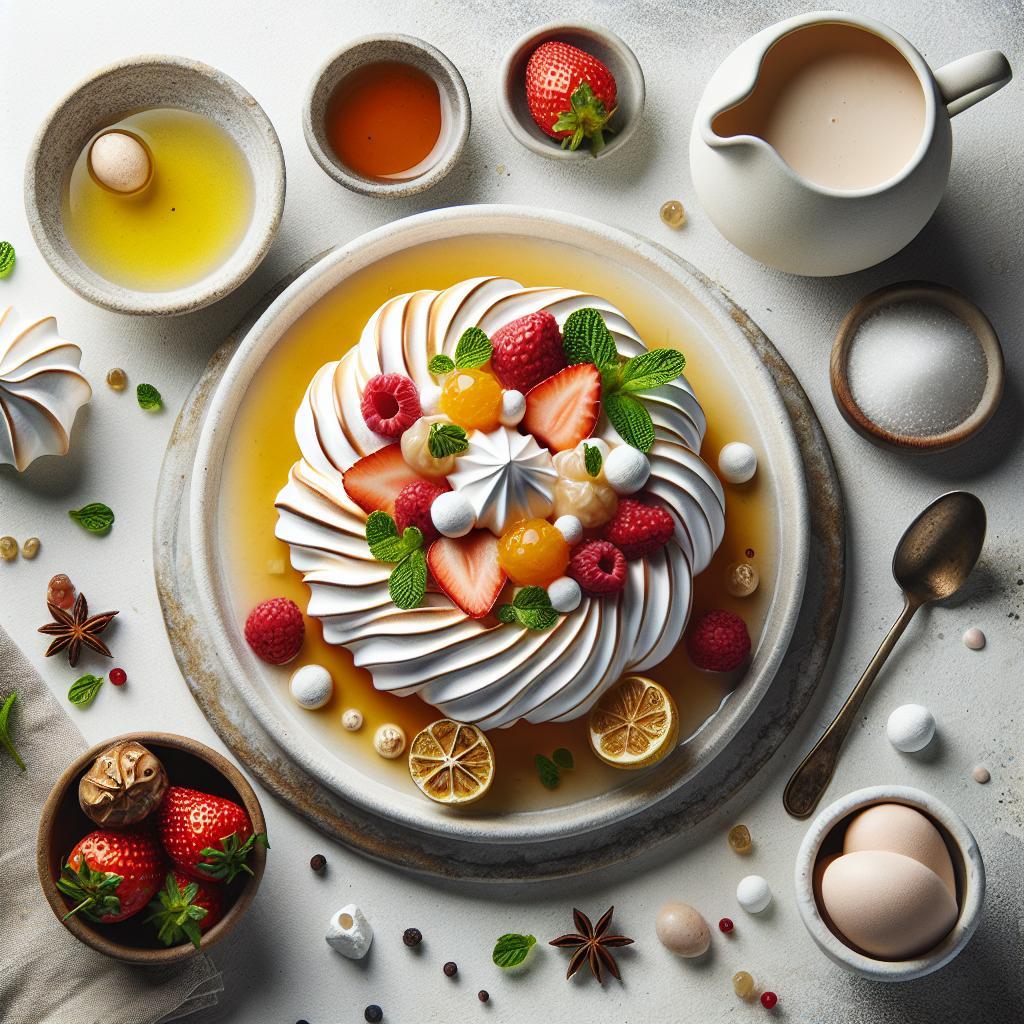
Use this meringue to frost cakes, pipe kisses, or top pies. It holds shape well and browns nicely with a quick torch pass for texture contrast.
Try it on a classic lemon meringue pie or experiment with variations; see ideas at classic lemon meringue pie and meringue variations. Garnishes like toasted nuts or fresh berries add flavor balance.
| Nutrient | Per 1/2 cup |
|---|---|
| Calories | 130 |
| Protein | 3g |
| Carbohydrates | 33g |
| Fat | 0g |

FAQ
What exactly is sugar syrup for meringue?
Sugar syrup is a concentrated solution of sugar and water heated to a precise stage. It integrates into whipped whites to stabilize the foam and provide a glossy finish.
The liquid form prevents graininess and locks in air bubbles by coating proteins and slowing moisture movement.
Why must the syrup reach soft-ball stage?
The soft-ball stage (about 235–240°F / 113–116°C) achieves the right sugar concentration and viscosity. At this point, syrup blends smoothly into the foam without crystallizing.
If the syrup falls short of that temperature, it may leave a grainy texture; if it exceeds that range, it risks becoming too thick and difficult to combine.
Can I use different sugars for syrup?
Yes. Granulated white sugar is standard, but caster or superfine sugar dissolves faster. Brown sugar will add flavor and color but requires temperature adjustments for the same behavior.
Whatever sugar you choose, keep water ratios and final temperature consistent to preserve the meringue’s structure.
How do I fix grainy or separated meringue?
If the meringue separates or looks grainy, gently rewarm the mixture over a double boiler while whisking. This helps dissolve sugar crystals and re-emulsify the foam.
After smoothing, return the bowl to the mixer and whip to cool and firm the meringue again.
Is there a vegan alternative using the same technique?
Yes: aquafaba (the liquid from cooked chickpeas) mimics egg white behavior and accepts hot sugar syrup similarly. Treat its whipping and syrup incorporation like egg whites for consistent results.
For more on aquafaba properties, review the overview at aquafaba.
Mastering sugar syrup techniques turns a fragile foam into a dependable pastry component. Focus on temperature control, steady syrup addition, and clean equipment to produce glossy, stable meringue every time.
See also: Sugar syrup