
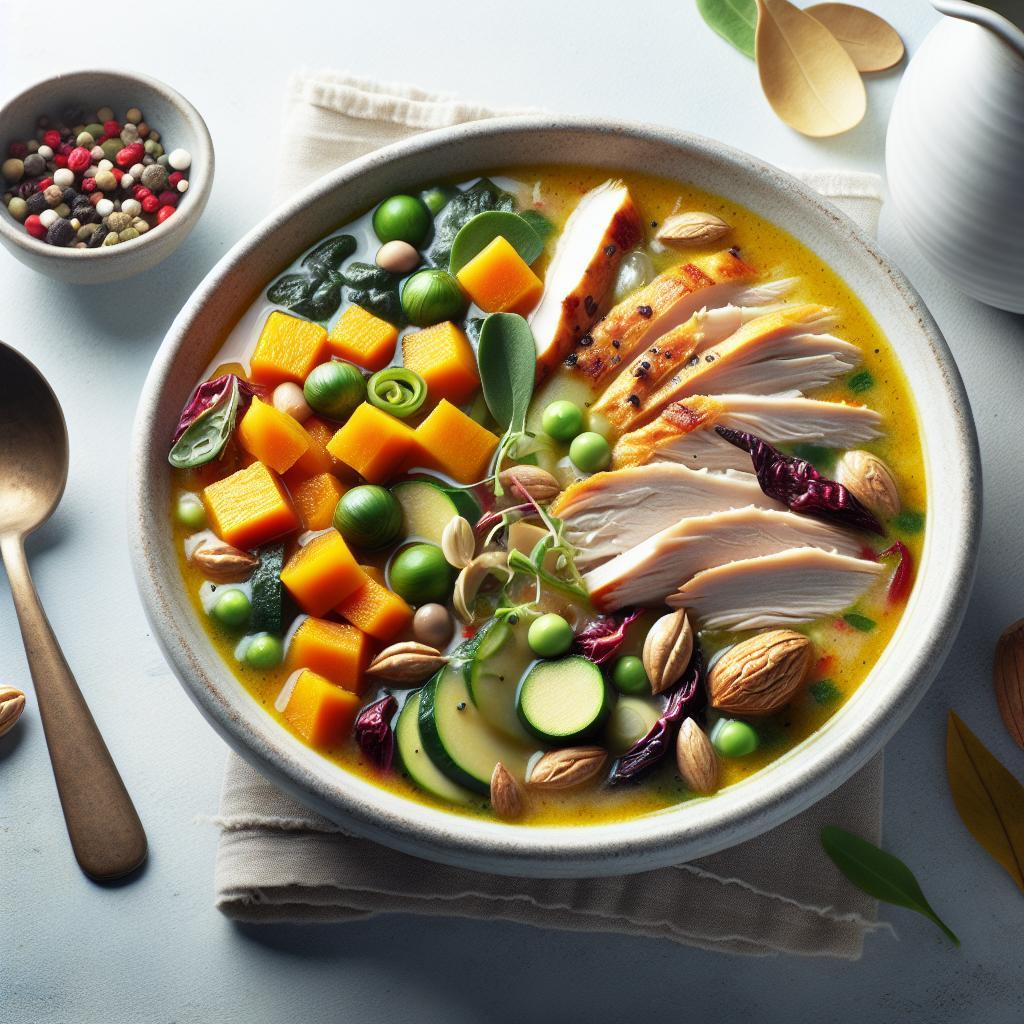

Comfort in a Bowl: Exploring Turkey Soup with Squash puts roasted squash and lean diced turkey together for a balanced, nourishing soup that tastes both homey and refined. This turkey soup focuses on aroma, texture, and timing to deliver reliable results for weeknights or easy entertaining.
- Overview and Flavor Profile of Turkey Soup
- Prep and Cook Time for Turkey Soup
- Yield and Storage for Turkey Soup
- Difficulty Level: Turkey Soup Made Accessible
- Ingredients for Turkey Soup
- Instructions to Make Turkey Soup
- Tips for Success: Technique and Timing for Turkey Soup
- Serving Suggestions to Elevate Your Turkey Soup Bowl
- Nutrition Snapshot for Turkey Soup
- FAQ
- What makes this turkey soup comforting?
- Can I use leftover turkey or homemade turkey stock?
- Which squashes work best for turkey soup?
- How should I store and reheat leftovers of turkey soup?
- Is this turkey soup adaptable for vegetarian diets?
- Wrapping Up
- Seasonal balance: Winter squash brings sweetness while turkey supplies lean protein and savory depth.
- Simple technique: Roast for caramelization, then gentle simmer to keep turkey tender.
- Make-ahead friendly: Turkey soup stores well—chill quickly and reheat gently to preserve texture.
- Versatile finish: Partial blending yields a creamy body while retaining meat and vegetable pieces.
Overview and Flavor Profile of Turkey Soup
This turkey soup uses a broth-forward base balanced by pureed or cubed winter squash for body. Chefs build complexity by roasting the squash and browning turkey to add Maillard flavors before simmering.
The recipe follows classic stock-and-simmer technique common in professional kitchens. For background on soup technique see soup.
Prep and Cook Time for Turkey Soup
Preparation: 15 minutes. Cook Time: 40 minutes. Total Time: 55 minutes. These times assume active prep and a single pot for sautéing and simmering.
If you roast the squash first, add 20–30 minutes for caramelization; this reduces blending time and improves mouthfeel in the turkey soup.
Yield and Storage for Turkey Soup
This recipe yields 6 hearty bowls, ideal for family meals or batch-cooking. You can halve or double quantities without changing technique.
Leftovers keep 3 days refrigerated or up to 2 months frozen. Reheat slowly and add a splash of stock if the turkey soup thickens during storage.
Difficulty Level: Turkey Soup Made Accessible
Difficulty is Easy to Medium. The method is straightforward, but attention to timing and seasoning elevates results.
Home cooks with basic knife and stovetop skills can execute this turkey soup reliably. Professional technique improves texture and final balance.
Ingredients for Turkey Soup
Gather quality produce and stock: olive oil, one medium onion, garlic, diced skinless turkey breast, butternut squash or other winter squash, low-sodium broth, carrot, celery, and dried herbs. Finish with fresh sage and parsley.
Choose ripe butternut for best texture and color; learn more about butternut at butternut squash. Use low-sodium stock to control salt and finish with acid for brightness.
- 2 tablespoons extra-virgin olive oil
- 1 medium yellow onion, finely chopped
- 3 garlic cloves, minced
- 1 pound skinless turkey breast, diced
- 4 cups butternut squash, peeled and cubed
- 4 cups low-sodium turkey or vegetable broth
- 1 large carrot, sliced thin
- 2 celery stalks, chopped
- 1 teaspoon freshly ground black pepper
- 1 teaspoon dried thyme
- 1/2 teaspoon smoked paprika
- Salt, to taste
- Fresh sage leaves for garnish
- 1/4 cup chopped fresh parsley
Instructions to Make Turkey Soup
Start by sweating the onion in olive oil until translucent to build a sweet base. Add garlic and diced turkey and brown lightly to develop savory notes.
Stir in squash, carrot, and celery, then pour in the stock and add thyme and smoked paprika. Bring to a gentle boil, reduce heat, and simmer 30 minutes until squash is tender.
- Heat olive oil in a large pot over medium heat; sauté chopped onion about 5 minutes until fragrant.
- Add garlic and turkey; cook 7–8 minutes until lightly browned, stirring to ensure even cooking.
- Stir in cubed squash, sliced carrot, and chopped celery; warm through 2–3 minutes.
- Pour in the broth and add thyme, smoked paprika, and black pepper; season with a pinch of salt and bring to a low boil.
- Reduce heat to maintain a simmer, cover, and cook about 30 minutes until squash is soft and flavors meld.
- Adjust seasoning and stir in chopped parsley; garnish with sage and a drizzle of olive oil.
For a velvety mouthfeel, puree one-third of the turkey soup with an immersion blender and fold it back in. Keep some turkey pieces whole to retain protein texture.
Alternatively, skip blending for a chunkier, brothy presentation. Both approaches work with the same base technique and seasoning strategy.
Tips for Success: Technique and Timing for Turkey Soup
Roasting and Browning
Roast squash at 200°C (400°F) for 20–25 minutes to concentrate sugars and develop color. Roasting improves mouthfeel and reduces blending time for the turkey soup.
Brown turkey in batches to avoid crowding the pan; even browning builds savory depth and helps the turkey retain juices during simmering.
Simmering and Seasoning
Maintain a gentle simmer rather than a rolling boil to keep turkey tender. Overcooking protein causes dryness, so check pieces for doneness near the end of the cook time.
Layer seasoning: add some herbs early for extraction and adjust salt or acid at the end. Smoked paprika adds warmth without heat and pairs well with winter squash in this turkey soup.
Serving Suggestions to Elevate Your Turkey Soup Bowl
Serve turkey soup with crusty whole-grain bread or a dollop of plain yogurt to add creaminess. Toasted seeds add crunch and make a compelling garnish.
For presentation, ladle into warmed bowls and drizzle high-quality olive oil over each portion. A sprinkle of chopped parsley and a few sage leaves lift aroma and color.
Nutrition Snapshot for Turkey Soup
Per serving estimates: approximately 260 kcal, 28 g protein, 18 g carbohydrates, and 7 g fat. Lean turkey and squash provide a nutrient-dense profile.
The dish supplies protein and beta-carotene from squash, supporting balanced meal planning when paired with whole grains or a salad. For stock technique, see stock (food).
| Nutrient | Per Serving |
|---|---|
| Calories | 260 kcal |
| Protein | 28 g |
| Carbohydrates | 18 g |
| Fat | 7 g |
FAQ
What makes this turkey soup comforting?
The combination of savory turkey, caramelized squash, and warm aromatics produces a rounded flavor profile. Texture plays a key role: creamy squash plus tender turkey yields a satisfying mouthfeel.
Can I use leftover turkey or homemade turkey stock?
Yes. Leftover turkey shortens cook time and integrates well when added late. Homemade turkey stock intensifies savory notes and improves depth in the turkey soup.
Which squashes work best for turkey soup?
Butternut and acorn squash balance sweetness and texture well. Explore the broader winter squash family for alternatives; see winter squash for variety information.
How should I store and reheat leftovers of turkey soup?
Cool quickly and refrigerate up to 3 days or freeze portions for up to 2 months. Reheat over low heat and add a splash of broth if the turkey soup thickened during storage.
Is this turkey soup adaptable for vegetarian diets?
Yes. Replace turkey with mushrooms, lentils, or a bean purée for body and protein. Use vegetable stock and umami boosters such as miso or soy sauce to achieve depth similar to turkey.
Wrapping Up
Turkey soup with squash delivers dependable comfort through straightforward technique and seasonally appropriate ingredients. Focus on even browning, controlled simmering, and final acid adjustment for best results.
With the nine tips above you can refine texture, timing, and seasoning to produce a bowl that performs well for weeknight dinners and batch-cooking. For context on the turkey itself, see turkey (bird).
See also: further reading on squash varieties and soup technique can refine your approach and inspire variations.
See also: turkey soup