
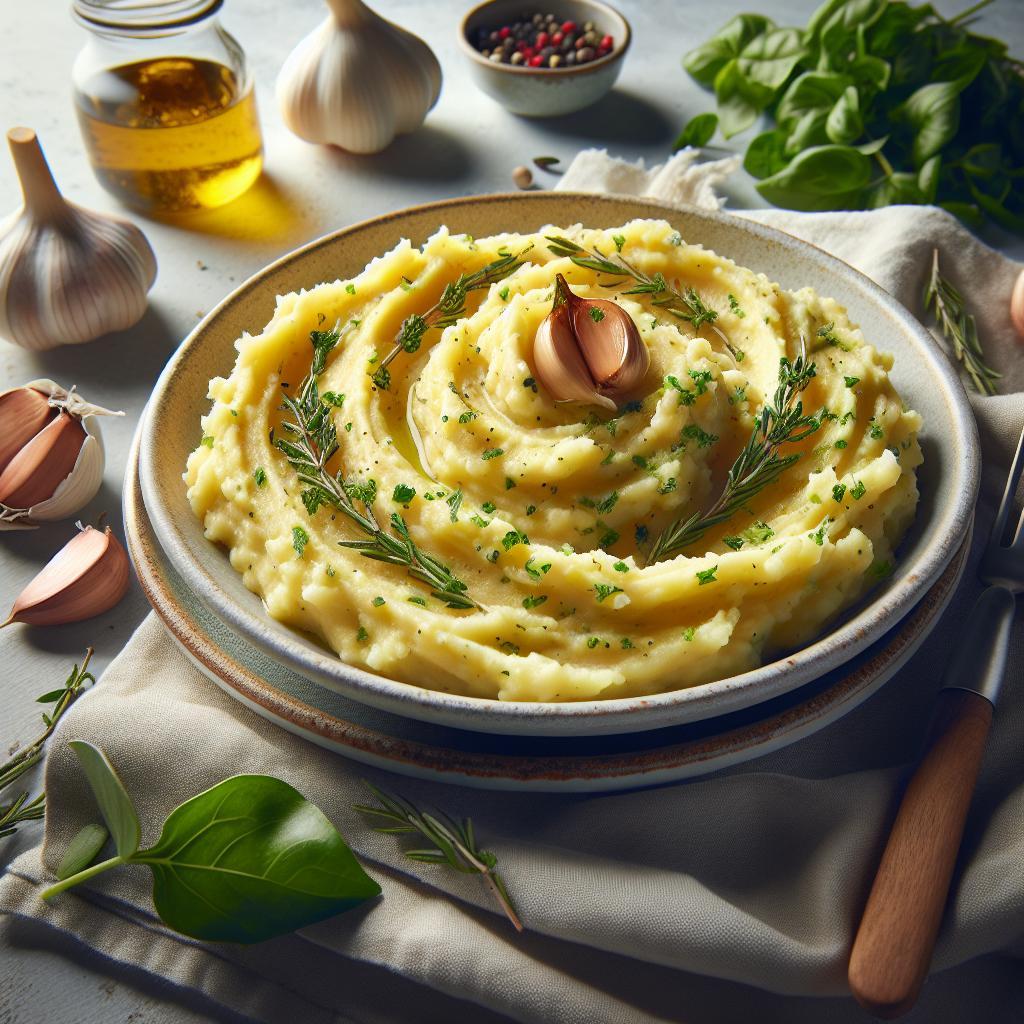

Creamy roasted garlic mashed potatoes refine a classic into a restaurant-quality side. Slow-roasted garlic adds sweet, caramelized depth while warm dairy yields a silky mouthfeel.
- Key takeaway: Roast garlic fully for sweet, spreadable cloves.
- Key takeaway: Use Yukon Gold or Russet potatoes for the best texture.
- Key takeaway: Warm dairy and fold gently to avoid gluey mash.
- Key takeaway: Reheat gently and add a splash of warm milk to refresh.
Overview and Flavor Profile
Roasted garlic transforms sharp sulfur compounds into a milder, caramel-like paste that disperses evenly through mashed potatoes. This method highlights savory umami while reducing raw bite so the garlic supports rather than overwhelms the dish.
Potato choice and handling determine mouthfeel and final structure. For background on the tuber and its varieties, see potato.
Prep and Cook Time
Timing matters. Plan time for garlic to caramelize and potatoes to reach a consistent tenderness. Rushing either step reduces flavor and compromises texture.
Typical timing runs about 90 minutes total: 35–45 minutes for roasting garlic, 20–25 minutes for boiling potatoes, and additional minutes for drying and gentle mashing. Prepare mise en place so each stage flows without delays.
Yield & Difficulty
This recipe yields roughly 6 generous servings, enough for a family dinner or as part of a holiday spread. Adjust amounts linearly for larger groups while keeping ratios of fat to starch stable.
Skill level rates as easy to medium. You need basic knife and stovetop skills plus attention to moisture control to avoid an overworked, gluey texture.
Ingredients
Use quality staples and keep dairy warm for best integration. Below is a balanced ratio designed to produce a creamy, flavorful mash without excess water or fat.
- 3 heads garlic, whole
- 2 tablespoons olive oil
- 3 lb Yukon Gold or Russet potatoes, peeled and cubed
- 1 cup whole milk, warmed
- 4 tablespoons unsalted butter, cut into cubes
- Salt to taste (start with about 1½ teaspoons)
- Freshly ground black pepper, to taste
- Fresh chives or parsley for garnish (optional)
Ingredient notes
Yukon Golds provide a naturally buttery profile and a creamier texture, while Russets yield a lighter, fluffier mash. Choose based on the mouthfeel you prefer and test small batches if unsure.
If you need a dairy-free option, choose an unsweetened neutral oat milk and a firm plant-based spread with similar fat content. Maintain warm liquid temperatures to ensure smooth integration.
Instructions
Follow the steps in order to control moisture and extract the best flavor from roasted garlic. Each stage prioritizes starch management and even heat so you retain a light, airy finish.
Work with hot potatoes and warm dairy; cold additions shock the starch and create clumps. Keep equipment ready: ricer or masher, fine sieve, and a saucepan for warming milk and butter.
- Roast the garlic: Preheat oven to 400°F (200°C). Trim garlic heads, drizzle with olive oil, wrap in foil, and roast 35–45 minutes until cloves are soft and golden. Squeeze cooled cloves into a bowl and mash into a paste before adding to potatoes.
- Cook potatoes: Place peeled, cubed potatoes in cold water and bring to a boil with a pinch of salt. Simmer until fork-tender, 20–25 minutes, then drain well to remove excess water.
- Warm milk and butter: Gently heat milk and butter until the butter melts; do not boil. Keeping dairy warm reduces temperature shock and helps the liquids absorb into the potato starches.
- Dry the potatoes: Return drained potatoes to the hot pot and set over low heat for 1–2 minutes while stirring to evaporate residual moisture. This brief drying step prevents a watery mash and concentrates flavor.
- Mash and combine: Use a ricer for the silkiest base or a handheld masher for more body. Fold in roasted garlic paste, then gradually add warm milk and butter until you reach desired consistency; season to taste.
- Finish and serve: Transfer to a warmed bowl and garnish with chopped chives or parsley. For a glossy finish, drizzle with browned butter or add a small knob of cold butter and let it melt through.
Let the finished dish rest for a few minutes before serving so the texture settles and the flavors meld. This short rest improves mouthfeel and allows seasoning to distribute evenly.
Tips for Success
Small technique changes yield large improvements in texture and flavor. Focus on temperature control, gentle handling, and ingredient sequencing for consistent results.
Keep the following pro tips in mind when you prepare this recipe; they address common mistakes and refinements used by experienced cooks.
- Potato selection: Use Yukon Gold or Russet for this style; avoid waxy reds that hold shape. Mixing varieties can balance body and silkiness when you want a customized mouthfeel.
- Roasting garlic: Roast heads slowly to convert sharp compounds into sweet, spreadable paste. Low, dry heat concentrates sugars and softens the cloves for a cleaner, richer flavor.
- Warm liquids: Warm milk and melted butter integrate faster and prevent chilling the mash. Add liquids gradually and stop when texture looks right.
- Texture control: Use a ricer for the silkiest finish; a masher gives more body but still works if used gently. Avoid high-speed mixers that develop excess starch.
For herb accents, reserve some chives to sprinkle right before serving; fresh herbs add a bright contrast to the rich garlic. Also, finish with acid—like a few drops of lemon juice or a dusting of finely grated cheese—to lift the overall flavor.
Serving Suggestions
These mashed potatoes pair well with roasted meats and vegetable-forward mains because the creamy base balances rich proteins and complements acidic sides. Choose robust mains like roast chicken or seared steak for a traditional pairing.
Garnish intentionally: browned butter drizzles, toasted nuts, or microgreens add texture and visual appeal. For related recipes and variations, visit internal guides on mashed potatoes and roasted garlic mashed potatoes.
Nutritional Info
Nutrition varies with portion size and ingredient choices. The estimate below reflects the recipe as written with whole milk and unsalted butter.
Per serving: about 280 kcal, 5 g protein, 38 g carbohydrates, and 9 g fat. Swap lighter dairy or plant-based options to reduce calories and saturated fat while keeping similar mouthfeel by matching fat content.
Technique Resources
Understanding starch behavior and dry-heat transformations helps you control texture reliably. For focused reading, consult resources on the potato and garlic to deepen practical knowledge.
Recommended references include general entries on garlic, the prepared dish on mashed potatoes, and cooking techniques such as roasting (cooking). These explain why each step affects final texture and flavor.
FAQ
How does roasted garlic change the flavor?
Roasting converts sharp sulfur compounds into sweeter, milder flavors that become a spreadable paste. Use roasted garlic when you want depth without the pungency of raw garlic.
Which potato type gives the best texture?
Choose Yukon Gold for a naturally creamy bite or Russet for a fluffy mash. Avoid waxy red potatoes for this style because they hold shape and can yield a gluey finish if overworked.
Can I prepare this ahead of time?
Yes. Cook and mash potatoes up to the seasoning stage, then chill. Reheat gently over low heat and add warm milk or butter to refresh texture before serving.
How do I avoid gluey mashed potatoes?
Drain thoroughly, dry briefly over low heat, and mash while hot. Add warm dairy slowly and avoid high-speed mixers that overdevelop starch; use a ricer or hand masher for control.
Can I freeze mashed potatoes made with roasted garlic?
Freeze airtight for up to 2 months. Thaw overnight in the refrigerator and reheat slowly, stirring in warm milk or butter to restore creaminess and texture.
Enjoy crafting these creamy roasted garlic mashed potatoes; the method rewards attention to small technique choices with reliably superior flavor and texture.
See also: mashed potatoes
See also: mashed potatoes