

The Chemistry Behind the Perfect Savory Macaron Delight
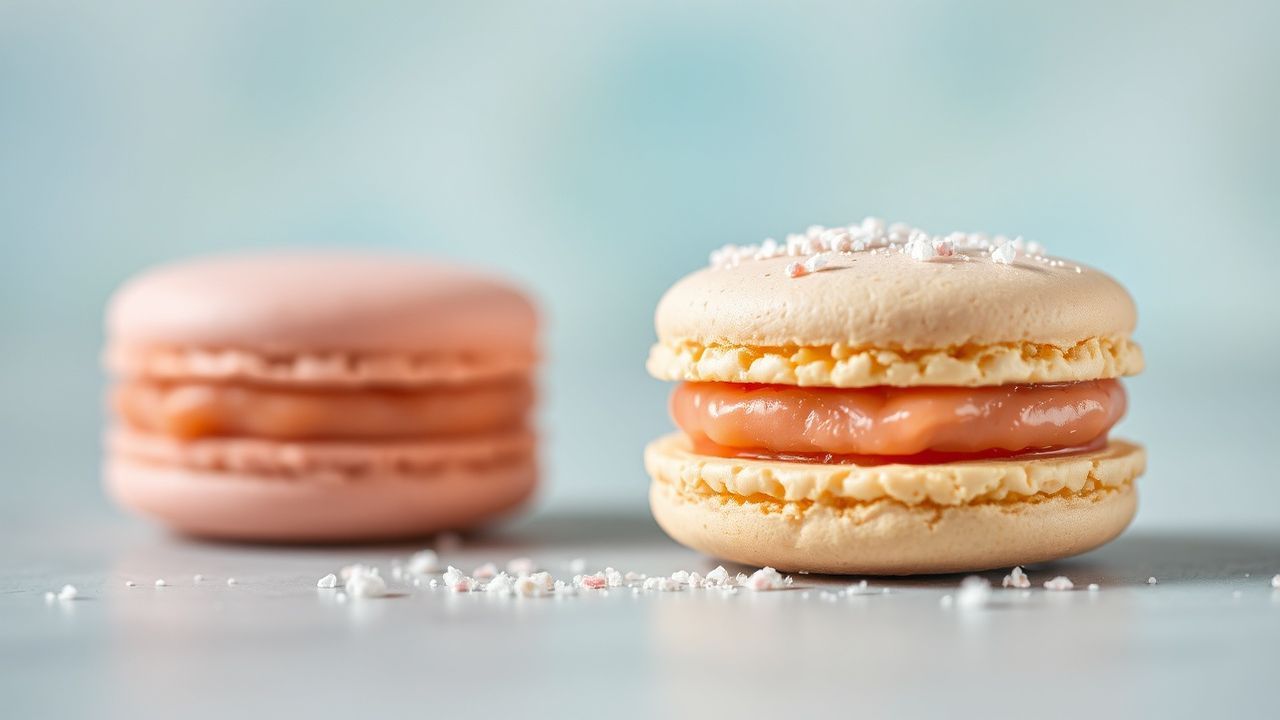
Beneath the delicate surface of a macaron lies precise chemistry that creates its crisp shell and tender interior. Understanding protein networks, moisture control, and emulsification lets bakers reliably shift a sweet template into a savory realm.
- Controlled egg-white foams produce the air structure that creates feet and chew.
- Macaronage balances aeration and viscosity for uniform shells.
- Filling moisture and pH influence shelf life and mouthfeel.
- Temperature and drying determine color, feet and top integrity.
Prep and Cook Time
Preparation: 45 minutes | Resting: 30 minutes | Baking: 15 minutes | Total: 1 hour 30 minutes.
These timings assume aged egg whites and a preheated, evenly calibrated oven. Small ovens or uneven heating require trial trays to dial in exact bake time.
Yield and Difficulty
Yield: Approximately 24 savory macarons (12 filled sandwiches). The yield depends on piping consistency and tray layout.
Difficulty: Advanced. This recipe demands measured technique and attention to each step to control protein foam and batter viscosity.
Ingredients
Ingredient quality and particle size affect shell texture. Use finely ground almond flour and fully sifted powdered sugar to avoid coarse bits that break shells.
Below is a focused ingredient list for a herb-cream cheese savory macaron:
- 100g almond flour, finely ground and sifted
- 100g powdered sugar, sifted
- 75g egg whites, aged at room temperature (about 3 days)
- 25g granulated sugar
- 10g black sesame seeds, toasted and finely ground (optional)
- 1/4 tsp cream of tartar
- ½ tsp coarse sea salt
- Filling: 100g cream cheese, softened
- 1 tbsp finely chopped chives
- 1 tbsp finely minced roasted garlic
- 1 tbsp unsalted butter, softened
- Salt and freshly ground black pepper to taste
- Optional garnish: Microgreens or edible flowers
Almond flour provides oil and protein that interact with the meringue matrix to influence shell chew. For more on the almond’s properties, see Almond.
Instructions
Follow each step precisely to maintain foam stability and batter viscosity. Small adjustments in mixing or temperature change the final texture dramatically.
Use standard pastry tools: a stand mixer, a fine sieve, a piping bag with a round tip, and parchment or silicone mats for even baking.
1. Prepare the dry mixture
Sift the almond flour and powdered sugar together. Fold in toasted ground sesame and sea salt to distribute solids evenly.
Remove any coarse pieces caught in the sieve; a fine, homogeneous powder ensures smooth shells and prevents cracking during bake.
2. Whip the egg whites
Start at medium speed until egg whites become frothy. Add cream of tartar to raise foam stability, then add granulated sugar gradually while increasing speed to high.
Whip to glossy, stiff peaks. The protein network must trap air without running; stable peaks indicate the structure needed for feet and rise. See Meringue for protein foam basics.
3. Macaronage and piping
Fold the dry mix into the meringue in three increments. Use a spatula to press and fold until the batter flows like lava: smooth and slightly runny but not liquid.
Transfer batter to a piping bag and pipe 3.5 cm rounds. Tap the tray firmly to release large air bubbles, then allow shells to rest until a skin forms on the surface; this step enables proper feet development.
4. Baking and cooling
Preheat the oven to 150°C (302°F) and bake one tray at a time for 14–16 minutes. Shells are done when they have risen feet and the tops are set without browning.
Cool shells completely on the baking sheet before peeling. Hot removal risks collapsing moisture gradients and losing the desired chewy interior.
Filling and Assembly
For savory fillings, control moisture to prevent sogginess. Cream cheese stabilized with a small amount of butter binds flavors while staying spreadable.
Combine cream cheese, butter, chives, and roasted garlic. Season to taste and whip until smooth. Pair shells by size and pipe filling to assemble sandwiches. Chill 24 hours to let flavors meld and texture settle.
Tips for Success
Egg-white age and room temperature influence foam quality. Aged whites whip faster and often yield more stable peaks; avoid using freshly separated whites straight from the fridge.
Temperature control matters: an oven thermometer will verify the setpoint and avoid browning or underdeveloped feet. Consistency in environment yields consistent results.
- Macaronage feel: Batter should flow slowly off the spatula in a continuous ribbon.
- Rest time: Let shells dry until a slight skin forms to ensure a smooth top and good feet.
- Freeze shells: Unfilled shells freeze well for up to a month; thaw completely before filling.
Emulsification ties the fat-rich almond flour to the aqueous meringue and affects texture. For a primer on emulsification science, consult Emulsification.
Control of pH and salt is subtle but impactful. Salt enhances perceived flavor but excessive ion concentration can weaken protein foams, so use salt sparingly in the shell batter.
Serving Suggestions
Serve savory macarons as an appetizer along with light, palate-cleansing accompaniments. Garnish with microgreens or a small herb leaf for visual contrast.
Pair with a crisp white or a light herbal iced tea to highlight subtle herb notes without overpowering the delicate shell. Present on a minimalist platter to emphasize shape and color.
Explore additional herb and spice pairings on our internal variation page: Savory macaron herb variations. For technical background on macaron structure, see Macaron science explained.
Nutrition
Approximate per-shell nutrition is provided for planning service and portion control. Values will vary with ingredient brands and exact portion sizes.
| Nutrition (per macaron) | Calories | Protein | Carbs | Fat |
|---|---|---|---|---|
| Calories | 85 kcal | 2 g | 7 g | 5 g |
FAQ
What key chemical changes produce macaron feet?
Feet form when trapped air expands and protein networks set at the base while the top forms a skin. The skin controls where expansion occurs, producing the characteristic frilly foot.
Temperature and batter viscosity determine how much air expansion happens before proteins solidify, so both must be consistent.
How do egg-white proteins create structure?
Whipping denatures proteins and forms a network that traps air and water, creating a foam. Stabilizers like cream of tartar help the network resist collapse during folding and baking.
Protein denaturation and recombination set during baking, which locks the foam into a crisp exterior and tender interior.
Can I make savory macarons gluten-free or vegan?
Macarons are naturally gluten-free when made with almond flour. Vegan adaptations use aquafaba (chickpea liquid) instead of egg whites, but aquafaba requires longer whipping and often additional stabilizers to match texture.
Expect slight adjustments to hydration and baking times for vegan versions; trial batches help find balance.
How long can I store assembled savory macarons?
Assembled savory macarons keep well refrigerated for up to three days if fillings are low in free moisture. For longer storage, freeze shells unfilled and fill after thawing.
Bring refrigerated macarons to room temperature before serving to restore ideal texture and release flavors.
Why do my macarons crack on top?
Cracks result from insufficient skin formation, overmixed batter, or oven temperature spikes. Allow proper resting time and avoid excessive tapping after piping.
Calibrate your oven and practice macaronage to achieve the right balance between aeration and stability.
For additional reading on the macaron itself, consult Macaron. For egg-white chemistry, see Egg white (protein).
See also: savory macaron