
By using this site, you agree to the Privacy Policy and Terms of Use.
Accept
CookOrBitCookOrBitCookOrBit
  • Home
  • About Us
  • Ingredient Science
    • Flavor & Aroma
    • Protein Chemistry
    • Sugar & Starch
    • Fats & Emulsions
  • Cooking Techniques
    • Searing & Grilling
    • Baking & Roasting
    • Boiling & Steaming
    • Low & Slow
  • Kitchen Experiments
    • DIY Ferments
    • Flavor Tests
    • Gadget Testing
    • Molecular Gastronomy
  • Food Myths
    • Searing Myth
    • 5-Second Rule
    • MSG Myths
    • Microwave Myths
  • Tools
  • More
    • Extra Picks
    • Quick & Easy
      • Breakfast Ideas
      • Desserts
      • Snacks
      • Soups
    • Global Flavors
      • Asian Street Eats
      • Latin Comforts
      • Mexican Flavors
      • Modern Mediterranean
CookOrBitCookOrBit
  • Home
  • About Us
  • Ingredient Science
  • Cooking Techniques
  • Kitchen Experiments
  • Food Myths
  • Tools
  • More
Search
  • Home
  • About Us
  • Ingredient Science
    • Flavor & Aroma
    • Protein Chemistry
    • Sugar & Starch
    • Fats & Emulsions
  • Cooking Techniques
    • Searing & Grilling
    • Baking & Roasting
    • Boiling & Steaming
    • Low & Slow
  • Kitchen Experiments
    • DIY Ferments
    • Flavor Tests
    • Gadget Testing
    • Molecular Gastronomy
  • Food Myths
    • Searing Myth
    • 5-Second Rule
    • MSG Myths
    • Microwave Myths
  • Tools
  • More
    • Extra Picks
    • Quick & Easy
    • Global Flavors
Follow US
  • Advertising Policy: 10 Practical Rules for Safe, Compliant Ads
  • Contact Us
  • Cookie Policy: Clear Guide for Site Owners
  • Copyright Notice Guide: 7 Essential Rules for Website Owners
  • Disclaimer
  • Privacy Policy
  • Terms of Service
By Fimaw.com
- Decoding Microwave Power Levels: What They Really Mean
CookOrBit > Blog > Food Myths > Microwave Myths > Decode Microwave Power Levels: 7 Expert Facts That Make Cooking Easier
Microwave Myths

Decode Microwave Power Levels: 7 Expert Facts That Make Cooking Easier

William J. Kroll
By William J. Kroll
Published: November 7, 2025
Share
SHARE

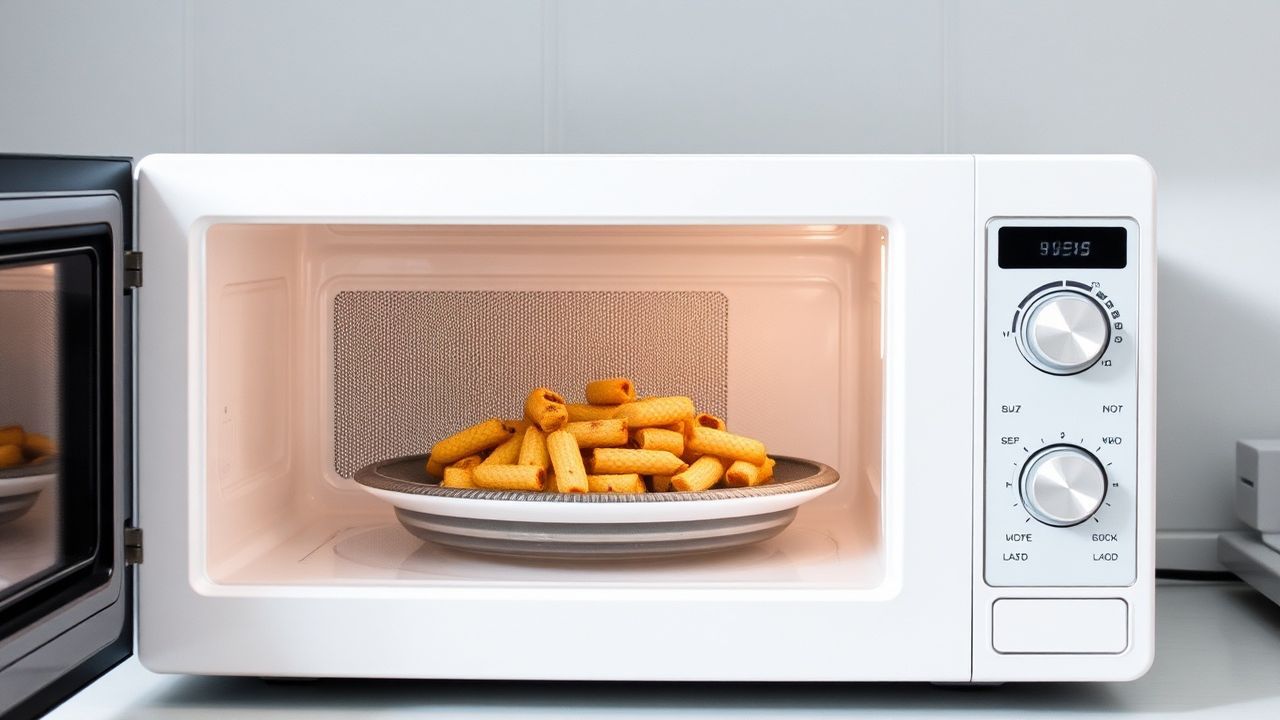
The numbers and labels on a microwave control panel control cooking tempo more than raw strength. Read them correctly, and you will cut missed spots, overcooked edges, and wasted time.

Contents
  • Understanding microwave power levels
    • What the percentage actually controls
    • Interpreting displayed wattage
  • Practical cooking guide: translate settings into results
    • Basic conversion rule
  • Energy, efficiency, and timing
    • How container choice affects heat transfer
  • Safety and maintenance
    • Simple maintenance checklist
  • Quick reference: common scenarios
  • FAQ
    • What does a microwave power level represent?
    • If my microwave says 1000W, is 50% the same as 500W?
    • How do I adjust cooking times between different wattages?
    • Why use lower power for some foods?
    • How can I verify my microwave’s true output?
  • Key takeaway 1: Power percentage sets duty cycle, not constant wattage.
  • Key takeaway 2: Wattage affects time; higher watts = shorter cook times.
  • Key takeaway 3: Use lower power for delicate tasks to preserve texture.
  • Key takeaway 4: Test and adjust times based on your model’s wattage.

Understanding microwave power levels

Most household microwaves list a maximum wattage on the label. That figure describes the peak energy the magnetron can produce during active cycles.

For background, see the Microwave oven article. Also consult the magnetron page to understand the component that creates microwaves.

- Advertisement -

What the percentage actually controls

Power settings work by pulse width modulation: the oven runs at full output and cycles off to lower the average energy. For example, a 50% setting means the magnetron spends roughly half the time on and half the time off during a cooking cycle.

Therefore, a lower percentage reduces heating intensity while preserving the magnetron’s full instantaneous output. This pulsing produces gentler heat transfer and reduces local overheating.

Interpreting displayed wattage

The label wattage (for example, 800W or 1200W) is the oven’s peak output. You convert recipes more reliably by scaling cook times by wattage ratios rather than by crude percentage guesses.

- Advertisement -

For the engineering of power, review the Watt entry. It clarifies the relation between energy, power, and practical cook time adjustments.

Practical cooking guide: translate settings into results

Use 100% for boiling liquids and rapid reheats where speed matters. For dense or layered dishes, high power can overcook edges while the center remains cold.

Set 50–70% for proteins, custards, and melting tasks to reduce toughness and curdling. Lower power produces more uniform doneness and preserves moisture in delicate foods.

- Advertisement -

Basic conversion rule

If a recipe assumes 1000W but your microwave is 800W, increase time by about 25%. Conversely, reduce time if your oven has higher wattage. Always test in short increments when adjusting.

Use small intervals, then rest the food to allow carryover cooking. That practice reduces the chance of overshoot and yields steadier temperatures.

💡 Expert Insight
Expert Insight: When defrosting, follow weight-based time guides and pause to separate pieces. Pausing prevents hot spots and speeds consistent thawing.

Energy, efficiency, and timing

Microwaves convert electrical energy into dielectric heating inside the food, which is often more efficient than stovetop methods for small portions. Efficiency depends on wattage, duty cycle, and how snugly food fits the cooking cavity.

For repeated short reheats, higher wattage saves total energy by finishing faster. However, moderate power often preserves quality and avoids wasted reheating cycles.

How container choice affects heat transfer

Use microwave-safe glass or ceramics to avoid absorption and cold spots caused by certain plastics. Uniform, shallow layers heat more evenly than tall, dense mounds.

Cover dishes with a vented lid to trap steam and speed cooking. That trick reduces energy loss and improves texture for grains and vegetables.

Safety and maintenance

Keep the cavity clean to avoid arcing and hotspots. Grease and food splatters change how microwaves reflect and can shorten component life.

Check door seals and hinges periodically for damage. A damaged seal can let energy leak and reduce the effective power delivered to food.

⚠️ Pro-Caution
Pro-Caution: Never operate a microwave when the plate, carousel, or turntable is cracked or jammed. Do not run it empty; that can damage the magnetron.

If you suspect a functional fault, stop use and consult a qualified technician. Regular inspection preserves safety and consistent power calibration.

Simple maintenance checklist

Wipe spills after each use, replace faulty light bulbs with OEM parts, and test auto-defrost cycles with a thermometer to confirm accuracy. These actions maintain reliable power performance.

Follow manufacturer instructions for cleaning and part replacement. That guidance ensures compliance with safety standards and prolongs the oven’s nominal wattage behavior.

Quick reference: common scenarios

Reheating soup: 100% power for short bursts works well, then rest to distribute heat. Reheating dense casseroles: start at medium power and extend time to avoid dried edges.

Defrosting meat: use lower power with timed pauses to break apart portions. Melting chocolate or butter: use 30–50% with 10–15 second pulses, stirring between intervals.

For more recipe ideas that match power-level strategies, see our internal guides: Quick Microwave Meals and Microwave Safety Guide. These pages give tested times for common portions and foods.

FAQ

What does a microwave power level represent?

A power level sets the oven’s duty cycle. The magnetron runs at full output in pulses, and the average on-time yields the displayed percentage.

That pulsed approach changes average heating, not the instantaneous microwave intensity during each pulse.

If my microwave says 1000W, is 50% the same as 500W?

Not exactly. The oven pulses at full power and cycles off to average 50% energy over time. So it produces bursts at 1000W rather than a continuous 500W stream.

Practical testing with short intervals gives the best results when you convert recipes between models.

How do I adjust cooking times between different wattages?

Scale time by the ratio of wattages. For example, multiply the recipe time by (recipe wattage / your wattage) to estimate a new time, then test and fine-tune in short steps.

Always allow a brief rest period for carryover heating before declaring doneness.

Why use lower power for some foods?

Lower power prevents surface overheating and protein tightening. Gentle cycling yields more even moisture retention in eggs, fish, and baked custards.

Use medium power for items that need through-heating without toughening the exterior.

How can I verify my microwave’s true output?

Use the water test: heat a measured volume of room-temperature water and time how long it takes to reach a target temperature. Compare results to published wattage charts to estimate real-world output.

Record results and adjust future cook times accordingly. That quick calibration makes recipes repeatable across different machines.

See also: microwave power
Unlock the Magic of a Food Mill: 7 Pro Uses to Transform Your Sauce Game
7-Step Hearty Turkey Soup Recipe: Ultimate Cozy Comfort
7 Science-Backed Insights: Unlocking the Protein Bar
Unfolding Flakiness: 7 Proven Steps for Perfect Puff Pastry
Foam Mastery: 7 Pro Techniques for Stable Culinary Clouds
TAGGED:andCooking timesdecodingDefrosting tipsDuty cyclemicrowavemicrowave cookingMicrowave powerMicrowave wattagepowerPower levelsthe
Share This Article
Facebook Pinterest Whatsapp Whatsapp LinkedIn Telegram Threads
What do you think?
Love0
Sad0
Happy0
Sleepy0
Angry0
Dead0
Wink0
Previous Article - Unlocking Flavor: Why Your Vegetarian Meal Feels Incomplete Unlocking Flavor: 10 Expert Ways to Make Vegetarian Meals Feel Complete
Next Article - Unlocking Power: The Role of Large Surface Areas Explained Unlock Power: 7 Proven Ways Large Surface Areas Increase Efficiency
Creamy Garlic Chicken with melted Parmesan and fresh herbs on a rustic white plate
Garlic Chicken: 7 Ultimate Brilliant Recipes to Make the Best-Ever Creamy Garlic Chicken with Parmesan & Fresh Herbs
Extra Picks
Colorful bowls of Leftover Couscous transformed into salads, fritters, and stuffed peppers.
12 Amazing Practical Leftover Couscous Ideas: Brilliant Ways to Reuse and Remix
Uncategorized
Colorful jars of spice blends beside steaming couscous with herbs and lemon
7 Ultimate spice blends That Transform Your Couscous — Amazing Best Flavor Boosts
Uncategorized
Bowls of gluten-free couscous alternatives: quinoa, millet, cauliflower, and rice
10 Amazing couscous alternatives: Best Gluten-Free Swaps for Incredible Flavor
Uncategorized

Tags

and art baked baking science baking techniques Baking tips batch cooking beef behind browning techniques butternut squash caramelization cast iron skillet chemistry chicken comfort food Cooking science cooking technique Cooking techniques Cooking tips crafting creamy creamy soup crispy culinary science fish flavor flavor chemistry food food safety Food science for garlic golden Ground turkey hearty heat high-heat cooking high protein meals how instant read thermometer Lean protein magic Maillard reaction make ahead meals make ahead soup mastering meal prep Meal prep recipes meat thermometer microwave microwave cooking moisture control one pot meals Pan searing perfect perfectly Plant based protein Probe thermometer protein denaturation Quick dinners roasted roasted squash roasted tomato soup Roasted vegetables Roasting techniques savor savory science Searing technique Searing techniques secrets slow cooking squash steak steak cooking sweet temperature control the top turkey turkey soup turkey stew ultimate umami cooking umami flavor unlock unlocking unveiling vegetable velvety weeknight dinner Weeknight dinners weeknight meals what when why with your zesty
April 2026
M T W T F S S
 12345
6789101112
13141516171819
20212223242526
27282930  
« Mar    

You Might Also Like

Golden Honey Baked Chicken Wings: Sweet & Crispy Delight
Extra Picks

7-Step Golden Honey Wings: Sweet, Crispy Perfection

William J. Kroll
William J. Kroll
February 5, 2026
- Mastering Flavor: How to Perfectly Balance Bitter Dishes
Flavor & Aroma

Mastering Bitter Dishes: 7 Proven Techniques to Perfect Balance

William J. Kroll
William J. Kroll
November 13, 2025
- Mastering the Flip: How Many Times Can You Flip a Steak?
Extra Picks

7 Expert Rules to Master Steak Flipping

William J. Kroll
William J. Kroll
September 29, 2025
- Brew On: Crafting Your Continuous Kombucha System
DIY Ferments

Brew On: 7 Expert Steps to Build a Continuous Kombucha System

William J. Kroll
William J. Kroll
October 3, 2025
Hearty Turkey and Bean Soup: A Cozy Classic Recipe
Extra Picks

7-Ingredient Hearty Turkey Soup: Cozy Bean Classic

William J. Kroll
William J. Kroll
February 12, 2026
Velvety Carrot Soup: A Creamy Delight for Every Season
Extra Picks

7 Proven Tips for Velvety Carrot Soup: Irresistible Creamy Recipe

William J. Kroll
William J. Kroll
February 4, 2026
Follow US
By Fimaw.com © All Rights Reserved.
  • Advertising Policy: 10 Practical Rules for Safe, Compliant Ads
  • Contact Us
  • Cookie Policy: Clear Guide for Site Owners
  • Copyright Notice Guide: 7 Essential Rules for Website Owners
  • Disclaimer
  • Privacy Policy
  • Terms of Service
Welcome Back!

Sign in to your account

Username or Email Address
Password

Lost your password?