
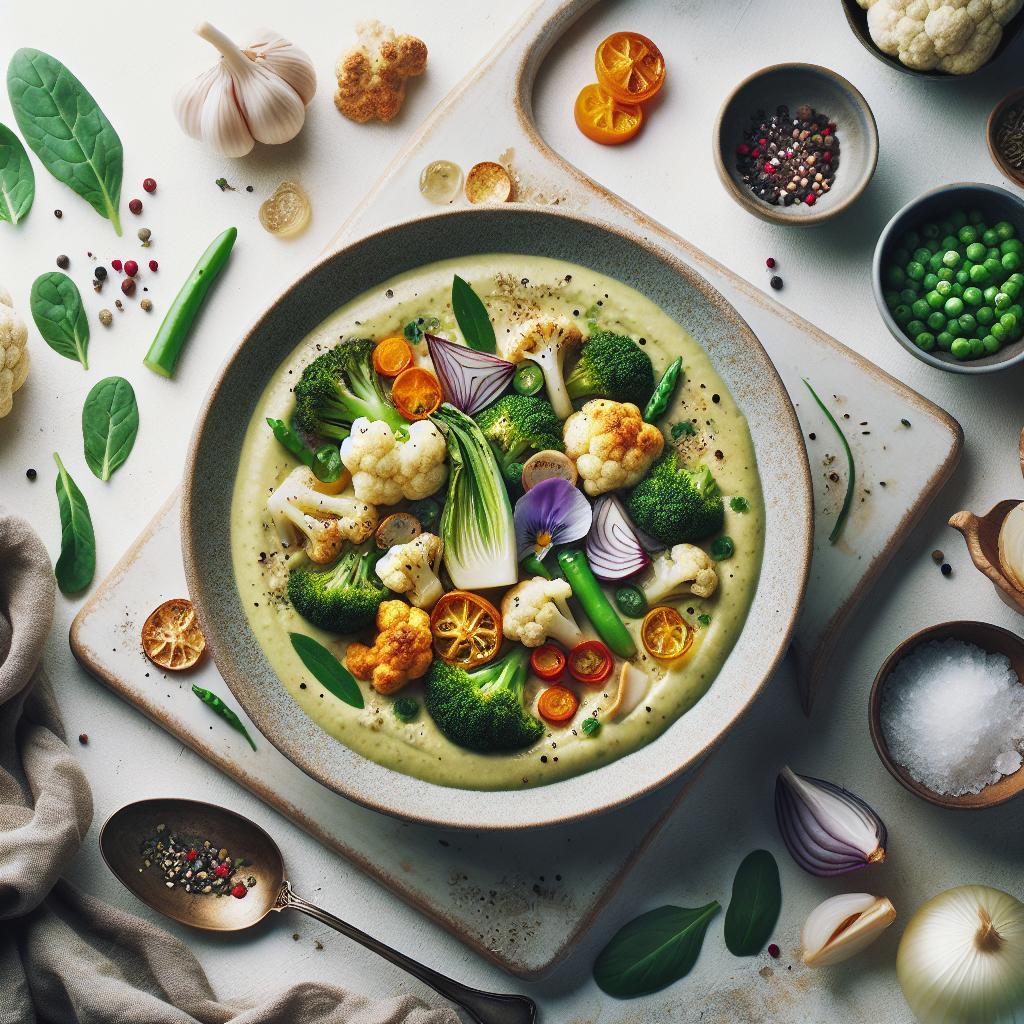

Harvest Gold: Savor the Magic of Roasted Cauliflower Soup celebrates a simple vegetable turned sumptuous through heat, seasoning, and technique. This roasted cauliflower soup delivers a silky texture and layered, nutty flavor that fits perfectly into autumn menus and weeknight dinners.
- Overview and Flavor Profile
- Prep and Cook Time
- Yield
- Difficulty Level
- Ingredients
- Instructions
- Chef’s Notes and Tips for Success
- Serving Suggestions
- Nutritional Snapshot
- Presentation Notes and Final Thoughts
- Q&A
- What makes roasted cauliflower the star of this soup?
- How does roasting compare to boiling or steaming?
- What complements roasted cauliflower well?
- Can this soup be adapted for special diets?
- How should I plate for an impressive presentation?
- FAQ
- Roast first: Caramelize florets to build base flavor.
- Blend for texture: Potatoes or a small amount of cream ensure a silky mouthfeel.
- Vegan options: Coconut or oat cream keeps richness without dairy.
- Serve smart: Toasted seeds and herb oil add crunch and vibrancy.
Overview and Flavor Profile
Roasted cauliflower develops a deep, nutty profile as sugars caramelize under high heat. That caramelization relies on chemical reactions and controlled browning to shift the vegetable from mild to savory and layered.
For background on the vegetable and its culinary uses, consult the cauliflower overview. Understanding the ingredient helps you coax the best texture and taste from each floret.
Prep and Cook Time
Plan roughly 15 minutes to prep, 35 minutes to roast, and 20 minutes to simmer and blend. This timeline yields a soup that tastes like it took longer than it did, thanks to purposeful roasting.
Timing matters: high oven heat concentrates flavor quickly; simmering finishes texture and melds aromatics. Keep a note of oven and simmer times to repeat success consistently.
- Preparation: 15 minutes
- Roasting: 35 minutes
- Simmering and Blending: 20 minutes
- Total Time: 1 hour 10 minutes
Yield
This recipe yields four hearty bowls, ideal for a family meal or two meals for two. Adjust portioning easily by scaling vegetables and broth in a 1:4 cauliflower-to-broth ratio by volume for consistent texture.
If you plan to freeze portions, leave out garnish and swirl-ins; refresh these at service for the best visual and textural results.
Serves: 4 hearty bowls
Difficulty Level
This dish sits between easy and medium: it requires basic roasting and blending skills, but rewards careful timing. Home cooks with a blender or immersion blender will find the technique straightforward.
Practice your roasting setup once: spacing florets and using a hot oven produce repeatable caramelization and predictable results.
Ingredients
Use fresh, firm cauliflower and reliable pantry spices for the most consistent outcome. Small adjustments—like using a potato for body—shift mouthfeel without masking the roasted notes.
Keep alternatives on hand: coconut cream or oat milk substitute for dairy and still provide silken texture.
- 1 large head of cauliflower, cut into florets
- 3 tablespoons olive oil, divided
- 1 medium yellow onion, finely chopped
- 2 cloves garlic, minced
- 4 cups vegetable broth, low sodium
- 1 medium potato, peeled and diced (for extra creaminess)
- 1 teaspoon smoked paprika
- 1/2 teaspoon ground cumin
- Salt and freshly ground black pepper, to taste
- Fresh thyme sprigs, for roasting and garnish
- 1/4 cup plain coconut cream or heavy cream alternative (optional)
Instructions
Read the sequence fully before you begin. Timing and order—roast then simmer—create the flavor arc that makes this soup distinctive.
Prepare equipment: preheat your oven to 425°F (220°C), line a baking sheet with parchment, and have a large pot ready for sautéing and simmering. A good immersion blender speeds finishing, but a countertop blender works well too.
- Preheat the oven to 425°F (220°C). Toss cauliflower florets in 2 tablespoons of olive oil, smoked paprika, ground cumin, salt, and pepper. Add a few fresh thyme sprigs and spread evenly on a parchment-lined baking sheet.
- Roast the cauliflower for 30–35 minutes until golden brown and caramelized, flipping halfway through for even color. Caramelized surface compounds add the soup’s signature depth.
- While the cauliflower roasts, heat the remaining 1 tablespoon olive oil in a large pot over medium heat. Sauté the onion and garlic until translucent and fragrant, about 5 minutes, stirring frequently to avoid browning too quickly.
- Add diced potato to the pot and stir for 2 minutes to coat it in the onion mixture. This step builds starch that gives body when blended.
- Once the cauliflower is roasted, transfer it to the pot along with thyme stripped from stems. Pour in vegetable broth and bring to a gentle simmer. Lower heat and simmer uncovered for 15 minutes until potatoes are tender.
- Remove thyme sprigs. Using an immersion blender or carefully in batches with a countertop blender, purée the soup until smooth. Add extra broth for a thinner consistency if needed.
- Stir in coconut cream or your chosen dairy alternative for a silky finish. Taste and adjust seasoning with salt and pepper.
- Serve hot, garnishing with a drizzle of olive oil, fresh thyme leaves, and toasted pumpkin seeds for texture contrast.
Chef’s Notes and Tips for Success
Roasting Precision: Space florets so they roast, not steam; a crowded pan produces limp, pale results. A hot oven encourages rapid surface browning and concentrates flavor.
The brown, savory notes come from the Maillard reaction, a set of chemical browning reactions that occur when proteins and sugars interact under heat. These reactions explain why high-heat roasting transforms cauliflower into something richly savory.
Customizing Creaminess: Swap coconut cream for a dairy-free option or add plain Greek yogurt at service for tang and silk. A small diced potato works as a neutral thickener that keeps the soup naturally creamy without extra fat.
Make-Ahead Magic: The soup freezes well. Cool completely, portion into airtight containers, and reheat gently to preserve texture. Add final garnishes at service for freshness.
For technique reading, see roasting (cooking), which highlights how dry heat concentrates flavor in vegetables and proteins.
Serving Suggestions
Pair the soup with rustic crusty bread to soak up the silkiness and create an inviting mouthfeel. Toasted seeds—pumpkin or sunflower—provide nutty crunch that complements the roasted profile.
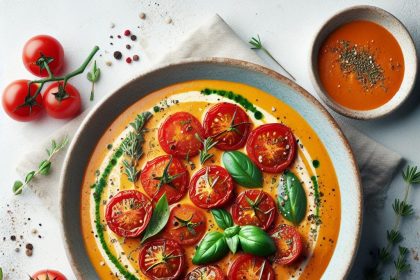
For visual contrast, drizzle a vibrant herb oil made from parsley and olive oil, and finish with freshly chopped chives or microgreens. A squeeze of lemon brightens the bowl and balances richness.
Nutritional Snapshot
This roasted cauliflower soup delivers a comforting balance of calories and nutrients because cauliflower offers fiber and micronutrients while potatoes add satiety. The numbers below reflect a typical serving prepared as written without heavy cream.
| Nutrient | Per Serving |
|---|---|
| Calories | 180 kcal |
| Protein | 6 g |
| Carbohydrates | 22 g |
| Fat | 8 g |
| Fiber | 6 g |
For herbs and seasonality, review the culinary use of thyme, a classic partner to roasted vegetables. It holds up to heat and adds an aromatic lift without overpowering.
Presentation Notes and Final Thoughts
Serve in warmed bowls to keep temperature steady through the first bite. Visual contrasts—bright oil, crunchy seeds, and green herbs—make the bowl feel rich and composed.
Keep a record of the exact oven temperature and time you used; small ovens vary and a brief note will reproduce consistent harvest-gold results in future batches.

Q&A
Below are focused answers to common practical questions about technique and adaptation. Each short response clarifies a step or choice to help you cook with confidence.
The answers draw on culinary technique and ingredient behavior rather than opinion, ensuring reliable guidance.
What makes roasted cauliflower the star of this soup?
Roasting concentrates sugars and creates Maillard browning on the florets, which produces savory, nutty notes. Those compounds provide a rich base that blending turns into an aromatic, flavorful soup.
How does roasting compare to boiling or steaming?
Boiling and steaming preserve a mild, vegetal profile and more water-soluble nutrients, while roasting changes flavor chemistry to produce depth and caramel notes. Use roasting when you want a more complex, savory soup.
What complements roasted cauliflower well?
Sweet onion, garlic, thyme, smoked paprika, and a starch like potato all enhance the soup’s body and balance the roasted flavors. Toasted seeds or crisp herbs add textural contrast at service.
Can this soup be adapted for special diets?
Yes. Use vegetable broth and coconut or oat cream for a vegan version. For lower sodium, use low-salt broth and adjust seasoning at the end. The technique remains the same across adaptations.
How should I plate for an impressive presentation?
Warmed bowls, a swirl of herb oil or cream, and a scattering of toasted seeds or microgreens create a balanced visual and textural finish. Serve with crusty bread for a rustic accompaniment.
FAQ
This short FAQ answers practical follow-ups that home cooks ask most often. Each answer stays focused and action-oriented to support reliable results.
How do I prevent my cauliflower from steaming instead of roasting?
Space florets on a rimmed baking sheet so air circulates; use a hot oven (425°F/220°C) and avoid overcrowding. Dry florets with a towel before oiling to reduce surface moisture.
Is it better to use an immersion blender or a counter blender?
Use an immersion blender for convenience and fewer transfers; use a countertop blender for ultra-smooth texture. When using a countertop blender, vent the lid slightly and blend in batches for safety.
Can I roast other vegetables with the cauliflower?
Yes. Root vegetables like carrots and parsnips roast well alongside cauliflower, but adjust roasting time for size and density. Add delicate items later to avoid overcooking.
How long does the soup keep in the fridge or freezer?
Refrigerate for up to 4 days in an airtight container. Freeze up to 3 months; thaw overnight in the refrigerator and reheat gently to avoid breaking emulsions in dairy-swirl finishes.
What small tweaks lift the flavor quickly?
A squeeze of lemon at service brightens the bowl; a pinch of smoked paprika or a light sprinkle of toasted seeds adds immediate depth and texture contrast.
For a concise reference on the broader category, consider the soup overview which situates roasted cauliflower soup within global soup traditions and techniques.
See also: cauliflower soup