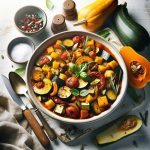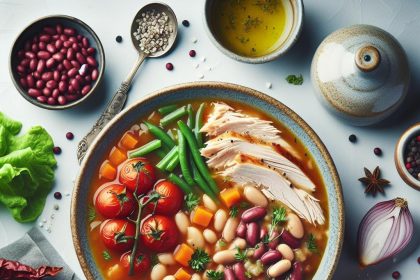

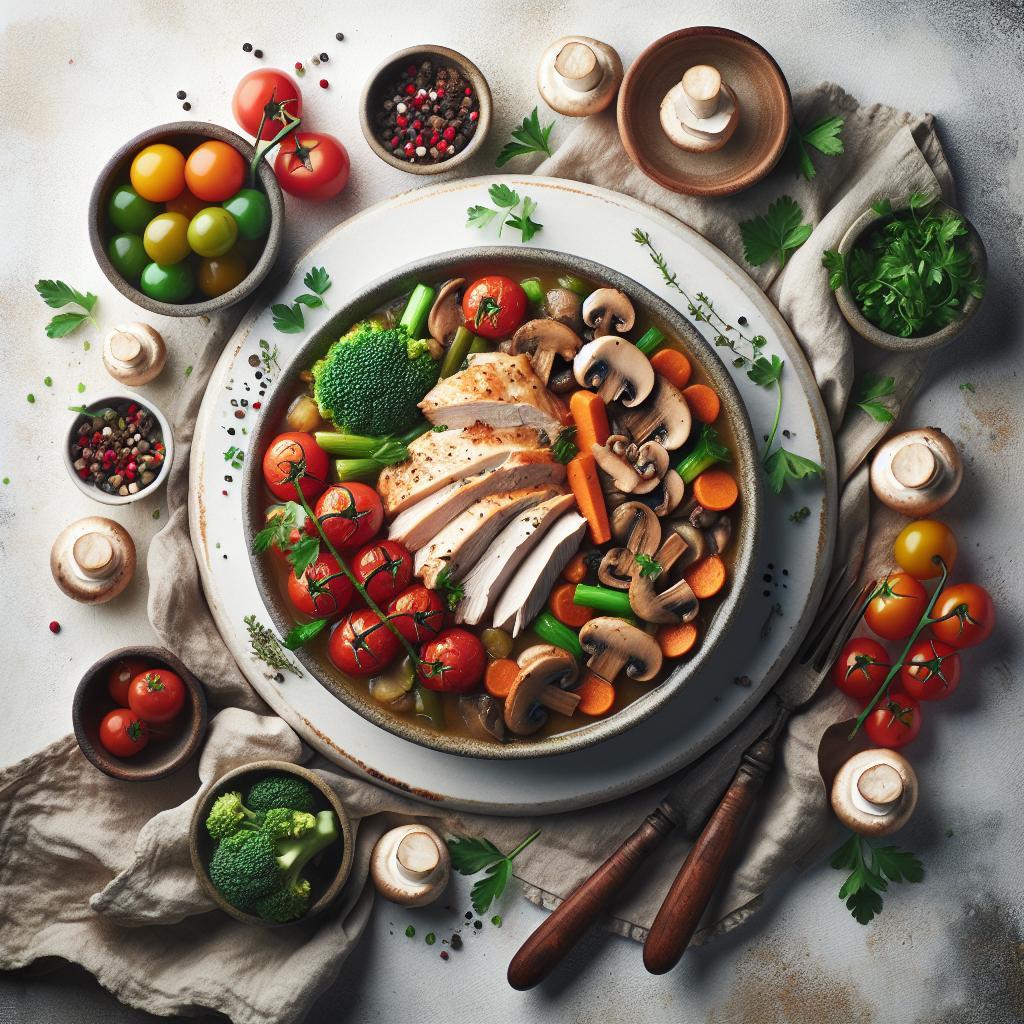

turkey stew answers the call when cold weather demands warm, reliable comfort food. This turkey stew blends dark meat, brown mushrooms, and intentional seasoning to produce a rich, silky broth with layered savory notes.
- Choosing the Perfect Mushrooms and Turkey Cuts for Hearty Turkey Stew
- Crafting the Ultimate Turkey Stew with Fresh Herbs and Spices
- Prep and Cook Time for Turkey Stew
- Yield and Difficulty of This Turkey Stew
- Ingredients
- Instructions for Turkey Stew
- Chef’s Tips for Turkey Stew Success
- Serving Suggestions and Pairings to Elevate Your Turkey Stew
- Nutrition Snapshot
- FAQ
- Can I use leftover cooked turkey for this stew?
- Which mushrooms give the deepest flavor?
- Is this stew freezer-friendly?
- How do I make the stew gluten-free?
- What wine pairs well with turkey and mushroom stew?
- Closing Notes
- At a glance: Use dark turkey cuts for moisture and collagen that enrich the broth.
- Flavor boost: Brown meat and mushrooms thoroughly to build depth before simmering.
- Make-ahead friendly: The turkey stew improves after resting, which makes it ideal for meal prep.
- Pairings: Serve with crusty bread or creamy mashed potatoes to soak up the sauce.
Choosing the Perfect Mushrooms and Turkey Cuts for Hearty Turkey Stew
Ingredient choice determines the final texture and depth of this turkey stew. Select components that tolerate long, slow cooking and yield concentrated flavor.
Choose mushrooms that keep structure and turkey cuts that supply collagen for mouthfeel. For more detail on fungi types, consult mushroom profiles to match texture and taste.
Mushroom selection
Cremini (baby bella) and shiitake work well because they offer meaty texture and umami weight in the broth. Mixing varieties creates layered texture and avoids a single-note profile.
Smaller, firmer caps keep their shape during long simmers, so lean toward those if you want distinct mushroom pieces in the finished turkey stew.
Best turkey cuts
Dark meat—thighs or drumsticks—contains connective tissue that converts to gelatin with gentle heat. That gelatin gives the turkey stew body and a coating mouthfeel that breast meat cannot provide without extra fat or collagen.
Avoid cooking lean breast for the full simmer; add it near the end if you prefer white meat. For broader context on bird cuts, see turkey anatomy and common cuts.
Crafting the Ultimate Turkey Stew with Fresh Herbs and Spices
Layer flavors in defined steps: brown, deglaze, and simmer. Each of these actions concentrates taste and prevents a thin, diluted sauce.
Use herbs that hold well under slow heat and spices that complement mushroom umami. Learn about rosemary’s aromatic profile at rosemary characteristics before deciding how much to add.
Browning and aromatics
Sear turkey skin-side down until you get deep color; that Maillard crust supplies essential fond for the stew. Then sauté vegetables and mushrooms in the same pot to capture those browned flavors.
Add garlic, shallots, and a spoon of tomato paste to lift the savory base and give subtle sweetness. These aromatics unify the turkey stew and balance the earthiness of the mushrooms.
Deglazing and simmering
Deglaze with stock to dissolve browned bits and fold them into the liquid. Use turkey stock when available to reinforce the primary protein note in this turkey stew.
Then simmer gently until connective tissue softens and the liquid concentrates. Maintain a low simmer rather than a boil to keep meat tender and the broth clear.
Prep and Cook Time for Turkey Stew
Preparation: Plan 20 minutes for trimming, seasoning, and chopping. Good mise en place reduces stress during cooking and improves timing control.
Cooking: Expect roughly 1 hour 15 minutes to 1 hour 30 minutes of low simmering for tender dark meat. Actual time varies with cut size and pot conduction.
Timing strategy
Start hot to brown, then drop to low to let collagen convert slowly. This two-stage approach protects texture and yields a richer mouthfeel in the turkey stew.
If you plan to reheat, undercook slightly and allow residual heat to finish the texture. This preserves moisture and keeps the turkey meat from drying out when reheated.
Yield and Difficulty of This Turkey Stew
Yield: The recipe serves six generous portions when plated as a main. Serve over a starch for extended portions or family-style bowls.
Difficulty: Medium. The technique centers on timing, heat control, and staging rather than advanced skills, so experienced home cooks will succeed consistently.
Ingredients
Measure and assemble ingredients before you heat the pot to keep the cook phase focused. Consistent ingredient quality shortens cook time and increases repeatability of results.
Below is a practical list tailored for a classic turkey stew prepared with mushrooms and herbs.
- 2 lbs turkey thighs (bone-in, skin-on)
- 12 oz cremini mushrooms, cleaned and quartered
- 4 cups turkey or mushroom broth
- 1 large onion, finely diced
- 3 cloves garlic, minced
- 2 medium carrots, peeled and sliced
- 2 tbsp olive oil
- 2 sprigs fresh rosemary
- 3 sprigs fresh thyme
- 2 bay leaves
- 1 tsp smoked paprika
- Salt and black pepper to taste
- 1 tbsp tomato paste
- 1/4 cup chopped fresh parsley for garnish
Instructions for Turkey Stew
Work methodically through the steps to build flavor while protecting texture. Keep the pot on medium-high for browning, then reduce to low for the simmer stage.
Check seasoning after reduction rather than during high-heat stages; reductions concentrate salt and aromatics.
- Prepare: Pat turkey dry and season with salt and pepper. Dry surfaces brown better and create a more flavorful fond.
- Brown turkey: Heat oil in a heavy pot and brown thighs skin-side down until deep color forms. Transfer the meat and reserve the fond.
- Sauté vegetables: Add onion and carrots; cook until softened and fragrant. Stir to prevent sticking and pick up browned bits.
- Add mushrooms and garlic: Cook mushrooms until they lose moisture and begin to caramelize. Add garlic last to avoid bitter overcooking.
- Incorporate herbs and seasoning: Stir in tomato paste, rosemary, thyme, bay leaves, and smoked paprika. Toast briefly to release essential oils.
- Deglaze: Pour in broth and scrape the pot to dissolve browned bits into the liquid. Return turkey to the pot, submerged in liquid.
- Simmer gently: Bring to a low simmer, cover, and cook 1 hour 15 minutes until the meat is fork-tender. Avoid high heat to keep the meat juicy.
- Finish: Remove herb stems and bay leaves; check seasoning and adjust salt and pepper. Rest briefly off the heat to allow flavors to settle.
- Serve: Ladle into bowls and garnish with parsley. Serve over mashed potatoes, polenta, or with crusty bread.
Finishing touches
For a thicker sauce, whisk 1 tablespoon cornstarch into cold water and stir in during the last 10 minutes. The cornstarch slurry yields a glossy finish without overcooking the meat.
Alternatively, reduce the stew uncovered for 10–15 minutes on medium-low to concentrate flavors naturally. Choose reduction for a more intense profile or slurry for speed and control.
Chef’s Tips for Turkey Stew Success
Small technique choices create large flavor gains in long-cooked dishes. Control moisture, heat, and browning to ensure a balanced final dish.
Use low-sodium stock when possible to avoid over-salting after reduction. Taste and adjust at the end rather than during the high-heat stages.
Practical shortcuts
Use bone-in thighs for both flavor and economy; bones improve the stock and add depth. If pressed for time, braise in a heavy Dutch oven to speed heat distribution.
Leftover roasted turkey integrates well—add it at the end to warm through without drying. This approach preserves texture while saving active cook time.
Serving Suggestions and Pairings to Elevate Your Turkey Stew
Pair the turkey stew with neutral starches that soak up the sauce and add contrast. Crusty bread, mashed potatoes, or polenta complement the rich broth and mushrooms.
Add a bright salad with acid to cut richness; simple arugula dressed with lemon vinaigrette balances the savory elements. For wine, choose a medium-bodied red like Pinot Noir to match the earthiness.
Nutrition Snapshot
Estimate per-serving values to guide portioning and dietary planning. Values vary with exact cuts, broth choice, and serving method.
Approximate per serving: 380 kcal, 45 g protein, 14 g carbohydrates, 12 g fat. Use these figures as a starting point for menu planning.
FAQ
Can I use leftover cooked turkey for this stew?
Yes. Fold diced leftover turkey in during the last 10 minutes of simmering to warm through without drying. This approach provides convenience while preserving texture in the turkey stew.
Which mushrooms give the deepest flavor?
Shiitake and cremini provide pronounced umami and meatiness that stand up to long cooking. Read about the science of umami at umami taste to understand why these mushrooms boost savory depth.
Is this stew freezer-friendly?
Yes. Cool completely and store in airtight containers before freezing. Reheat gently from thawed to maintain texture and avoid overcooking the turkey meat.
How do I make the stew gluten-free?
The base recipe is naturally gluten-free if you use certified gluten-free broth and thickeners. Verify labels on processed ingredients to ensure full compliance.
What wine pairs well with turkey and mushroom stew?
Choose a medium-bodied red such as Pinot Noir or a fuller-bodied white like an oaked Chardonnay. The wine should complement the earthiness without overpowering the turkey stew’s subtle herb notes.
Closing Notes
This turkey stew emphasizes technique: brown thoroughly, simmer gently, and season after reduction. Those steps create a reliable, crowd-pleasing dish suited for family meals and make-ahead plans.
Apply braising and stew principles consistently for predictable results; see an overview of stew methods at stew preparation for background on long, low cooking techniques.
See also: turkey stew recipes and braising techniques
See also: turkey stew