
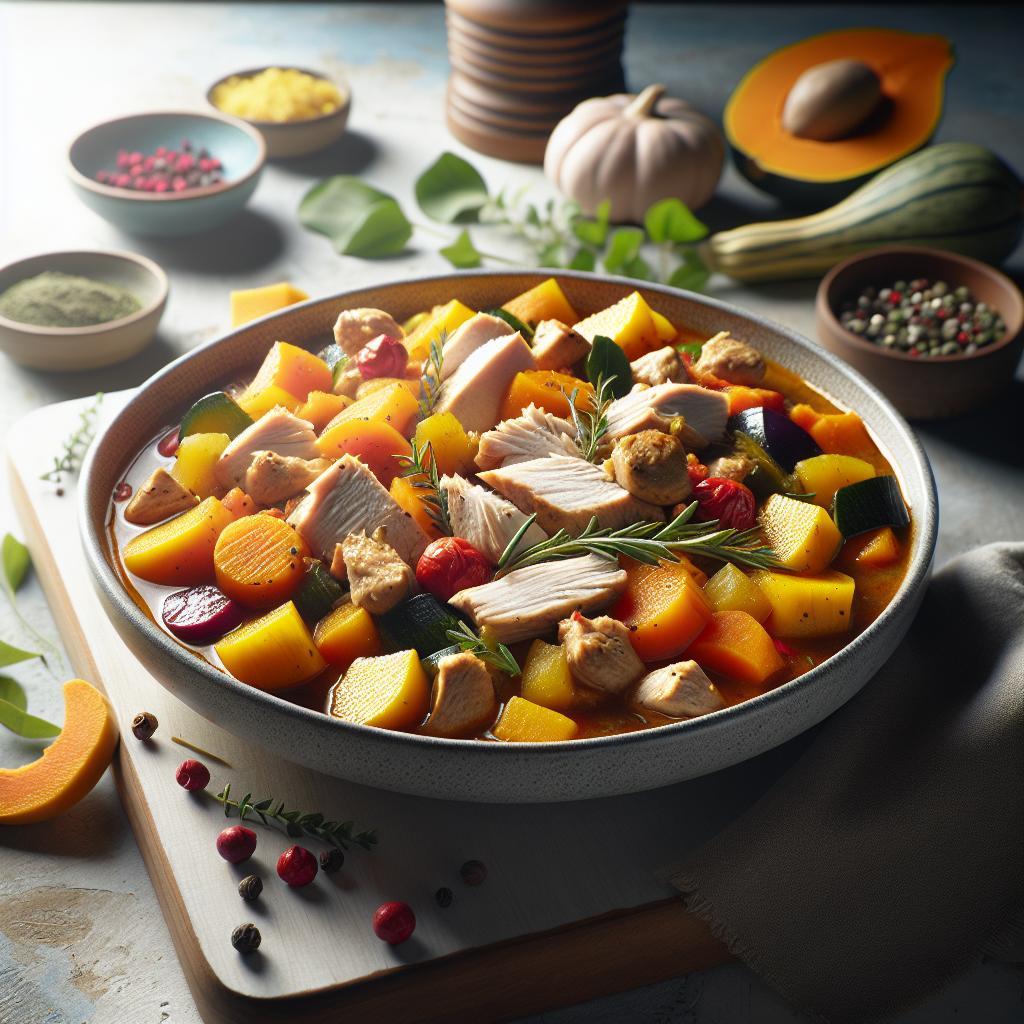

Hearty Turkey Stew with Squash: 7 Steps
Turkey stew pairs lean turkey with winter squash to deliver warming flavor and a nutrient-dense meal. The method below focuses on controlled searing, layered spice, and a simple simmer to produce consistent, family-ready results.
- Prep and Cook Time for Turkey Stew
- Yield
- Difficulty Level
- Ingredients for Turkey Stew
- Instructions for Turkey Stew
- Tips for Success
- Serving Suggestions and Storage Hacks for Turkey Stew
- Nutrition Snapshot
- Ingredient Notes and Flavor Science
- FAQ
- What makes this stew particularly comforting?
- Can I use leftover roast turkey?
- Which squashes substitute best for butternut?
- How do I thicken the stew without flour?
- Is this recipe suitable for special diets?
- Closing Remarks
- Balanced nutrition: Lean protein from turkey and beta-carotene from squash create a filling, vitamin-rich dish.
- Make-ahead friendly: Flavor improves after refrigeration, which helps when planning weeknight meals.
- Flexible technique: Sear, simmer, and adjust spices to suit texture and heat preferences.
Prep and Cook Time for Turkey Stew
Preparation: 15 minutes. Focus on consistent knife work so pieces cook evenly and finish at the same time.
Cooking: 1 hour 10 minutes. Most of that time is passive simmering, which builds depth while keeping hands-off time minimal.
Yield
Serves: 6 hearty portions. This yield fits a standard family dinner and produces useful leftovers for lunches.
Scale easily: halve for two to three people or double for batch freezing. Use shallow containers to speed refrigeration and preserve texture when reheating.
Difficulty Level
Skill required: Medium. You should be comfortable searing protein and monitoring a gentle simmer for even doneness.
Equipment needs stay simple: a heavy-bottomed pot or Dutch oven and a wooden spoon are sufficient to avoid hotspots and control reduction.
Ingredients for Turkey Stew
Below are core ingredients for a 6-serving batch. Quantities deliver robust flavor while keeping added fat and sodium moderate.
- 2 lbs turkey breast, cut into 1-inch cubes
- 2 cups butternut squash, peeled and cubed (or other winter squash)
- 1 large carrot, sliced diagonally
- 1 medium onion, finely chopped
- 3 cloves garlic, minced
- 4 cups low-sodium chicken broth
- 1 cup diced tomatoes, drained
- 2 tablespoons olive oil
- 1 teaspoon smoked paprika
- 1 teaspoon ground cumin
- 1/2 teaspoon ground cinnamon
- 2 sprigs fresh rosemary
- 3 sprigs fresh thyme
- 1 bay leaf
- Salt and freshly ground black pepper, to taste
- 1/4 cup chopped fresh parsley for garnish
- Optional: 1/2 tsp crushed red pepper flakes for gentle heat
Choose butternut or another winter squash to tune mouthfeel. For background on common winter squashes consult winter squash.
Instructions for Turkey Stew
Follow these seven steps for a reliably balanced stew. Maintain medium-high heat for searing and lower heat for a gentle simmer to avoid toughening the turkey.
Prep first: measure spices, chop vegetables, and have herbs bundled for easy removal. Mise en place shortens active time and reduces mistakes while cooking.
- Heat the oil: Warm 2 tablespoons olive oil in a large heavy pot over medium-high. Add turkey cubes in a single layer and sear until golden, about 5–7 minutes; transfer to a plate.
- Sauté aromatics: Add the chopped onion to the same pot and cook until translucent, about 4 minutes. Stir in minced garlic and cook 1 minute to awaken aroma without burning.
- Bloom spices: Sprinkle smoked paprika, cumin, and cinnamon over the aromatics and toast 30 seconds. Toasting releases essential oils and deepens each spice’s profile.
- Add vegetables and turkey: Return browned turkey to the pot and add cubed squash, carrots, and tomatoes. Stir to coat ingredients in the spiced fat.
- Add liquid and herbs: Pour in the chicken broth and add rosemary, thyme, and bay leaf. Season lightly with salt and pepper, then bring to a gentle boil before reducing to a low simmer.
- Simmer: Cover and cook 45–50 minutes until turkey is tender and squash yields to a fork. Stir occasionally to prevent sticking and to monitor texture.
- Finish: Remove herb sprigs and the bay leaf. Taste and adjust salt and pepper. For a thicker stew, simmer uncovered for the last 10 minutes to reduce liquid naturally.
Use a skimming spoon if foam appears during the first boil; skimming clarifies the broth for a cleaner finish. Serve hot and garnish with chopped parsley and a fresh grind of black pepper.
Tips for Success
Small technique choices change the stew’s final texture. For example, brown turkey in two batches to avoid crowding and to achieve consistent color and caramelization.
Control salt early and finish by tasting. Broth and canned tomatoes vary in salt content, so final seasoning ensures balance without oversalting.
Allow a rest period when possible: refrigerating overnight deepens flavor as oils and acids meld. Reheat gently to preserve turkey tenderness and maintain squash texture.
Serving Suggestions and Storage Hacks for Turkey Stew
Serve the stew in wide bowls to showcase the vegetable and turkey pieces. Add a dollop of plain Greek yogurt or a scattering of toasted nuts for a satisfying textural contrast.
For storage, cool completely before sealing in airtight containers. Refrigerate up to 4 days or freeze portions for up to 3 months and thaw overnight in the refrigerator before reheating.
If reheated stew looks dry, loosen with a splash of broth. Avoid high heat during reheating; gentle warming preserves turkey’s tender texture.
Nutrition Snapshot
The estimate below provides a practical view for portion planning. Values assume turkey breast and minimal added fat.
Per serving (approx): 320 kcal, 38 g protein, 18 g carbohydrates, 8 g fat. Adjust when swapping to darker turkey meat or adding oil.
| Nutrient | Per Serving |
|---|---|
| Calories | 320 kcal |
| Protein | 38 g |
| Carbohydrates | 18 g |
| Fat | 8 g |
Ingredient Notes and Flavor Science
Smoked paprika adds smoky depth without extra fat and pairs well with squash. For background on the spice, see paprika.
Cumin contributes warm, earthy notes and responds well to light toasting in fat. Learn more about cumin at cumin.
Rosemary offers pine-like top notes while thyme lends savory complexity; both stand up to long simmering. Refer to rosemary for botanical details and common culinary uses.
Turkey supplies lean protein and a mild base flavor that lets herbs and squash dominate. For species context, consult turkey (bird).
FAQ
What makes this stew particularly comforting?
Comfort comes from the texture contrast between soft squash and tender turkey, plus warm spices that create a familiar aroma. A low, steady simmer blends flavors and produces the desired mouthfeel.
Can I use leftover roast turkey?
Yes, leftover roast turkey shortens cooking time and works well. Add it near the end and simmer only until heated through to avoid drying the meat.
Which squashes substitute best for butternut?
Kabocha and acorn squash both substitute effectively. Kabocha yields creamier texture, while acorn produces firmer chunks; adjust cook time by density.
How do I thicken the stew without flour?
Reduce the liquid by simmering uncovered for 10–15 minutes. Alternatively, mash a portion of the cooked squash into the broth to thicken naturally without added starch.
Is this recipe suitable for special diets?
The stew is naturally gluten-free when served without wheat-based sides. Use low-sodium broth for heart-conscious diets and swap ingredients to accommodate paleo or Whole30 needs.
Closing Remarks
This turkey stew with squash delivers on nutrition, flavor layering, and straightforward technique. It adapts easily to seasonal produce and scales cleanly for batch cooking.
Try the recipe once, then vary squash types, herb bundles, or spice levels to fit personal taste. Bookmark the method and use internal resources below to explore similar stew recipes and variations.
See also: Turkey stew and turkey-squash recipes
See also: turkey stew