
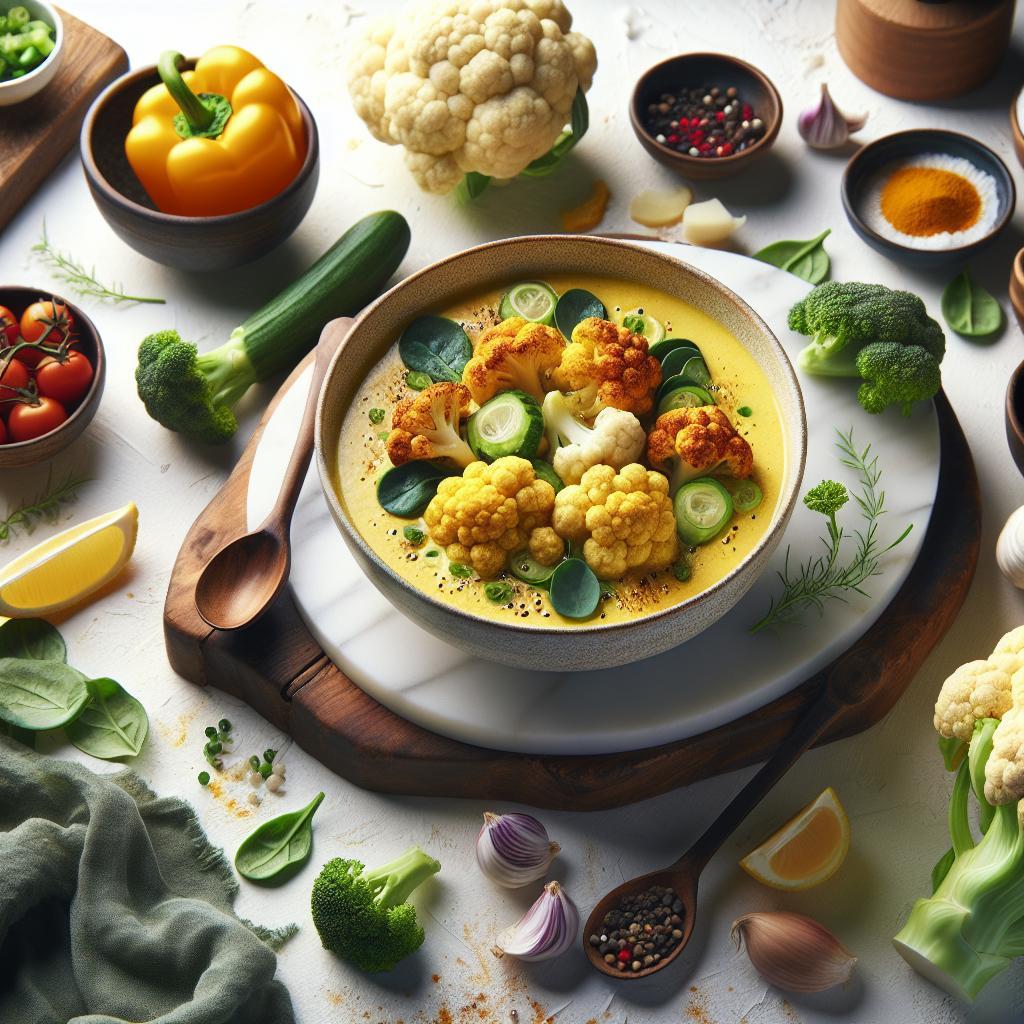

Golden Glow: The Secret to Perfect Roasted Cauliflower Soup
Roasting converts cauliflower into a richly flavored, golden-hued base that anchors an elegant, velvety soup. As an experienced chef, I rely on precise roast techniques to extract natural sweetness, resulting in a bowl that feels both simple and sophisticated.
- Roast at high heat for pronounced caramelization.
- Use starchy potato as a natural thickener for silky texture.
- Layer aromatics for depth: onion, garlic, and a smoky spice.
- Finish with quality olive oil to preserve flavor and mouthfeel.
Why Roasting Matters
Roasting triggers browning reactions that develop sweet and savory compounds in cauliflower. The Maillard reaction and mild caramelization produce the soup’s signature golden glow and a complex aroma profile.
Cauliflower’s cellular structure collapses as water evaporates, concentrating flavor and improving texture when pureed. For background on the vegetable, consult cauliflower for botanical and culinary context.
Prep and Cook Time
Preparation: 15 minutes. Roasting: 35 minutes. Keep steps concise and efficient to maximize tempering and flavor development.
Simmering and Blending: 20 minutes. Total time: Approximately 1 hour 10 minutes. Timing ensures the potato fully softens and flavors integrate.
Yield
Serves 4 generous bowls, suitable for a light lunch or dinner starter. Portion control helps maintain serving temperature and texture.
Adjust yield by scaling cauliflower and broth proportionally; a 25% increase in florets requires roughly 25% more liquid to preserve consistency. Always taste as you go.
Difficulty Level
Easy to Medium — this recipe fits home cooks who want elevated results without complex technique. The key skill is patient roasting and mindful seasoning.
Tools you need are minimal: a heavy roasting tray, a heavy-bottomed pot, and an immersion or high-speed blender. These yield consistent, professional results.
Ingredients
1 large head cauliflower, cut into bite-sized florets.
3 tbsp extra virgin olive oil, divided; 1 medium yellow onion, finely chopped; 3 cloves garlic, minced; 1 tsp ground cumin; 1/2 tsp smoked paprika.
4 cups low-sodium vegetable broth; 1 large russet potato, peeled and diced; salt and freshly ground black pepper to taste; 1/4 cup fresh parsley, chopped.
Optional: pinch of cayenne for heat, or silken tofu/soaked cashews for added creaminess. For reference on olive oil varieties, see olive oil.
Instructions
1. Preheat oven to 425°F (220°C). Toss cauliflower florets with 2 tbsp olive oil and a pinch of salt. Spread in a single layer on a large baking sheet to ensure even browning.
2. Roast the cauliflower for 30–35 minutes, turning halfway, until the edges show deep bronze and a caramelized surface appears. This step creates the concentrated flavor that defines the soup.
Roasting: Technical Notes
Use hot, dry heat to promote Maillard browning rather than steaming; do not crowd the pan. If florets steam, they will soften without developing the desired golden crust.
For deeper roast flavor, add a light dusting of smoked paprika or turmeric before roasting. Monitor closely in the final 5 minutes to avoid char that would introduce bitterness.
3. Sauté aromatics: In a heavy-bottomed pot, heat remaining olive oil over medium heat. Sweat the onion until translucent and lightly golden, about 6–8 minutes, then add garlic and spices for 30–60 seconds to bloom the oils.
4. Combine and simmer: Add diced potato, roasted cauliflower, and vegetable broth. Season and bring to a gentle simmer for 15–20 minutes until the potato collapses and flavors marry.
5. Purée to finish: Stir in fresh parsley, then puree until smooth. Use an immersion blender or transfer in batches to a high-speed blender, combining slowly to preserve texture.
Blending Tips
For ultra-silky texture, pass the purée through a fine-mesh sieve, pressing gently with a spatula. This removes any fibrous bits and yields a restaurant-quality mouthfeel.
For added creaminess without dairy, blend in silken tofu or soaked cashews after pureeing. Add a small amount of warm broth to adjust viscosity.
Tips for Success
Master the roast: Patience at the roasting stage rewards you with concentrated, sweet flavors that no amount of seasoning can recreate. High heat is the priority.
Swap the starch: Russet potato provides body and a neutral taste. For variation, try celeriac or parsnip to introduce subtle, earthy notes while maintaining thickness.
Boost aromatics: Use shallots for a gentler base, or add a splash of dry white wine during sauté to lift the flavors. Fresh thyme and lemon zest work well as final brighteners.
Make ahead: The soup improves in flavor after a day as spices meld. Reheat gently over low heat, thinning with broth if it becomes too thick.
Serving Suggestions
Serve in deep, white bowls to showcase the golden color. Finish with a drizzle of extra virgin olive oil and a scattering of chopped parsley or toasted seeds for texture contrast.
Add a garnish of toasted pumpkin seeds or crispy shallots to introduce crunch. For context on soups globally and serving traditions, see soup.
Nutrition Per Serving
The recipe yields approximately 180 calories per serving with moderate carbohydrates and low fat when using minimal olive oil. Potato contributes starch for texture and satiety.
Adjust sodium by choosing low-sodium broth and tasting as you season. For more on the potato as a culinary staple, see potato.
| Nutrient | Per Serving |
|---|---|
| Calories | 180 |
| Protein | 6g |
| Carbohydrates | 28g |
| Fat | 5g |

Common Questions (FAQ)
What makes roasted cauliflower soup different from boiled versions?
Roasting concentrates sugars and creates caramelized notes that boiling cannot develop. This yields a deeper, nuttier, and more savory flavor profile.
Boiling tends to dilute taste into the cooking water, while roasting retains and amplifies the vegetable’s natural essence.
How do I achieve the perfect golden color on the cauliflower?
Toss florets in oil and space them in a single layer on the tray to ensure dry heat exposure. Roast at 425°F (220°C) and turn once to develop even browning.
Allow the edges to take on a bronze tone; that color correlates with the flavor compounds you want to capture in the soup.
Can I make the soup ahead and freeze it?
Yes. Cool the soup quickly and store in airtight containers for up to three months in the freezer. Thaw overnight in the refrigerator before reheating gently.
Avoid freezing with dairy added; instead, add any non-dairy cream or delicate garnishes after reheating for best texture.
How do I keep the soup silky without dairy?
Use starchy potato, silken tofu, or soaked cashews to introduce viscosity while keeping the recipe vegan. Blend thoroughly for a smooth mouthfeel.
Straining the purée through a fine mesh also produces a luxurious, cream-like texture without dairy.
What spices complement the roasted cauliflower base?
Smoked paprika and ground cumin add warmth and a subtle smoke note. Fresh thyme or lemon zest brighten the finish and pair well with roasted flavors.
For umami depth, try a small sprinkle of nutritional yeast or a splash of tamari when reheating; these add savory complexity without altering texture.
Now that you have actionable steps and tested techniques, roast with intention and blend with care to produce a roasted cauliflower soup that reliably delivers a golden glow and full, layered flavor.
See also: Roasted Cauliflower