
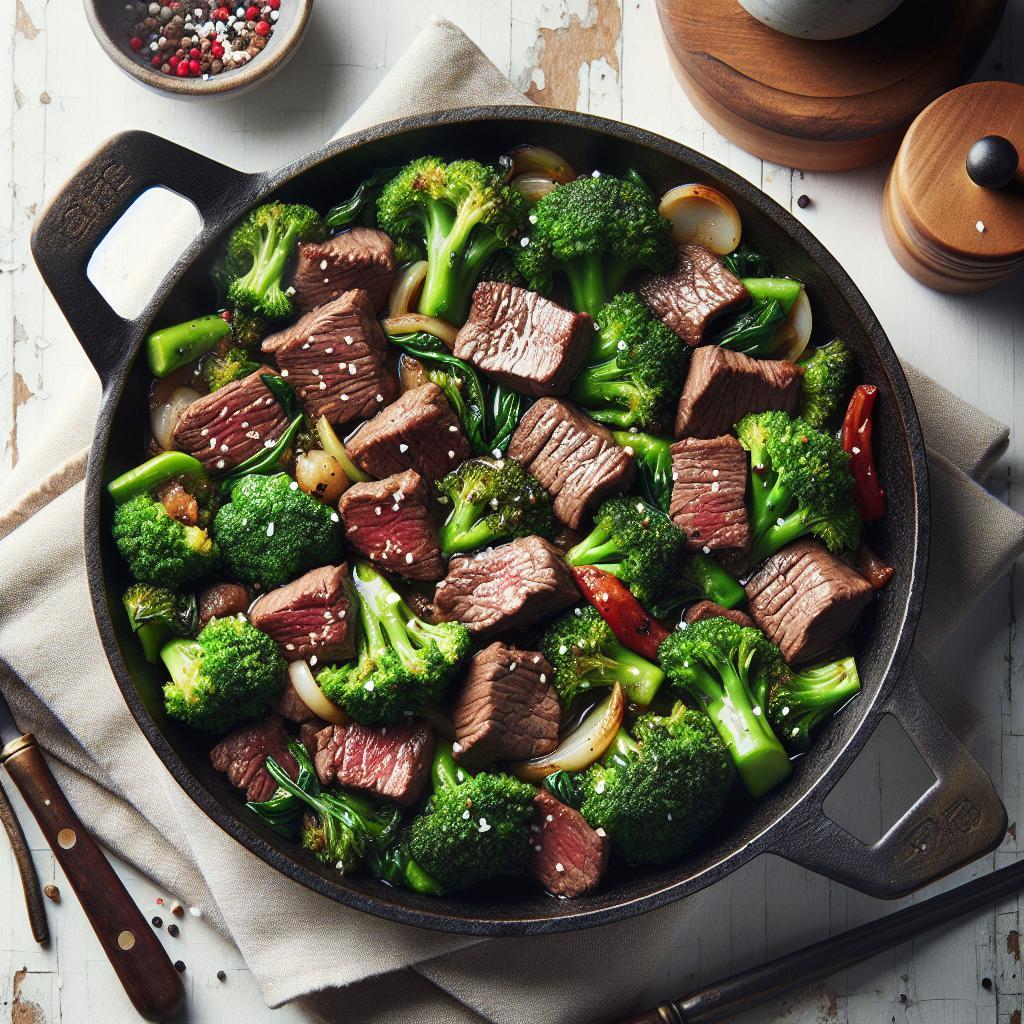

Beef Broccoli delivers restaurant-style flavor in a fraction of the time. This skillet method locks in a caramelized sear on thinly sliced beef while keeping broccoli crisp and bright.
- Overview
- Prep and Cook Time
- Yield
- Difficulty Level
- Ingredients
- Instructions
- Tips for Success
- Pro-Caution
- Serving Suggestions
- Nutrition (Per Serving)
- Q&A
- Q1: What makes this skillet meal so fast and flavorful?
- Q2: Can I customize the flavors?
- Q3: Which cuts of beef are best?
- Q4: How do I keep broccoli crisp-tender?
- Q5: Is this suitable for weeknight meals?
- FAQ
- Ready fast: Complete meal in about 25 minutes.
- High-impact flavor: Sear meat, steam veg, and finish with a cornstarch glaze.
- Weeknight-friendly: Minimal prep, flexible ingredients, and reliable results.
- Make-ahead options: Sauce mixes refrigerate up to 24 hours.
Overview
The Beef Broccoli skillet focuses on texture contrast and efficient technique. You get a browned crust on the beef and a snap in the broccoli florets.
Professional kitchens use searing and brief steam to protect vegetable color and bite while finishing with a glossy sauce. Those steps translate directly to home cooking for consistent results.
Prep and Cook Time
Preparation: 10 minutes. Trim and slice the beef thinly across the grain so slices cook quickly and evenly. Also, cut broccoli into uniform florets to reduce variable cooking times.
Cooking: 15 minutes. Use high heat searing followed by a quick covered steam to finish the broccoli. Total active time is about 25 minutes from pan to plate.
Yield
This Beef Broccoli skillet serves 4 generous portions. Scale protein and vegetables proportionally for larger groups or meal prep batches.
Leftovers store well for 2–3 days refrigerated. Reheat in a skillet briefly to preserve texture; microwaving softens broccoli faster, so prefer pan reheating for best results.
Difficulty Level
Rated Easy to Medium. The method requires attention to timing and heat rather than advanced knife skills. With organized mise en place, home cooks will succeed routinely.
Key execution points include patting meat dry, keeping the pan hot between batches, and avoiding overcooking the broccoli. Follow the sequence for the best sear and glaze adhesion.
Ingredients
Use fresh, quality items for the best outcome. Below are core components and straightforward swap options to preserve texture and flavor.
- 1 lb flank steak, thinly sliced across the grain
- 4 cups fresh broccoli florets
- 3 tbsp vegetable oil, divided
- 4 cloves garlic, minced
- 1 tbsp fresh ginger, grated
- 1/3 cup low-sodium soy sauce
- 2 tbsp oyster sauce
- 1 tbsp brown sugar
- 1 tbsp cornstarch
- 1/4 cup water
- 1 tsp toasted sesame oil
- 1/4 cup sliced green onions, for garnish
- 1 tbsp toasted sesame seeds, for garnish
Ingredient notes
Beef choice: Flank or skirt steak work best when sliced thinly for quick cooking and tenderness. For background on the cut and muscle fiber, consult beef information.
Produce and swaps: Use fresh broccoli or similar tender-crisp vegetables. For botanical context, see the broccoli entry. Snap peas or asparagus are viable seasonal substitutes.
Instructions
Follow the sequence to preserve sear and texture: sear beef, remove, saute aromatics, steam broccoli, add sauce, and return beef. This order optimizes browning and prevents the meat from steaming.
Use a wide skillet or wok to maintain even heat and avoid overcrowding. Work in batches if necessary to keep the pan hot for a proper Maillard reaction.
- Prepare the beef: Pat the flank steak slices dry with paper towels. Toss with 1 tablespoon vegetable oil and a pinch of salt to promote browning.
- Sear the beef: Heat a large skillet over high heat until just smoking. Add beef in a single layer and sear 1–2 minutes per side until a golden crust forms; remove and set aside.
- Sauté aromatics: Lower heat to medium-high and add 1 tablespoon oil. Add garlic and ginger; sauté about 1 minute until fragrant, stirring constantly to avoid burning.
- Cook the broccoli: Add broccoli plus 1/4 cup water to the skillet. Cover and steam 2–3 minutes until bright green and slightly tender but still crisp.
- Craft the glaze: Whisk soy sauce, oyster sauce, brown sugar, cornstarch, and remaining water until smooth. Pour over broccoli and bring to a gentle boil to activate the cornstarch.
- Finish the dish: Return the seared beef to the skillet. Toss to coat and simmer 2–3 minutes until sauce thickens and beef reheats without overcooking.
- Garnish and serve: Drizzle toasted sesame oil and scatter green onions and sesame seeds immediately before serving to preserve aroma and texture.
Timing tips
Work quickly when searing and avoid crowding the pan to ensure consistent browning. Maillard browning provides much of the savory character.
If broccoli reaches desired doneness before the sauce reduces, remove it briefly, finish the sauce, and then combine to avoid over-softening the vegetable. That order preserves texture and color.
Tips for Success
Small technique adjustments produce reliable, restaurant-quality results at home. Focus on heat management, ingredient prep, and orderly workflow to keep timing predictable.
Always slice meat thinly and consistently so each piece cooks in the same time window. Even thickness equals even doneness and better texture.
- Choosing the cut: Flank, skirt, or sirloin sliced thinly work best. Slice against the grain for tenderness.
- Pat dry: Remove surface moisture from meat to promote a fast, clean sear rather than steaming.
- Make-ahead sauce: Whisk sauce components in advance and refrigerate up to 24 hours to speed assembly.
- Vegetable timing: Add broccoli with a splash of water and cover briefly to retain color and crunch.
Allow the pan to recover heat between batches of meat to maintain high searing temperature. That prevents the meat from stewing and losing its roasted flavor.
Pro-Caution
Control the steaming liquid. Excess water dilutes the glaze and prevents proper thickening, so use measured splashes and raise heat to reduce quickly.
Also, avoid over-salting before searing when using a reduced-sodium soy base. Adjust salt at the end after the sauce concentrates to taste.
Serving Suggestions
Serve the Beef Broccoli skillet over steamed jasmine rice or buttered egg noodles to capture the sauce. Both options provide a neutral starch that highlights the glaze and beef.
Complement the skillet with quick sides like a cucumber salad or a light soup for contrast in texture and acidity. Small, bright sides enhance the dish without competing with the main flavors.
For related recipes and quick skillet dinners, see our internal guides: Beef Broccoli recipes and Quick Skillet Dinners. These internal links help plan efficient weeknight menus.
Nutrition (Per Serving)
The values below are approximate and depend on specific ingredients and portion sizes. Use a nutrition calculator if you require precise numbers for dietary tracking.
Typical estimate: 320 kcal, 28 g protein, 12 g carbohydrates, 16 g fat per serving. Adjust oil and sugar to alter calorie density.
| Nutrient | Per Serving |
|---|---|
| Calories | 320 kcal |
| Protein | 28 g |
| Carbohydrates | 12 g |
| Fat | 16 g |
Q&A
Below are focused answers to common execution and customization questions for the Beef Broccoli skillet method. These practical tips remove guesswork and speed up the learning curve.
Responses reflect tested technique: sear at high heat, steam briefly, then finish with a cornstarch-thickened glaze for cohesive flavor and texture.
Q&A: Beef Broccoli Skillet – Your Quick, Flavorful Feast
Q1: What makes this skillet meal so fast and flavorful?
High-heat searing produces Maillard browning that concentrates flavor quickly. Brief steaming preserves vegetable color and texture while a cornstarch-thickened glaze binds components into a cohesive dish.
Q2: Can I customize the flavors?
Yes. Add chili flakes for heat, a dash of citrus zest for brightness, or honey for additional sweetness. Small adjustments change the profile without disrupting the core cooking sequence.
Q3: Which cuts of beef are best?
Choose cuts that handle high-heat searing and slice thinly across the grain. Flank, skirt, and sirloin are reliable choices that reheat well in a quick skillet finish.
Q4: How do I keep broccoli crisp-tender?
Steam briefly with a splash of water and cover the pan to accelerate cooking. Finish uncovered to reduce liquid and toss in the sauce briefly to avoid soggy florets.
Q5: Is this suitable for weeknight meals?
Absolutely. Minimal prep, fast cooking, and flexible ingredient lists make the Beef Broccoli skillet ideal for busy evenings. Prep components ahead to reduce active time during dinner service.
FAQ
How should I slice beef for the fastest cook time?
Slice thinly, across the grain, about 1/8 to 1/4 inch thick. Even thickness ensures quick, uniform cooking and retains tenderness.
Can I use frozen broccoli?
Yes, but thaw and drain well to avoid excess water in the pan. Add slightly longer cooking time to reach the desired crisp-tender texture.
What if my sauce doesn’t thicken?
Ensure you activated the cornstarch by bringing the sauce to a gentle boil. For more on thickening agents, consult cornstarch. If it still won’t thicken, make a quick slurry and add gradually while stirring.
How to reduce sodium without losing flavor?
Choose low-sodium soy sauce and boost umami with a small amount of mushroom powder or a reduced amount of oyster sauce. For background on the condiment, refer to soy sauce.
Can I make this gluten-free?
Yes. Use tamari or a certified gluten-free soy substitute and verify other sauces for gluten-free labeling. Cornstarch is naturally gluten-free, making it a safe thickener for many diners.
Transform pantry staples into a reliable, high-impact weeknight meal by following the sequence and timing above. Sear correctly, steam briefly, finish with a glossy glaze, and serve immediately for the best texture and flavor.

See also: Beef Broccoli • Related beef recipes
See also: Beef Broccoli