
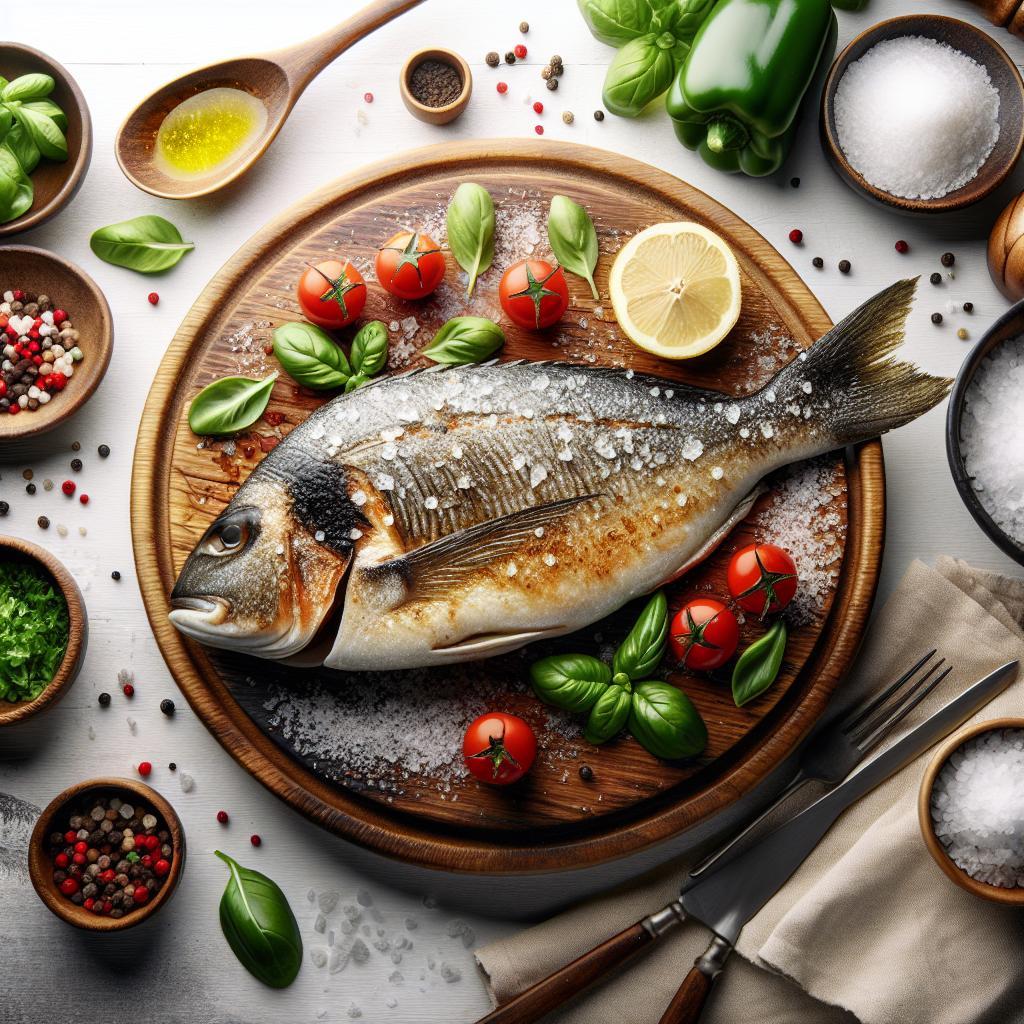

Salt-crusted fish delivers reliably moist, flaky flesh and dramatic presentation by baking a whole fish inside a rigid salt shell. The method traps steam, moderates surface temperature, and seasons the outer layers without drying the interior.
- Recipe Overview for Salt-Crusted Fish
- Ingredients for Salt-Crusted Fish
- Instructions to Cook Salt-Crusted Fish
- Science Behind Salt-Crusted Fish
- Tips for Salt-Crusted Fish Success
- Serving Salt-Crusted Fish
- Nutrition Profile of Salt-Crusted Fish
- Practical Variations for Salt-Crusted Fish
- FAQ
- What is salt-crusted fish and why use it?
- Will the fish be too salty?
- Can I use fillets instead of whole fish?
- What salts and binders work best for salt-crusted fish?
- How do I tell when salt-crusted fish is done?
- Final Notes on Salt-Crusted Fish
- Locks moisture: the crust forms a sealed micro-oven around the fish.
- Even heat: insulation reduces hot spots and overcooking.
- Subtle seasoning: controlled salt exchange seasons without excess.
- Simple showpiece: dramatic presentation with minimal hands-on time.
Recipe Overview for Salt-Crusted Fish
This salt-crusted fish recipe suits a 2–3 lb whole fish such as sea bass, snapper, or branzino. Follow precise timing and a firm salt binder to ensure a stable shell and predictable doneness.
Set your oven to 425°F (220°C) and use roughly 12–15 minutes per pound as a guideline. Adjust for oven variance and fish shape; consistent temperature produces repeatable results.
Ingredients for Salt-Crusted Fish
Use a whole, firm-fleshed fish for best results; avoid very thin or tapered bodies that cook unevenly. A 2–3 lb specimen provides reliable timing for a single bake cycle.
Assemble coarse kosher salt and egg whites for the binder; coarse grains build a stable matrix while egg white protein sets during baking. Keep aromatics minimal to highlight the fish.
- 1 whole fish (sea bass, snapper, or branzino), 2–3 lbs, cleaned and scaled
- 4 cups coarse kosher salt
- 1 cup egg whites (about 4 large eggs)
- Fresh herbs (thyme, rosemary, or dill), optional
- 2 lemons, thinly sliced
- Olive oil, for finishing
- Freshly ground black pepper, to taste
Instructions to Cook Salt-Crusted Fish
Preheat the oven to 425°F (220°C) and line a baking sheet with parchment or a silicone mat. A nonstick surface prevents the crust from adhering too tightly to the pan when removed.
Mix coarse kosher salt with egg whites until the texture resembles damp sand and becomes moldable. Pat the fish dry, stuff the cavity with herbs and lemon, and press a 1/2-inch bed of salt on the sheet before sealing the fish completely.
- Bake: about 12–15 minutes per pound at 425°F; medium whole fish typically take 30–40 minutes.
- Rest: let the fish rest 5 minutes after the oven to let juices redistribute.
- Crack: tap the hardened shell with the back of a spoon or small knife, then lift the fish out and discard the crust.
- Finish: drizzle olive oil, add fresh pepper and lemon slices before serving.
Science Behind Salt-Crusted Fish
The salt crust acts as an insulating barrier that traps steam and reduces direct air contact, producing even heat transfer into the flesh. The environment closely resembles sealed steaming, which limits moisture loss.
Two physical principles govern the method: thermal insulation and controlled osmotic exchange. Insulation moderates surface temperature, and limited salt diffusion seasons the outermost layers without overwhelming the interior tissue.
For background on the materials and processes, consult authoritative references on salt, osmosis, and general cooking science. These sources explain why coarse grains and binders behave predictably in heat.
Tips for Salt-Crusted Fish Success
Choose a fish with firm flesh and symmetric girth for consistent cooking; heavily tapered bodies cook unevenly and concentrate heat at thin points. Weigh the fish and calculate time precisely for repeatable results.
Use coarse salt rather than fine salt to prevent over-seasoning; coarse grains form a matrix and slow penetration. Place aromatics inside the cavity rather than embedding them in the crust for subtle infusion.
- Bind salt with egg whites for an easy, crackable shell.
- Weigh the fish and use 12–15 minutes per pound as a base.
- Rest briefly before cracking to let steam settle and juices relax.
When using fillets, reduce salt volume and monitor time carefully. Fillets lack a cavity for aromatics and will cook faster, so prefer whole fish where practical.
Use a light hand with finishing salt; remove any residual crystals from the surface before plating to avoid local oversalting. A brush of olive oil and a squeeze of lemon balance texture and aromatics.
Serving Salt-Crusted Fish
Present the salt-crusted fish whole for theatre and to preserve juices until the table crack. Flake the fish at the table to reveal moist flesh and maintain the dramatic reveal.
Pair simply: a lemony arugula salad, lightly roasted vegetables, or buttered new potatoes complement the fish without overpowering it. Choose garnishes that add acid and texture.
Nutrition Profile of Salt-Crusted Fish
Salt-crusted fish remains a high-protein, low-carbohydrate dish when served without heavy sauces. Fat content varies with species; oily fish increase omega-3s while white fish keep calories lower.
Below is a representative per-serving estimate for a lean white fish with a modest olive oil finish. Adjust values for fattier species or different portions.
| Nutrient | Per Serving |
|---|---|
| Calories | 280 kcal |
| Protein | 35 g |
| Carbohydrates | 1 g |
| Fat | 12 g |
Practical Variations for Salt-Crusted Fish
Adapt the method for different species: denser, oilier fish tolerate longer times, while thin white fish require shorter bakes. Adjust by 1–2 minutes per pound depending on thickness and fat content.
Consider alternative binders if you cannot use egg whites. A small amount of water mixed with coarse salt creates a paste, but egg whites produce cleaner cracks and firmer shells in most tests.
FAQ
Below are concise answers to common questions about the salt-crusted fish method. Each entry gives checks and small adjustments to improve outcomes.
What is salt-crusted fish and why use it?
Salt-crusted fish cooks inside a rigid shell of salt that traps steam and seasons the surface. Chefs use it to lock moisture and produce a striking presentation while minimizing direct drying of the flesh.
Will the fish be too salty?
No — when executed correctly, the crust seasons only the outermost layers. Use coarse salt, avoid direct contact of salt against exposed flesh, and remove any visible salt crystals before serving.
Can I use fillets instead of whole fish?
Yes, but fillets cook faster and lack the cavity for aromatics. Reduce time substantially and consider using a shallower salt bed rather than full encasement to avoid overcooking.
What salts and binders work best for salt-crusted fish?
Coarse kosher salt or coarse sea salt provides a stable structure; egg whites act as a reliable binder for a cohesive shell. Some cooks add minimal water, but egg whites yield cleaner cracks.
How do I tell when salt-crusted fish is done?
The shell hardens and cracks easily when tapped; the flesh beneath should flake and remain opaque and moist. If unsure, check the thickest part for gentle springiness rather than dryness.
Final Notes on Salt-Crusted Fish
Salt crusting is a precise, low-intervention technique that rewards attention to salt grain, binder, and timing. With controlled tests, you can achieve repeatable, excellent results.
Use this recipe and the troubleshooting notes here as a baseline, then adapt salt ratios and baking time to your oven and fish sizes. Record simple adjustments to build consistent outcomes.

See also: salt-crusted fish