
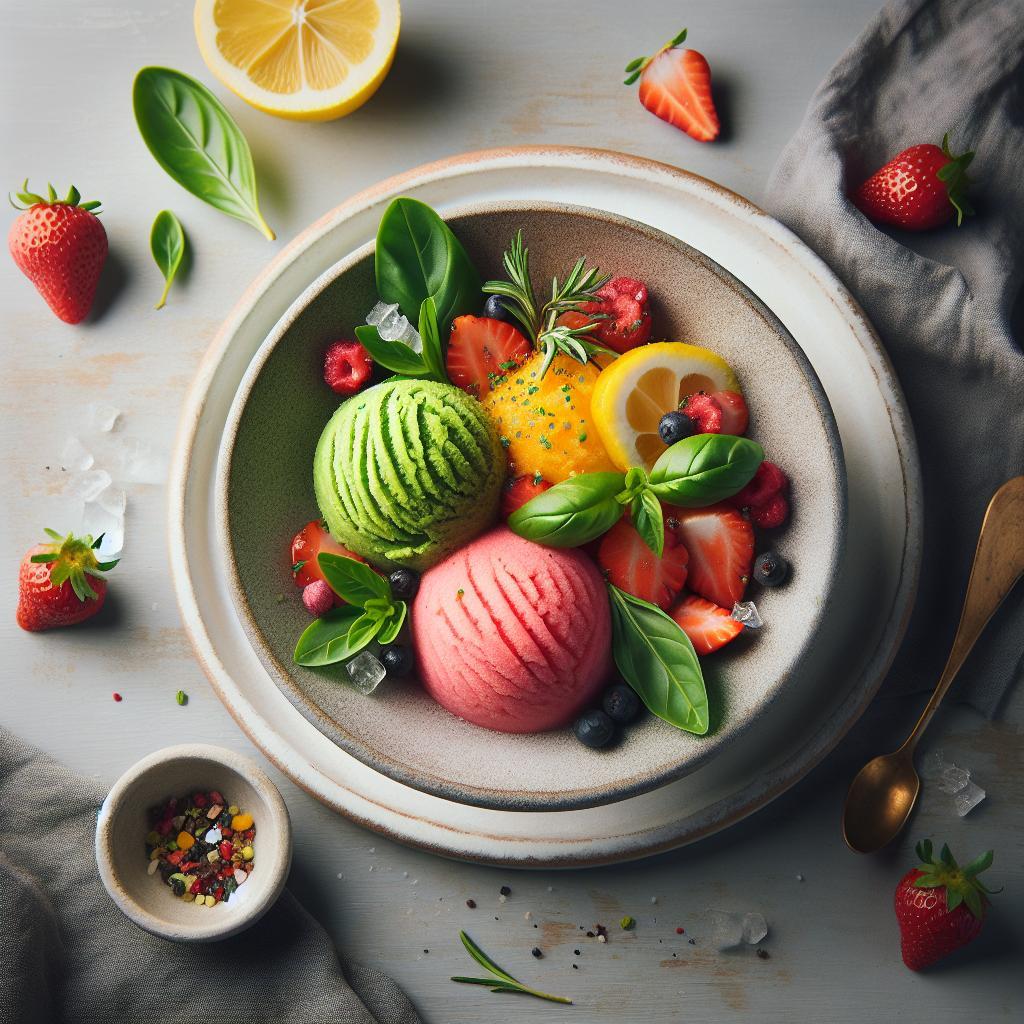

Savory sorbet challenges expectations by delivering concentrated umami, bright acid, and a clean thermal contrast on the palate. It requires precise balance so savory components remain vivid despite the cold.
- Balance acid and salt to keep flavors lively at low temperatures.
- Control freezing kinetics to avoid large ice crystals and preserve creaminess.
- Use hydrocolloids and fats to smooth texture without adding dairy.
Prep and Cook Time
Preparation: 15 minutes. Freezing: minimum 4 hours including churn time.
Plan chilled resting time and active cook time separately so flavors marry before freezing. Accurate timing improves both texture and aromatic retention.
- Preparation: 15 minutes
- Freezing: 4 hours (minimum)
- Total: 4 hours 15 minutes
Yield and Difficulty
This recipe yields 4 servings and rates as medium difficulty for home cooks. It asks for careful seasoning and attention during chilling to avoid a bland finished product.
Treat the process like a simple lab: measure, taste, and test texture during the chill cycle. Small adjustments to salt and acid are common on a first run.
Ingredients
Use high-quality bases: a low-sodium vegetable stock concentrates savory notes without excess salt. Include dense umami sources like shiitake and miso for depth.
Below is a practical ingredient list; bold amounts to aid quick shopping and prep. For ingredient provenance, consider dried options for concentration and storage stability.
- 2 cups vegetable broth (preferably homemade or low sodium)
- 1/2 cup dried shiitake mushrooms, soaked and finely chopped
- 2 tbsp white miso paste
- 1 tbsp yuzu juice or freshly squeezed lemon juice
- 1 tsp soy sauce (low sodium)
- 1 tsp sea salt, adjust to taste
- 1 tbsp olive oil
- 1/4 cup sun-dried tomatoes, finely diced
- 1 tbsp finely chopped fresh chives
- 1 tbsp agar-agar powder or gelatin powder (for ideal texture)
For background on the primary frozen form, see sorbet to understand its composition and how water and solids set when frozen.
To review the umami concept and how glutamates affect perceived savory intensity, consult umami.
Instructions
Follow precise heat and cooling steps to extract umami and then stabilize the matrix before freezing. Each step influences how aromas survive the cold and how the texture forms.
Mix, clarify if needed, then gel or stabilize before chilling. Chill fully before churning to reduce ice crystal growth and protect aromatic volatiles.
- Prepare the broth base: Pour 2 cups vegetable broth into a saucepan and bring to a gentle simmer over medium heat.
- Infuse umami: Add the soaked and chopped shiitake mushrooms. Simmer 10 minutes to extract deep, earthy compounds.
- Mix seasoning elements: Whisk in white miso, soy sauce, and sea salt. Taste and adjust in small increments.
- Add acidity: Remove from heat, then stir in yuzu or lemon juice to lift heavier flavors and sharpen perception.
- Incorporate texture agents: Dissolve agar-agar in 1/4 cup of hot water and add to the warm broth to stabilize the final sorbet.
- Blend: Transfer to a blender and add sun-dried tomatoes, olive oil, and chives. Blend to a fine texture but leave some micro-texture for interest.
- Churn or freeze: Pour the mixture into an ice cream maker and churn 20–25 minutes until sorbet consistency. Alternatively freeze in a shallow container, stirring every 30 minutes to aerate.
- Rest: Allow the sorbet to firm in the freezer at least 1 hour before serving so the texture sets evenly.
Churning vs Freeze Method
Churning introduces controlled air and shortens the freezing time, producing a smoother product. Use the ice cream maker when you want the silkiest mouthfeel.
Batch freezing and intermittent stirring works when equipment is limited. Stir often to break crystals and mirror the aeration achieved by a churner.
Texture Agents and Ratios
Hydrocolloids like agar-agar and gelatin control ice crystal formation and retain a scoopable texture. Small doses change the perceived creaminess dramatically without adding dairy.
Add fats such as olive oil to coat flavor molecules and give a richer mouthfeel; use sparingly to avoid greasiness. Balance oil with acidity and salt for a clean finish.
Agar vs Gelatin
Agar yields a slightly firmer set and suits vegetarian diets; it resists melting at room temperature longer than gelatin. It also tolerates higher acid levels.
Gelatin produces a silkier, more yielding texture but requires animal-derived ingredients. Adjust use depending on diet and the desired melt profile.
For technical reference on gelling agents, see agar.
Science of Flavor
Savory sorbet relies on molecular interactions: acids free aromatic compounds, salt enhances receptor sensitivity, and fats help solubilize volatile oils. These mechanisms preserve flavor intensity despite the numbing effect of cold.
Freezing lowers volatility and dulls taste receptors; therefore, chefs use higher-than-expected concentrations of savory elements plus bright acids to keep the profile vivid. Precise dosing ensures the result stays balanced.
Role of Temperature and Crystal Size
Smaller ice crystals create a creamy texture that allows flavor molecules to reach receptors more readily. Faster freezing and churn processes minimize large crystals that scatter flavor and mouthfeel.
Maintain consistent freezer temperatures and pre-chill the sorbet mix; this reduces nucleation time and yields a finer crystal structure. The result reads as fresher and more aromatic.
Chef’s Notes
Ingredient swaps: Substitute dried porcini for shiitake for a woodier umami, or add a splash of tamari for gluten-free depth. Modify acid sources to match your base ingredient’s character.
Salt management: Add salt gradually because miso and soy already contribute sodium. Tasting cold is hard; taste chilled samples after partial freezing to judge final balance.
Texture tips and make-ahead guidance minimize crystal growth and maintain freshness. Store in an airtight container and press parchment over the surface to limit freezer burn.
Serving Suggestions
Serve scoops in chilled bowls and finish with a drizzle of high-quality olive oil to heighten aromatic perception. Warm a scoop tool to produce clean rounds and limit ice crystal disturbance.
Garnish with fresh microgreens, thin radish slices, or a light dusting of smoked spice for contrast. Offer small toasted crostini or delicate seafood as plated companions to expand textural range.
Nutrition
This sorbet keeps calories modest while delivering notable savory density suitable for a light starter. Per-serving macros depend on the oil and solid additions you select.
Monitor sodium carefully if you plan to serve multiple courses; umami boosters can push sodium higher than expected. Adjust portions and seasoning to suit dietary needs.
| Nutrient | Per Serving |
|---|---|
| Calories | 75 kcal |
| Protein | 3.4 g |
| Carbohydrates | 8.5 g |
| Fat | 2.1 g |
FAQ
This FAQ answers practical and technical questions most cooks face when trying savory sorbet. Each reply aims to be actionable and testable in a home kitchen.
For further background on mushrooms used here, consult the shiitake reference and other culinary fungi resources.
What makes a sorbet ‘savory’ instead of sweet?
Savory sorbet uses ingredients rich in umami, herbs, spices, and acids rather than sugar-forward fruits. The mix relies on glutamate-rich components and careful acid-salt balance to remain flavorful when frozen.
How do I keep the sorbet from turning icy?
Prevent large ice crystals by chilling the mix thoroughly, using an ice cream maker, or stirring frequently during freezing. Add small amounts of hydrocolloids or fats to improve crystal control and mouthfeel.
Can I make a dairy-free creamy texture?
Yes. Use olive oil, avocado, or small amounts of plant-based emulsifiers combined with agar or gelatin to mimic creaminess. These ingredients coat flavor molecules and produce a satisfying mouthfeel without dairy.
Should I adjust salt for cold serving?
Yes. Cold suppresses taste sensitivity, so add salt incrementally and test after chilling. Use low-sodium broths and taste chilled samples to reach the correct final seasoning.
How long can I store savory sorbet?
Store airtight for up to three days for best texture and flavor. Thaw slightly before serving to release aromas and ease scooping.
For a concise primer on the fungus used in many savory recipes, see shiitake. For a foundational reference on fermentation and miso usage, review miso.

See also: savory sorbet