

Velvety carrot soup delivers a silky mouthfeel and pure vegetable sweetness with minimal fuss. This recipe highlights technique and ingredient choices that create consistent, restaurant-quality texture while keeping flavors bright and balanced.
- Prep and Cook Time
- Yield
- Difficulty Level
- Ingredients
- Instructions
- Tips for Success
- Serving Suggestions
- Nutrition Information
- Practical Notes and Science
- Q&A
- FAQ
- How do I get the smoothest texture?
- Can I roast the carrots first?
- How should I reheat without losing creaminess?
- What garnishes work best?
- Can I make this in advance for a dinner party?
- Wrapping Up
- Key takeaway 1: Proper chopping and even simmering give consistent cooking and smoother blending.
- Key takeaway 2: Creamy finish options include coconut milk or cream; each shifts texture and flavor predictably.
- Key takeaway 3: Blending technique determines final mouthfeel—immersion blenders differ from high-speed blenders.
- Key takeaway 4: Simple seasonal swaps adjust sweetness and aroma without complexity.
Prep and Cook Time
Preparation: 15 minutes. Cooking: 30 minutes. These timings assume uniform chopping and a steady simmer to tenderize carrots without breaking down their sugars excessively.
Allow a short rest after blending to adjust seasoning. For busy cooks, prepare carrots and aromatics ahead to shave 10–15 minutes from active time.
Yield
This recipe yields 6 generous bowls, suitable for family dinner or small batch freezing. Multiply proportions linearly when scaling for larger groups or meal prep.
Portion into airtight containers for storage and label with date; frozen portions keep quality for up to two months under recommended conditions.
Difficulty Level
Easy: The method relies on basic stovetop technique and standard kitchen tools, making it accessible for cooks at any level. Follow the blending guidance to achieve professional texture.
Minimal technical skill is required; focus on consistent size for carrot pieces and gentle heat management to protect flavor and color.
Ingredients
Use fresh, firm produce and a good-quality stock. The ingredient choices below balance sweetness, aromatics, and fat to create a stable emulsion and lasting creaminess.
Substitutions are noted inline so you can tune richness or dietary needs without compromising texture.
- 2 lbs (900 g) fresh carrots, peeled and chopped into 1-inch pieces
- 1 large yellow onion, diced
- 3 cloves garlic, minced
- 4 cups (950 ml) vegetable stock, low-sodium preferred
- 1 cup (240 ml) full-fat coconut milk or heavy cream for richness
- 2 tablespoons olive oil or unsalted butter
- 1 teaspoon ground cumin for warmth
- 1/2 teaspoon freshly grated ginger for lift
- Salt and freshly cracked black pepper to taste
- Fresh thyme sprigs or parsley for garnish
- Optional: pinch of smoked paprika or a squeeze of fresh lemon juice
Instructions
Prepare the base: Heat the olive oil or butter in a large heavy-bottomed pot over medium heat. Add the diced onion and cook until translucent, about 5 minutes, stirring to avoid browning.
Infuse aromatics and cook carrots: Add garlic, cumin and grated ginger and sauté 1–2 minutes until fragrant. Add carrots, toss to coat, then pour in vegetable stock to just cover and bring to a gentle simmer; cook until tender, about 20 minutes.
- Blend to smooth: Purée the soup with an immersion blender or in batches in a high-speed blender until completely smooth.
- Enrich and finish: Return to low heat, stir in coconut milk or cream, and warm gently without boiling. Adjust seasoning and add optional smoked paprika or lemon juice.
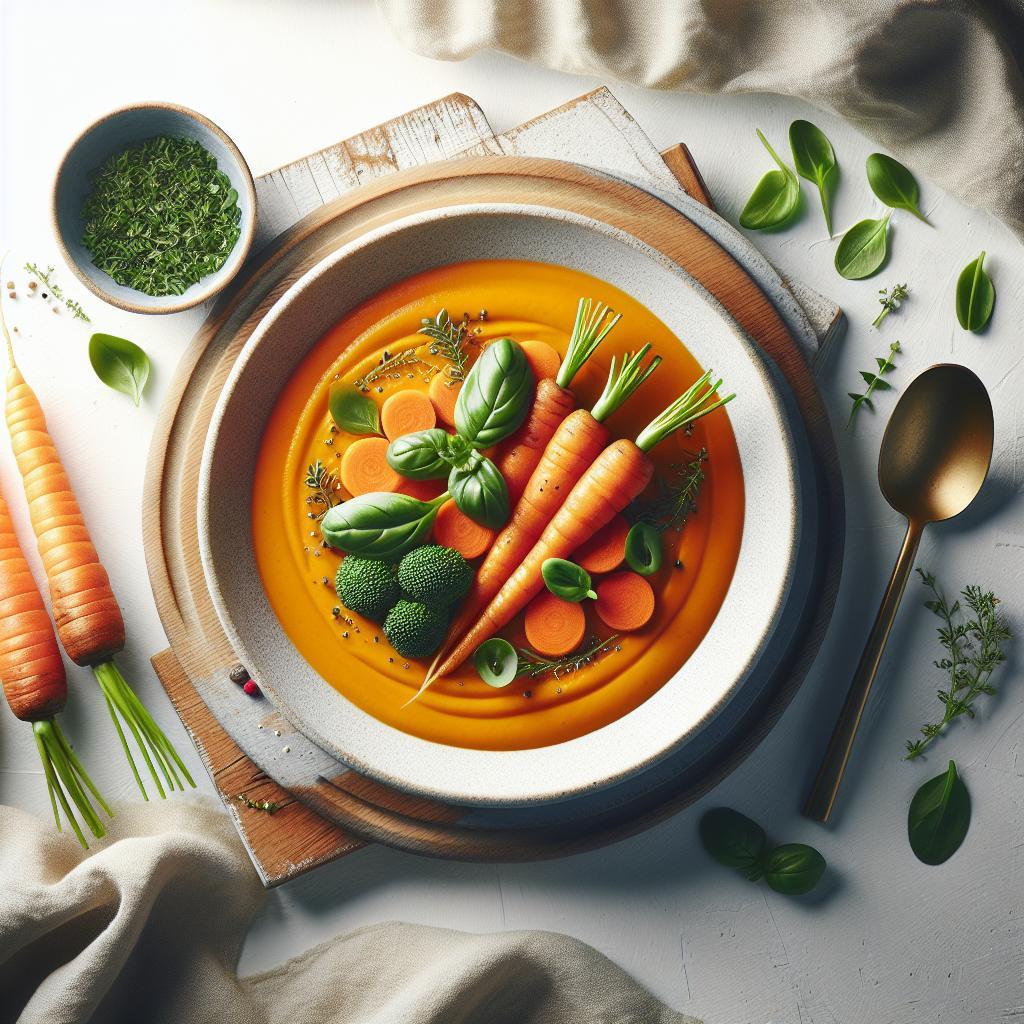
- Serve: Ladle into bowls and garnish with thyme, parsley, a swirl of cream, or toasted seeds for contrast.
Blending techniques
Use an immersion blender for direct, controlled blending that keeps heat in the pot and reduces cleanup. For an ultra-silky texture, a high-speed blender gives the smoothest result by creating finer particulates.
After blending, strain through a fine-mesh sieve if you need the absolute silkiest finish; press solids gently with a spatula to keep volume and texture consistent.
Tips for Success
Choose carrots that are firm and evenly colored to avoid woody cores and uneven sweetness. Cut carrots into uniform pieces so they reach tenderness at the same time.
Control simmering: a steady, gentle simmer extracts flavor without promoting bitter notes from overcooking. Taste and adjust seasoning in stages, especially after adding cream or coconut milk.
For batch cooking, cool quickly and refrigerate within two hours. When freezing, use portion-sized containers to thaw only what you need and preserve texture.
Serving Suggestions
This soup pairs well with hearty bread and crisp, contrasting textures such as toasted pumpkin seeds or crispy chickpeas. A light herb oil or a swirl of coconut milk adds visual appeal and flavor depth.
For seasonal adjustments, add roasted chestnuts or a dash of maple syrup in autumn, or finish with fresh basil or mint in summer for a brighter profile.
Nutrition Information
Per serving estimates are useful for meal planning. The values below assume coconut milk is used; using heavy cream will increase saturated fat and calorie counts.
Adjust portions and garnish choices to meet dietary goals; this soup is naturally gluten-free and can be vegan when coconut milk is used.
| Nutrient | Per Serving |
|---|---|
| Calories | 180 kcal |
| Protein | 3 g |
| Carbohydrates | 25 g |
| Fat | 8 g |
| Fiber | 5 g |
Practical Notes and Science
Texture depends on particle size and emulsification. High-speed blending reduces particle size and increases perceived creaminess by suspending tiny solids in the liquid phase.
Carrots contain natural sugars and pectin; controlled cooking preserves sweetness while pectin helps with mouthfeel. For background on the vegetable itself, see carrot.
Coconut milk provides fat that stabilizes the emulsion and contributes to sheen and mouth-coating richness. For reference on coconut milk properties, consult coconut milk.
When discussing technique and utensil choices, consider differences between hand and countertop appliances. Read about modern kitchen blenders at blender.
Q&A
This section answers common practical questions from home cooks and clarifies technique or ingredient choices. Each answer focuses on actionable steps to improve results quickly.
The guidance combines culinary fundamentals with tested shortcuts that preserve texture and flavor across seasons.
Q1: What makes carrot soup “velvety”?
The velvety texture comes from thorough puréeing combined with a fat source to create a smooth emulsion. Blending until no fibrous bits remain and adding coconut milk or cream achieves the desired mouthfeel.
Q2: Can velvety carrot soup be enjoyed year-round?
Yes. Seasonal aromatics or garnishes shift the character without changing core technique. Use warmer spices in cold months and fresh herbs or citrus in warmer months to adapt the dish.
Q3: What ingredients enhance the carrot flavor without overpowering it?
Onion, garlic and a modest amount of ginger provide depth. Small additions like nutmeg or a touch of honey amplify natural sweetness without masking carrot notes.
Q4: Is this soup suitable for special diets?
Yes. It is naturally gluten-free and can be vegan when made with coconut milk. Swap heavy cream for a plant-based milk to retain richness while meeting dietary restrictions.
FAQ
How do I get the smoothest texture?
Cook carrots until very tender, then use a high-speed blender for the finest particle breakdown. Strain through a fine-mesh sieve if you need an extra-silky finish.
Can I roast the carrots first?
Yes. Roasting concentrates sweetness and adds caramelized notes. Roast at 200°C/400°F until fork-tender, then proceed with the recipe for a deeper, slightly sweeter soup.
How should I reheat without losing creaminess?
Reheat gently over low heat, stirring frequently. If the soup thickens, add a little stock, water, or cream to restore the desired consistency.
What garnishes work best?
Choose contrasts: toasted seeds or nuts for crunch, fresh herbs for brightness, and a cream or herb oil drizzle for visual and textural richness.
Can I make this in advance for a dinner party?
Absolutely. Finish the soup to the point before adding the final cream, chill, and reheat gently before service. Add fresh garnishes at the last minute for best presentation.
Wrapping Up
This velvety carrot soup rewards small investments in technique—uniform chopping, gentle simmering, and mindful blending—for a reliably silky result. Use the ingredient swaps and tips above to tailor flavor and richness to season and occasion.
For an authoritative overview of soups and their cultural roles, consult general references like soup. Apply these practices, and you will produce a comforting, elegant bowl every time.

See also: Carrot Soup