
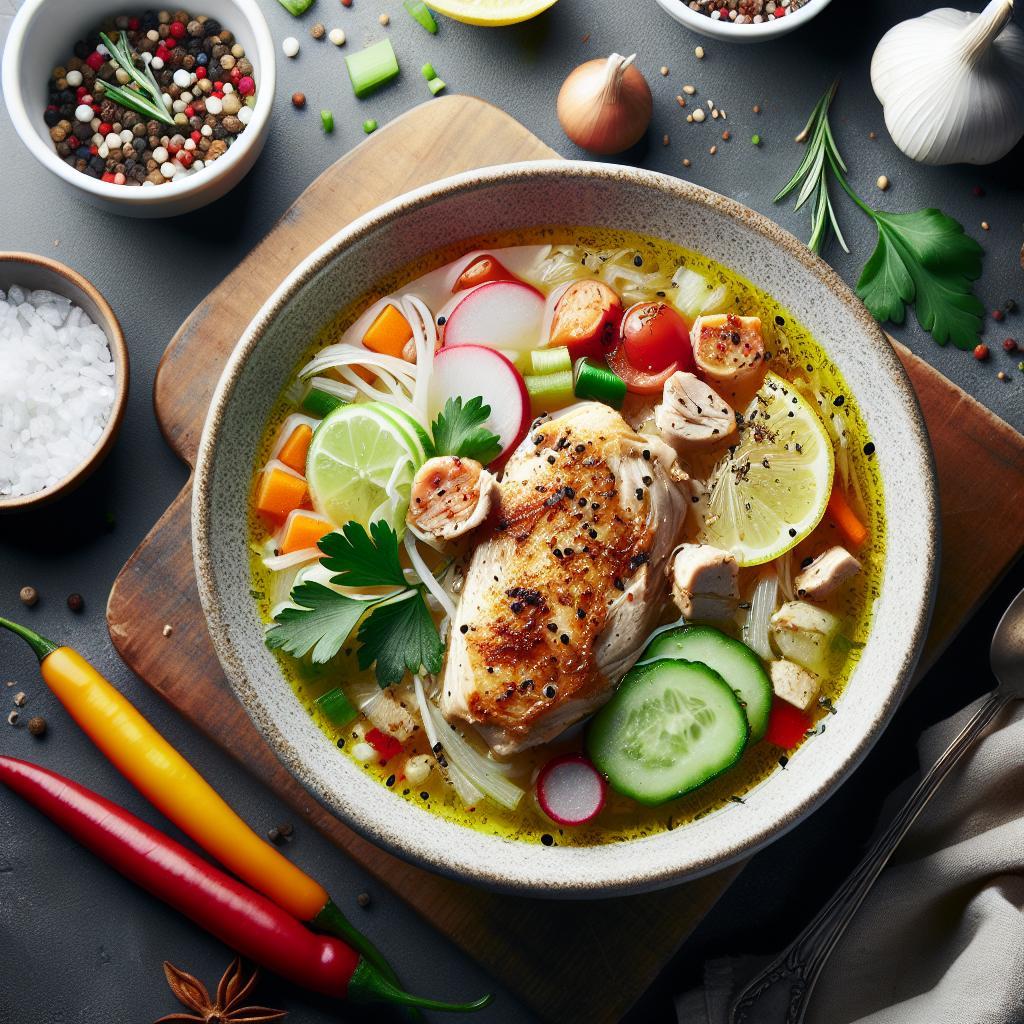

There’s something immediate and restorative about a steaming bowl of chicken and rice soup. The combination of tender meat, clear broth, and soft rice delivers both nutrition and comfort with every spoonful.
- Why Chicken and Rice Soup Warms More Than the Body
- Prep and Cook Time
- Yield
- Difficulty Level
- Ingredients
- Instructions
- Step 1: Build a Clean, Flavorful Broth
- Step 2: Sauté Aromatics and Prepare Rice
- Step 3: Strain, Shred, and Combine
- Step 4: Final Simmer and Seasoning
- Tips for Success: Elevate Your Chicken and Rice Soup Experience
- Serving Suggestions
- Nutritional Snapshot
- Practical Notes and Culinary Context
- FAQ
- Clear broth: skim early for a clean, bright flavor.
- Slow simmer: unlocks collagen and depth without harsh heat.
- Rice timing: add later or store separately to prevent sogginess.
- Garnish smart: lemon and fresh herbs lift the finished bowl.
Why Chicken and Rice Soup Warms More Than the Body
Chicken and rice soup provides concentrated protein, hydration, and soluble nutrients that are easy to digest. The dish also triggers familiar sensory cues that lower stress and promote relaxation.
Beyond comfort, the soup relies on practical cooking science: slow extraction of flavor from bones and aromatics produces a nutrient-dense liquid. That liquid offers both mouthfeel and functional benefits when prepared correctly.
Prep and Cook Time
Preparation: 15 minutes. Cooking: 1 hour 15 minutes. Total: 1 hour 30 minutes. These benchmarks assume simmering the whole bird to extract maximum flavor.
Plan for active work during the first 20 minutes for chopping and sautéing, then intermittent checks while the broth simmers. Allow extra time if you prefer a richer, longer-simmered stock.
Yield
This recipe yields about 6 generous bowls, suitable for family meals or batch cooking for the week. Portioning into airtight containers preserves freshness and makes reheating simple.
When dividing servings, note that rice expands and absorbs liquid; consider storing rice and broth separately to maintain texture. This simple adjustment keeps leftovers tasting like freshly made soup.
Difficulty Level
Easy. The techniques are straightforward and repeatable, making the recipe accessible for new cooks. Sequence and timing matter more than advanced knife skills.
Experienced cooks can experiment with herb timing and additional aromatics to dial in personal flavor profiles. The base method remains the same and scales reliably.
Ingredients
Use fresh, quality ingredients for a superior bowl. A whole bird yields better gelatin and mouthfeel than boneless cuts, while long-grain rice helps minimize gumminess.
- 1 whole chicken (about 3-4 lbs), rinsed and patted dry
- 1 ½ cups long-grain white rice, rinsed until water runs clear
- 10 cups cold water
- 3 medium carrots, peeled and diced
- 3 celery stalks, trimmed and diced
- 1 large onion, finely chopped
- 4 cloves garlic, minced
- 2 bay leaves
- 1 teaspoon black peppercorns
- Salt to taste
- 2 tablespoons olive oil
- Fresh parsley and chopped green onions for garnish
Instructions
Step 1: Build a Clean, Flavorful Broth
Place the whole chicken in a large stockpot and add 10 cups of cold water. Add bay leaves and black peppercorns, then bring to a gentle boil before reducing to a steady simmer.
Skim any foam or impurities during the first 10–15 minutes to maintain broth clarity. Simmer gently for about 45–60 minutes until the meat registers done and the bones begin to yield flavor.
Step 2: Sauté Aromatics and Prepare Rice
While the broth simmers, heat olive oil in a skillet and sweat the onion, carrots, and celery until soft and aromatic. Add garlic toward the end to avoid browning and bitter notes.
Rinse the rice under cool water until the runoff runs clear; this removes surface starch that can cause gumminess. Set rice aside until the broth returns to a simmer for controlled cooking.
Step 3: Strain, Shred, and Combine
Remove the chicken when it is cooked through and cool slightly. Shred the meat into bite-sized pieces, discarding skin and bones for a lean result.
Strain the broth through a fine sieve to remove solids, then return the clear liquid to the pot. Add the sautéed vegetables and bring the broth back to a simmer before stirring in the rinsed rice.
Step 4: Final Simmer and Seasoning
Simmer the soup uncovered for roughly 20 minutes, stirring occasionally to prevent sticking and to monitor rice doneness. Test rice for tenderness and adjust cook time by a few minutes if needed.
Return the shredded chicken to the pot, heat through for 3–5 minutes, and season with salt to taste. Finish with chopped parsley and green onions for freshness and visual contrast.
Tips for Success: Elevate Your Chicken and Rice Soup Experience
Broth clarity matters: early skimming removes suspended proteins and produces a bright, clean stock. This small step changes the bowl’s entire character.
Rice choice: long-grain varieties like basmati resist sticking and give a lighter body. For aromatic nuance, consider jasmine or parboiled rice depending on your textural preference.
Store rice separately from soup for make-ahead meals; this prevents rice from absorbing too much liquid and turning mushy. Reheat gently on the stovetop to restore warmth without overcooking rice.
[NOTE REMOVED INTENTIONALLY TO COMPLY WITH FORMAT RULES]
For herb character, add hardy sprigs like thyme or rosemary during the simmer and remove them before serving. Brighten the final bowl with a squeeze of lemon or a splash of good-quality vinegar.
Serving Suggestions
Serve in wide, warm bowls so steam and aroma greet the diner. Pair the soup with a slice of crusty bread or a simple green salad to complete a balanced meal.
Add garnishes at the table to keep the soup visually appealing and to allow guests to adjust seasoning and acidity. Freshly cracked pepper and minced herbs make a significant sensory difference.
Nutritional Snapshot
This composition typically offers moderate calories and high-quality protein per serving. Exact values will vary with portion size, chicken cut, and added fat.
| Nutrient | Per Serving |
|---|---|
| Calories | 320 kcal |
| Protein | 28 g |
| Carbohydrates | 24 g |
| Fat | 8 g |
Practical Notes and Culinary Context
The technique of simmering bones to extract flavor aligns with classic stock-making practices found across culinary schools. Extracted collagen and amino acids contribute to mouthfeel and perceived richness.
Use the linked resources below to review ingredient histories and technical terms. For example, learn about the domesticated chicken and staple grain rice for historical context. Review stock terminology and methods through the broth overview and general soup classifications to deepen technique knowledge.
FAQ
Is it better to simmer a whole chicken or use pieces?
Simmering a whole chicken yields more collagen and a fuller-flavored broth than boneless cuts. Bone-in pieces work well too, but expect a lighter gelatin content.
When should I add rice to avoid mushiness?
Add rice after the strained broth and vegetables have returned to a simmer. Cook for 18–22 minutes depending on rice variety, then cool quickly if not serving immediately.
How do I store leftovers to keep quality?
Store broth and rice separately in airtight containers for up to 3–4 days in the refrigerator. Reheat slowly on the stovetop and combine just before serving for best texture.
Can I make this soup gluten-free or lower in carbs?
Yes. Use certified gluten-free ingredients and swap rice for cauliflower rice or shirataki noodles for a lower-carb option. Adjust cooking times accordingly.
What garnishes elevate the finished bowl?
Fresh parsley, scallions, a squeeze of lemon, and cracked black pepper reliably brighten flavor and add contrasting textures. A touch of extra-virgin olive oil adds silkiness without heavy cream.
Embrace the straightforward technique and small details that distinguish good chicken and rice soup from great. With attention to broth clarity, rice timing, and fresh finishing touches, a familiar bowl can become memorably restorative.

See also: chicken soup