

Bread baking blends simple ingredients and precise technique. When you skip kneading, you change how those ingredients interact and how the final loaf behaves. This guide explores the fascinating world of no-knead baking, detailing the effects when you skip kneading.
- No-knead relies on time: long fermentation develops gluten slowly.
- Texture shifts: you often get a more open, irregular crumb.
- Flavor deepens: extended fermentation produces more complex acids and aromas.
- Handling changes: higher hydration and gentle shaping become critical.
What is kneading and why it matters
Kneading mechanically develops gluten, the protein matrix that traps gas and gives bread structure. Bakers apply folding and pressure to align gluten strands rapidly.
This mechanical action contrasts with biochemical development over time. For more on the protein itself, see gluten on Wikipedia.
Mechanics of gluten formation
Kneading stretches and orients gluten-forming proteins (gliadin and glutenin). That creates elasticity and strength so the dough holds rise and shape.
When you skip this work, enzymes and hydration gradually do the aligning for you during fermentation. For background on fermentation processes, consult fermentation.
How skipping kneading changes dough structure
Skipping kneading shifts the method from physical manipulation to time-based chemistry. You give enzymes, water, and yeast hours to develop the network that kneading would otherwise force in minutes. This is a core principle of no-knead bread.
That slower pathway creates characteristic differences in crumb, crust, and flavor. Understanding those differences lets you control outcomes deliberately.
Texture and crumb
No-knead doughs often yield a more open, irregular crumb with larger alveoli. The result looks rustic and can hold toppings or dips well.
If you under-ferment, however, the loaf will be dense and gummy. Correct timing prevents that problem and rewards patience.
Flavor and aroma
Extended fermentation increases organic acid and ester production, which gives the loaf deeper, tangy notes. This is why many bakers prefer long, slow rises for flavor.
Long fermentation also improves keeping quality; the loaf stays flavorful longer compared with a quick, mechanically developed loaf.
Practical steps for reliable no-knead loaves
Successful no-knead bread requires deliberate adjustment of hydration, time, and shaping. Treat it as a method, not a shortcut.
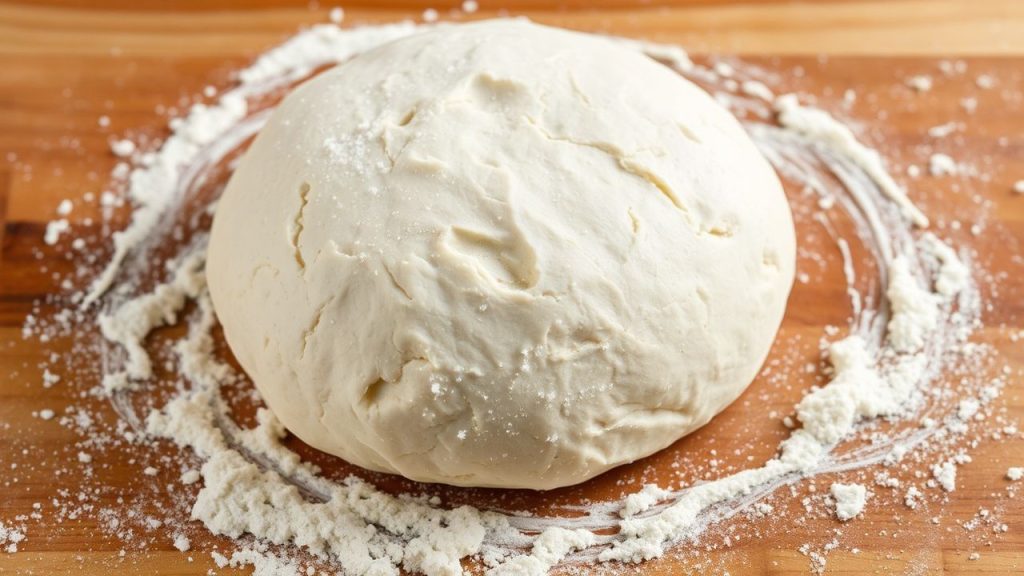
Start with a high-hydration dough (typically 70–80% hydration) and allow 12–18 hours of fermentation at room temperature for most yeasted recipes.
- Hydration: higher water content encourages natural gluten development.
- Fermentation time: longer bulk ferment improves strength and flavor.
- Handling: minimal degassing and gentle shaping preserve open crumb.
For recipe ideas and tested methods, see our internal bread recipes collection. For technical background, review our baking science resources.
Allow the shaped dough a final proof in a well-floured banneton or a lined bowl to build surface tension gently. That tension supports oven spring and a pleasing crust.
Common pitfalls and how to avoid them
People often assume no-knead means no attention. The truth: no-knead trades effort now for patience and timed care later.
Common mistakes include under-hydration, insufficient fermentation, and harsh shaping. Each leads to predictable faults like tight crumb, weak oven spring, or collapsed loaves.
Temperature control matters. Cooler rooms slow enzyme activity and require longer fermentation. Warmer rooms speed fermentation but risk overproofing.
When troubleshooting, log times, temperatures, and hydration. That data makes adjustments rapid and reliable.
Quick troubleshooting table
| Symptom | Likely cause | Fix |
|---|---|---|
| Dense crumb | Under-fermented or low hydration | Extend bulk ferment 2–4 hours; increase hydration 2–4% |
| Large collapse mid-loaf | Overproofed or weak shaping | Shorten proof or tighten shaping; cold retard overnight |
| Sticky handling | High hydration and low gluten development | Use gentle dusting, stretch-and-folds, or chill briefly |
How yeast and microbes shape the no-knead profile
Yeast metabolizes sugars into CO2 and alcohol, driving the rise. Bacterial activity introduces acids and flavor compounds over long fermentation.
Different leavens (commercial yeast vs. sourdough starter) produce distinct profiles. For more on yeast and starters, consult yeast and sourdough entries.
Choosing between quick no-knead and sourdough
Quick no-knead uses commercial yeast and yields reliable results with less time. Sourdough emphasizes complex flavor and longer retards.
Both methods benefit from long hydration and gentle handling. Choose by desired flavor profile and the time you can commit.
Final considerations for home bakers
Skipping kneading is a conscious technique choice. It favors fermentation-driven structure and flavor over mechanical speed. Mastering the no-knead approach opens up new possibilities in home baking.
Adopt the method with intention: monitor times, use appropriate hydration, and adjust for room temperature. You will control the result, not leave it to chance.
FAQ
Can I skip kneading completely and still get good bread?
Yes. You can get excellent bread with no-knead methods if you allow adequate fermentation and use higher hydration. Skillful shaping and proofing finish the loaf.
How long should I ferment no-knead dough?
Typical room-temperature fermentation runs 12–18 hours for a standard recipe. Adjust based on room temperature and desired flavor intensity.
Will no-knead bread have the same chew as kneaded bread?
No-knead loaves often have a different chew—less uniform but pleasantly open. Proper hydration and time produce good chew even without mechanical kneading.
Do I need special equipment for no-knead baking?
You do not need special mixers. A Dutch oven helps create steam and strong oven spring, but you can also use a baking stone and steam pan.
Can I adapt my favorite kneaded recipe to a no-knead method?
Yes, but adapt hydration and increase fermentation time. Log changes and test small batches until you get reliable results.
See also: no-knead