

Microwave boiling changes how water, fats, and protein-rich liquids behave under heat and explains why some cups erupt while others only shimmer.
- How microwave boiling heats liquids
- Key physical factors that change microwave boiling behavior
- Setting up a safe microwave boiling experiment
- Common behaviors in microwave boiling: What each liquid typically does
- Practical microwave boiling safety and timing
- Microwave boiling applications: When to use each heated liquid
- Microwave boiling troubleshooting and advanced tips
- FAQ: microwave boiling questions
- Microwave boiling depends on molecular polarity, surface texture, and dissolved solids.
- Superheating and nucleation sites control eruption risk; container finish matters.
- Lower power, stirring, and brief cycles give predictable, even heat and reduce hazards.
How microwave boiling heats liquids
Microwaves in a kitchen oven create an electromagnetic field that excites polar molecules, notably water. The rapid rotation of dipoles converts electromagnetic energy to thermal motion and raises temperature quickly.
This selective coupling explains why microwave boiling affects watery liquids more than nonpolar oils and why power settings matter for control. For background on the appliance physics, see microwave oven.
Key physical factors that change microwave boiling behavior
Three core properties control microwave boiling: molecular polarity, viscosity, and solute content. Polar fluids heat efficiently; viscous or particulate-laden fluids trap steam and develop hot spots that affect bubble formation.
Surface tension, dissolved gases, and nucleation sites determine when bubbles form and escape. Consult the formal thermodynamic concepts behind phase change at boiling point.
Setting up a safe microwave boiling experiment
Choose identical microwave-safe glass or ceramic cups and label samples: distilled water, olive oil, whole milk, and saltwater. Keep variables limited so results reflect each liquid’s properties, not container or volume differences.
Use lower power and short cycles when you run tests. This approach reduces thermal gradients and allows you to spot small bubbles, surface skin, or sudden eruptions before they escalate.
Supplies and baseline parameters
Gather one cup per sample, a wooden stir stick, and oven mitts. Set the microwave to roughly 50–60% power and clear a workspace to handle hot cups safely.
Start with 60–90 second bursts for water or milk, then pause and observe. For oils, plan shorter checks after the first minute because they hide localized hotspots.
Step-by-step heating routine
Heat each sample for an initial interval and then pause to stir gently. Stirring breaks hot spots and introduces nucleation, lowering the chance of superheating and sudden eruptions.
Continue in 20–30 second increments, stirring between cycles until you see a consistent ring of small bubbles or a steady shimmer. Remove when the visual cue matches your target temperature range.
Common behaviors in microwave boiling: What each liquid typically does
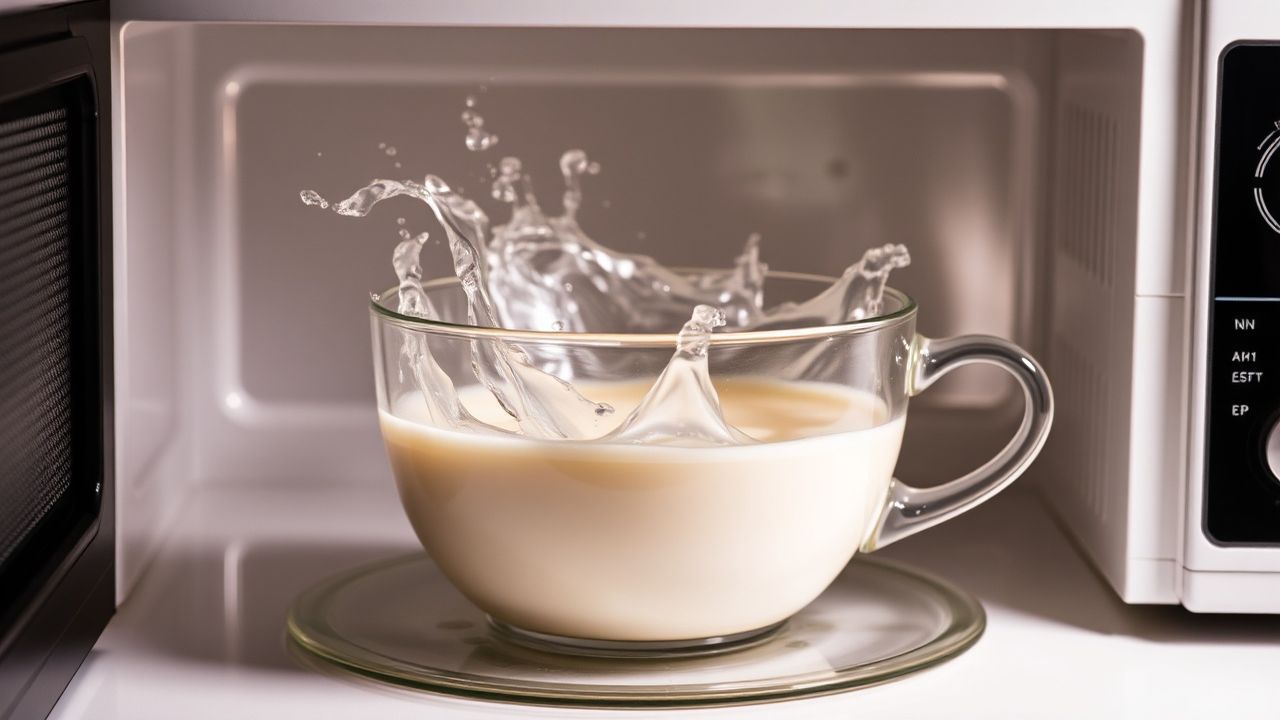
Distilled water: Heats rapidly and often becomes superheated because it lacks dissolved gases and particulates that promote bubble nucleation. When disturbed, superheated water can erupt violently and cause scalding.
When testing distilled samples, watch for a smooth, glassy surface that hides energy above the boiling point. See the controlled explanation of superheating at superheating (phenomenon).
Olive oil and fats: Heat slowly in a microwave; oils are less polar and convert less microwave energy into heat. They develop surface hotspots that can reach smoking or ignition temperatures without visible boiling behavior.
Because oils reach much higher temperatures before vaporizing, stop heating at the first sign of smoke and use stovetop methods for high-temperature cooking. Oils rarely form bubbles, so rely on shimmer and odor cues.
Whole milk: Contains proteins, fats, and sugars that change its heating profile and promote skin formation on the surface. The skin traps steam and can cause the liquid to froth or boil over suddenly.
Heat milk in short bursts and stir between intervals to collapse surface film and redistribute heat. For composition context, review milk (animal product).
Salted water: Dissolved salts raise the boiling point slightly and alter nucleation dynamics. Solutes delay bubble formation and can mask the approach to a boil, so handle with extra care.
Salt changes surface tension and the microscopic sites where bubbles form; therefore, salted samples often show delayed visible boiling compared with pure water.
Practical microwave boiling safety and timing
Plan for short, monitored heating windows: typical runs total 2–10 minutes split across short cycles depending on microwave wattage and the liquid. Use higher-sided containers to reduce boil-over risk and always handle with protective gear.
For a safe simmer-like result in water or milk, begin with a 1–2 minute interval at reduced power. If small bubbles rise steadily from the bottom, the sample has reached a stable simmer and you can stop heating.
Microwave boiling applications: When to use each heated liquid
Warm milk suits beverages like hot chocolate, lattes, and recipes that require controlled temperature rather than rapid boiling. Reheat gently to avoid skin and scalding and always stir before serving.
Briefly warmed olive oil unlocks aroma for dressings or infusions; heat at low power and for short bursts to extract herbal notes without damaging flavors or risking ignition. For culinary technique, test small volumes first.
Salted water is useful for blanching or dissolving seasonings, but its higher effective boiling point demands attention; delayed bubbling can hide rapid steam release. Use a thermometer or visual cues to judge readiness.
Understanding these differences improves food quality and reduces kitchen accidents. For context on water properties, consult water.
Microwave boiling troubleshooting and advanced tips
If you see uneven heating or cold spots, switch to lower power and add scheduled stirring breaks. Rotating the container by hand between cycles also helps distribute energy more uniformly in ovens without turntables.
Replace scratched or glossy-smooth containers when possible: highly smooth surfaces reduce nucleation and increase superheating risk. Minor surface roughness or a wooden stick provides safe nucleation points.
Advanced timing cues
Use infrared thermometers or probe thermometers for exact control when preparing sensitive recipes. Visual cues—small rising bubbles, consistent steam, and absence of sudden surface tension changes—help you stop at the correct temperature.
For oils and high-fat liquids, check every 30 seconds after the first minute and stop at the first hint of smoke. For volatile applications, prefer stovetop control where you can directly sense and disperse hotspots.
FAQ: microwave boiling questions
Why does my water sometimes erupt when I take it out of the microwave?
Water can become superheated when it lacks nucleation sites. When you disturb the cup, the trapped energy forms vapor bubbles suddenly and violently, causing eruptions. Prevent this by introducing a spoon or stirring between cycles.
Is milk safer to microwave than water?
Milk carries solids and fat that provide nucleation, so it tends to resist superheating compared with distilled water. However, milk forms surface skin and can boil over, so heat in short bursts and stir frequently to avoid spills and scorching.
Can I heat oil in the microwave for cooking?
You can gently warm oil to release aromas, but do not attempt to reach typical stovetop cooking temperatures in a microwave. Oils hide hotspots and can smoke or ignite; use a pan for high-heat cooking and short microwave checks for flavor extraction only.
Does container material change microwave boiling behavior?
Yes. Glass and ceramic differ from plastics in heat transfer and surface finish. Smooth, glossy surfaces reduce nucleation and increase superheating risk; scratched or textured surfaces promote bubble formation. Always use microwave-safe, undamaged vessels.
How do I avoid superheating in future microwave boiling attempts?
Use lower power settings, heat in short intervals, stir regularly, and add a wooden stir stick or a teaspoon to provide nucleation. Cover containers loosely to contain splashes while letting steam escape, and test unfamiliar combinations in small quantities first.
Related internal reading: explore practical tips and experiments on microwave boiling and detailed safety protocols at microwave heating safety for further guidance.
See also: microwave boiling