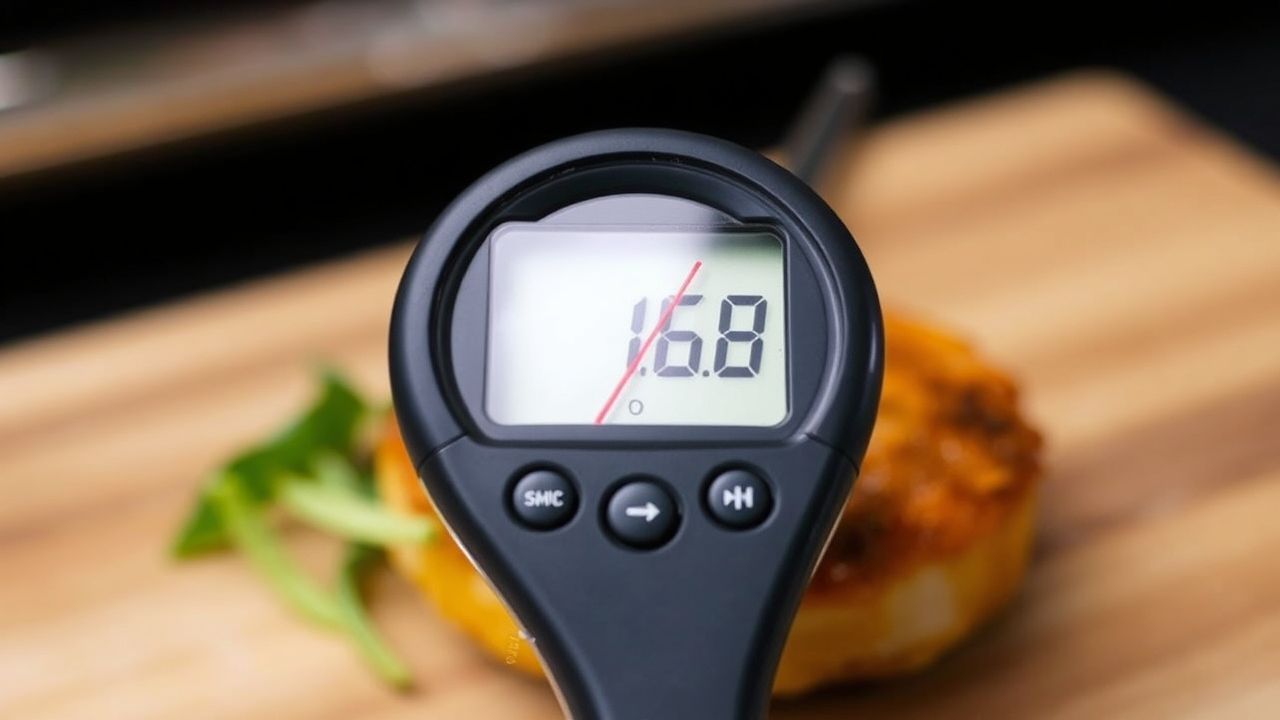

Carryover cooking is the final act that defines doneness and texture. Use a reliable thermometer and controlled resting to turn a good roast into a great one.
- Pull slightly low: aim 5–10°F (3–5°C) below final target for most cuts.
- Rest smart: allow 10–30 minutes depending on size to let juices redistribute.
- Probe placement matters: center thickest section without touching bone or fat.
- Use the right tool: instant-read for checks, leave-in probes for continuous monitoring.
What is carryover cooking?
Carryover cooking occurs when internal temperature rises after removal from a heat source. Residual heat stored in outer layers migrates inward and raises the center temperature by several degrees.
This concept applies across roast, steak, poultry, and even thick fish. Understanding carryover links directly to how heat transfers through muscle and fat, so knowing the physics helps you time the pull point precisely. For background on how heat affects food structure, consult this meat overview.
Why a thermometer matters
A thermometer removes guesswork. Visual cues like color or juices lie; temperature gives objective data so you can pull meat at the exact moment to account for carryover.
Temperature control improves juiciness, texture, and food safety. For core safety thresholds—especially for poultry—use validated temperature targets when planning your pull temperature; see food safety guidance.
Thermometer types and when to use them
Pick a thermometer that fits the task. Two common categories dominate pro and home kitchens: instant-read units and leave-in probe thermometers.
Instant-read thermometers
Instant-read devices give a quick temperature snapshot. Use them to check the thickest part of a cut right before you expect to pull; they are fast and less invasive.
Instant reads are ideal for steaks and thin roasts where you need frequent checks. However, avoid leaving them in during rest or oven cook time; they are for spot checks only. For basic technical context, read about the standard thermometer principles.
Leave-in probe thermometers
Leave-in probes monitor temperature continuously and record trends during the last phase of cooking. They allow you to pull based on the rising curve rather than a single reading.
Probes shine with large roasts and whole birds where carryover will be significant. Choose a probe with a thin stem and an accurate display; wireless probes add convenience when resting on the counter.
Practical pull temperatures and resting guidelines
Plan your pull point by subtracting the expected carryover amount from your target final temperature. Typical rise ranges from 5°F to 15°F (3–8°C) depending on mass, initial temperature, and cooking method.
Below is a quick reference table with common target final temperatures and recommended pull points plus resting times. Use these as starting points and refine by experience.
| Protein | Final Temp (F) | Pull Temp (F) | Rest Time |
|---|---|---|---|
| Beef steak (medium-rare) | 130–135°F | 125–130°F | 5–10 min |
| Beef roast | 135–145°F | 125–140°F | 10–30 min (size-dependent) |
| Pork (safe and juicy) | 145°F | 135–140°F | 10–20 min |
| Poultry (safe) | 165°F | 155–160°F | 10–20 min |
| Thick fish / salmon | 120–130°F | 115–125°F | 5–10 min |
Adjust the pull temperature if the piece has high thermal mass (dense bone, large diameter) or if you prefer carryover to finish the cooking. Always allow for a safety margin on poultry and ground meats per food-safety standards.
After a few tests you will learn how many degrees your typical roast climbs while resting. Keep a simple log of weight, oven temp, pull temp, and final result to speed mastery.
Probe placement and technique
Insert the probe into the thickest part of the cut, perpendicular to the muscle fibers. For bone-in pieces, avoid touching bone because bone reads hotter and will give a false high result.
Place probes so the tip sits at the geometric center of the thickest section. For long roasts, target the broadest cross-section rather than the narrow end.
Thickness, thermal mass, and crust management
Thick pieces store more residual heat and therefore have greater carryover. Thin fillets often show negligible rise; treat them as near-instant items.
Crisp crusts can soften during resting if wrapped tightly. Tent with foil loosely to retain heat while allowing steam to escape and preserve textural contrast.
After resting, slice against the grain for even texture and to display the correct doneness. Slicing too soon releases juices; wait until the internal pressure relaxes after rest.
Troubleshooting common issues
If a roast finishes too dry, identify whether the oven temperature was too high, the probe was misplaced, or the pull point was set too high. Record the failure mode and change only one variable at a time.
If the exterior lacks color, you probably pulled too early or the Maillard reaction did not develop. Higher initial sear heat or longer exposure at medium-high heat helps; learn more about browning chemistry at Maillard reaction.
FAQ
How many degrees does carryover cooking usually add?
Expect about 5–15°F (3–8°C). Small steaks will be at the low end; large roasts will be at the high end. Use the probe trend to refine this estimate for your specific roasts.
Should I tent with foil or leave uncovered when resting?
Tent loosely to hold heat without trapping steam if you want to preserve crust crispness. Tight wrapping creates condensation and softens crusts.
Can carryover cooking make undercooked meat safe?
Carryover adds limited heat and cannot reliably replace reaching safe internal temperatures while cooking. Always aim for the correct minimum safe temperature during the cook, especially for poultry and ground products.
What probe accuracy should I expect?
Aim for a probe accuracy of ±1–2°F. Calibrate periodically by testing in an ice water slurry (should read ~32°F/0°C) and near-boiling water, adjusted for altitude.
Does resting time differ for bone-in versus boneless cuts?
Yes. Bone-in cuts usually need longer rest because bone affects heat distribution and thermal mass. Increase rest time for large bone-in roasts by 5–10 minutes compared to a similar-sized boneless cut.
Mastery of carryover cooking comes from combining methodical temperature control with consistent technique. Use the guidance above, keep notes, and tune pull points to your kitchen and equipment. Over time, the thermometer will become your most reliable tool for consistent, juicy results.
See also: carryover cooking