
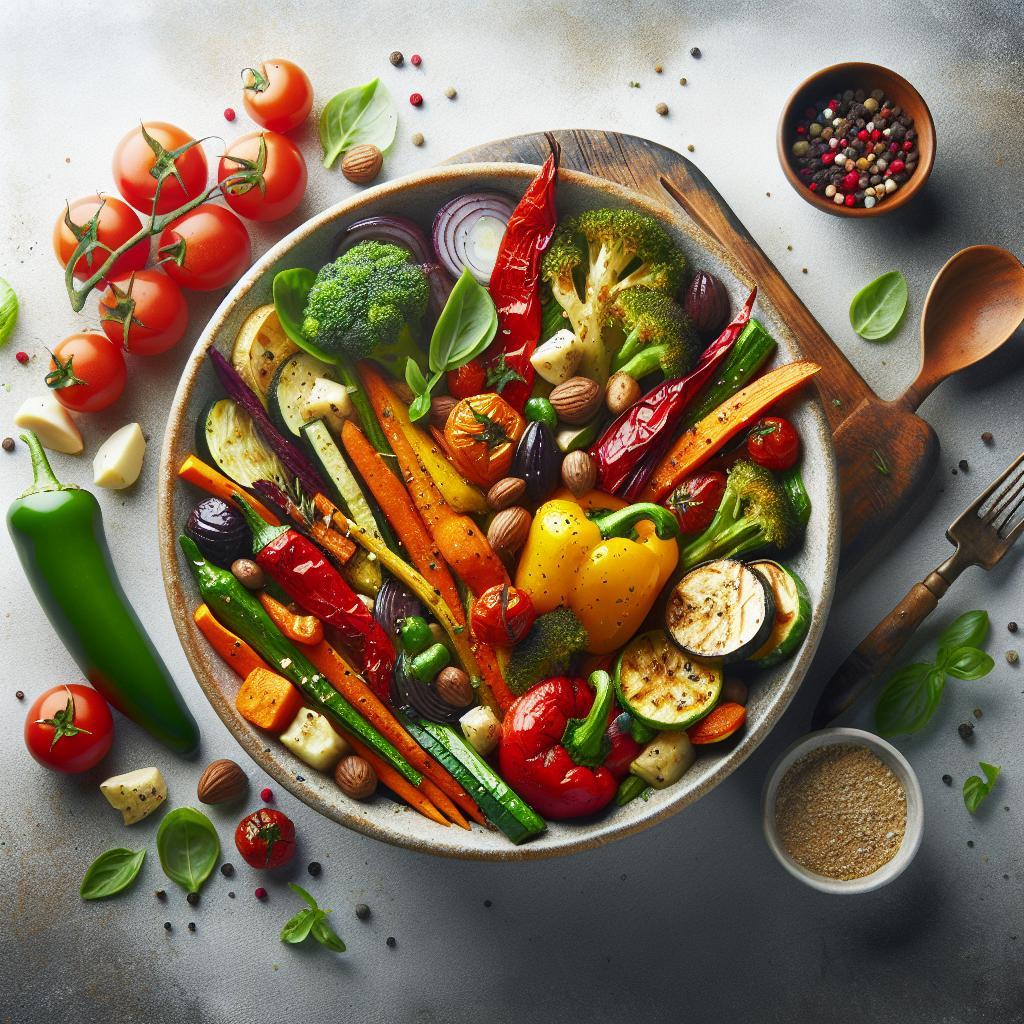

As autumn produce peaks, the kitchen becomes a workshop for precise heat, seasoning, and texture. This Flavorful Roasted Vegetable Medley focuses on technique that brings out natural sweetness and complex savory notes while keeping preparation straightforward for home cooks.
- Key textures: Aim for caramelized edges and tender interiors for balanced mouthfeel.
- Timing matters: Stagger root and soft vegetables to ensure even doneness.
- Seasoning baseline: Olive oil, smoked paprika, and thyme create a dependable backbone.
Prep and Cook Time
Preparation: Allow 20 minutes to wash, trim, and cut vegetables to consistent sizes. Consistent pieces equal even roasting and predictable texture.
Roasting: Roast at 425°F (220°C) for 35–40 minutes, turning once. Higher heat drives caramelization through Maillard reactions and caramelization, improving flavor concentration.
Yield
This recipe serves six as a colorful side dish and scales well for larger batches. Multiply ingredients by 2x or 3x and roast on separate sheet pans to avoid crowding and steaming.
Leftovers retain value: they work in salads, bowls, and blended preparations. Reheated vegetables regain crispness when refreshed briefly under high heat.
Difficulty Level
Easy. The technique emphasizes simple, repeatable steps that deliver consistent results for cooks at any skill level. Focus on cut uniformity and high oven temperature to get professional outcomes.
Time management and mise en place reduce errors. When you prep ingredients before heating the oven, the roast proceeds without stress.
Ingredients
Gather fresh, firm produce and pantry staples for a balanced medley. Use high-quality extra virgin olive oil to coat pieces and promote even browning; learn more about oil selection at Olive oil.
Below are the ingredients for a six-serving batch; adjust ratios to taste and seasonality. Substitute similar-textured vegetables when needed to preserve cooking times.
- 2 cups baby carrots, trimmed
- 1 large red bell pepper, cut into 1-inch pieces
- 1 medium zucchini, sliced thickly
- 1 cup Brussels sprouts, halved
- 1 medium red onion, cut into wedges
- 1 medium sweet potato, peeled and cubed
- 4 cloves garlic, minced
- 3 tbsp extra virgin olive oil
- 1 tsp smoked paprika
- 1 tsp dried thyme
- ½ tsp ground cumin
- Salt and freshly cracked black pepper to taste
- Fresh parsley for garnish
Spice blend and swaps
Use smoked paprika and thyme as a neutral, autumnal base, then test variations like rosemary or za’atar. Small swaps maintain integrity while expanding flavor range.
For sharper aromatic notes, add a pinch of red chili flakes or smoked chili powder. If you prefer herb-forward profiles, finish with lemon zest and fresh herbs just before serving.
Instructions
Preheat your oven to 425°F (220°C) and prepare a rimmed sheet pan with parchment or a silicone mat. A rimmed pan prevents juices from pooling and encourages even contact between vegetables and hot metal.
Cut vegetables into similar-sized pieces to ensure uniform cooking. Uniformity prevents a mix of undercooked interiors and burnt edges.
Step-by-step roasting
- Combine carrots, bell pepper, zucchini, Brussels sprouts, onion, sweet potato, and garlic in a large bowl.
- Coat with olive oil and toss to ensure even coverage; oil conducts heat and promotes browning.
- Season with smoked paprika, thyme, cumin, salt, and pepper; toss to distribute spices evenly.
- Spread in a single layer on the prepared baking sheet—do not crowd the pan.
- Roast for 35–40 minutes, turning once halfway. Roast until tender with deep golden edges.
- Rest for 5 minutes off the heat before plating to let flavors settle.
If you include quick-cooking vegetables, add them halfway through roasting to avoid overcooking. Adjust roasting time for different ovens; convection ovens often reduce time by 10–15%.
Tips for Success
Choose firm, blemish-free vegetables for predictable texture and flavor outcomes. Seasonal produce offers the best sugar content for caramelization and concentrated taste.
Monitor the roast during the last 10 minutes to control the level of browning. Small adjustments at the tail end make the difference between slightly caramelized and deeply charred.
- Vegetable selection: Opt for fresh, firm produce free from blemishes; seasonality improves results.
- Cut size: Keep pieces consistent—this prevents burning or uneven cooking.
- Enhance sweetness: Add a light drizzle of maple syrup or honey in the final 5 minutes for extra glaze; the sugars will brown quickly.
- Make ahead: Roast in advance and reheat briefly at high heat for revived texture.
- Seasoning variations: Swap thyme for rosemary or add za’atar for a Middle Eastern twist.
Creative Serving Suggestions
Serve the medley alongside whole grains like quinoa or farro to build a complete dish; see general grain profiles at Quinoa. Grains supply chewy contrast and additional protein.
Garnish with parsley, toasted seeds, or pine nuts for texture and flavor contrast. Pair the vegetables with a creamy hummus, tahini, or a lemon-yogurt drizzle for balance.
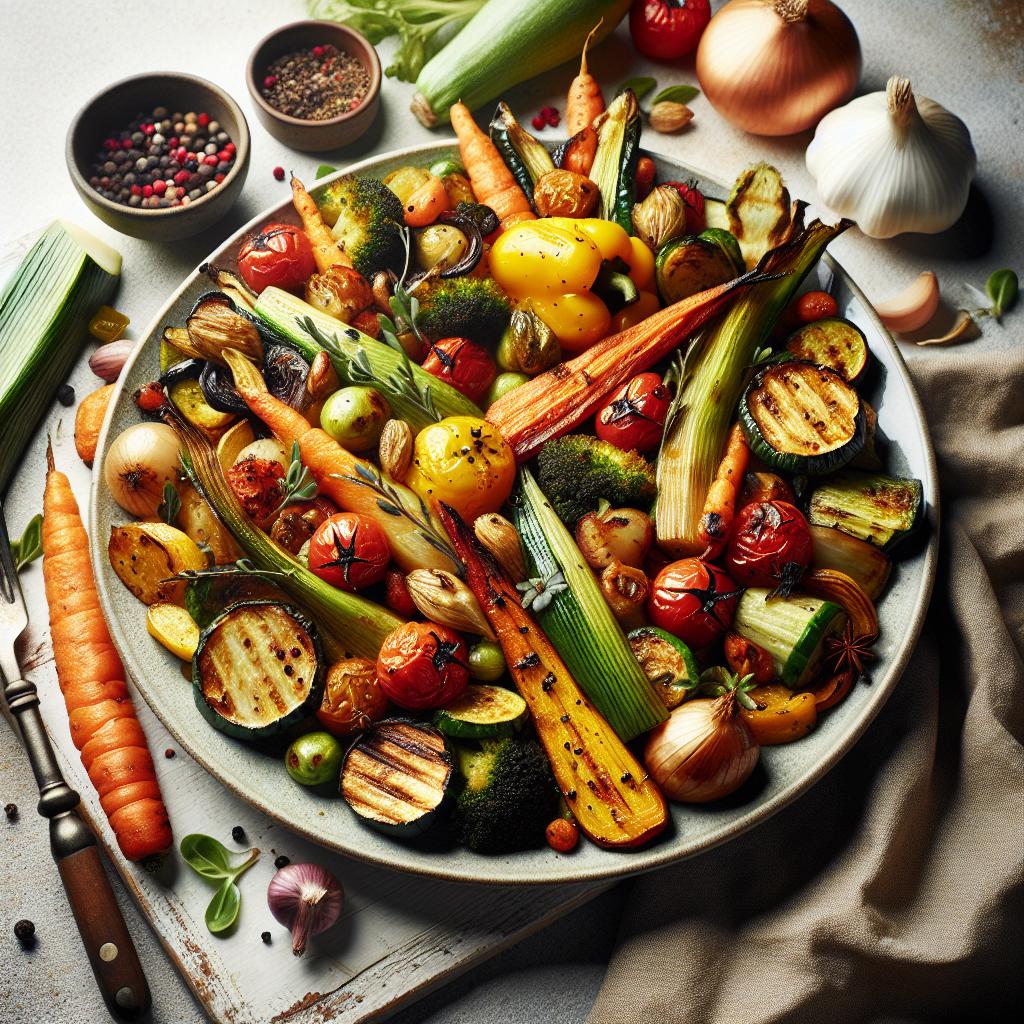
For an elevated presentation, mound the vegetables on a wide platter and sprinkle with toasted seeds and a scattering of fresh herbs. This technique suits holiday tables and buffets where visual appeal matters.
If you want further technique notes and seasonal selection ideas, consult our Ultimate Guide to Roasted Vegetables or the seasonal produce guide for pairing suggestions and shopping tips.
Nutritional Profile
Roasted vegetables provide fiber, vitamins, and moderate calories, depending on oil and portion size. A typical six-serving recipe yields about 160 calories per serving, with modest protein and healthy fats.
Roasting can concentrate flavors without large added fats, provided you limit oil to a thin coating. To learn how heat affects nutrients, review principles in food chemistry and cooking thermodynamics at Roasting (cooking).
| Nutrient | Per Serving |
|---|---|
| Calories | 160 |
| Protein | 3g |
| Carbohydrates | 24g |
| Fat | 7g |

FAQ
What is the best oven temperature for roasting vegetables?
Use 425°F (220°C) for reliable caramelization and tender interiors. Higher temperatures accelerate Maillard reactions and reduce overall cook time, but watch closely to prevent burning.
How do I ensure even roasting when mixing root and soft vegetables?
Cut root vegetables smaller or start them 10–15 minutes before adding softer vegetables. Alternatively, remove tender items early or add them later in the roast to synchronize doneness.
Can I roast vegetables ahead of time and reheat them?
Yes. Store cooled vegetables in an airtight container for up to four days. Reheat briefly at high heat or use a hot skillet to restore caramelized edges and minimize sogginess.
Which oils and fats work best for roasting?
Use oils with moderate to high smoke points; extra virgin olive oil provides flavor and works at the temperatures recommended here. For higher heat or different flavor profiles, choose refined olive oil or avocado oil.
How do I add color and crunch after roasting?
Finish with toasted nuts, seeds, or a quick squeeze of lemon to brighten flavors. Fresh herbs like parsley or chopped chives add color and aromatic lift.
For botanical context on specific vegetables such as Brussels sprouts, consult the detailed entry at Brussels sprout. For sugar transformations during cooking, the caramelization article provides clear chemical background.
Dive into the harvest and master this medley with controlled technique, thoughtful seasoning, and smart timing. Use the internal guides above for extra recipes and seasonal tips to keep your kitchen inspired.
See also: Roasted Vegetables