
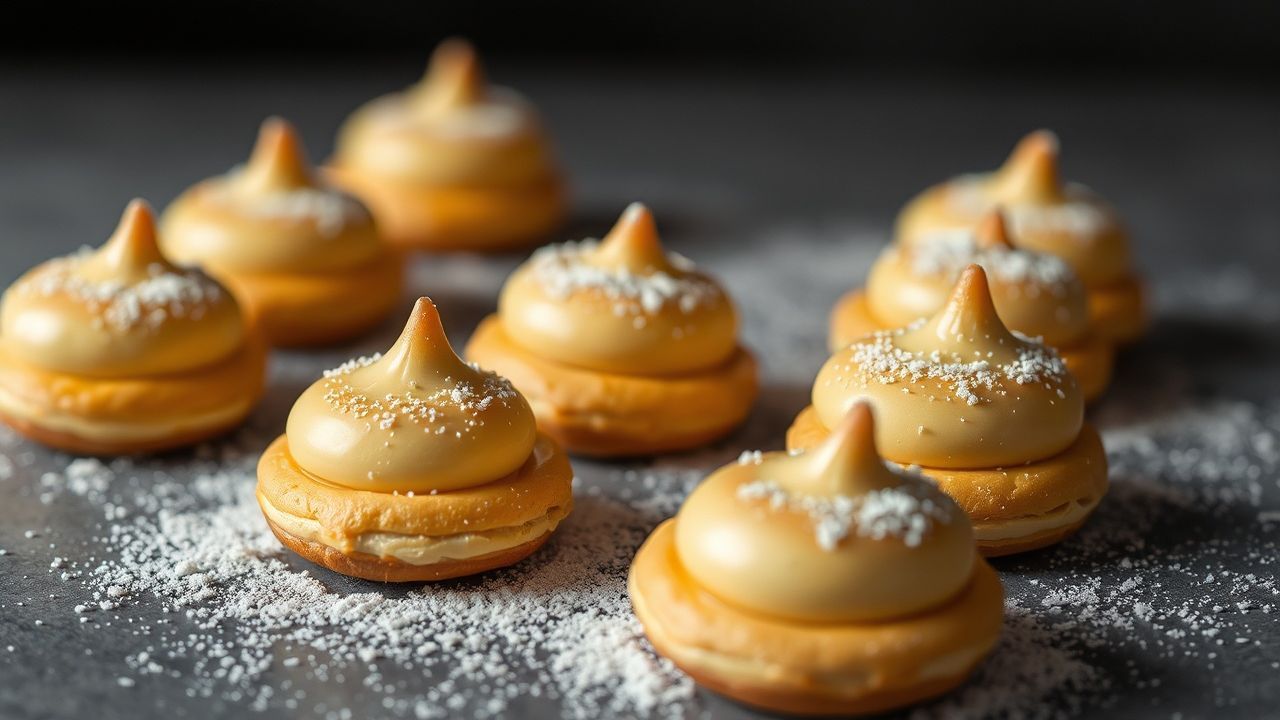

Beneath a golden, crisp shell, choux pastry hides a careful balance of heat, moisture, and timing. As a pastry chef with decades of kitchen experience, I rely on precise technique to produce hollow, stable shells for éclairs and profiteroles. Proper method turns simple ingredients into reliable, airy results every bake.
- Foundations: What Is Choux?
- Prep and Cook Time
- Yield and Difficulty
- Ingredients and Why They Matter
- Step-by-Step Instructions
- Tips for Consistent Success
- Creative Filling Ideas and Flavor Pairings
- Storing, Reheating, and Serving
- Related Techniques and Further Reading
- Science Behind the Rise
- Visual Guide and Nutrition
- FAQ
- Steam-driven rise: Choux puffs through trapped moisture, not chemical leaveners.
- Stove drying matters: Brief heat after adding flour sets structure before eggs arrive.
- Egg control: Add eggs slowly to reach a glossy, pipeable consistency.
Foundations: What Is Choux?
Choux, or pâte à choux, differs from laminated or enriched doughs. It relies on high internal moisture that converts to steam and inflates the dough during baking.
Unlike puff pastry, which uses layers of butter and folding, choux forms from a cooked paste of water, fat, and flour. That hot paste accepts eggs to create extensibility and structure for the steam to work against.
Prep and Cook Time
Preparation: 15 minutes. Cooking: 30 minutes. Total: 45 minutes.
These time blocks assume piped mounds baked on a preheated sheet and a single-batch workflow. Allow extra minutes for cooling and filling if you plan to assemble plated desserts.
Yield and Difficulty
Yield typically reaches about 20 medium-sized choux buns from the recipe below. Yield varies with piping size and moisture in the dough.
Difficulty rates as medium: execution requires attention to heat, dough texture, and oven behavior. Beginners succeed faster when they follow measured steps and practice a couple of times.
Ingredients and Why They Matter
Use precise measurements for water, butter, flour, salt, and eggs. Each ingredient performs a clear function: water provides steam, butter adds fat and flavor, flour builds structure, and eggs give moisture and elasticity.
Choose all-purpose flour for a balance between protein and tenderness. High-protein flours can tighten the crumb and inhibit expansion, while very low-protein flours undermine structure.
Recipe: Classic Choux Pastry
Ingredients:
- 1 cup water
- 8 tablespoons unsalted butter (1 stick), cut into cubes
- 1/2 teaspoon salt
- 1 cup all-purpose flour, sifted
- 4 large eggs, room temperature
- 1 tablespoon granulated sugar (optional)
This quantity delivers about 20 medium puffs. Scale proportionally for larger batches and weigh ingredients for repeatable results.
Step-by-Step Instructions
Preheat your oven to 400°F (200°C) and place the oven rack in the center for even heat. Line baking sheets with parchment and fit a piping bag with the tip of your choice.
Combine water, butter, salt, and sugar in a medium saucepan. Bring to a gentle boil, stirring until the butter melts and the mixture becomes uniform.
Remove from heat and add all sifted flour at once. Stir vigorously with a wooden spoon until a smooth paste forms and pulls away cleanly from the pan sides. This step gelatinizes starch and concentrates moisture.
Return the pan to low heat and stir the dough for 1–2 minutes to dry it slightly. Transfer to a mixing bowl and cool for 3–5 minutes until warm to the touch but not hot.
Add eggs one at a time, beating after each addition until the mixture becomes glossy and holds shape on a spoon. The final dough should be pipeable but thick enough to mound without collapsing.
Pipe mounds two inches apart on prepared sheets. Bake at 400°F for 10 minutes to trigger rapid steam expansion, then reduce to 350°F (175°C) and bake 20 more minutes until golden, puffed, and dry to the touch.
Switch off the oven, open the door slightly, and let choux rest inside for 10 minutes. This slow cooling completes the internal drying and reduces the risk of collapse.
Tips for Consistent Success
Flour choice: Use all-purpose flour for consistent gluten and structure. Weigh your flour to avoid dense results caused by scooping.
Egg temperature: Room-temperature eggs blend more uniformly and yield a smooth, glossy paste. Cold eggs can slow incorporation or curdle the mix.
Drying the dough on the stovetop makes the difference between hollow, stable shells and dense puffs. The brief reheating expels free water that would otherwise steam too aggressively.
Baking temperature control: Start hot to create rapid expansion, then lower to finish cooking without excessive coloration. Avoid opening the oven during that first rise window.
[p class=”callout”]
For make-ahead convenience, bake shells fully, cool, and freeze on a tray before bagging. Reheat in a 350°F oven for 5–7 minutes before filling to refresh crispness.
Creative Filling Ideas and Flavor Pairings
Classic fillings include vanilla pastry cream or chocolate ganache. For contrast, try citrus curds, salted caramel, or flavored whipped creams for seasonal variations.
Savory options transform choux into appetizers. Fill shells with herbed cheese mousses, smoked salmon rillettes, or warm mushroom duxelles paired with grated aged cheese.
Use garnish sparingly: a dusting of powdered sugar, a thin chocolate glaze, or micro-herbs can elevate presentation without masking texture.
Storing, Reheating, and Serving
Store unfilled choux in an airtight container at room temperature for up to 48 hours. Filled shells keep best refrigerated and should be consumed within 24 hours to preserve crispness.
To re-crisp frozen shells, warm briefly in a preheated oven rather than using a microwave. Pipe or spoon fillings just before serving to retain the contrast between crisp exterior and creamy interior.
Related Techniques and Further Reading
Choux knowledge pairs well with laminated and enriched dough skills. Explore complementary skills like puff pastry folding in our puff pastry techniques guide to broaden plated dessert options.
For foundational skill-building, review basics in heat control, egg handling, and mise en place at our baking basics resource. Reinforce theory with practice: precise timing and small test bakes speed mastery.
Science Behind the Rise
Steam powers the choux rise: water in the dough vaporizes and expands rapidly, creating internal pressure that inflates the shell. The gelatinized starch structure sets around the steam to hold shape.
For technical context, compare choux mechanics to simple steam expansion described on Steam. This physical process explains why controlling free moisture and oven temperature matters.
Visual Guide and Nutrition
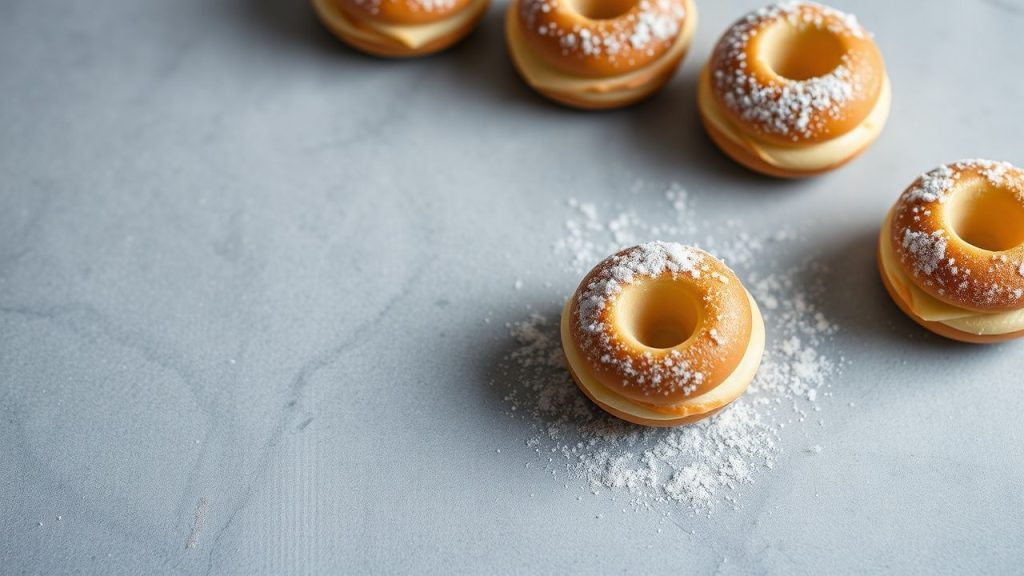
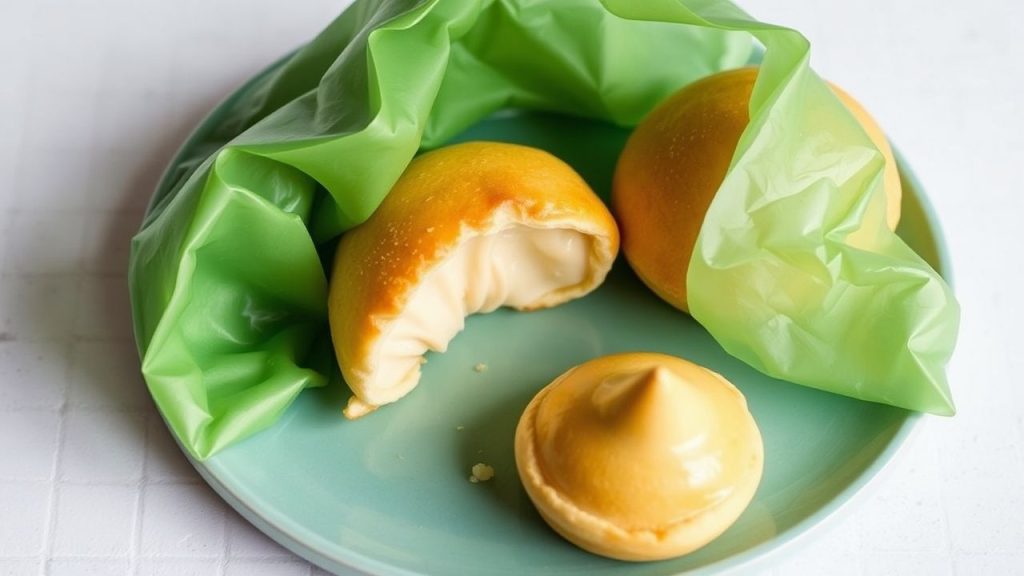
Photographs of the baked shells help diagnose issues like underbaked centers or collapsed crowns. Visual checks remain a quick tool alongside thermometers and texture tests.
A typical medium choux contains about 95 calories with modest protein and fat levels, making it a light vessel for richer fillings. Balance portion size and filling richness for menu planning.
FAQ
What is the difference between choux and puff pastry?
Choux forms from a cooked paste and rises through steam rather than layered lift. Puff pastry relies on alternating layers of dough and butter that separate into flakes when baked.
Both produce light textures but through distinct mechanical and structural pathways. Choose choux for hollow shells and puff pastry for flaky layers.
Why did my choux collapse after baking?
Collapse usually results from excessive internal moisture or premature cooling. Ensure you dry the dough on the stovetop, finish cooking in the oven until dry, and allow gradual cooling with the door ajar.
Also verify oven accuracy; low temperature can prevent the structure from setting before steam dissipates.
Can I make choux gluten-free?
Gluten-free choux requires flours that mimic wheat starch behavior, usually a blend with tapioca, rice flour, and a binding agent. Expect different textures and adjust hydration and drying times experimentally.
Work in small test batches and document changes to egg volume or oven time to dial in a reliable method for alternative flours.
How do I store filled choux to preserve texture?
Fill choux just before serving whenever possible. If you must prefill, use a sealed container, refrigerate, and consume within 24 hours to keep the shell from softening excessively.
Re-crisp by draining excess moisture from fillings and reheating briefly in an oven rather than a microwave.
Where can I read more on classic choux recipes and history?
Read the pastry entry on Éclair and the profiterole overview at Profiterole for historical context and variations across cultures.
Combine these readings with hands-on practice, and consult technical baking texts when converting recipes by weight for consistent, professional results.
See also: Choux pastry