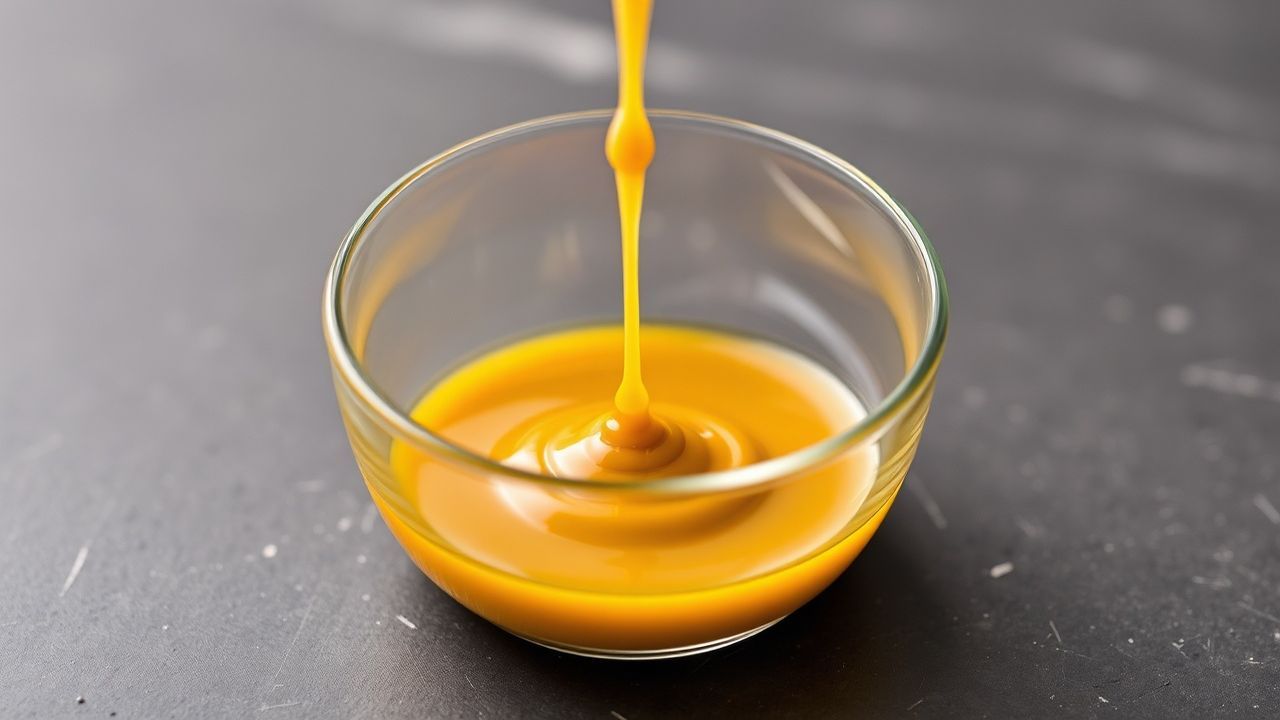

Mustard emulsions deliver a reliably stable, silky dressing when executed correctly. Professional cooks favor mustard because its proteins and polysaccharide mucilage actively coat oil droplets and slow separation, so you get consistent texture and shelf life.
- Why mustard stabilizes emulsions
- Core recipe and measured approach
- Practical tips for consistent results
- Science-backed variables that affect stability
- Fixes and troubleshooting
- Chef’s notes — texture, flavor, and scale
- Serving suggestions and variations
- Nutrition and shelf life
- Practical examples and related concepts
- FAQ
- Function and flavor: mustard supplies interface-active molecules while contributing bright, savory notes.
- Repeatable method: room-temperature ingredients and a slow oil stream create small droplets that resist coalescence.
- Vegan binder: mustard can replace egg yolk in many vinaigrettes, offering plant-based stability.
- Troubleshooting: broken dressings often recover with a small fresh aqueous base and steady whisking.
Why mustard stabilizes emulsions
Mustard emulsions stabilize because seed proteins adsorb to the oil-water interface while mucilage increases continuous-phase viscosity. These two actions reduce surface tension and slow droplet motion, which limits coalescence and creaming.
The mechanism parallels other culinary stabilizers but uses seed-derived amphiphiles rather than pure lecithin. For background on interfacial science see emulsion (chemistry) for core terminology and processes.
Molecular actors and how they work
When you grind or whisk mustard, proteins with hydrophobic and hydrophilic domains migrate to oil droplets and form a protective shell. That adsorbed protein layer reduces direct droplet contact and raises the energy barrier for coalescence.
Simultaneously, mustard mucilage — a mix of soluble polysaccharides — thickens the aqueous phase and slows droplet diffusion. For technical context on polysaccharide function consult polysaccharide concepts.
Core recipe and measured approach
The following recipe yields about 1 cup of stable mustard vinaigrette and highlights the functional balance between emulsifier, acid, and oil. Maintain proportions and technique as you scale to preserve droplet size and texture.
Core formula: 2 tbsp Dijon or stone-ground mustard, 1/4 cup white wine vinegar or lemon juice, 1/2 cup neutral oil or extra-virgin olive oil at room temperature, 1 tsp honey (optional), salt and pepper to taste.
Ingredients (yields ~1 cup)
Use either Dijon for a smooth silk or stone-ground for rustic texture; both support stable mustard emulsions. Optional additions such as 1–2 tbsp full-fat yogurt or a small mashed avocado increase viscosity and mouthfeel without changing process control.
Choose a neutral oil for larger batches if you want mustard to remain the dominant flavor. Avoid very cold oils; they raise viscosity and make droplet breakup harder, which increases separation risk.
Method: controlled emulsification
Combine mustard, acid, honey, and salt in a bowl and whisk until the aqueous phase loosens and becomes slightly viscous. This pre-emulsified base readies the interface for efficient protein adsorption and more uniform droplet formation.
Whisk the base vigorously while streaming oil in a thin, steady thread; maintain motion for 2–3 minutes until the dressing thickens and shines. For scaled batches, use a low-speed blender and pour oil through the feed tube in a narrow stream to preserve droplet-size control.
Practical tips for consistent results
Keep all ingredients close to room temperature so proteins remain mobile and mucilage can hydrate properly. Small, uniform droplets and an adequately viscous continuous phase give you the longest-lasting mustard emulsions.
Acidity helps by partially unfolding proteins and increasing interfacial activity, but excessive acid or salt can collapse mucilage structure. Balance acid level and salt to preserve both flavor and stability.
If a dressing breaks, start a fresh small base — about one teaspoon mustard or a tablespoon of warm water — then whisk the separated dressing slowly into that base. Alternatively, whisk in a teaspoon of warm water or a bit more mustard to re-establish interfacial coverage and shear the mixture back into uniformity.
Science-backed variables that affect stability
Temperature, shear energy, droplet-size distribution, and continuous-phase viscosity strongly control emulsion behavior. Smaller, more uniform droplets and a thicker aqueous phase slow creaming and separation.
Soluble solids like sugar, salt, and acid shift protein charge and hydration. Controlled amounts of acid improve protein adsorption, while too much salt or extreme pH reduces mucilage swelling and undermines stability.
Fixes and troubleshooting
If a vinaigrette appears greasy or phase-separated, increase the aqueous ratio and re-emulsify. Add a fresh small portion of mustard or a tablespoon of warm water and whisk the broken dressing into that base in a slow, steady action.
Mechanical tools can help. A small immersion blender on low speed breaks oil into finer droplets with controlled shear, but avoid high-speed blending that heats and may denature proteins used in mustard emulsions.
Chef’s notes — texture, flavor, and scale
Match mustard style to your target mouthfeel: smooth Dijon yields a refined silk, while stone-ground yields a coarse texture with visual interest. Adjust oil quality and intensity to balance flavor without destabilizing the emulsion.
When scaling, maintain the same oil-to-aqueous ratio and preserve slow addition. Use a food processor at low speed and pour oil through a narrow feed to keep droplet-size control when making larger batches.
Explore related internal resources for further technique: vinaigrette recipes and Mustard emulsions tag provide practical variations and tested proportions.
Serving suggestions and variations
Mustard emulsions adhere well to salads, roasted vegetables, grilled fish, and poultry, delivering acid and fat in balanced bites. They also make efficient marinades when thinned slightly with water or additional acid.
Try swapping vinegars, adding roasted shallot purée, herbs, or a spoonful of miso for umami depth. For creamier styles, fold in yogurt or crème fraîche while keeping oil addition slow to maintain droplet control.
Nutrition and shelf life
A typical two-tablespoon serving contains roughly 120 calories, mostly from the oil. Mustard contributes negligible calories but adds trace micronutrients and plant-derived bioactive compounds that may offer mild antimicrobial benefit.
Store mustard emulsions in a sealed container in the refrigerator for up to seven days. Always shake or whisk briefly before serving to re-disperse any micro-separation and check aroma and appearance for freshness.
Practical examples and related concepts
Use mustard as a plant-based alternative to egg yolk in light sauces; its mechanism resembles other culinary emulsifiers but relies on seed proteins and mucilage rather than lecithin alone. For a comparison on lecithin and its emulsifying role see lecithin.
For general reference on the condiment and varieties, consult the mustard article and classic dressing composition sources such as mustard (condiment) and vinaigrette. These entries clarify historical use and composition while supporting practical technique.
FAQ
What specifically in mustard stabilizes emulsions?
Mustard supplies proteins that adsorb at the oil-water interface and soluble polysaccharide mucilage that increases continuous-phase viscosity. The dual action reduces droplet collision and coalescence in mustard emulsions.
Can mustard replace egg yolk in all recipes?
Mustard replaces egg yolk in many vinaigrettes and light sauces, especially for plant-based needs. However, egg yolk lecithin still offers unmatched stability for heavy emulsions like traditional mayonnaise.
Why did my mustard dressing split, and how do I fix it?
Common causes include cold oil, too-rapid oil addition, or excessive salt or acid. To fix a split dressing, whisk a small fresh base of mustard or warm water and slowly incorporate the separated mixture back into that base.
Which mustard types work best for emulsifying?
Dijon and stone-ground mustards perform consistently due to balanced protein and mucilage content. Highly flavored or oil-added commercial mustards can vary, so test a small sample before scaling a recipe.
How long will a mustard vinaigrette keep in the refrigerator?
Properly stored in a sealed container, a mustard vinaigrette remains usable for up to seven days. Always re-whisk or shake before use to re-suspend any light separation common in stored emulsions.
See also: mustard emulsions