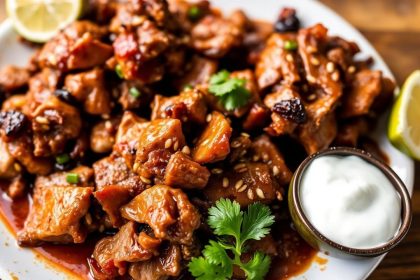


Carbonnade Flamande is a classic Belgian beef stew that relies on precise browning, measured acidity, and long, gentle braising to produce meltingly tender meat and a glossy sauce. This piece explains the practical chemistry and techniques a cook must control to reproduce the dish consistently.
- Overview and Heritage
- Prep and Cook Time
- Yield and Serving
- Difficulty Level and Equipment
- Ingredients
- Instructions
- Tips for Success
- Serving Suggestions
- Nutritional Snapshot
- Science Behind Key Techniques
- Q&A
- What cut of beef works best?
- Can I substitute the beer?
- How do I fix a thin sauce?
- Is make-ahead practical?
- What temperature should I braise at?
- In Retrospect
- Key takeaway: controlled browning and slow, moist heat transform collagen into gelatin for a silky mouthfeel.
- Key takeaway: beer choice and sugar balance determine the stew’s bitter-sweet profile.
- Key takeaway: long resting time concentrates flavors and allows the sauce to finish naturally.
Overview and Heritage
Carbonnade Flamande sits squarely in the corpus of Carbonade flamande preparations; it represents Flemish regional cooking that pairs inexpensive beef with robust beer. The recipe evolved to extract maximum flavor from tough cuts through time and heat rather than expensive ingredients.
The dish also reflects broader elements of Belgian cuisine, where beer serves as both an ingredient and a cultural signifier. Understanding that context helps a cook select appropriate beer styles and accompaniments for authenticity.
Prep and Cook Time
Preparation: 30 minutes. Focus your mise en place: measured flour, trimmed beef, and sliced onions ready before heat hits the pan.
Cooking: 3–3½ hours in a low oven at roughly 300°F (150°C). The slow cycle is not passive: check for steam balance and skim occasionally to maintain clarity in the sauce.
Yield and Serving
Yield: Serves 6 hearty portions. This quantity scales predictably if you maintain meat-to-liquid ratios and oven temperature.
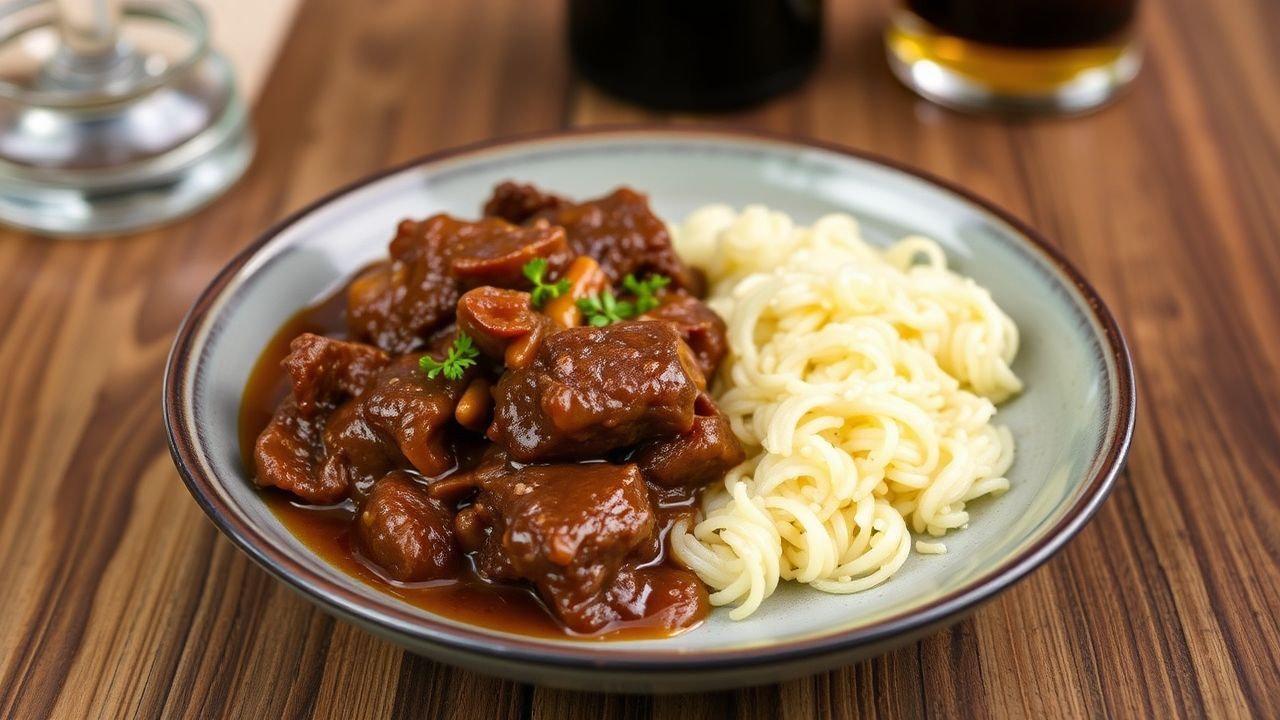
Serve over buttered mashed potatoes or thick slices of rustic bread to absorb the sauce. For further reading on stew variations, see our internal guide: Belgian Beef Stew Variations.
Difficulty Level and Equipment
Difficulty: Medium. The method demands attention during browning and the patience to braise slowly, but it does not require advanced knife skills.
Use a heavy Dutch oven or braiser for steady heat distribution. For technique reference, consult our internal resource on slow braising techniques to refine oven vs. stovetop control.
Ingredients
Below are practical ingredient choices and purpose-driven notes rather than optional decoration. Choose chuck or blade for connective tissue; they render gelatin when cooked low and long.
- 2 lbs (900g) beef chuck, cut into 1½-inch cubes
- 1 cup all-purpose flour, sifted
- 4 tbsp unsalted butter
- 2 tbsp neutral oil
- 3 large onions, thinly sliced
- 3 cloves garlic, finely minced
- 2 tbsp brown sugar
- 2 tbsp apple cider vinegar
- 12 oz Belgian dark ale or dubbel beer (use a malty, low-hop option)
- 2 cups beef broth
- 2 tbsp Dijon mustard
- 4 sprigs fresh thyme
- 2 bay leaves
- Salt and freshly ground black pepper, to taste
- 1 tbsp fresh flat-leaf parsley, chopped for garnish
- 2 tsp finely grated orange zest (optional)
Instructions
Follow a structured sequence: dry-coat, brown in batches, caramelize onions, deglaze, return meat, and finish with low, moist heat. Each stage builds a chemical and textural layer that the next stage refines.
Control is the theme: even heat during browning, gentle agitation when caramelizing onions, and a steady oven temperature during braise produce consistent results.
Browning the Beef
Pat beef dry and coat lightly with flour; this creates a thin starch layer that aids browning and slightly thickens the final sauce. Sear in hot butter and oil in batches to avoid steaming; aim for a rich, deep crust without burning.
Remove browned pieces to rest briefly. The browned bits left in the pot contain concentrated flavor compounds from Maillard reactions; preserve them for deglazing to build an umami backbone.
Caramelizing Onions and Aromatics
Cook onions low and slow until deeply golden. This process relies on caramelization and Maillard-type interactions to convert simple sugars into complex flavor molecules that balance the beer’s bitterness.
Add garlic near the end to avoid burning, then introduce brown sugar and vinegar to create a glossy glaze and a counterpoint of acid and sweetness that harmonizes the stew.
Deglaze and Assemble
Pour in beer to deglaze, scraping up browned bits with a wooden spoon. Follow with mustard, thyme, bay leaves, orange zest if using, return the beef and add broth so the meat is nearly submerged.
Bring to a gentle simmer on the stovetop, then cover and transfer to a 300°F (150°C) oven for 3–3½ hours. The consistent low temperature allows collagen to convert into gelatin without collapsing muscle fibers.
After braising, remove thyme and bay leaves, then adjust seasoning. Rest the stew covered for 10–20 minutes to let the sauce settle and thicken naturally.
Tips for Success
Selecting beef: Use well-marbled chuck or blade. These cuts contain collagen that becomes gelatin when cooked slowly, which yields a silky mouthfeel and rich body in the sauce.
Beer selection: Choose a malt-forward beer such as a dubbel or other dark Belgian ale; avoid heavily hopped styles that add grassy bitterness rather than malty sweetness. For context on Belgian beer styles, consult Beer in Belgium.
If sauce is thin after braising, finish uncovered on the stovetop and reduce gently until glossy. Cold refrigeration overnight often firms the sauce due to gelatin, so reheating gently restores the desired texture.
Serving Suggestions
Serve hot over buttered mashed potatoes, egg noodles, or thick country bread to capture the sauce. A light sprinkling of fresh parsley brightens the final plate.
For wine or beer pairing, return to the cooking beer or choose similarly malty, low-hop beverages that echo the stew’s caramel and toasted notes. Offer steamed green vegetables or glazed root vegetables for balance.
Nutritional Snapshot
The following values are estimates per serving and will vary with precise ingredients and portion size. Use these as a planning guide rather than a lab measurement.
| Nutrient | Per Serving |
|---|---|
| Calories | 450 kcal |
| Protein | 38 g |
| Carbohydrates | 20 g |
| Fat | 22 g |

Science Behind Key Techniques
The Maillard reaction is central to flavor development during browning; it produces heterocyclic compounds and melanoidins that deliver savory, roasted, and toasted notes. For a technical overview, see Maillard reaction.
Meanwhile, gelatin formation from collagen gives the sauce body and mouthfeel. Maintaining a low, steady temperature maximizes this conversion without denaturing proteins into dry textures.
Q&A
What cut of beef works best?
Use chuck or blade because they have sufficient connective tissue to render gelatin during slow cooking. Lean cuts lack this collagen and will produce a thinner mouthfeel.
Can I substitute the beer?
Yes, but substitute with care. Choose malt-forward dark ales rather than hoppy IPAs. You can also substitute beef stock and a touch of dark sugar for a non-alcohol version, but the beer contributes specific flavor compounds difficult to replicate fully.
How do I fix a thin sauce?
Simmer uncovered until the liquid reduces and the sauce thickens. Alternatively, remove some braised meat and reduce the liquid, then return the meat once the sauce reaches the desired gloss and viscosity.
Is make-ahead practical?
Yes. Carbonnade Flamande often tastes better the next day as flavors meld and the sauce firms. Reheat gently to avoid breaking the emulsion and to preserve meat tenderness.
What temperature should I braise at?
A stable oven at about 300°F (150°C) yields predictable results. The key is steady, even heat; fluctuations toward higher temperatures risk tightening proteins and evaporating volatile aromatics.
In Retrospect
Carbonnade Flamande rewards an analytical approach: controlled browning, measured acidity, and long, moist heat working together produce both depth and tenderness. When cooks respect these mechanical and chemical steps, the results consistently excel.
Embrace these practical techniques and repeat them. Over time you will learn subtle adjustments that match your ingredients and equipment, producing a reliably excellent Carbonnade Flamande.

See also: Carbonnade Flamande