
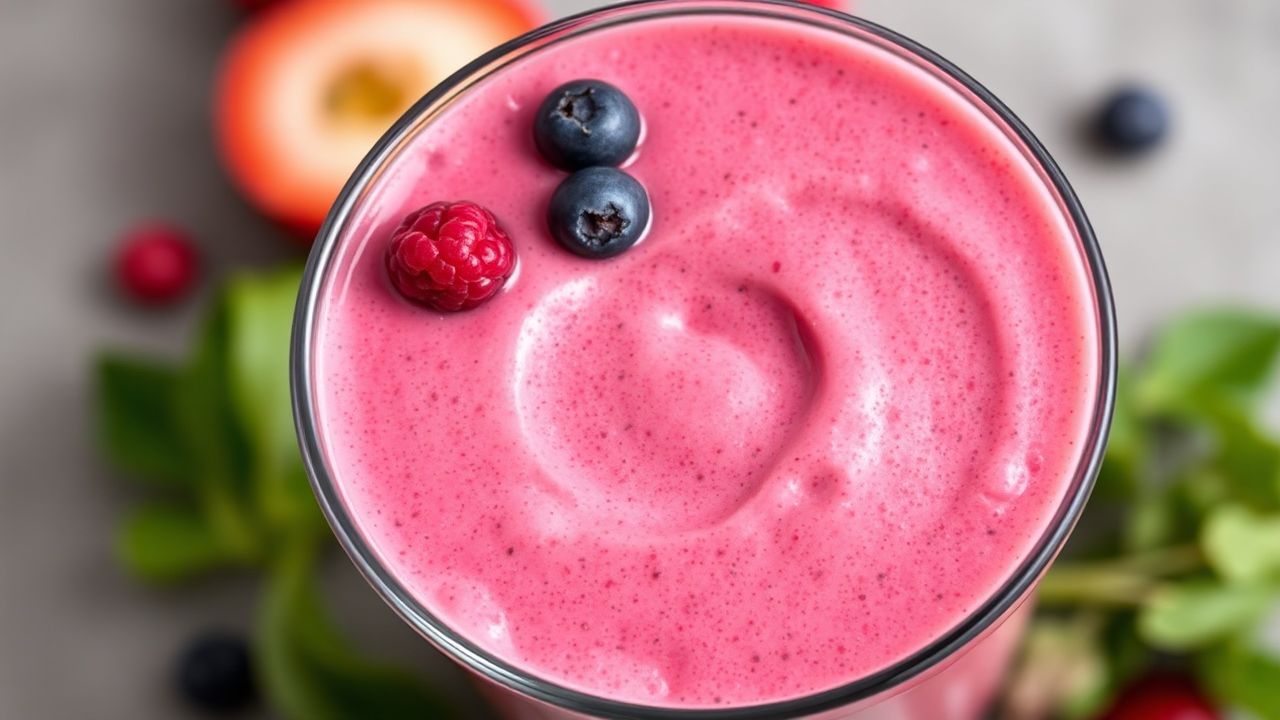

Smoothie Mastery condenses scientific principles and kitchen technique into practical steps that deliver reliably silky, nutrient-dense drinks. Intentional choices—ingredient chemistry, particle size, and blending sequence—determine texture, flavor clarity, and nutrient availability.
- The physics of a perfect blend: texture, particles, and emulsions
- Equipment and motor mechanics
- Ingredient selection: shaping nutrition, flavor, and body
- Blending technique: sequence, speed, and heat control
- Prep, timing, and workflow
- Yield and scaling
- Ingredients for a balanced, creamy smoothie
- Step-by-step instructions
- Chef’s notes and substitutions
- Serving suggestions
- FAQ
- Particle size controls mouthfeel and can increase nutrient extraction.
- Layering and order affect blending efficiency and color retention.
- Speed, duration, and temperature shape texture and preserve heat-sensitive vitamins.
- Smart swaps maintain creaminess while meeting dietary needs.
The physics of a perfect blend: texture, particles, and emulsions
Texture depends on how blades fragment solids and disperse fats into water to form a stable matrix. When fats and water mix into a smooth, uniform phase, the result is an emulsion that creates a pleasant, silky mouthfeel.
Reducing particle size increases surface area, which often enhances the release of phytonutrients and may improve absorption. For technical background on emulsions see emulsion and for nutrient delivery read about bioavailability.
Equipment and motor mechanics
High rotational speed and sharp blades create shear forces that rupture cell walls and break fiber bundles. Those forces determine how smooth the final puree becomes and how evenly fats and water distribute.
Container shape and blade geometry matter: a tall, tapered jar and properly pitched blades form a consistent vortex that pulls solids toward the cutting zone and reduces dead pockets. For appliance basics see the blender (appliance) reference.
Ingredient selection: shaping nutrition, flavor, and body
Choose ingredients for complementary roles: starches and ripe bananas supply bulk and smoothness, full-fat yogurts or avocado provide richness, and fibrous greens add micronutrients without excess sweetness. Each component influences viscosity and flavor balance.
Add seeds and nuts for healthy oils and satiety, but pre-soak dense seeds like chia to eliminate gritty particles and improve digestibility. For botanical context on chia see Salvia hispanica.
Small amounts of acid, such as lemon juice, brighten flavor and can slow enzymatic browning in greens. Cold liquids help preserve color and slow degradation of sensitive vitamins during blending.
Blending technique: sequence, speed, and heat control
Start with liquids to create a vortex, add firm items next, and finish with soft fruits and greens to avoid air entrapment and over-processing. This order accelerates blending and minimizes oxidation of delicate compounds.
Keep blend times short and powerful: a few high-speed bursts reduce particulates without overheating. For the science behind nutrient loss from exposure to oxygen, see oxidation.
Speed and duration
Use pulse mode to disintegrate tough fibers, then finish with a brief continuous run for homogenization. Pause once or twice to scrape the jar and collapse any lingering air pockets for a uniform texture.
Short runs at high RPM reduce thermal buildup that can degrade vitamin C and some B vitamins. Measure temperature when testing: blends that warm above room temperature indicate over-processing.
Pulse versus continuous blending
Pulse in short bursts to fracture cell walls without excessive aeration. Too much air makes drinks foamy and can alter perceived flavor and texture.
Conclude with a 15–30 second continuous spin to marry particles and oil droplets into a single, smooth phase. That final homogenization polishes mouthfeel and stabilizes the emulsion.
Prep, timing, and workflow
Prep time should remain efficient: measure, peel, and pre-soak seeds when necessary to speed blending and preserve fresh flavors. These small steps reduce blender strain and shorten runtime.
Blend in stages rather than continuously. A typical efficient workflow: 1–2 minutes of pulsing and 60–90 seconds of full speed yields smooth results while keeping total time under 15 minutes.
Yield and scaling
Standard recipes often produce two servings; scale by adjusting liquid in quarter-cup increments to preserve texture. Keep solids-to-liquid ratios consistent to maintain the same mouthfeel when scaling up.
Store leftovers in an airtight, chilled container for up to 24 hours and re-blend briefly before drinking to restore uniform texture. Re-blending quickly reforms the emulsion without losing appreciable nutrients.
Ingredients for a balanced, creamy smoothie
Below is a tested ingredient set that creates a creamy, nutrient-rich blend. Quantities make two moderate servings; scale linearly for more portions.
- 1 cup baby spinach, packed for iron and antioxidants
- 1 medium ripe banana, sliced for natural sweetness and body
- 1/2 cup frozen mango, for acidity and structure
- 1/2 cup plain Greek yogurt (or coconut yogurt for dairy-free)
- 1 tablespoon chia seeds, soaked 5 minutes to reduce grit
- 1 cup unsweetened almond milk as the base liquid
- 1 tablespoon lemon juice to brighten flavor
- 1 teaspoon grated ginger, optional for zing
- 1 teaspoon honey or maple syrup, optional to taste
Frozen fruit adds body without watering the blend; avoid adding large amounts of ice because it dilutes flavor as it melts. Use frozen banana if you want extra thickness and chill.
Step-by-step instructions
Follow this layering and timing sequence to get repeatable results. Keep monitoring texture and adjust liquids by tablespoons for fine control.
- Soak chia: Mix chia with 3 tablespoons water and let gel for 5 minutes.
- Layer liquids first: Pour almond milk then yogurt into the jar to form a base vortex.
- Add firm solids: Place banana and frozen mango next so blades catch them easily.
- Top with greens: Press spinach on top to reduce air and protect color.
- Flavor: Add lemon, ginger, and sweetener if desired.
- Blend: Pulse 4–6 short bursts, then run on high for 60–90 seconds; scrape once if needed.
- Finish: Taste, adjust viscosity with small liquid additions, and serve immediately.
Small adjustments preserve emulsion integrity while letting you fine-tune thickness. If separation occurs, a quick 5–10 second re-blend restores texture.
Chef’s notes and substitutions
To make this dairy-free, swap Greek yogurt for coconut yogurt and use a neutral-tasting plant milk. For higher protein, add a measured scoop of unflavored protein powder and retest liquid volume.
Texture mastery relies on balance: starchy fruit or avocado increases creaminess, while a controlled amount of healthy fat helps carry flavor. Avoid over-thinning with excess liquid.
Pre-portion dry mixes of seeds and powders to speed morning prep. Add fresh greens and liquid at the last minute to preserve color and volatile aromatics.
Serving suggestions
Garnish with a mint sprig or a few whole berries for a fresh visual contrast. Pair the smoothie with raw nuts or a small portion of granola to create a balanced mini-meal.
For on-the-go use, pour into an insulated bottle and re-blend for 5–10 seconds if separation occurs before drinking. That quick pulse reconstitutes the emulsion and restores texture.
FAQ
What defines a “perfect” smoothie from a scientific view?
A perfect smoothie balances particle size, solids-to-liquid ratio, and ingredient compatibility to optimize mouthfeel and nutrient extraction. Use layering and brief high-speed blending to maintain texture and minimize heat buildup.
Does blending destroy nutrients?
Blending ruptures cell walls, which often increases the availability of vitamins and phytonutrients. Excessive run time and heat generation, however, can degrade sensitive compounds, so keep blends short and cold.
Why do some smoothies turn out thin while others are thick?
Thickness depends on the solids-to-liquid ratio, fiber type, and final particle size. Use starchy ingredients or added fats to thicken without raising sugar too much.
Can the order I add ingredients change results?
Yes. Liquids-first creates a reliable vortex that draws solids into the blades and speeds processing. Adding delicate greens last preserves their color and reduces oxidative damage.
How do I adapt recipes for dietary needs?
Substitute plant-based yogurts and nut milks for dairy-free versions, reduce sweet fruit and increase low-carb greens for lower sugar, and test texture with small liquid adjustments to maintain creaminess.
See also: smoothie