
Kombucha brewing rewards discipline: consistent technique, measured ingredients, and close tasting produce safe, repeatable results. This guide presents 10 proven steps to master homemade kombucha with clear, evidence-aligned practice for home brewers.
- Selecting the Perfect Tea and Sweetener for Optimal Kombucha Fermentation
- Crafting the Ultimate SCOBY: Tips for Healthy Kombucha Culture Growth
- Balancing Flavor Profiles Through Controlled Kombucha Fermentation Times
- Innovative Additions and Bottling Techniques to Elevate Your Kombucha Brew
- Prep and Cook Time for Kombucha
- Yield for Kombucha Batches
- Difficulty Level for Kombucha Home Brewing
- Ingredients for Reliable Kombucha
- Instructions: Step-by-Step Kombucha Brewing
- Chef’s Notes for Consistent Kombucha
- Serving Suggestions for Kombucha
- FAQ
- Key takeaway: Clean technique and the right ingredients yield reliable kombucha batches.
- Key takeaway: Fermentation time controls sweetness, acidity, and carbonation in kombucha.
- Key takeaway: Secondary fermentation lets you add flavor and build fizz safely.
- Key takeaway: Reserve starter liquid and a healthy SCOBY to maintain continuous kombucha production.
Selecting the Perfect Tea and Sweetener for Optimal Kombucha Fermentation
Choose a high-quality tea because it supplies the nutrients the kombucha culture consumes during fermentation. Use plain black, green, or white tea; avoid oils and flavored sachets that can stress the SCOBY.
Use sucrose (standard cane sugar) as the primary fermentable for consistent kombucha results. You may trial alternatives like honey or maple in small, controlled pilot batches and track the SCOBY response carefully.
For background on the beverage and its microbial context, consult the kombucha reference on kombucha. For fermentation science, see the fermentation (food) entry.
Crafting the Ultimate SCOBY: Tips for Healthy Kombucha Culture Growth
A healthy SCOBY (symbiotic culture of bacteria and yeast) begins with unpasteurized starter liquid and stable, warm conditions. Keep brewing equipment sanitized and provide a breathable cover so gas exchange can occur while keeping dust and insects out.
Expect a thin pellicle to form in 7–14 days under good conditions; thickness increases through subsequent cycles. Store a spare SCOBY in starter tea between batches to maintain viability and reduce failure risk.
Balancing Flavor Profiles Through Controlled Kombucha Fermentation Times
Fermentation time dictates sweetness, acidity, and the live culture profile in kombucha. Short primary ferments (7–10 days) leave more residual sugar and a milder acidity; longer ferments (12–21 days) produce tangier, less sweet kombucha.
Taste daily after day seven using a clean spoon or straw to map sweetness versus sharpness. Adjust batch length seasonally to compensate for ambient temperature shifts and to reach your target flavor consistently.
Innovative Additions and Bottling Techniques to Elevate Your Kombucha Brew
Secondary fermentation lets you safely add fruit, herbs, or spices to build aroma and natural carbonation in kombucha. Use airtight bottles rated for pressure and monitor pressure daily to avoid over-pressurization hazards.
Add about 1–2 tablespoons of puree or grated flavoring per 16 oz (approx. 500 ml) bottle for predictable results, then refrigerate when the desired carbonation arrives. Label bottles with flavor and date so you can track performance.
Prep and Cook Time for Kombucha
Preparation for a standard gallon batch takes roughly 15 minutes to brew tea and dissolve sugar. Primary fermentation ranges from 7 to 21 days depending on taste and ambient temperature.
Secondary carbonation typically adds 2–5 days; plan staggered bottles for testing so you can chill the first bottles and evaluate carbonation safely. Use sturdy glass bottles rated for carbonated beverages during secondaries.
Yield for Kombucha Batches
A typical home batch yields about one gallon of kombucha per jar. Reserve 2 cups of starter liquid at bottling to start the next batch immediately and maintain culture continuity.
Label jars with the batch date and flavor to monitor shelf life and carbonation performance. Keeping consistent records improves reproducibility and reduces wasted product.
Difficulty Level for Kombucha Home Brewing
Home kombucha brewing rates as medium difficulty: it requires routine sanitation, environmental control, and tasting to dial in flavor. The process follows repeatable steps; attention to detail reduces failed batches.
Invest in basic equipment—accurate scale, clean glass jars, breathable covers, and pressure-rated bottles—and you will reduce variability. Over time you will develop a predictable rhythm and fewer surprises.
Ingredients for Reliable Kombucha
Measure accurately. Consistent kombucha outcomes depend on precise water volume, tea mass, and sugar weight for each batch.
- 8 cups water
- 5 tea bags black or green (or 1 tablespoon loose leaf)
- 1 cup cane sugar
- 2 cups raw kombucha (starter)
- 1 SCOBY
- Optional: ginger, hibiscus, berries, lavender for secondary ferment
Use filtered water when municipal chlorine or chloramine levels are high, since those compounds can impede the culture. Record any deviations and their effects in your brewing journal.
Instructions: Step-by-Step Kombucha Brewing
Boil water and steep tea for 10 minutes to extract tannins and nutrients. Remove leaves or bags and dissolve sugar fully while the tea remains hot.
Cool the sweet tea to room temperature before adding starter liquid and the SCOBY. Pour the cooled sweet tea into a clean glass jar, add starter kombucha and the SCOBY, then cover with a breathable cloth and secure with a band.
- Place jar in a warm (75–85°F / 24–29°C) spot out of direct sunlight to ferment for 7–21 days.
- When the balance suits your taste, remove the SCOBY and reserve 2 cups starter for the next batch.
- For secondary fermentation, add flavoring to bottles, cap tightly, ferment 2–5 days, then chill to halt yeast activity.
Monitor pressure during secondary fermentation by opening a test bottle daily. Always use bottles designed for carbonation and discard any container that shows cracks or bulging.
Chef’s Notes for Consistent Kombucha
Blend tea types for a rounded kombucha profile; for example, use three parts black to one part green for body and brightness. White tea yields a delicate profile and may speed pellicle growth in some climates.
When trying alternative sweeteners, run 1-liter pilot batches to observe SCOBY reaction before scaling. Store and layer SCOBYs carefully; peel discolored layers if desired, as darker layers can indicate tannin buildup rather than spoilage.
Serving Suggestions for Kombucha
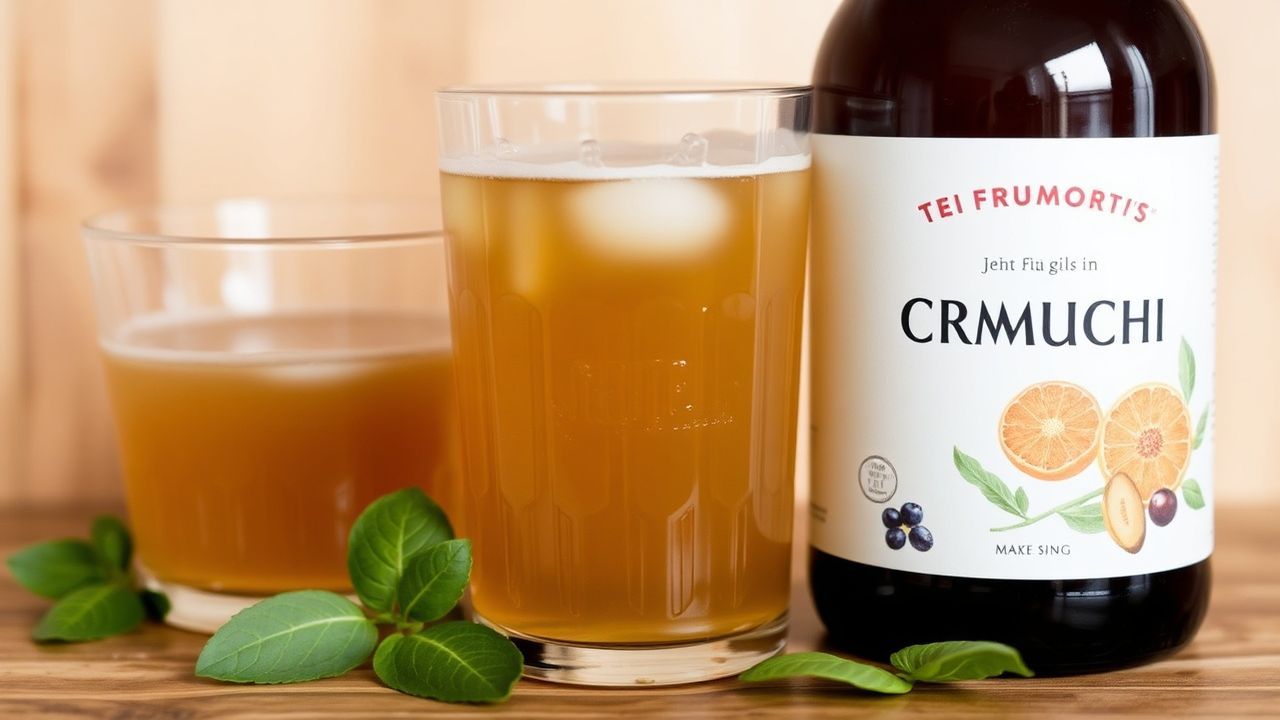
Serve chilled with citrus slices, mint, or a thin fruit wedge to enhance aroma and presentation. Kombucha pairs well with salads, grilled dishes, and spicy foods to refresh the palate.
For gatherings, pre-chill bottles and offer tasting pours so guests compare flavors and carbonation. Keep backup bottles refrigerated to prevent over-fermentation during service.
FAQ
What is kombucha?
Kombucha is a fermented tea beverage produced by a symbiotic culture of bacteria and yeast acting on sweetened tea. The beverage contains organic acids, trace alcohol, and live cultures that contribute to its tang and effervescence.
How long does it take to make kombucha?
Primary fermentation typically takes 7–21 days depending on temperature and desired acidity. Secondary fermentation for carbonation adds an additional 2–5 days in sealed bottles.
What is a SCOBY and how do I care for it?
SCOBY stands for symbiotic culture of bacteria and yeast and forms a cellulose pellicle on the surface of the brew. Keep a SCOBY in starter tea between batches at room temperature short-term or refrigerated for longer storage.
How can I safely carbonate my kombucha?
Use bottles designed for carbonation and add measured flavoring to feed yeast during secondary fermentation. Check pressure daily by opening a test bottle to prevent over-pressurization and always refrigerate when desired carbonation is reached.
Where can I learn more about tea and probiotics?
Consult reliable references on tea to understand polyphenols and extraction, and read about probiotics for context on live culture benefits and limitations. These sources provide solid background for home kombucha practice.
Brew Bliss emphasizes repeatable technique, precise measurement, and deliberate observation. Those practices convert trial-and-error into a dependable kombucha brewing rhythm.
Follow these steps, keep records, and adjust variables deliberately; over a few batches you will build consistent flavor, controlled carbonation, and confidence in your home kombucha practice.
See also: kombucha