
Slow-cooked pears transform ordinary fruit into a composed dessert through gentle, controlled heat that concentrates sugars and relaxes cell walls for a tender, glossy finish.
- The Chemistry Behind Slow-Cooked Pears: Caramelization and Softening
- Choosing Varieties for Consistent Slow-Cooked Pears
- Mastering Temperature and Timing for Slow-Cooked Pears
- Enhancing Flavors in Slow-Cooked Pears with Spices and Acid
- Ingredients and Precise Method for Slow-Cooked Pears
- Practical Tips to Produce Reliable Slow-Cooked Pears
- Serving and Pairing Ideas for Slow-Cooked Pears
- FAQ
- Texture control: low, steady heat preserves silhouette and yields even tenderness.
- Variety selection: choose pears with firm flesh to avoid collapse during poaching.
- Syrup finish: reduce and acidify at the end to balance flavor and stabilize color.
- Layered aromatics: whole spices and citrus build depth without clouding the syrup.
The Chemistry Behind Slow-Cooked Pears: Caramelization and Softening
Slow-cooked pears rely on two predictable chemical processes: the concentration of simple sugars and the controlled breakdown of pectin. Caramelization concentrates sugars and delivers warm, toffee-like notes that complement the fruit.
At the same time, pectin cleavage and mild enzymatic activity loosen cell adhesion so flesh becomes tender while retaining structure. For accessible overviews of these reactions, see caramelization and pectin.
How sugar reactions shape flavor
Controlled heating emphasizes sweetness without forcing Maillard browning, which can introduce bitter or roasted notes when inappropriate. Use low temperatures to keep aromas integrated and to avoid scorching.
For technical context on non-enzymatic browning, refer to the Maillard reaction entry; understanding the distinction helps you decide whether to permit deeper coloration.
Choosing Varieties for Consistent Slow-Cooked Pears
Select fruit that is ripe but still firm; that balance ensures the flesh will soften evenly without turning to mush. Bosc and Anjou are reliable choices because they have dense flesh and tolerant structure.
Bartletts cook faster and yield a juicier, softer result; shorten cook time if you prefer that texture. Adjust times based on size and initial ripeness to maintain consistent results.
Storage and selection tips
Pick pears that yield slightly under gentle fingertip pressure. Avoid fruit with bruises or overly soft spots that predict disintegration under long, wet heat.
Store selected pears refrigerated only if you plan to delay poaching; otherwise keep at cool room temperature until you begin to preserve cell integrity for the poaching step.
Mastering Temperature and Timing for Slow-Cooked Pears
Control heat precisely: keep the liquid at a barely perceptible simmer and avoid a rolling boil. That gentle environment lets pectin relax gradually and prevents rapid collapse of the cell matrix.
Typical poaching ranges run between 45 and 90 minutes depending on pear size and initial ripeness. Test tenderness with a paring knife; the flesh should yield yet preserve the silhouette for plated service.
Visual and instrumental cues
Use a thermometer and visual signs to maintain a consistent simmer. Aim for a surface with small, slow bubbles rather than vigorous agitation.
If you use a heavy-bottomed pan, heat distributes evenly and hot spots that accelerate breakdown disappear. That small investment reduces variability between batches.
Enhancing Flavors in Slow-Cooked Pears with Spices and Acid
Spices should complement the sweet, caramel notes and never dominate. Whole spices such as cinnamon sticks, star anise, and cardamom pods extract slowly and keep the syrup clear while building aromatic depth.
Add a citrus peel or a slice of fresh ginger to lift the finish; finish the syrup with a small squeeze of lemon or another fat-compatible acid to balance sweetness and stabilize color.
Fortified liquids and sweeteners
Small amounts of honey, fortified wine, or brewed tea add complexity and mouthfeel. Use them sparingly to avoid overpowering the pear’s natural flavor.
Always adjust sugar and supplemental sweeteners to the ripeness of the fruit. Riper pears need less added sugar and will highlight subtler aromatics.
Ingredients and Precise Method for Slow-Cooked Pears
Keep the ingredient list focused: pears, water, sugar, an acid for finishing, a small measure of honey or wine, and whole spices. Precise ratios allow you to scale without upsetting texture or syrup balance.
Use a heavy-bottomed pan and keep pears partially submerged to promote even heat penetration. A controlled approach yields repeatable results and a clear, glossy syrup.
Step-by-step procedure
1. Combine water, sugar, chosen whole spices, a touch of honey or wine, and a strip of citrus peel. Heat until the sugar dissolves, then reduce to a barely bubbling simmer.
2. Peel, halve, and core pears to preserve shape. Place them in the syrup, flesh-side down, and maintain a gentle simmer until tender.
Slow simmer and finish
3. Cook the pears for 45–75 minutes, turning occasionally for even color. Test with a knife; the flesh should yield but remain intact.
4. Remove the pears and reduce the poaching liquid to a syrup that lightly coats a spoon. Add lemon juice at the end to brighten and stabilize the syrup, then return pears to warm syrup before serving.
Practical Tips to Produce Reliable Slow-Cooked Pears
Make pears a day ahead when possible; resting lets flavors penetrate and improves cohesion between syrup and flesh. Reheat gently to avoid over-softening before service.
Control syrup reduction carefully. Reduce until the liquid lightly coats a spoon; that viscosity creates a glossy finish and improves shelf life when chilled.
If you plan to experiment, swap spices in small batches. Cardamom and a few cracked peppercorns add savory tension that works well when pairing with aged cheese or roasted meats.
Serving and Pairing Ideas for Slow-Cooked Pears
Serve warm with vanilla ice cream for contrast, or chilled alongside a cheese board for texture variation. Toasted nuts and flaky sea salt highlight the syrup’s richness and provide crunch.
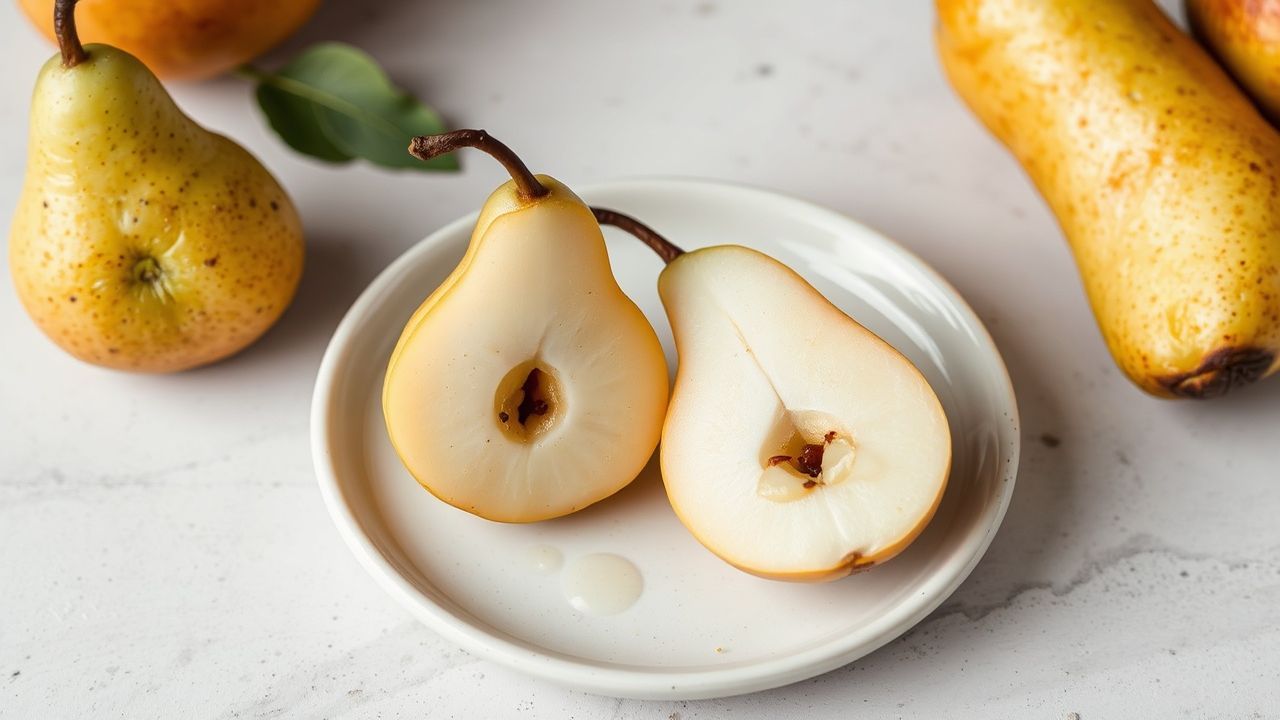
For a composed dessert, halve pears vertically to show the stem or keep skins on for visual contrast. Spoon a few teaspoons of warm syrup over each portion to enhance gloss and mouthfeel.
Presentation details
For plated service, add a small garnish—micro herbs or pomegranate arils lend color, while crisp crumbs or toasted grains introduce a welcome textural counterpoint.
Consider beverage pairings: late-harvest wines or fortified options accentuate sweetness, while a mildly acidic wine will cut through richness and refresh the palate.
FAQ
How long should I poach pears for best texture?
Poaching typically takes 45 to 90 minutes. Aim for a tender yield with intact shape and adjust by pear size and ripeness.
Which pear varieties resist overcooking?
Bosc and Anjou resist collapse due to denser flesh, making them ideal for slow poaching. Bartlett will cook faster; shorten the time to avoid mushy fruit.
Can I make slow-cooked pears ahead of time?
Yes. They often improve after resting overnight as the syrup infiltrates the flesh. Store in their syrup in the refrigerator and rewarm gently when ready to serve.
What liquids work for poaching?
Water with sugar is a neutral base. Add honey, fortified wine, or brewed tea for layered flavor, and finish with acid to prevent discoloration and brighten taste.
Are slow-cooked pears suitable for savory dishes?
Absolutely. Their gentle sweetness pairs well with aged cheeses and roasted meats. Reduce added sugar and use savory spices to shift the profile toward accompaniment.
For botanical context on the fruit itself, refer to the pear entry. For procedural background on wet-heat methods, the poaching article provides concise technique notes.
Follow these controlled steps and you will consistently produce slow-cooked pears that balance tenderness, flavor, and presentation. Manage heat, choose appropriate fruit, and finish the syrup deliberately to preserve the qualities that make this preparation reliable and rewarding.
See also: caramelization, pectin
See also: slow-cooked pears