
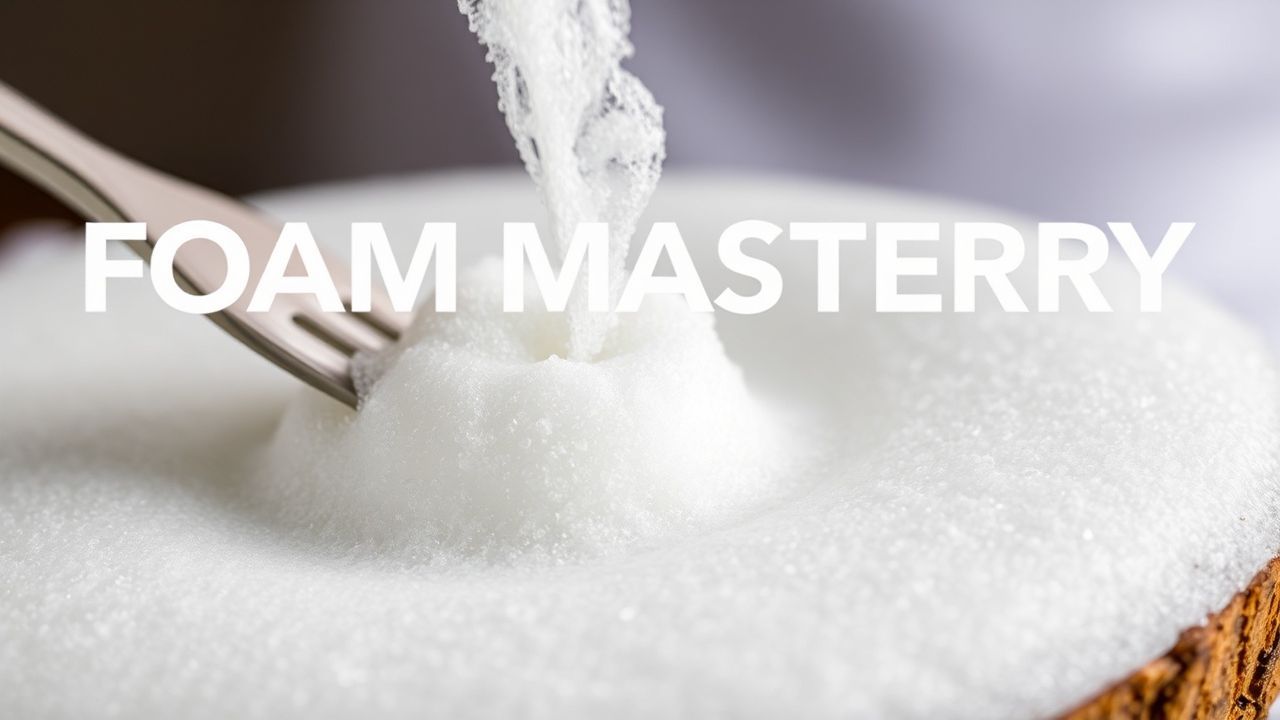

Creating reliable culinary foam demands both practical technique and ingredient knowledge. This guide explains proven methods to turn liquids into lasting, airy foams that perform on plates and in drinks.
- Foam Mastery: Understanding the Science Behind Stable Foams
- Prep and Cook Time
- Yield and Difficulty
- Ingredients
- Step-by-Step Instructions
- Chef’s Notes: Tips for Success
- A Deeper Dive: Techniques and Tools for Effortless Foam Perfection
- Troubleshooting Common Challenges in Foam Creation
- Nutrition Snapshot
- Further Reading and References
- FAQ
- Key takeaway: Stable foams need proper emulsifiers, temperature control, and gentle aeration.
- Tool focus: An immersion blender or siphon yields repeatable results when used correctly.
- Troubleshooting: Adjust emulsifier levels and aeration speed rather than adding more air.
- Versatility: Use foams for soups, desserts, and cocktails to add texture and aroma.
Foam Mastery: Understanding the Science Behind Stable Foams
Foam forms when gas becomes trapped inside a liquid film and those films resist rupture. Two physical properties dominate: surface tension and the strength of the film formed by proteins or surfactants.
Proteins and emulsifiers create networks that slow bubble coalescence and drainage. For a tactical overview of the culinary approach that uses these principles, consult molecular gastronomy, which frames practical lab techniques for the kitchen.
Prep and Cook Time
Plan a short hands-on window for foaming; most methods concentrate work into a few focused minutes. Preparing cold equipment and pre-measured ingredients shortens active time and improves consistency.
Follow predictable timing to manage expectations: cooling, hydration of stabilizers, and active aeration each take fixed intervals that you can train to repeat reliably.
- Preparation: 10 minutes
- Foaming process: 5–7 minutes
- Total time: 15–20 minutes (including chill time)
Yield and Difficulty
A single batch using the proportions below produces about 1 cup of foam, enough to top four servings. Scale up cautiously; larger volumes often demand incremental adjustments to aeration technique and stabilizer percentage.
Skill level: intermediate. You need awareness of texture, timing, and temperature to achieve repeatable results. Practice refines the eye for bubble size and gloss.
- Makes approximately 1 cup of stable foam (1/4 cup per serving)
- Difficulty: Intermediate — experience helps but the method is accessible
Ingredients
Select components with structure in mind: proteins and emulsifiers provide film strength, fats adjust mouthfeel, and acidity affects stability. Keep ingredients cold when possible to slow bubble drainage.
Below are practical choices and why they matter in the foam matrix. Use high-quality, fresh liquids and measure emulsifiers accurately for consistent results.
Emulsifiers and Stabilizers
Soy lecithin and gelatin function differently: lecithin lowers surface tension and stabilizes thin films, while gelatin forms a gel network that traps air for longer hold. See lecithin for technical details.
Egg white and aquafaba (chickpea liquid) provide protein networks but need immediate use; their stability decreases with time and temperature changes. Adjust technique rather than overloading with additives.
Liquids, Fats, and Flavor
Milk, broths, fruit purées, and coffee all foam differently because of their protein, sugar, and fat content. Higher protein content usually yields firmer foam; fats can make films more flexible but may weaken them if excessive.
Use neutral oils sparingly to modify mouthfeel. Balance seasoning after foaming when possible so salts and acids don’t prematurely break films.
Step-by-Step Instructions
Follow a disciplined sequence: chill tools, hydrate stabilizers, combine liquids, then aerate at the surface. That order preserves film integrity while building fine bubbles.
Work deliberately and observe change. Visual cues—sheen, bubble size, and body—tell you when to stop aeration and transfer the foam to service vessels.
- Chill bowl and whisk or immersion blender head. Cold contact surfaces reduce bubble collapse during formation.
- Pour the liquid into a wide, shallow container. Wider surface area encourages consistent surface aeration.
- Sprinkle the lecithin across the surface and let it hydrate for 1–2 minutes. Hydration disperses the emulsifier and strengthens the surface film.
- Add a small amount of neutral-flavored oil and a pinch of salt, and stir gently to avoid breaking the developed surface film.
- Position the immersion blender or whisk just below the surface and begin aeration slowly. Increase speed as stable microbubbles appear, then stop once a glossy, cloud-like foam forms.
- Skim the foam gently with a slotted spoon and transfer to the plate or glass immediately. Prompt transfer keeps the foam intact and attractive.
Chef’s Notes: Tips for Success
Small adjustments create big improvements: reduce aeration speed if bubbles become coarse, or increase emulsifier by small increments when foams weaken. Keep logs of each batch for repeatability.
Temperature control is non-negotiable. Cold ingredients slow drainage and extend hold time; warm liquids accelerate coalescence and collapse.
- Ingredient choice: Favor higher-protein milks or broths for structure.
- Lecithin timing: Hydrate before aeration; avoid adding it to steaming liquids.
- Substitutions: Use aquafaba or egg whites when lecithin is not available, but serve quickly.
A Deeper Dive: Techniques and Tools for Effortless Foam Perfection
An immersion blender with a narrow, high-speed head gives control for most home and professional kitchens. For ultra-fine bubbles, whipped siphons deliver superior texture but require practice and precise recipes.
Use a shallow vessel to maximize the gas-liquid interface and favor surface aeration over deep mixing. For tool selection guidance, consult our kitchen tools guide to match gear to volume and desired bubble size.
Consider the science behind tools: mechanical shear affects bubble size distribution, while pressure-based methods change nucleation and bubble formation. Cross-reference technique choices with ingredient profiles for the best outcomes.
Troubleshooting Common Challenges in Foam Creation
Diagnose problems by observing bubble size, sheen, and drainage. Those cues map directly to root causes—emulsifier level, aeration method, or temperature.
Apply small corrections and test again; avoid large one-off changes that obscure which variable fixed the issue. Keep notes to speed learning.
- Foam collapses too quickly: Check temperature and hydration of stabilizers; using slightly more lecithin often helps.
- Large, unstable bubbles: Slow down aeration and reduce oil percentage; large bubbles reveal weak films.
- Foam sinks immediately: Verify emulsifier dispersion and avoid deep mixing that breaks the surface network.
- Muted flavor: Adjust seasoning after foaming or use more concentrated base liquids.
If a siphon or charger is involved, verify seals and charge technique. Equipment failure can mimic formula problems, so confirm hardware is working before changing recipes.
Nutrition Snapshot
Foams add negligible calories per serving when used sparingly, but ingredient choices alter macros. For example, increased oil raises fat and energy density significantly.
Use the nutritional frame to decide foam portions in plated dishes or cocktails, and adjust base liquids for dietary requirements.
| Nutrient | Per serving (1/4 cup) |
|---|---|
| Calories | ~35 kcal |
| Protein | ~1.2 g |
| Carbohydrates | ~2.8 g |
| Fat | ~2.0 g |
Further Reading and References
For deeper technical context on foams and surfactants, see foundational references on emulsifiers and foam physics. Those entries summarize the core phenomena that govern culinary foams.
Explore related recipes and technique pages, including our molecular gastronomy techniques hub for applied examples and tested formulas.
FAQ
The following short answers address common operational questions and offer quick fixes. Each response focuses on a single actionable step to help you progress fast.
What is culinary foam and why use it?
Culinary foam traps gas in thin liquid films to add texture and aroma without heavy calories. Chefs use foam to enhance mouthfeel, concentrate flavor delivery, and create visual contrast.
How do I make foam last longer?
Use effective stabilizers like lecithin or gelatin, keep ingredients chilled, and aerate gently at the surface. Small increases in stabilizer concentration usually extend hold time more reliably than added air.
Which liquids produce the best foams?
Proteins-rich liquids such as milk, broths, and certain fruit purées foam well. Liquids high in oil or sugar need formulation tweaks, like added emulsifier or reduced fat, to behave predictably.
Can I flavor and color foams safely?
Yes; infuse herbs, spices, or concentrated juices, but add potent oils or pigments sparingly because they can disrupt film strength. Always test the stability after any flavor addition.
What tools should a beginner buy first?
Start with a quality immersion blender and a set of chilled bowls. Move to a siphon once you understand formulation and can reproduce textures consistently with basic tools.
Mastering foam technique rewards precision and repetition. Use the troubleshooting cues and tool guidance above to refine your approach, and consult linked references for scientific context. Practice with consistent measurements and you will obtain reliable, elegant foams every service.
See also: culinary foam