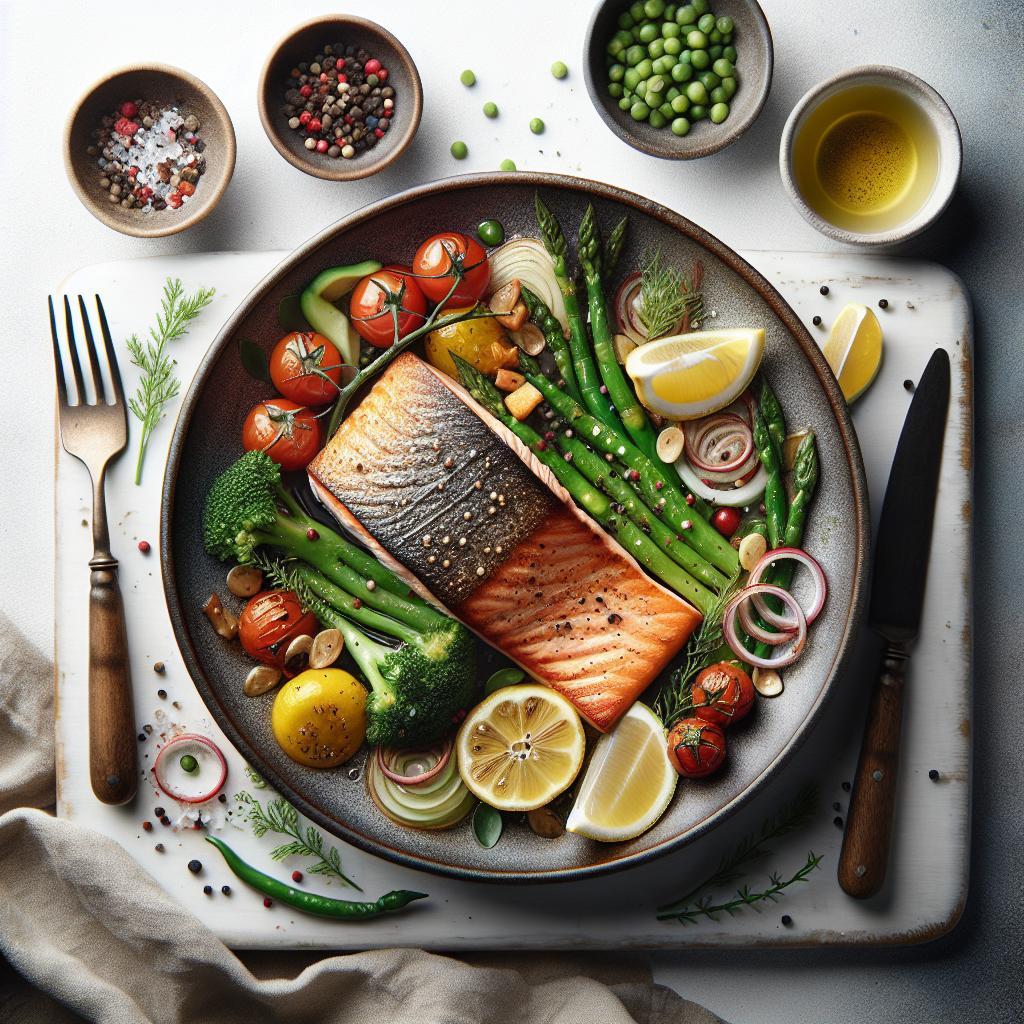

Crispy skin is the single texture that separates good salmon from great salmon. Achieving a dependable, golden, crackling skin requires precise drying, the right fat and pan, controlled heat, and a confident sear.
- Choosing Fish and Tools for Crispy Skin
- Prep and Timing for Crispy Skin
- Yield, Difficulty, and Batch Management for Crispy Skin
- Ingredients That Build Crispy Skin
- Instructions to Achieve Crispy Skin
- Techniques and Physics Behind Crispy Skin
- Tips for Crispy Skin Success
- Serving Crispy Skin Salmon
- Common Problems and Troubleshooting for Crispy Skin
- FAQ
- At a glance: Dry the fillet thoroughly, use a heavy pan, sear mostly skin-side down, finish with butter for flavor and gloss.
- Timing tip: For a 1-inch fillet, expect about 6–8 minutes skin-side down and 2–3 minutes on the flesh side.
- Pan care: Work in batches to avoid steam and maintain surface temperature for repeatable crisping.
Choosing Fish and Tools for Crispy Skin
Pick a fresh, skin-on fillet to maximize the chance of crisping. Fresh salmon has firm flesh and a taut skin that responds predictably to high-heat contact.
Use a heavy-bottomed skillet to hold steady heat and create an even crust. A cast-iron or thick stainless pan resists temperature drop; see the mechanics of good cookware on cast-iron cookware.
Prep and Timing for Crispy Skin
Effective prep focuses on removing surface moisture and tempering the fish. Pat fillets completely dry, salt just before cooking, and let the skin air-dry briefly on a rack to improve contact.
Time is variable by thickness, but the method is constant: long skin-side contact, short flesh-side finish. Visual cues—color change from the edge inward—give more reliable results than rigid timers.
Yield, Difficulty, and Batch Management for Crispy Skin
Plan yield by fillet size and pan capacity so you do not overcrowd the surface. Overcrowding lowers pan temperature and creates steam that defeats crisping.
Difficulty is moderate because the technique depends on temperature control and timing. With practice and consistent mise en place, the steps become routine and reproducible.
Ingredients That Build Crispy Skin
Keep the ingredient list short and functional: a neutral high smoke-point oil, a small finishing amount of butter, coarse salt, and pepper. The oil handles sear heat while butter adds gloss late in the cook.
Use oils suited to searing heat and flavor goals; compare options on the cooking oil overview. Choose avocado or grapeseed for neutral flavor and high smoke point.
Instructions to Achieve Crispy Skin
Follow a fixed sequence: dry, season, preheat pan, add oil, sear skin-side down, flip, baste, rest, and serve. Each step isolates a single variable—moisture, heat, contact, or finish—so you can troubleshoot precisely.
Heat the pan until it retains heat well and the oil shimmers but does not smoke. For a 1-inch fillet, press the skin briefly to ensure contact, sear skin-side down for 6–8 minutes, then flip and finish for 2–3 minutes.
Step-by-step details
Pat the skin until it feels tack-free and season immediately before cooking to avoid extracting excess moisture. If you must salt early, re-pat the fillet before it hits the pan.
Add oil and heat to a visible shimmer; this reduces sticking and encourages Maillard reaction for a golden crust. Avoid moving the fillet while the crust forms; the fish will release when the crust is ready.
After flipping, lower the heat and add a small amount of butter to baste for 30–60 seconds. Basting adds flavor without burning when used at the end of the cook.
Rest the cooked fillet briefly on a warm plate for 1–2 minutes to let carryover heat equalize the interior. Serve skin-side up to preserve and showcase the crisp texture.
When working multiple fillets, wipe the pan between batches and reheat the oil so each piece hits the optimal surface temperature. That reset preserves consistent results across servings.
Techniques and Physics Behind Crispy Skin
The goal is direct conduction of heat to the skin to drive Maillard browning while limiting steam formation. Surface dryness and firm contact remove insulating air pockets, enabling even browning.
Press the fillet at initial contact to flatten edges and eliminate air pockets. Maintain a stable pan temperature to sustain conduction; erratic heat produces uneven browning or burning.
Pan-frying mechanics
Pan-frying relies on sustained surface contact and the oil’s heat capacity to transfer energy into the skin. For deeper context on frying techniques, review frying.
Use a thin metal fish spatula for precise flipping. A careful flip preserves the crust and avoids tearing the skin.
Tips for Crispy Skin Success
Dryness matters: Even light surface moisture prevents crusting. Pat dry well and let fillets rest uncovered briefly if needed to remove residual dampness.
Temperature control: Start at medium-high for initial sear, then drop to medium-low after flipping to finish the flesh without burning the skin. This sequencing protects both texture and flavor.
Use fats with high smoke points for the main sear and reserve butter as a finishing agent. Butter browns quickly and contributes desirable nutty notes when added late in the cook.
Work in single layers and avoid overcrowding so each fillet cooks in consistent, dry heat. If you must cook in batches, reheat the pan and oil to maintain a strong sear surface.
Serving Crispy Skin Salmon
Plate the fillet skin-side up to preserve the crunch and show off the color contrast between skin and flesh. A late squeeze of lemon and a sprinkle of flaky sea salt sharpen the perception of crispness.
Pair the salmon with something creamy, like mashed potatoes or a yogurt-based sauce, to amplify mouthfeel contrast. Bright sides, such as sautéed greens, cut richness and refresh the palate.
Common Problems and Troubleshooting for Crispy Skin
If the skin sticks, the pan or oil was not hot enough or the skin still held moisture. Reheat the pan and wait until the oil shimmers before trying again.
If the skin chars before the flesh cooks, reduce initial heat slightly and lengthen the finish on the flesh side at lower temperature. Use a thermometer to confirm internal temperature when precision is required.
FAQ
How does moisture affect crispy skin?
Moisture creates steam between skin and pan, preventing direct contact and browning. Dry thoroughly and, if needed, air-dry fillets briefly to eliminate surface dampness.
Salt draws moisture out of flesh; salt immediately before cooking or re-pat the fish if you salted earlier to maintain dryness for crisping.
Which oil is best for crispy skin pan-searing?
Choose a neutral oil with a high smoke point like avocado or grapeseed. These oils tolerate searing heat and preserve oil integrity during the sear phase.
Add a small knob of butter near the end for flavor and gloss, but avoid using butter as the primary searing fat because it browns and smokes quickly.
Why does the skin sometimes stick to the pan?
Sticking typically indicates the pan or oil wasn’t hot enough or the skin retained moisture. Heat the pan correctly and avoid moving the fish until the crust forms.
A properly formed crust releases naturally; forceful flipping risks tearing the skin and compromising crispness.
Can frozen salmon produce crispy skin?
Yes, but only if fully thawed and dried thoroughly. Frozen fillets often retain more water, so extend drying time and consider patting and air-drying before searing.
Fresh fillets give the most predictable results, but careful handling of thawed fish can still yield satisfying crispy skin.
How do I judge doneness without overcooking?
Look for an opaque band moving from the edge toward the center and a slightly translucent core for medium doneness. Use a gentle lift with a thin spatula to inspect doneness without piercing the flesh.
Remove the fillet while a slight translucence remains; carryover heat during the short rest will finish the center without drying out the fish.
See also: Technique references on searing and pan tools support repeatable results across kitchens. Practice and controlled technique produce consistent crispy skin every time.

For repeatable outcomes, focus on surface dryness, pan heat retention, and fat selection. Those three levers determine whether you get a crisp, golden skin or a soggy surface.
Adopt a checklist approach—dry, season, preheat, sear, finish—to reduce variation and increase success on the first try.
See also: crispy skin