
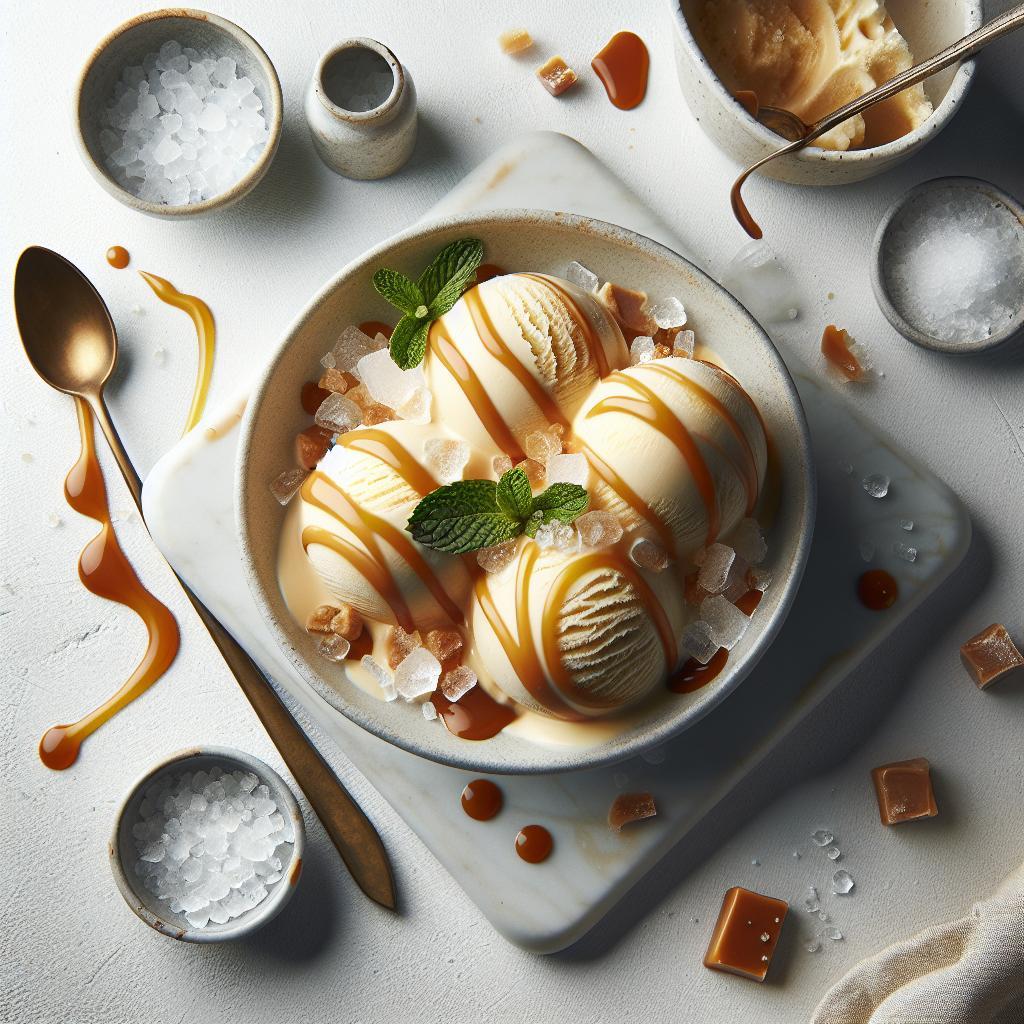

Imagine a single spoonful of gelato melting on your tongue, a clear sweep of creaminess balanced by a whisper of salt. This piece explains the controlled chemistry and practiced technique that turn basic ingredients into a silky salted caramel gelato.
- Balance matters: salt, sugar, and fat shape flavor and texture.
- Temperature control: slow heating and measured cooling reduce ice crystals.
- Emulsion and churn: create small ice crystals and dense mouthfeel.
- Caramel chemistry: precise caramelization builds depth without bitterness.
Why Salted Caramel Gelato Works
Gelato relies on a dense matrix of milk solids, fat, and dissolved sugars to form a smooth texture. Unlike many frozen desserts, this density stems from lower overrun and a focus on milk rather than heavy cream; see the entry on gelato for context.
Salted caramel introduces Maillard and caramelization products that deepen flavor and increase perceived viscosity. Understanding caramelization helps you control color and bitterness while boosting mouthfeel.
Prep and Cook Time
Timing impacts both texture and flavor. Precise timing during caramelization and custard thickening prevents grainy sugar or scrambled egg, so plan each stage to avoid rushing.
Typical time windows work well for home cooks. Build a schedule and allow refrigeration time to let flavor integrate and the base to stabilize.
- Preparation: 20 minutes
- Cooking (caramel & custard): 25 minutes
- Chill & churn: 8 hours (overnight chilling preferred)
Yield and Difficulty
This recipe yields roughly 1 quart, suitable for four generous servings. It balances moderate technique with reliable results when you follow temperature cues.
Difficulty rates as medium because the process demands close attention during caramel and custard stages. Equip yourself with a candy or instant-read thermometer to keep the work predictable.
Ingredients
Use clean, high-quality ingredients to let science do the heavy lifting. Fresh dairy and correct sugar types influence freezing point and texture more than exotic add-ins.
Measure precisely. Small differences in sugar or salt change freezing behavior and flavor balance, which alters mouthfeel and perceived creaminess.
- 1 cup granulated sugar
- 6 tbsp unsalted butter, cubed and chilled
- 2 tsp flaky sea salt (adjust to taste)
- 2 cups whole milk
- 1 cup heavy cream
- 5 large egg yolks
- ½ cup light brown sugar, packed
- 1 tsp pure vanilla extract
Step-by-Step Instructions
Follow the sequence: make caramel first, then prepare the custard, temper the eggs, and combine. Each step modifies the base’s chemistry and sets the stage for a smooth churn.
Rinse and prep mise en place before heat hits the pan. That reduces interruptions and prevents overcooking at sensitive moments.
- Make the salted caramel: In a heavy-bottomed saucepan over medium heat, melt 1 cup granulated sugar in an even layer. Swirl gently until the sugar reaches a deep amber color, about 8–10 minutes.
- Add butter carefully: Remove from heat and whisk in the chilled 6 tbsp unsalted butter. Expect vigorous bubbling; keep hands and face clear.
- Stir in salt: Mix 2 tsp flaky sea salt into the caramel and set aside to cool slightly so it won’t curdle the custard when added.
- Warm milk and cream: Heat 2 cups whole milk and 1 cup heavy cream to just below a simmer, then remove from heat.
- Whisk yolks and sugar: Whisk 5 egg yolks with ½ cup light brown sugar until pale and slightly thickened to incorporate air and dissolve sugar.
- Temper the yolks: Slowly add warm milk to the yolks while whisking constantly to prevent scrambling.
- Cook the custard: Return the mixture to low heat, stirring until it coats the back of a spoon and reaches about 170°F (77°C). Do not boil.
- Combine with caramel: Off the heat, whisk the slightly cooled salted caramel and 1 tsp vanilla into the custard until uniform.
- Chill thoroughly: Cool to room temperature, then refrigerate for at least 4 hours or overnight to let sugars hydrate and flavors meld.
- Churn: Freeze in a gelato machine per manufacturer guidelines, typically 20–30 minutes for a dense, creamy texture.
- Set: Transfer to an airtight container and firm in the freezer for 2–4 hours before serving.
Caramel and Custard Details
Caramelization forms compounds that add aromatic complexity and increase viscosity. Control heat to avoid bitter notes that occur when sugars burn.
Custard viscosity depends on egg yolk proteins coagulating at controlled temperatures. Use a thermometer and low heat to reach the targeted gel without stranding proteins.
Tips for Success: Unlocking the Salted Caramel Gelato Magic
Precision and patience deliver the smoothest texture. Keep the custard below boiling and chill completely before churning to minimize ice crystal growth.
Adjust salt cautiously. Flaky sea salt adds bursts of flavor without raising the base’s ionic strength too far, which would lower freezing point excessively.
Use European-style butter for a richer, silkier caramel due to its higher fat and lower moisture. Let the caramel cool slightly before adding to the hot custard to protect egg proteins.
Serving Suggestions
Serve gelato slightly warmer than ice cream (about 10–15°F warmer) to let aromatic compounds bloom on the palate. This temperature highlights salt and caramel nuance.
Garnish with a light drizzle of reserved salted caramel and a few toasted nuts for texture contrast. Pair with dark chocolate or a short espresso for complementary bitterness.
Nutrition and Storage
Expect about 380 kcal per serving, depending on portion size and ingredient brands. The chart below offers a practical per-serving snapshot for home cooks tracking macros.
| Nutrient | Per Serving (1/4 qt) |
|---|---|
| Calories | 380 kcal |
| Protein | 6 g |
| Carbohydrates | 38 g |
| Fat | 23 g |
Store gelato in an airtight container with a sheet of plastic pressed to the surface to limit ice crystal formation. Consume within two weeks for best texture and flavor.
Scientific Notes and Further Reading
For a molecular view of freezing point depression and sugar behavior, consult reliable references. The physics of ice crystal growth and sugar solubility explain why chilling and ingredient ratios matter.
Explore related concepts at these references: the chemistry of caramel, the role of salt in flavor perception, and how custard structure forms the base for rich frozen desserts. These pages connect practice to principle and help you troubleshoot technique.
FAQ
What makes salted caramel gelato creamier than ice cream?
Gelato uses less overrun and usually a lower fat ratio, resulting in denser texture. Smaller air cells and more dissolved sugars produce a smoother mouthfeel and a stronger perception of creaminess.
How much salt should I add to the gelato base?
Start with 2 teaspoons of flaky sea salt in the caramel, then taste the cooled base and adjust by small increments. Flaky salt adds bursts of flavor without dramatically changing freezing point.
Can I make this without eggs?
You can produce an egg-free gelato using milk solids, stabilizers like a small percentage of invert sugar, or a reduced cream ratio to mimic texture. Eggs add natural emulsification and body, so expect a slightly different mouthfeel without them.
Why did my gelato turn out grainy?
Graininess usually signals sugar recrystallization or icy crystals from inadequate chilling. Ensure the caramel fully dissolves into the custard, chill the base overnight, and churn at the correct speed to form small ice crystals.
How should I serve and store leftovers?
Scoop when slightly softened to release aromas and flavor. Store in an airtight container, press plastic film to the surface, and keep at a stable freezer temperature. Consume within two weeks for peak quality.
See also: Salted Caramel