
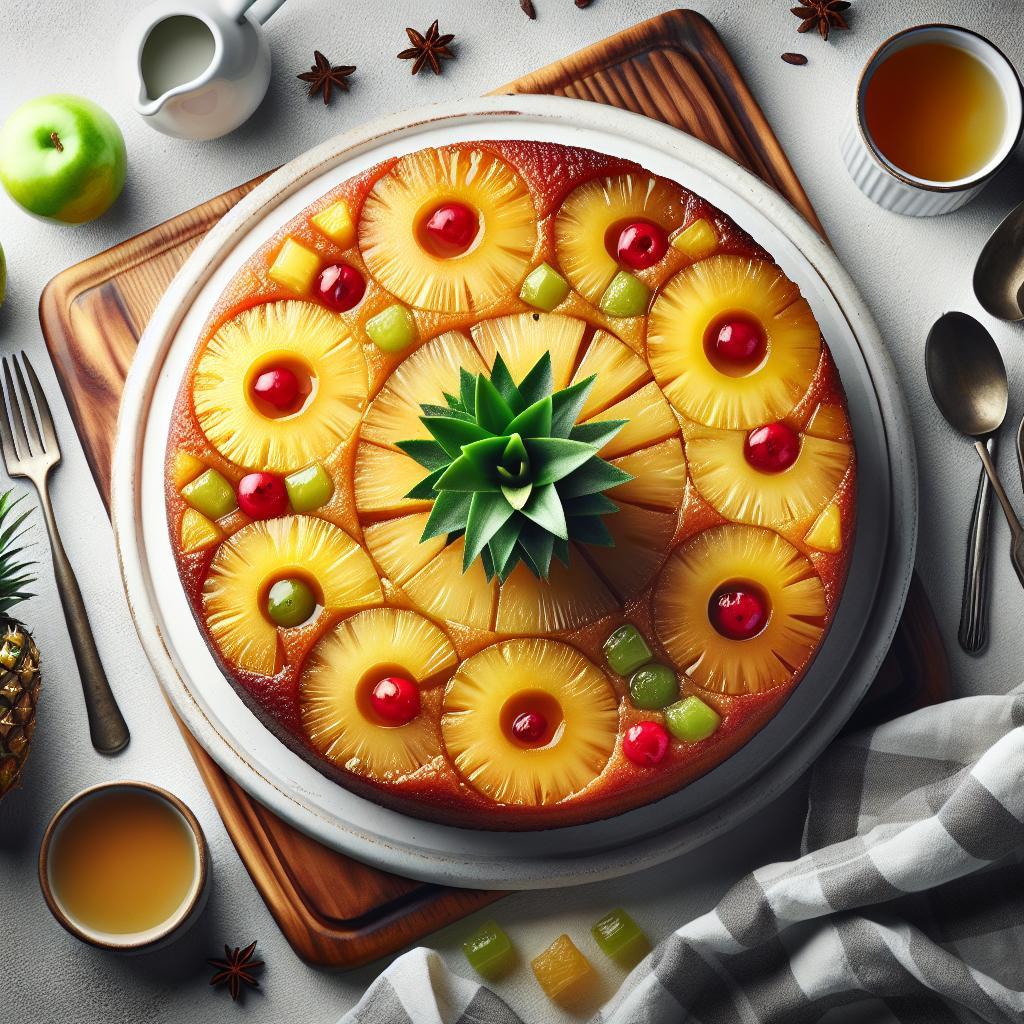

The golden, caramel-glazed surface of a pineapple cake carries an instant sense of comfort and celebration. This pineapple cake blends bright fruit, sticky brown sugar, and a tender crumb to deliver a memorable finish that suits weeknight baking and holiday spreads.
- Key takeaways: Classic assembly flips fruit into a glossy crown.
- Timing matters: Brown sugar and butter must caramelize before you bake.
- Texture tips: Fold gently to keep the cake light and moist.
- Modern twists: Spice, fresh fruit, and alternative flours broaden appeal.
This piece explains the recipe, technique, and focused variations that preserve the cake’s identity while improving consistency. Expect clear steps, safety notes, and tested tips you can use immediately in the kitchen.
History and Origin of Pineapple Cake
The pineapple cake rose to popularity in the early 20th century when canned pineapple became widely available. Canning made the fruit affordable and stable, which changed how home bakers used pineapple in desserts.
Early recipes used a skillet or cast-iron pan and inverted the cake to display caramelized fruit on top. For background on the ingredient and technique, see pineapple and cake history for context.
Prep and Cook Time for Pineapple Cake
Plan your workflow: prep takes about 20 minutes, baking runs 35–40 minutes, and a brief cool-down prevents a messy inversion. Good timing ensures the brown sugar-butter layer sets enough to release cleanly when you flip the pan.
Preparation time: 20 minutes. Cooking time: 35–40 minutes. Cooling time: 15 minutes before unmolding. Use a kitchen timer and test with a toothpick to confirm doneness.
Yield for Pineapple Cake
This standard version yields a 9-inch round cake that serves 8 generous slices. Adjust pan size or divide batter for minis; reduce baking time for smaller portions and test with a toothpick for doneness.
If you prefer cupcakes or individual servings, portion into muffin tins and reduce bake time to 15–20 minutes. Individual portions speed serving and make neat single-serve presentations that are easier to transport.
Difficulty Level: Pineapple Cake Basics
Difficulty rates as easy to intermediate because the steps are simple but timing and inversion require care. Novices will succeed by following measured steps and avoiding overmixing.
Cast-iron or heavy, well-greased pans work best for even caramelization and release. Use room-temperature eggs and warmed milk to assure batter blends smoothly and avoids broken emulsions.
Ingredients
Ingredient quality influences final texture and flavor. Use fresh butter and pure vanilla for the best caramel depth and stable crumb.
- ¾ cup (1½ sticks) unsalted butter, melted and slightly cooled
- 1 cup packed light brown sugar
- 1 (20-ounce) can pineapple slices in juice, drained, or 1 fresh pineapple, peeled and sliced into rings
- 8 maraschino cherries, drained
- 1½ cups all-purpose flour, sifted
- 1 teaspoon baking powder
- ½ teaspoon fine sea salt
- 2 large eggs, at room temperature
- ¾ cup granulated sugar
- 1 teaspoon pure vanilla extract
- ½ cup whole milk, warmed
- Optional: ½ teaspoon ground cinnamon or ¼ teaspoon ground ginger
For a lighter crumb, substitute part of the all-purpose flour with cake flour. For dietary swaps, use a one-to-one gluten-free blend tested for baking to preserve structure.
Instructions
Preheat the oven to 350°F (175°C) and prepare a 9-inch round pan by greasing it thoroughly. A film of butter prevents adhesion and supports clean unmolding.
- Pour the melted butter into the prepared pan and spread it to coat the bottom evenly.
- Sprinkle the brown sugar over the butter and press lightly to form a level layer.
- Arrange pineapple slices on the sugar layer and set a cherry in each ring center.
- Whisk flour, baking powder, salt, and spices in a bowl until uniform.
- Beat eggs and granulated sugar until light, then stir in vanilla.
- Alternate adding the dry mix and warm milk to the eggs, starting and ending with dry ingredients. Fold gently to keep the batter airy.
- Pour batter over fruit, smoothing the top with an offset spatula.
- Bake 35–40 minutes until a toothpick inserted near the center comes out clean and edges pull slightly from the pan.
- Cool in the pan for 15 minutes, run a thin knife around the edge, then invert onto a plate. Lift the pan carefully to reveal the glossy top.
After unmolding, let the cake sit a minute before slicing so the caramel sets slightly. Serve warm or at room temperature for the best texture contrast with cold accompaniments.
Tips for Success
Small technique choices make the difference between sticky frustration and a flawless release. Melted butter and evenly packed brown sugar create the ideal caramel layer under the fruit.
Use fresh pineapple when you want bright acidity and texture; canned fruit gives consistent sweetness and predictable caramelization. If using fresh, blot excess juice to preserve the crust and avoid sogginess.
Keep eggs at room temperature to achieve a stable batter and uniform rise. Also, warm milk mixes more quickly into the batter and reduces the chance of lumps or overmixing.
- Fresh vs. canned: Fresh gives brightness; canned provides even caramel color.
- Moisture control: Warm milk blends more evenly; do not overmix batter.
- Make-ahead: Bake one day ahead, cover at room temperature, and reheat gently uncovered.
Flavor Variations
Add small amounts of warm spices like cardamom, ginger, or cinnamon to the batter for aromatic depth. These spices complement pineapple and work well with toasted coconut or macadamia nuts as a finishing touch.
For an adult twist, soak fresh pineapple slices in a little rum or dark spirit for 10–15 minutes before assembling. Reserve excess liquid and reduce it to a glaze for brushing over slices at service.
Serving Suggestions
Serve each slice with whipped cream, vanilla ice cream, or a drizzle of coconut cream to balance the caramel’s richness. Contrast temperature by pairing warm cake with chilled ice cream for high sensory appeal.
Garnish with a sprig of mint or a scatter of toasted coconut for texture and visual lift. For the classic red accent, use maraschino cherries; read more about the preserved fruit at maraschino cherry.
Caramelization and Science
Caramelization occurs when sugar breaks down and forms brown, complex-flavored compounds under heat. Understanding this helps you predict how the brown sugar will transform under butter and fruit.
Control heat and time to favor deep flavor over bitterness. For a technical overview of the reaction, consult caramelization and adjust your stovetop or oven technique accordingly.
Nutrition
Per-serving nutrition varies with portion size and ingredient swaps. The estimate below reflects the standard recipe using full-fat dairy and standard sugars.
| Nutrient | Per Serving |
|---|---|
| Calories | 320 kcal |
| Protein | 4 g |
| Carbohydrates | 45 g |
| Fat | 12 g |
To reduce calories, swap half the sugar for natural sweeteners and use lower-fat milk or plant-based milk. Whole-grain flour options increase fiber but may require slight hydration adjustments.
FAQ
What is the origin of the pineapple upside-down cake?
The cake gained popularity in North America when canned pineapple became widely available in the early 20th century. Home cooks adapted inverted cake techniques to showcase the fruit and caramel layer attractively.
Why does the cake bake upside down?
Baking inverted places the fruit and sugar at the heated pan base so they caramelize during baking. After flipping, that caramel sits on top as a glossy, flavorful crown.
Can I use fresh pineapple instead of canned?
Yes, fresh pineapple offers a brighter, juicier bite but requires draining and blotting to prevent a soggy base. You can briefly macerate slices in a splash of rum or juice to boost flavor before assembling.
How do I prevent the cake from sticking when I flip it?
Grease the pan thoroughly and press the brown sugar into melted butter to form a cohesive layer. Cool the cake for 10–15 minutes before inverting and run a thin knife around the edge to release it cleanly.
Can I make the cake gluten-free or lower-sugar?
Use a tested one-to-one gluten-free flour blend to maintain crumb and structure. For lower sugar, substitute part of the sugar with honey or maple syrup and reduce liquids slightly; expect a different texture and bake time adjustments.
For technique primers, consult the baking overview for standard methods and terms. For ingredient details, the pineapple entry helps explain flavor profiles and seasonal differences.
With a solid method and a few careful choices you can produce a pineapple cake that is both classic and distinctively yours. Follow the steps, respect the heat, and enjoy a reliably glossy finish every time.

See also: Pineapple Cake and Cake Basics
See also: pineapple cake