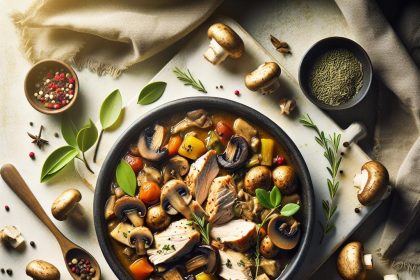
Silky Smooth Creamy Mushroom Soup delivers a warm, velvety bowl that balances earthy depth and gentle creaminess. The approach below emphasizes repeatable technique, controlled timing, and ingredient choices so you achieve a restaurant-quality texture at home.
- Prep and Cook Time
- Yield
- Difficulty Level
- Ingredients
- Instructions
- Tips for Success
- Storage and Make-Ahead
- Serving Suggestions to Elevate Your Cozy Bowl Experience
- Nutrition
- FAQ
- What makes a mushroom soup silky smooth and creamy?
- Which mushrooms produce the best flavor for this soup?
- Can I make this soup dairy-free or vegan?
- How do I avoid a grainy or broken texture?
- How long does homemade mushroom soup keep?
- Closing Remarks
- At a glance: Roast or sauté mushrooms to concentrate umami and deepen flavor.
- Texture tip: Puree while warm and finish with cream off the boil to preserve a silky emulsion.
- Dairy-free option: Use full-fat coconut milk or cashew cream to retain richness.
- Storage: Freeze portions for up to three months and re-emulsify gently when reheating.
Prep and Cook Time
Preparation: 15 minutes; Cooking: 30 minutes; Total: 45 minutes. These estimates assume pre-cleaned mushrooms and standard home equipment.
Short, focused cooking preserves mushroom flavor while minimizing nutrient loss. For efficiency, multitask by chopping aromatics while mushrooms sweat to reduce hands-on time.
Yield
This recipe yields four generous bowls of mushroom soup, ideal as a starter or a main paired with a side salad. Scale ingredients linearly: doubling components doubles yield without changing technique.
For batch plans, the mushroom soup freezes well in individual portions for up to three months. Thaw overnight in the refrigerator and re-emulsify gently before serving to restore the original mouthfeel.
Difficulty Level
Easy to moderate: the skills are straightforward but benefit from attention to browning and seasoning. Precise timing during the sauté and simmer phases produces measurable improvements in depth and mouthfeel.
Home cooks with basic knife skills and an immersion blender will find the recipe manageable. Professional tips later accelerate learning and improve consistency for every batch of mushroom soup.
Ingredients
Use a mix of mushroom types for a layered flavor profile; combining varieties increases natural glutamates and perceived umami. For more on the savory taste mechanism, consult umami.
Core ingredients:
- 1 lb mixed mushrooms (cremini, shiitake, oyster), cleaned and sliced
- 3 tbsp unsalted butter (or vegan butter)
- 1 medium onion, finely chopped
- 3 cloves garlic, minced
- 1 tsp fresh thyme leaves
- 4 cups vegetable broth (low sodium)
- 1 cup heavy cream or full-fat coconut milk
- 2 tbsp all-purpose flour (or cornstarch for gluten-free)
- Salt and freshly ground black pepper, to taste
- 1 tbsp olive oil
- Fresh parsley or chives, finely chopped for garnish
When choosing a cream substitute, prioritize full-fat alternatives to maintain mouth-coating viscosity. For background on dairy fat and structure, see cream.
Instructions
Follow the sequence: sauté mushrooms, build aromatics, thicken, simmer, blend, and finish with cream. Each step either develops flavor or stabilizes texture, so avoid skipping any phase.
Use an immersion blender for a seamless process, or work in batches with a standing blender while venting the lid to release steam. Keep a ladle nearby to skim foam and adjust seasoning as you blend the mushroom soup.
Prepare the Mushrooms
Heat olive oil in a wide, heavy-bottomed pot over medium heat and add mushrooms in a single layer; crowding causes steaming rather than browning. Sear until moisture releases and mushrooms turn golden brown, about 7–8 minutes, stirring occasionally.
Browning concentrates flavor through the Maillard reaction, which builds savory compounds and increases perceived richness. For technical context, refer to Maillard reaction.
Cook Aromatics
Lower heat, then add butter, chopped onion, and garlic; sweat until translucent and fragrant, about 4–5 minutes. Stir in fresh thyme to release volatile oils and anchor the soup with herbaceous notes.
Thyme complements mushrooms because its terpenes and low sugar content pair with savory profiles. Use the reserved sautéed slices as a garnish to provide texture contrast at service.
Thicken and Simmer
Sprinkle flour over the mushroom-aromatic base and cook for 1–2 minutes to remove raw starch taste. Slowly whisk in vegetable broth to create a smooth slurry, then simmer gently for 12–15 minutes to meld flavors.
Alternatively, use a cornstarch slurry for a gluten-free option by whisking cornstarch into cold broth before adding. Maintain a gentle simmer rather than a rolling boil to avoid breaking dairy emulsions later.
Blend and Finish
Puree the soup using an immersion blender until fully smooth, or transfer in batches to a standing blender, venting the lid to release steam safely. Return to low heat, then stir in cream or coconut milk off the boil to preserve emulsion stability.
Adjust seasoning with salt and pepper in small increments, tasting between additions to avoid over-salting concentrated stocks. For extra silkiness, pass the finished mushroom soup through a fine sieve before service.
Tips for Success
Choose mushrooms with varied textures and flavor intensities for complexity rather than relying on a single variety. Dry-mushroom browning and briefly roasting a portion of the mix will elevate depth without adding excess fat.
Reserve a few sautéed slices for garnish to add visual contrast and texture at service. Reheat gently, stirring and adding a splash of broth if the soup thickens after refrigeration.
[TESTIMONIAL NOTE: Fast, repeated browning cycles yield more complex flavor and reduce water retention in the pan. Try a wide pan for best results.]
Also, for recipe variation, consult related mushroom soup recipes and explore technique notes in our browning technique guide. These internal references help refine your process across batches.
Storage and Make-Ahead
Cool the soup quickly in an ice bath before refrigerating to preserve quality and safety. Freeze in shallow containers to speed freezing and reduce cell rupture that alters texture.
When reheating frozen portions, thaw overnight and warm gently while whisking to re-emulsify. If the soup separates, remove from heat and whisk in a tablespoon of cold liquid to reincorporate the emulsion.
Store refrigerated portions in airtight containers for 3–4 days. For extended shelf life, freeze in single-serving containers for up to three months and relabel with the preparation date.
Serving Suggestions to Elevate Your Cozy Bowl Experience
Serve the mushroom soup in warmed bowls to maintain temperature and mouthfeel throughout the meal. Add finishing touches like chopped herbs, a drizzle of high-quality olive oil, or toasted seeds for contrast.
Pair with crunchy elements such as garlic-rubbed sourdough croutons or a crisp green salad for balance. For wine pairing, choose a dry white such as an unoaked Chardonnay to match the soup’s buttery texture.
Nutrition
The approximate nutrition profile per serving reflects a creamy preparation: roughly 280 kcal with 24 g fat, 12 g carbohydrates, and 6 g protein. Variations depend on cream versus coconut milk and added fat amounts.
To reduce calories, use half cream and half stock or swap in lower-fat dairy, while monitoring texture and mouthfeel. Always calculate nutrition from your exact ingredient brands for precise values when managing diets.
| Nutrient | Per Serving (Approx.) |
|---|---|
| Calories | 280 kcal |
| Protein | 6 g |
| Carbohydrates | 12 g |
| Fat | 24 g |

FAQ
The following questions address texture, substitutions, storage, and simple upgrades. Each answer focuses on actionable technique and sound culinary reasoning.
What makes a mushroom soup silky smooth and creamy?
Silkiness comes from fully pureeing the cooked base and finishing with fat that coats the palate. Puree while warm and add cream off the boil to preserve a stable emulsion in the mushroom soup.
Which mushrooms produce the best flavor for this soup?
Use a mix of cremini, shiitake, and oyster mushrooms to combine nutty, meaty, and delicate notes. Blending varieties delivers greater complexity than a single type, amplifying natural glutamates and umami.
Can I make this soup dairy-free or vegan?
Yes. Full-fat coconut milk or cashew cream provides the body and mouthfeel that heavy cream offers. Use vegan butter or extra olive oil for richness and adjust seasoning because plant milks can taste slightly sweeter.
How do I avoid a grainy or broken texture?
Puree thoroughly while the soup is still warm and strain if necessary to remove fibrous bits. Avoid boiling after adding cream and re-emulsify gently if separation occurs by whisking in a small amount of cold liquid.
How long does homemade mushroom soup keep?
Refrigerate in airtight containers for 3–4 days; freeze in portions for up to three months. Thaw slowly in the fridge and reblend or whisk gently when reheating to restore smoothness.
For additional reading on fungi and edible varieties, see the general overview at mushroom. These resources support ingredient choices and technique decisions for consistent mushroom soup results.
Closing Remarks
This silky mushroom soup rewards small technical investments like proper browning, gentle simmering, and careful emulsification. Follow the sequence provided to convert modest pantry items into a reliably comforting bowl with refined texture.
Experiment with garnishes and mushroom blends to make the recipe your own, while preserving the core steps that define the soup’s silkiness. Enjoy a repeatable process that yields rich comfort without unnecessary complexity.
See also: mushroom soup