
There is deliberate chemistry behind a perfect mushroom sear. Heat, moisture control and choice of fat govern the Maillard reaction and determine if mushrooms brown or steam. Watch those variables and you convert a water-heavy fungus into rich, caramelized bites.
- Key takeaways: Dry mushrooms and avoid overcrowding to trigger surface browning.
- Use high heat and a sturdy pan to sustain the temperatures needed for Maillard chemistry.
- Balance oil and butter: oil for sear, butter for flavor finish.
- Adjust time and spacing by mushroom variety and thickness.
Prep and Cook Time
Preparation: 10 minutes. This includes cleaning and slicing mushrooms to uniform thickness so they cook evenly.
Cooking: About 12 minutes over medium-high heat in small batches for consistent crust formation. Total time typically runs under 25 minutes.
- Preparation: 10 minutes
- Cooking: 12 minutes
- Total Time: 22 minutes
Yield
This recipe yields a versatile seared mushroom component for mains or sides. A pound of cremini delivers substantial volume once reduced by evaporation.
Serve as a side for four diners or incorporate into salads, bowls, or sandwiches to stretch flavor across dishes.
- Serves 4 as a side dish or ingredient
Difficulty Level
Technically straightforward but timing-sensitive. The technique is easy to learn and repeats reliably when you control moisture and heat.
Beginners should practice one pan at a time, focusing on batch size rather than rushing through the skillet.
- Easy to Medium
Ingredients
Use fresh, firm mushrooms and choose a high-smoke-point oil. Butter adds flavor but lowers the maximum safe pan temperature.
Scale ingredients by portion. For dairy-free versions, replace butter with a neutral oil or a finishing knob of dairy-free butter after searing.
- 1 lb (450g) cremini mushrooms, cleaned and sliced 1/4-inch thick
- 2 tbsp unsalted butter (or olive oil for dairy-free)
- 1 tbsp high-smoke point oil (grapeseed or avocado oil recommended)
- 1/2 tsp kosher salt
- 1/4 tsp freshly ground black pepper
- 2 garlic cloves, finely minced
- 1 tbsp fresh thyme leaves (optional)
- 1 tsp lemon juice (optional, for bright finishing)
Instructions
Follow sequencing: dry, heat, oil, space, sear, season, finish. Each step affects the pan temperature and surface chemistry.
Work in small batches to avoid crowding. Overcrowding traps steam and prevents the surface temperature from rising to Maillard-friendly levels.
- Pat mushrooms dry completely using a clean kitchen towel; moisture inhibits proper searing and stalls the Maillard reaction.
- Preheat a heavy-bottomed skillet (preferably cast iron or stainless) over medium-high heat until it shimmers.
- Add oil and butter, swirling to coat. Use oil for heat tolerance; butter can be added late for flavor.
- Spread mushrooms in a single layer without overcrowding; steam forms if pieces touch densely.
- Cook undisturbed for 5–6 minutes to form a golden crust. Flip when edges are deeply browned.
- Season immediately after flipping to avoid premature moisture extraction.
- Add garlic and thyme once mushrooms are ~75% done; stir for 2–3 minutes to release aroma without burning.
- Finish off heat with a squeeze of lemon to brighten the rich, earthy notes.
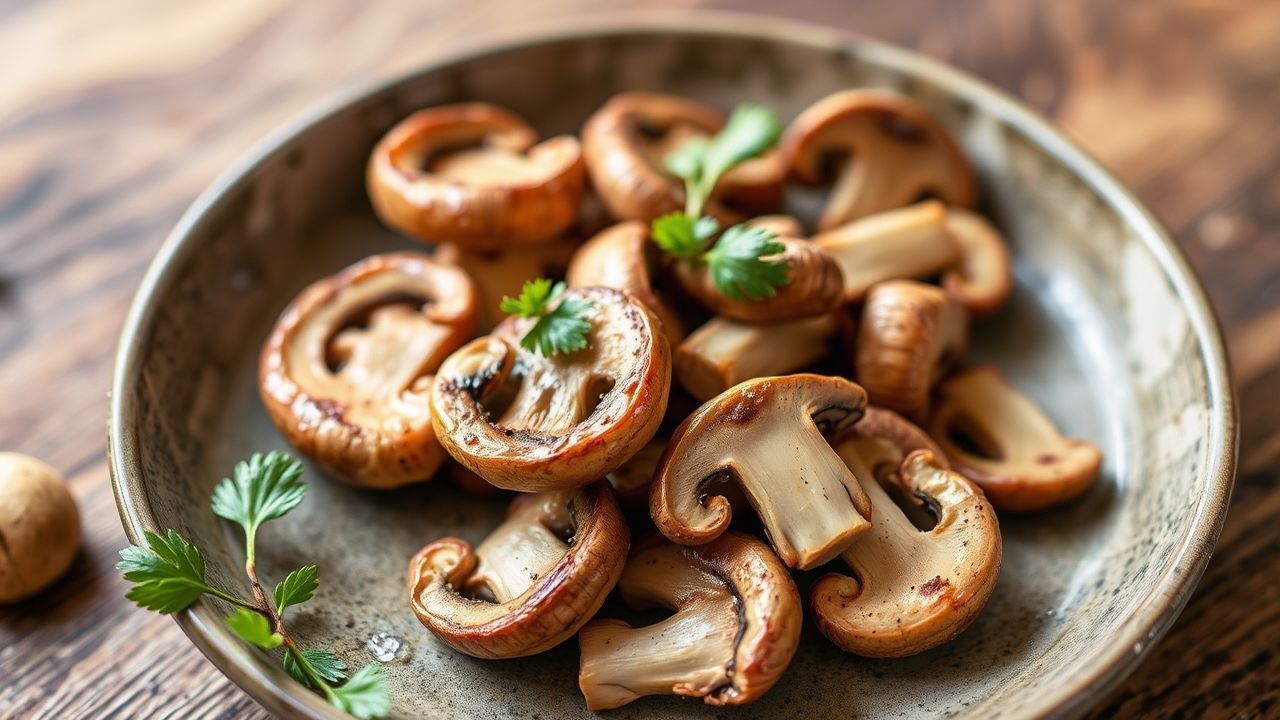
- Serve hot to showcase contrast between crisped edges and tender interiors.
Why Chemistry Matters
The key reaction is the Maillard reaction, a set of complex interactions between amino acids and reducing sugars that produces brown pigments and savory compounds. Temperature and dryness dictate if this chemistry proceeds.
Mushrooms also contribute unique flavor precursors. Their umami compounds interact with Maillard products to give the deep, roasted notes you expect from a great sear. Learn more about umami and its role in savory perception.
Key Principles
Three variables control success: moisture, heat, and fat. Tweak each to push surface temperature above water boiling and into Maillard territory.
Understand how mushroom biology affects cooking. The fungal tissues hold water differently by species; adjust spacing and heat accordingly.
Moisture Management
Water prevents surfaces from reaching the ~150°C (300°F) needed for Maillard chemistry because the pan temperature remains tied to water’s boiling point. Dry surfaces brown; wet surfaces steam.
Pat mushrooms dry or brush off dirt rather than rinsing. Also, avoid salting too early because salt draws water out by osmosis and can sabotage crust formation.
Heat and Pan Choice
A cast-iron skillet holds heat best and resists temperature drop when food is added. See the cookware behavior on the cast-iron skillet page for material context.
Preheat thoroughly and use medium-high heat. If the pan smokes immediately, reduce slightly; if it cools when mushrooms hit the surface, work in smaller batches.
Fats and Flavor
Fats transfer heat and coat surfaces to promote even browning. Use a neutral, high-smoke-point oil for initial searing and a knob of butter near the end for aroma.
Butter contains milk solids that brown at lower temperatures; combine fats for performance and flavor control. Adjust amounts to taste and dietary needs.
Step-by-step technique refinement
Batch size matters. If mushrooms touch, steam pockets form and the surface never dries. Aim for a single, non-overlapping layer.
Timing changes by species: thin chanterelles brown faster; portobellos require slightly longer to release moisture but reward with greater depth of flavor.
Chef’s Notes: Tips for Success
Moisture control: Wipe or brush mushrooms rather than rinsing. If you must rinse, dry thoroughly before cooking to avoid steam formation.
Pan selection: Cast iron or heavy stainless steel is preferred for steady, even heat retention. Non-stick pans rarely reach the temperatures needed for a true sear.
- Heat strategy: Start hot to achieve color, then regulate to prevent burning.
- Make ahead: Sear mushrooms in advance but add fresh herbs and citrus only at service.
- Variations: Match mushroom variety to the dish—for example, shiitake or oyster bring stronger earthiness.
Serving Suggestions
Seared mushrooms pair with grilled proteins, roasted vegetables, or toasted bread. Their concentrated flavors act as a high-impact garnish or a main ingredient in vegetarian plates.
Finish with a small scatter of fresh herbs, a dusting of grated cheese, or a calibrated drizzle of acid to balance fat and intensify perception of umami.
Nutrition
Seared mushrooms remain low-calorie while adding savory depth. Fat and salt additions change the nutrition profile more than the mushrooms themselves.
For precise counts, track added fats and finishes; basic seared mushrooms are modest in calories and provide small amounts of protein and fiber.
| Nutrition per serving | Calories | Protein | Carbs | Fat |
|---|---|---|---|---|
| Mushroom Sear | 85 | 3g | 6g | 6g |
Explore related technique articles such as Mastering the Art of Sautéing and our internal Mushroom Searing Guide for recipe variations and plating ideas.
FAQ
Why is searing mushrooms different from searing meat?
Mushrooms contain up to ~90% water and lack the higher fat content found in many meats. That water must evaporate before the surface temperature can rise enough for Maillard browning. The result: mushrooms will steam if not dried and properly spaced.
What chemical reactions create the seared flavors?
The Maillard reaction produces browned pigments and a complex mixture of flavor compounds when amino acids and reducing sugars react at elevated temperatures. The reaction differs from pure sugar caramelization and yields savory, nutty, roasted notes.
How does moisture affect browning?
Exposed water buffers the pan temperature at water’s boiling point, preventing the higher temperatures required for Maillard reactions. Drying prior to pan contact and avoiding early salting are practical controls.
Does mushroom type change technique?
Yes. Different species vary in water content, tissue density and sugar levels. Adjust heat and cook time: delicate varieties brown quickly, while dense caps need longer to release internal moisture.
What role do oil and butter play?
Oil raises the pan’s usable heat range, while butter contributes flavor through its milk solids. Many chefs sear using oil, then add butter at the end for aroma and mouthfeel.
Understanding the science behind searing turns a routine sauté into a repeatable skill. Apply these steps, and the next time you hear that satisfying sizzle you’ll know the chemistry doing the work beneath the surface.
See also: mushroom sear