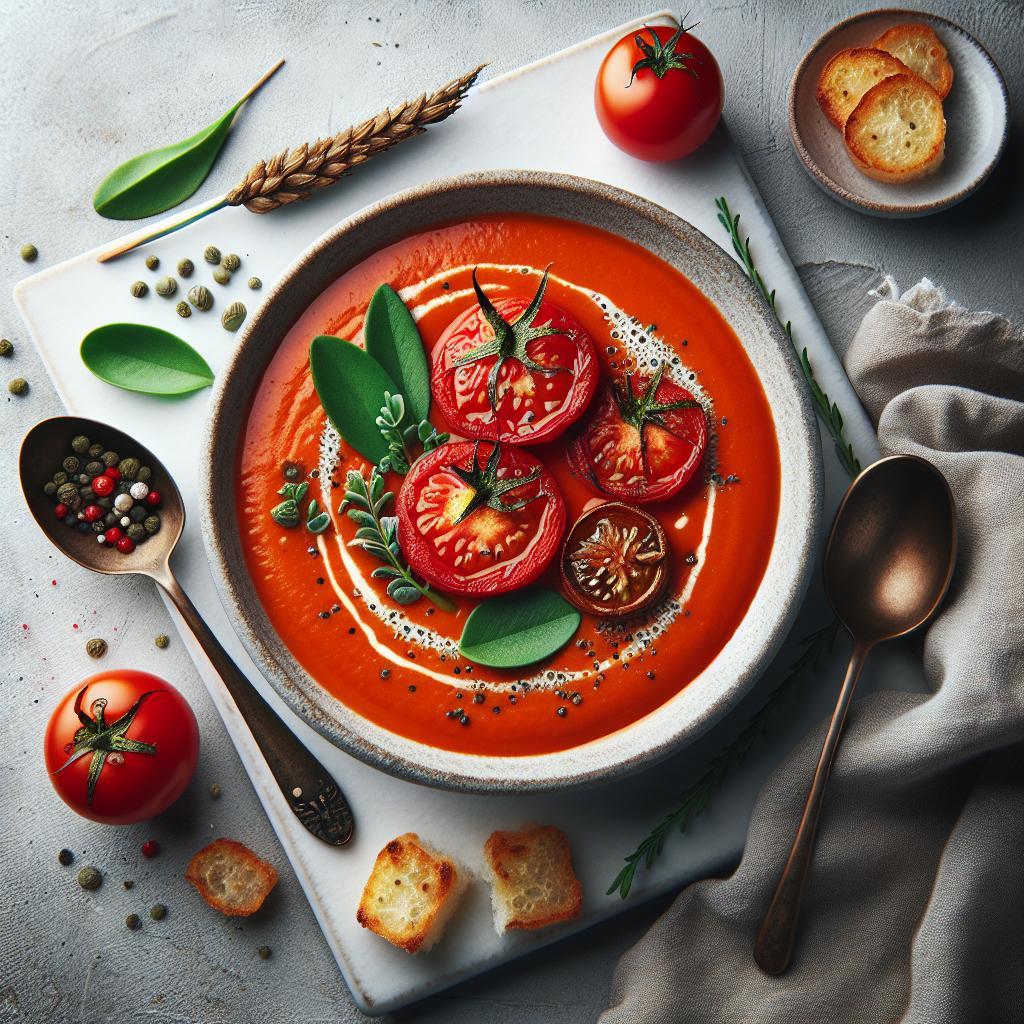

Savor the Warmth: Crafting Perfect Roasted Tomato Soup
Savor the warmth with every spoonful of this roasted tomato soup, a bowl that turns ripe tomatoes into a layered, smoky, and velvety comfort food. I explain proven techniques so you can reproduce the same depth of flavor every time.
- Roast tomatoes at high heat to concentrate sugars and add smoky notes.
- Blend to preferred texture, then finish with acid and fresh herbs for balance.
- Use low-sodium broth and adjust salt after roasting to avoid over-salting.
- Make-ahead: flavor improves after resting in the refrigerator for 24 hours.
Prep and Cook Time
Preparation: 15 minutes. I recommend prepping all ingredients before you preheat the oven.
Cooking: 50 minutes total. The roasting stage is the longest but it delivers the richest taste.
- Preparation: 15 minutes
- Cooking: 35–40 minutes roasting + 10 minutes simmering
- Total Time: ~1 hour
Yield & Difficulty
This recipe yields 4 generous bowls, suitable for weeknight dinners or small gatherings. I design the instructions so home cooks can follow them without specialist tools.
Difficulty: Medium. The tasks require basic roasting and blending skills and attention to seasoning.
Ingredients
Use ripe tomatoes for the best results; the fruit’s sugar-to-acid balance defines the final flavor. I prefer meaty varieties that roast well and hold texture.
Below is a focused ingredient list that supports the roasting process and balances the soup on finish.
- 3 pounds ripe tomatoes (heirloom, vine-ripened, or Roma)
- 1 large yellow onion, chopped
- 4 cloves garlic, minced
- 3 tablespoons extra virgin olive oil
- 1 teaspoon smoked paprika
- 1 teaspoon ground cumin
- 1/2 teaspoon red pepper flakes (optional)
- 1 teaspoon sea salt, plus more to taste
- Freshly ground black pepper, to taste
- 3 cups low-sodium vegetable broth
- 1 tablespoon balsamic vinegar or good quality vinegar
- 1/4 cup fresh basil, chopped
- To garnish: Greek yogurt or coconut cream, fresh basil sprigs, toasted croutons (optional)
Instructions
Follow a clear sequence: roast, simmer, blend, and finish. Each stage builds flavors that layer into a complex, satisfying soup.
Use high heat during roasting and gentle simmering after blending to preserve brightness and texture. Control salt at the end.
Roasting Stage
Preheat the oven to 425°F (220°C). Line a baking sheet with parchment or a silicone mat to avoid sticking and promote even browning.
Toss halved tomatoes, chopped onion, and garlic with 2 tablespoons of olive oil, smoked paprika, cumin, salt, and pepper. Arrange cut side up in a single layer so each piece caramelizes.
Blending & Finishing
Roast 35–40 minutes until tomatoes blister and caramelize at the edges; the char adds depth without bitterness. Transfer the roasted vegetables into a large pot and add the broth.
Simmer gently for 10 minutes to marry flavors. Then use an immersion blender or blend in batches and return to the pot. Stir in balsamic vinegar and chopped basil, adjust seasoning, and heat through for 2–3 minutes before serving.
Step-by-step Checklist
- Preheat oven to 425°F (220°C).
- Toss tomatoes, onion, and garlic with oil and spices; arrange cut side up.
- Roast 35–40 minutes until caramelized.
- Transfer roasted veggies to pot, add broth, simmer 10 minutes.
- Blend to desired texture; finish with vinegar and basil.
- Garnish and serve warm.
If you plan to keep leftovers, cool the soup quickly and refrigerate in an airtight container for up to 4 days. Freeze in portioned containers for longer storage.
Tips for Success
Tomato selection matters. Choose tomatoes with firmness and a balance of sugar and acidity for the best roast and finished flavor. For more on tomato varieties, see Tomato varieties.
High heat is purposeful. The oven’s high temperature triggers Maillard reactions that create caramelized, savory notes you cannot achieve by boiling.
Choosing Tomatoes
Plum and Roma tomatoes have dense flesh and low seed content; they roast well and yield concentrated flavor. Heirloom tomatoes add nuanced fruitiness but may be juicier, so watch roasting time.
When tomatoes are meaty, they resist collapsing and concentrate better during roasting, which gives the soup a richer mouthfeel.
Roasting Technique
Toss aromatics with oil and spices before roasting. The oil conducts heat and carries flavor compounds into the tomato flesh during caramelization.
If you want a smoky accent, include a small pinch of chipotle powder or add a roasted red pepper to the sheet; both boost complexity without overpowering the tomato base.
Serving Suggestions
Serve the soup hot with a swirl of cream or yogurt and torn basil leaves for freshness. The cream balances acidity while herbs restore bright top notes.
Pair with crusty bread, a light green salad, or a melted sandwich. For specific sandwich pairings and technique, see our internal guide on Grilled Cheese Pairings.
Garnish ideas include toasted pumpkin seeds for crunch or microgreens for visual contrast and extra freshness. A spoonful of pesto folded in at the end adds herbaceous depth.
Nutrition & Image
Per serving, this roasted tomato soup offers modest calories and light protein, mainly from the tomato and any garnishes you add. Use low-sodium broth to manage overall salt intake.

| Nutrient | Per Serving (1 bowl) |
|---|---|
| Calories | 150 |
| Protein | 3g |
| Carbohydrates | 18g |
| Fat | 8g |
For more comforting soup recipes, try our Hearty Vegetable Soup for a meal-plan friendly companion. Also consult culinary resources on roasting techniques to refine your oven method.
FAQ
What makes roasted tomato soup different from standard tomato soup?
Roasting caramelizes tomato sugars and produces mild char that adds smoky, savory notes. That process concentrates flavor and creates a fuller body than simply simmering fresh tomatoes.
Can I use canned tomatoes if fresh are unavailable?
Yes. Use whole peeled canned tomatoes and roast them briefly on a baking sheet to add char and reduce excess liquid. Choose high-quality canned tomatoes for the best results.
How do I get a creamy texture without dairy?
Blend thoroughly and adjust with extra broth or starchy ingredients like mashed potato or cooked rice to add body. Coconut milk also creates creaminess while keeping the recipe dairy-free.
How should I store leftovers?
Cool to room temperature, refrigerate in an airtight container for up to 4 days, or freeze for longer storage. Reheat gently on low heat to avoid breaking the emulsion.
Which herbs and spices complement this soup best?
Fresh basil provides aromatic brightness; thyme or rosemary adds a savory backbone. Smoked paprika enhances roasted notes, while red pepper flakes add welcome warmth.
Roasted tomato soup rewards attention to technique: roast well, season late, and finish with acid and fresh herbs. These steps produce a bowl that tastes layered, balanced, and reliably comforting.
See also: Tomato Soup