

Cookie Scoops Unwrapped: Scoop, Shape, and Bake Perfect Treats
Cookie scoops are a small investment that delivers large returns in consistency, yield control, and visual appeal. Use the right scoop and you get uniform cookies that bake evenly and present professionally.
- Choosing the Right Cookie Scoop for Every Recipe
- Mastering the Art of Perfect Cookie Shapes
- Tips and Techniques for Even Baking Results
- Cleaning and Maintaining Your Cookie Scoops for Longevity
- Recipe Timing, Yield and Tools
- Ingredients (for the example cookie)
- Instructions
- Chef’s Notes and Variations
- Serving Suggestions
- Nutrition Snapshot
- Q&A
- What is a cookie scoop and how does it differ from a small ice cream scoop?
- Which scoop size should I use for different cookie textures?
- Can I use a cookie scoop for other kitchen tasks?
- How should I maintain and store cookie scoops?
- Where can I learn more about baking techniques and cookie styles?
- Concluding Remarks
- Even portions mean predictable bake times and consistent texture.
- Right material and mechanism reduce sticking and speed release.
- Scoop size matters for edge crispness versus chewy centers.
Choosing the Right Cookie Scoop for Every Recipe
Select a scoop by size, material, and release mechanism to match your dough type. Small scoops (about 1 tablespoon) produce bite-size cookies; large scoops (2–3 tablespoons) yield bakery-style cookies best for dunking.
Material affects release and durability. Stainless steel scoops resist staining and maintain a smooth bowl; plastic scoops are light and inexpensive but may need light greasing. For more on materials, see stainless steel.
For sticky or dense dough, choose a spring-loaded scoop with a scraping arm to clear dough without finger contact. Measure by tablespoon or ounces to keep portioning consistent across batches.
Professional bakers often keep a set of three sizes to match recipe goals: small for crisp cookies, medium for balanced chew, and large for soft-center cookies. Keep lids or covers for nested scoops to prevent kitchen grime.
Mastering the Art of Perfect Cookie Shapes
A neat, round dough ball bakes more predictably than an uneven clump. Dispense dough onto a lined sheet and space portions to allow for spread; spacing prevents collision and uneven browning.
Gently roll or smooth dough balls with lightly floured hands when recipes call for a tidy edge. For soft doughs, chill scooped dough on the sheet for 20–30 minutes to firm fats and slow spread during baking.
For recipes like classic chocolate chip cookies, scoop size directly affects crumb and edge texture. Learn how size shifts bake behavior by testing one tray with different scoop sizes and noting time and mouthfeel; refer to guidance on the chocolate chip cookie for style examples.
When you need perfect domes, slightly underbake and allow resting on the sheet. The residual heat firms centers without overcooking edges, delivering that ideal soft center versus crisp edge contrast.
Tips and Techniques for Even Baking Results
Uniform portioning reduces variance in bake time and texture. Always preheat the oven fully and position racks in the center for even convection under standard home conditions.
Rotate sheets halfway through the bake on conventional ovens to counter hot spots. Use parchment paper or silicone mats to promote even browning and simplify cleanup.
Chilling dough reduces spread by solidifying butter and shortening melting window in the oven. For crisp edges and soft centers, remove cookies when edges show color but centers remain slightly soft.
Invest in a reliable oven thermometer to verify temperature. Many ovens run off by 10–20°F; consistent temperature yields repeatable results across batches.
Cleaning and Maintaining Your Cookie Scoops for Longevity
Proper cleaning preserves function and prevents flavor transfer. Wash scoops with warm, soapy water and a soft brush for moving parts; avoid abrasive pads on polished surfaces.
Dry metal scoops thoroughly to prevent corrosion and, if manufacturer-recommended, apply a light film of food-grade oil for long-term storage. Store scoops in a dedicated drawer or utensil holder to prevent dents.
Spring-loaded mechanisms can trap dough. Use a small brush or wooden pick to clear crevices after each use, then test the release before next batch. Regular maintenance avoids sticky buildup that degrades release performance.
Replace worn scoops; a warped bowl or sticky arm increases scrap and slows production. For commercial environments, maintain an inventory of backup scoops to ensure uninterrupted service.
Recipe Timing, Yield and Tools
Prep Time: 10 minutes is typical for scoop-and-bake recipes when dough is ready. Efficient portioning cuts hands-on time and keeps production steady.
Cook Time: 12–15 minutes depending on scoop size and oven behavior. Monitor the first batch closely and adjust minutes for your oven and sheet type.
Yield: About 24 medium cookies using a 1.5 tablespoon scoop; scale linearly with dough weight. Weigh a single scoop if you need precise batch counts for events or baking sales.
Tool checklist: cookie scoops in 3 sizes, silicone mats or parchment, oven thermometer, wire rack for cooling. These items create a workflow that minimizes second-guessing and waste.
Ingredients (for the example cookie)
- 2 1/4 cups all-purpose flour, sifted
- 1 teaspoon baking soda
- 1/2 teaspoon salt
- 1 cup unsalted butter, softened
- 3/4 cup granulated sugar
- 3/4 cup packed brown sugar
- 1 teaspoon vanilla extract
- 2 large eggs
- 2 cups semi-sweet chocolate chips
These ingredients form a versatile base. You can vary sugar ratios or add egg yolk to tune chewiness or crispness.
Instructions
- Preheat the oven to 375°F (190°C). Line baking sheets with parchment or silicone mats for even heat distribution.
- Combine flour, baking soda, and salt in a bowl and set aside.
- Cream butter and both sugars until light and fluffy, about 3–4 minutes with a mixer. Add eggs and vanilla, mixing to combine.
- Fold dry ingredients in gradually and stop when just combined to avoid gluten overdevelopment.
- Stir in chocolate chips evenly. Use a 1.5 tablespoon scoop to portion dough about 2 inches apart on the sheet.
- Optional: Chill scooped dough 20 minutes to reduce spread. Bake 12–15 minutes or until edges are lightly golden.
- Cool on the baking sheet 5 minutes, then transfer to a wire rack to finish cooling.
Scaling: for larger batches, portion dough directly onto multiple sheets and freeze trays before bagging for long-term storage. Bake from frozen by adding 1–2 minutes to bake time.
Chef’s Notes and Variations
For chewier cookies, substitute half the butter with a butter-substitute or add one extra egg yolk. For crisper edges, increase bake time by 1–2 minutes while watching color carefully.
Swap mix-ins—nuts, dried fruit, or white chocolate—to vary flavor. If dough sticks to the scoop, dip the scoop in warm water or spray lightly with nonstick spray between portions.
Use parchment or silicone mats to reduce turnaround time between batches. They improve browning consistency and remove the need for repeated greasing.
Serving Suggestions
Serve warm cookies with cold milk or coffee for classic pairings. A light sprinkle of flaky sea salt lifts chocolate flavors and balances sweetness.
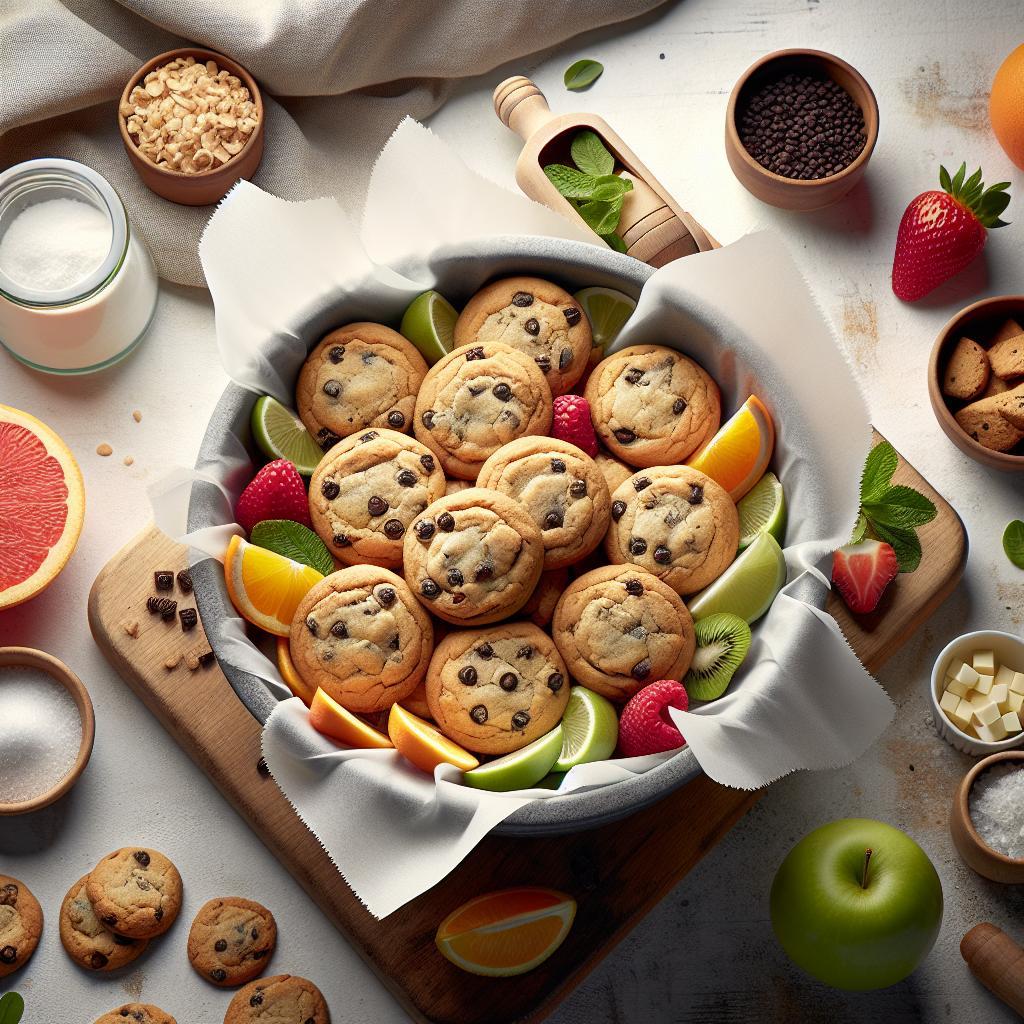
For presentation, arrange cookies on a platter with fresh berries or a small pot of jam. Use doilies or parchment circles to keep display neat and avoid grease stains.
Nutrition Snapshot
| Nutrient | Per Cookie |
|---|---|
| Calories | 140 kcal |
| Protein | 1.5 g |
| Carbohydrates | 18 g |
| Fat | 7 g |
Use the table to plan portions and label baked goods for sale or events. Adjust ingredient amounts for dietary needs or batch scaling.
Q&A
Q&A: Cookie Scoops Unwrapped – Scoop, Shape, and Bake Perfect Treats
What is a cookie scoop and how does it differ from a small ice cream scoop?
A cookie scoop is a handheld portioning tool sized for cookie dough and often includes a scraping arm for release. It differs from ice cream scoops by size, bowl shape, and release mechanism optimized for thicker batters and dough.
Which scoop size should I use for different cookie textures?
Smaller scoops (1 Tbsp) make crisper cookies while larger scoops (2–3 Tbsp) yield thicker centers and softer, chewier interiors. Test sizes to match your desired texture and adjust bake time accordingly.
Can I use a cookie scoop for other kitchen tasks?
Yes. Cookie scoops work well for portioning muffin batter, shaping meatballs, and filling muffin tins. Their consistent portioning speeds prep and creates uniform results across many recipes.
How should I maintain and store cookie scoops?
Wash with warm, soapy water and dry thoroughly. Lubricate moving parts if the manufacturer recommends it and store scoops uncompressed in a drawer to avoid warping.
Where can I learn more about baking techniques and cookie styles?
Consult reliable references for foundational techniques, such as the general practice of baking and the variety of styles summarized under the entry for cookies. These resources clarify ingredient roles and heat behavior.
Concluding Remarks
The right cookie scoop clarifies portioning, speeds production, and improves presentation. Small changes in scoop size and dough handling produce measurable differences in texture and bake time.
Practice portioning and bake one tray as a test to lock in time and temperature for your oven. Once you find the right combination, you will produce consistent, bakery-quality cookies every time.
See also: Cookie scoops