

Harvest Harmony: The Art of Roasted Squash Salad Bliss
Autumn kitchens fill with warm aromas when squash meets high heat and bright greens. This roasted squash salad pairs caramelized squash with peppery arugula, crunchy nuts, tart fruit, and a balanced vinaigrette.
- Why Roasted Squash Works
- Prep and Cook Time
- Yield and Difficulty
- Ingredients
- Instructions
- Tips for Success: Balancing Act for Ultimate Salad Bliss
- Serving Suggestions: Finishing Touches to Elevate Your Roasted Squash Salad
- Nutrition
- FAQ
- How do I get squash cubes to caramelize without burning?
- Can I roast the squash ahead of time?
- What dressing pairs best with roasted squash?
- Which greens work best with warm squash?
- Can I use other winter vegetables instead of squash?
- Wrapping Up
- Key takeaway: Roast for color, not collapse—aim for caramelized edges and tender but intact cubes.
- Flavor balance: Sweet squash needs acid and texture; citrus, mustard, and seeds deliver contrast.
- Make-ahead strategy: Roast the squash early; assemble the salad just before service to keep greens crisp.
Why Roasted Squash Works
Roasting concentrates sugars and develops Maillard browning that adds complex flavor. This technique gives squash a nutty-sweet backbone that stands up to bold dressings and textural toppings.
When assembled as a salad, the squash becomes the flavor anchor. The contrast of warm squash against cool greens creates a satisfying mouthfeel and seasonal appeal.
Prep and Cook Time
Preparation: 15 minutes. Keep knives and pans organized to speed the process. Trim and cube consistently to ensure even cooking.
Roasting: 30–35 minutes at 425°F (220°C). Monitor in the final 10 minutes to catch caramelization without charring. Rest briefly before assembling.
- Total: 50 minutes
Yield and Difficulty
Yield: Serves 4 as a main or 6 as a side. Adjust roasted squash quantity to scale servings without altering dressing ratios.
Difficulty: Easy to Medium. The technique centers on even roasting and a balanced vinaigrette. Home cooks achieve excellent results with basic tools and timing.
Ingredients
Below are measured components that create the signature contrasts of this salad. Use fresh, firm produce for best texture and flavor.
- 2 medium butternut squash, peeled and cut into 1-inch cubes. Choose firm squash with dry, unblemished skin. See butternut squash for varietal notes.
- 3 tbsp extra virgin olive oil, divided
- 1 tsp sea salt and ½ tsp freshly ground black pepper
- 1 tsp ground cinnamon and 1 tbsp pure maple syrup (optional for a glossy finish). Learn about maple syrup grades if substituting.
- 4 cups baby arugula or mixed greens. Arugula gives a peppery lift; check arugula for flavor profile.
- ½ cup toasted pecans, roughly chopped
- ½ cup dried cranberries or fresh pomegranate seeds for brightness
- ½ cup crumbled feta or goat cheese (optional)
- 1 small red onion, thinly sliced
- 2 tbsp fresh lemon juice, 1 tbsp Dijon mustard, 1 tsp honey, and 1 garlic clove, minced
Instructions
Start with temperature and equipment: preheat a heavy sheet pan and line it for easy cleanup. Consistency in cube size ensures even cooking and repeatable results.
Follow the step sequence; roast first, then prepare dressing and components while the squash cools slightly. Assemble just before serving to preserve texture.
- Preheat oven to 425°F (220°C). Use a rimmed baking sheet to capture juices and allow airflow.
- Toss squash with 2 tbsp olive oil, salt, pepper, cinnamon, and maple syrup in a bowl until evenly coated. Spread in a single layer to promote browning rather than steaming.
- Roast for 30–35 minutes, turning once after 15 minutes. Aim for golden edges and a fork-tender interior. For technique background see roasting.
- Make the dressing while squash roasts: whisk lemon juice, Dijon, honey, minced garlic, remaining olive oil, salt, and pepper until emulsified. Taste and adjust acidity to balance sweetness from the squash.
- Build the salad in a large bowl: combine arugula, sliced red onion, toasted pecans, and dried cranberries. Add roasted squash slightly cooled so the greens do not wilt immediately.
- Dress and serve by drizzling vinaigrette and tossing gently. Top with crumbled cheese if using and finish with a few whole toasted pecans for garnish.
Tips for Success: Balancing Act for Ultimate Salad Bliss
Consistency matters: cut squash into uniform pieces to avoid mixed textures. Use a hot oven and avoid overcrowding the pan to encourage caramelization.
Acidity controls perception of sweetness. If the squash tastes flat, add a squeeze of lemon or a splash of apple cider vinegar to the dressing and taste again.
Texture anchors a composed salad. Combine one soft element, one crunchy element, and one bright element for a complete bite. Toast nuts for 3–5 minutes in a dry skillet to deepen their aroma.
Substitutions and Variations
Swap butternut for kabocha or delicata to explore different sweetness and firmness. Adjust roast time according to density; denser squash needs a few extra minutes.
For a vegan version, omit cheese and use maple or agave in the dressing. For nut allergies, replace pecans with roasted pumpkin seeds for similar crunch.
Serving Suggestions: Finishing Touches to Elevate Your Roasted Squash Salad
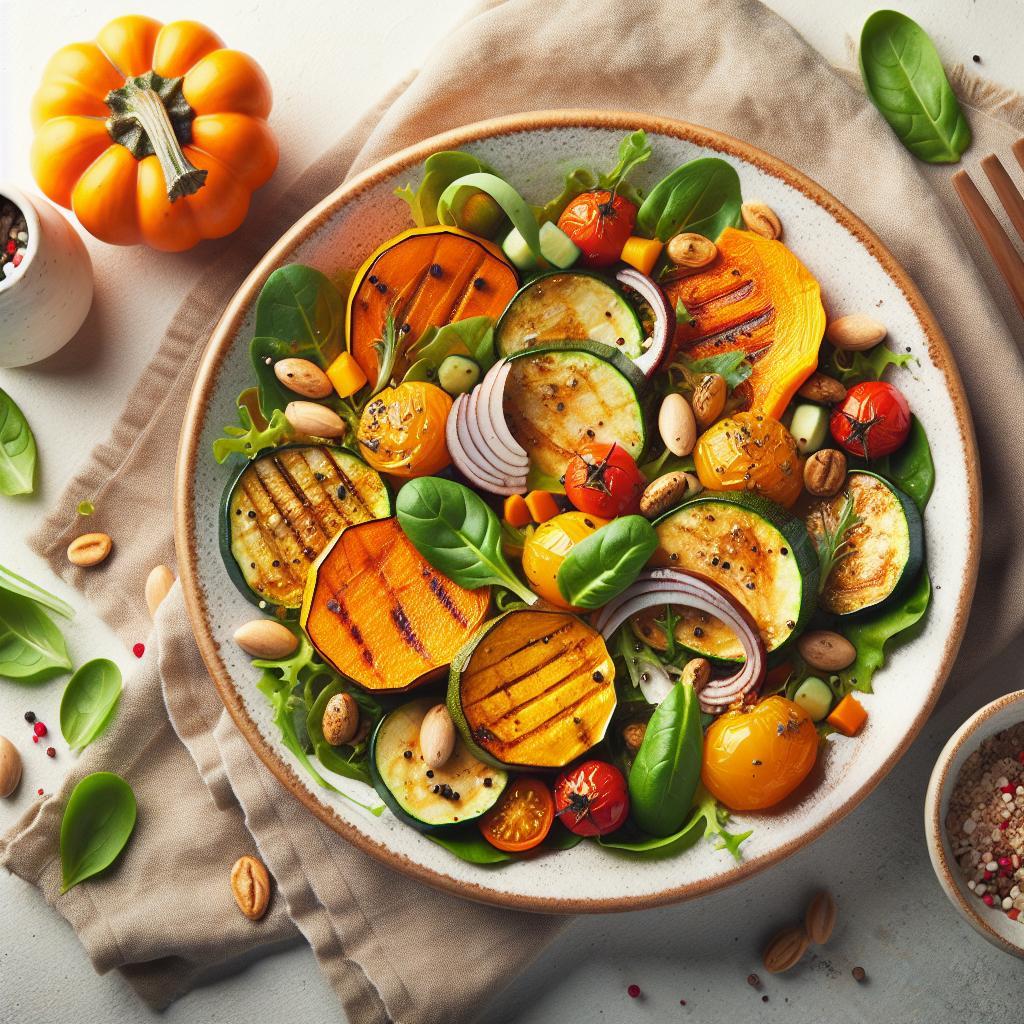
Present the salad on a wide platter to display colors: orange squash, deep green arugula, and ruby cranberries create visual appeal. Garnish with fresh herbs such as parsley or thyme to add fragrance.
Pair the salad with grilled fish, roasted chicken, or crusty bread for a composed meal. Offer the dressing on the side at buffets to control moisture for longer displays.
Leftover roasted squash stores well in an airtight container for up to 3 days. Reheat briefly in a hot oven or add cold to bowls for a composed grain salad.
Nutrition
This salad balances macronutrients: squash delivers complex carbs and beta-carotene, nuts supply healthy fats, and greens provide dietary fiber and micronutrients.
Per-serving values vary with portion size and cheese inclusion. Use the table below as a starting estimate and adjust based on your chosen ingredients.
| Nutrient | Per Serving |
|---|---|
| Calories | 320 kcal |
| Protein | 6 g |
| Carbohydrates | 32 g |
| Fat | 18 g |
FAQ
How do I get squash cubes to caramelize without burning?
Use a hot oven and space the cubes on the pan so air circulates. Turn once mid-roast and monitor during the final minutes to hit a uniform golden color.
Can I roast the squash ahead of time?
Yes. Roast and cool completely, then store in an airtight container for up to 3 days. Rewarm briefly or add cold to the salad depending on your desired contrast.
What dressing pairs best with roasted squash?
A citrus-mustard vinaigrette with a touch of honey or maple syrup complements the squash. Adjust acid to balance sweetness and finish with freshly ground pepper.
Which greens work best with warm squash?
Peppery arugula, baby kale, or mixed spring greens all hold well. Hearty greens tolerate warmer squash; delicate lettuces will wilt faster and need immediate service.
Can I use other winter vegetables instead of squash?
Yes. Roasted sweet potatoes, beets, or carrots all deliver sweet-roasted notes that pair similarly. Modify roast time to match vegetable density.
Wrapping Up
Mastering a roasted squash salad comes down to control of heat, seasoning, and contrast. When you roast for color, balance sweetness with acid, and add diverse textures, the salad reads as intentional and refined.
Use the techniques here as a template. Experiment with varietals, dressings, and toppings to create a signature harvest salad that suits your table.
See also: roasted squash