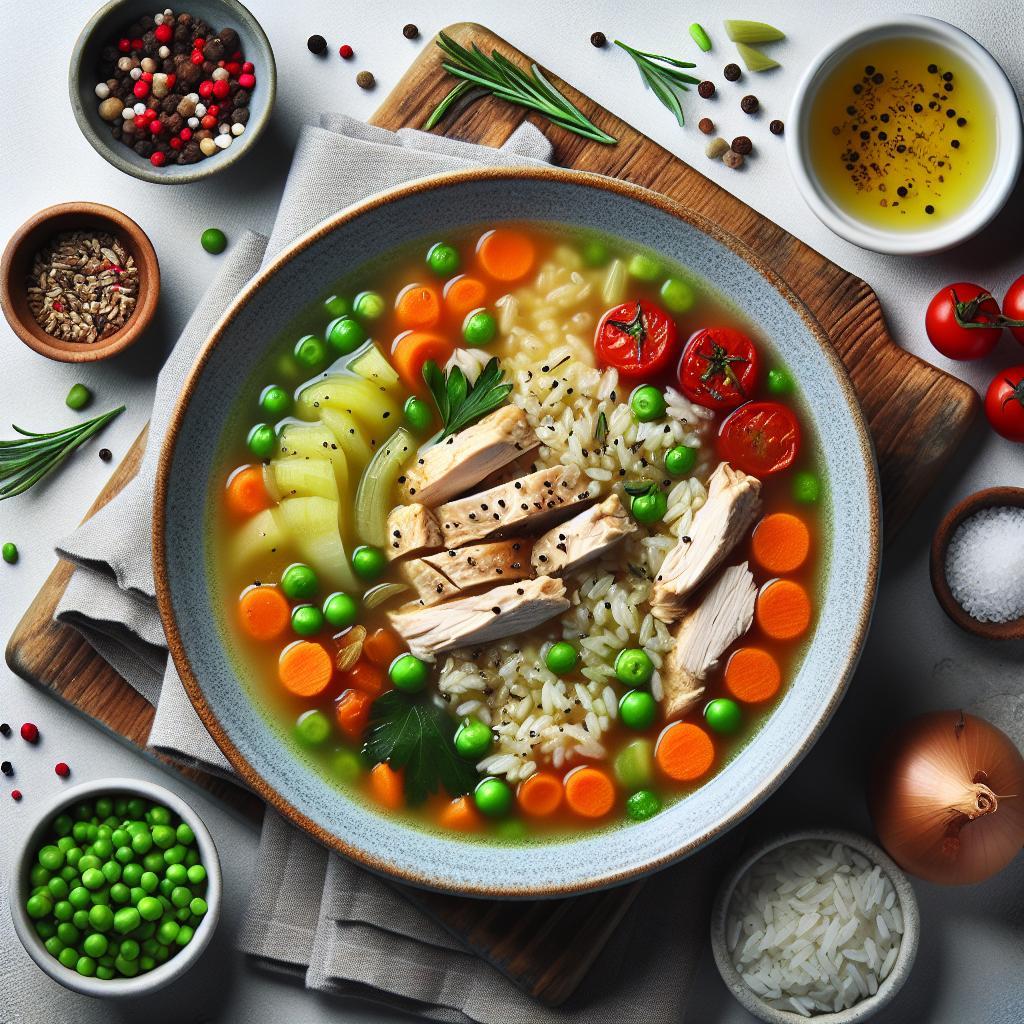

There is something deeply soothing about a steaming bowl of chicken and rice soup. This classic combines tender chicken, fluffy rice, and a savory broth to deliver comfort with balanced nutrition.
- The Rich History and Nutritional Benefits of Chicken Soup
- Choosing Ingredients for Flavorful Chicken Soup
- Prep and Cook Time for Chicken Soup
- Yield and Difficulty for Chicken Soup
- Ingredients
- Step-by-Step Guide to Crafting Chicken Soup
- Expert Tips for Customizing Chicken Soup
- Serving Suggestions for Chicken Soup
- Nutritional Information per Serving for Chicken Soup
- Storage and Make-Ahead Strategies for Chicken Soup
- Related Techniques and Tools for Chicken Soup
- FAQ
- What makes chicken soup so comforting?
- How can I keep rice from getting mushy?
- Can I use bone-in chicken?
- Is this recipe freezer-friendly?
- Which herbs pair best with this soup?
- The Conclusion on Chicken Soup
- Hearty nutrition: High in lean protein and gentle carbohydrates.
- Simple technique: Uses affordable pantry staples and a single pot.
- Flexible: Easy to customize for dietary needs and flavor preferences.
- Make-ahead friendly: Stores well if you separate rice when freezing.
The Rich History and Nutritional Benefits of Chicken Soup
Chicken soup appears in many culinary traditions, from brothy Asian bowls to European stews. Its simple formula—meat, water, vegetables, and grains—made it a staple where fuel and calories mattered.
From a nutrition standpoint, chicken soup supplies lean protein, electrolytes from broth, and steady carbohydrates from rice. For a concise historical reference see chicken soup.
Choosing Ingredients for Flavorful Chicken Soup
Select fresh vegetables and a low-sodium stock to control salt and build layered taste. Choose bone-in cuts for a richer mouthfeel or boneless for easy portioning.
Match rice type to your plan: long-grain white or jasmine stays distinct; whole-grain rice needs more time and liquid. See technical rice details at rice.
Rice Choices and Timing for Chicken Soup
Cooking rice separately prevents over-softening during storage and reheating. If you cook rice in the pot, add it late and monitor texture closely.
White rice cooks quickly; brown rice adds fiber but increases total time by 20–30 minutes. Adjust liquids when using whole grain to maintain a balanced final texture.
Herbs, Aromatics, and Fat in Chicken Soup
Carrots, celery, and onion form a classic soffritto or mirepoix base; garlic adds depth when added briefly. Finish with parsley and thyme for a fresh lift.
A small amount of olive oil or butter at the start will help extract fat-soluble flavors and give the broth a silky mouthfeel. These fats also aid in browning for deeper notes.
Prep and Cook Time for Chicken Soup
Plan roughly one hour total for a stovetop method: 15 minutes active prep and about 45 minutes simmering. This sequence yields tender chicken and properly cooked rice when added at the right time.
Use pressure cookers or slow cookers to change the timeline: an electric pressure cooker reduces hands-on time, while a slow cooker deepens flavor with long, low heat.
- Preparation: 15 minutes
- Cooking: 45 minutes (stovetop)
- Total time: 1 hour
Yield and Difficulty for Chicken Soup
This recipe yields about six hearty portions, suitable for family meals or batch cooking. The method rates easy-to-medium: basic sautéing and simmering, no advanced skills required.
To save time, use pre-cooked rotisserie chicken and reduce simmering to 15–20 minutes for flavor melding. That swap preserves texture and speeds service for weeknight meals.
Ingredients
Keep ingredients straightforward and scalable. Fresh components improve final texture and aroma versus canned substitutes.
- 1 lb (450g) boneless skinless chicken thighs, trimmed and cut into bite-sized pieces
- 6 cups (1.4 liters) low-sodium chicken broth
- 1 cup long-grain white rice, rinsed until water runs clear
- 2 medium carrots, peeled and diced
- 2 celery stalks, thinly sliced
- 1 medium yellow onion, finely chopped
- 3 garlic cloves, minced
- 2 tablespoons olive oil
- 1 teaspoon fresh thyme leaves (or ½ teaspoon dried thyme)
- 1 bay leaf
- Salt and freshly ground black pepper, to taste
- Fresh parsley, chopped for garnish
Step-by-Step Guide to Crafting Chicken Soup
Follow sequencing for the best texture: sauté aromatics, sear the chicken briefly, then simmer in stock before adding rice. The order builds flavor and prevents mushy rice.
Maintain a gentle simmer rather than a rolling boil to keep chicken tender and the broth clear. Gentle heat also reduces evaporation and keeps seasoning balanced.
- Heat olive oil in a large pot over medium heat. Sauté onion, carrots, and celery until softened, 5–7 minutes.
- Add garlic and cook 1 minute until fragrant, stirring constantly to avoid burning.
- Add chicken pieces and sear briefly until edges turn opaque, about 3–4 minutes.
- Pour in broth, bring to a gentle boil, add thyme and bay leaf, then reduce to a simmer for 15 minutes.
- Add rinsed rice and simmer 18–22 minutes until rice and chicken are fully cooked.
- Season with salt and pepper to taste. Remove bay leaf and finish with chopped parsley before serving.
Technique Notes
Monitor liquid level and add broth or hot water if the pot reduces too much while the rice cooks. This preserves the grain texture without overconcentrating salt.
When reheating, add a splash of hot broth to restore volume instead of reboiling on high. Gentle reheating keeps chicken tender and rice intact.
Use roasted bones and trimmed vegetables for a clearer, more savory stock if you make broth from scratch. Cold-set the stock and remove excess fat for a cleaner finish.
Expert Tips for Customizing Chicken Soup
Small swaps change nutrition and texture: exchange white rice for quinoa or brown rice to add fiber and change mouthfeel. For quinoa background consult quinoa.
Finish with acid—lemon juice or a teaspoon of vinegar—to lift flavors and balance the savory broth. A bright finish reduces perceived heaviness.
Serving Suggestions for Chicken Soup
Serve the soup hot with crusty bread or a simple green salad to contrast warm broth. A drizzle of extra virgin olive oil or a squeeze of lemon brightens the bowl before serving.
Garnish with chopped parsley and freshly cracked black pepper for color and scent. Use rustic bowls and warm linens to enhance the meal experience.

Nutritional Information per Serving for Chicken Soup
The approximate nutrition for one serving reflects lean protein and moderate carbohydrates. Values will vary by brand and exact portions.
| Nutrition | Amount |
|---|---|
| Calories | 280 kcal |
| Protein | 28 g |
| Carbohydrates | 22 g |
| Fat | 7 g |
Storage and Make-Ahead Strategies for Chicken Soup
To preserve texture, freeze broth with chicken and vegetables separately from cooked rice. Label containers with date and contents for safe rotation.
Refrigerate cooled soup for up to three days and freeze portions for two months. Thaw overnight in the refrigerator and reheat gently to maintain texture.
Related Techniques and Tools for Chicken Soup
Pressure cookers and slow cookers both work well, but timing changes. Consult the slow cooker tool page when planning longer cooks and lower temperatures.
When using an electric pressure cooker, delay adding fresh rice until after pressure release to prevent overcooking and foam-related issues. This technique preserves grain shape.
FAQ
What makes chicken soup so comforting?
Warm broth hydrates and soothes the throat while protein and gentle carbohydrates provide steady energy. Mild flavors and familiar textures also contribute to perceived comfort.
How can I keep rice from getting mushy?
Cook rice separately or add it at the end of the simmering period. Choose long-grain rice for firmer texture and reduce cooking time if reheating later.
Can I use bone-in chicken?
Yes. Bone-in chicken adds collagen and depth to the broth for a richer mouthfeel. Increase simmer time slightly to extract maximum flavor from bones.
Is this recipe freezer-friendly?
Yes. Freeze broth and solids separately from rice for best results. Thaw overnight in the refrigerator and reheat gently to maintain texture.
Which herbs pair best with this soup?
Thyme, parsley, and bay leaf create a balanced aromatic profile. Add fresh herbs just before serving to preserve brightness and volatile aromas.
The Conclusion on Chicken Soup
A well-made chicken soup combines controlled technique with modest ingredients to produce consistent comfort. Apply timing and ingredient choices here to control texture, flavor, and storage outcomes.
Use tips above to avoid common issues like overboiled rice or tight seasoning. With small adjustments, this recipe becomes a weeknight staple and a reliable recovery dish.
See also: Chicken soup | Chicken and rice recipes
For additional context on stock science and composition, consult broth for technique and definitions.
See also: chicken soup