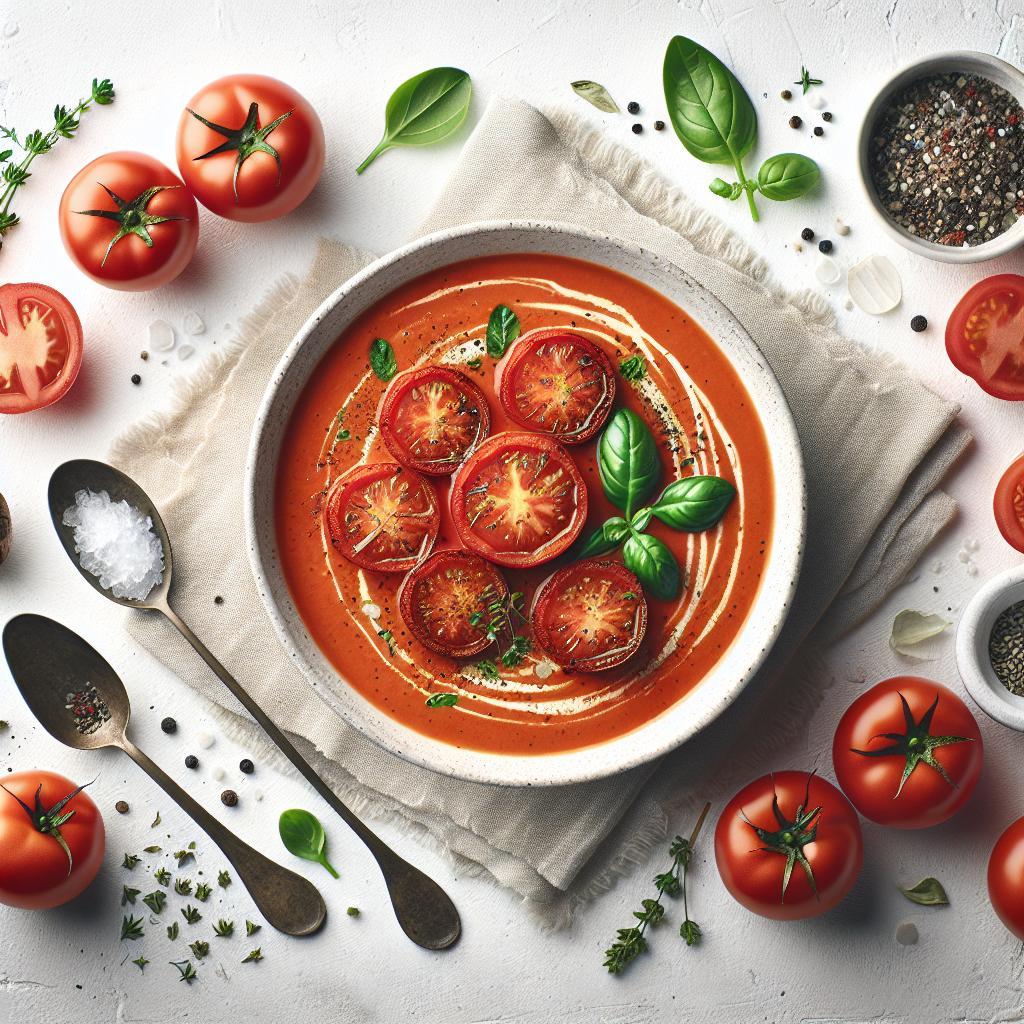

There is nothing more comforting than a steaming bowl of roasted tomato soup when you want clarity of flavor and textural balance. This guide gives targeted, cook-tested techniques to deepen sweetness, add gentle smoke, and achieve a silky mouthfeel while preserving tomato brightness.
- Choosing the Ripest Tomatoes for Tomato Soup
- Mastering Roasting for Tomato Soup
- Crafting Herbs and Spices for Tomato Soup
- Tips for Achieving Creamy Texture Without Cream in Tomato Soup
- Recipe Details: Timing, Yield, Ingredients, and Instructions for Tomato Soup
- Chef’s Notes and Practical Adjustments for Tomato Soup
- Serving Suggestions for Tomato Soup
- Nutritional Snapshot
- FAQ
- Choose fully ripe tomatoes for concentrated sugars and balanced acidity.
- Roast to caramelize and amplify umami and aroma without masking fruit notes.
- Build creaminess strategically with legumes, nuts, or starchy vegetables instead of heavy cream.
- Season progressively to avoid over-salting during reduction and roasting.
Choosing the Ripest Tomatoes for Tomato Soup
Start with ripe, heavy tomatoes for the best roasted tomato soup base. Ripe fruit concentrates sugars and reduces the green, astringent notes that undercut balance.
Use Roma or plum varieties for dense flesh and lower water content, or mix in heirlooms for layered sweetness and aromatics. For botanical and cultivar context, consult tomato.
Mastering Roasting for Tomato Soup
Roasting concentrates juices and generates Maillard browning on exposed flesh, improving savory complexity for roasted tomato soup. Use high heat and arrange pieces with cut sides exposed so edges char and flesh collapses.
Set the oven to 425°F (220°C), drizzle olive oil, and roast until edges caramelize and the flesh bubbles. For technical background on the technique and browning reactions, see roasting (cooking) and caramelization.
Crafting Herbs and Spices for Tomato Soup
Herbs shape the midpalate of the roasted tomato soup and help balance acidity. Fresh basil brightens the top notes while thyme and oregano add savory weight.
Introduce smoked paprika or a touch of cumin for warm, toasty undertones without hiding tomato fruit. For herb background, review basil.
Use fresh herbs late in the process to preserve aroma. Dried herbs work well during simmering to release their essential oils and to create an integrated flavor profile.
Tips for Achieving Creamy Texture Without Cream in Tomato Soup
You can create a velvety roasted tomato soup without dairy by using ingredients that provide body and emulsion. Cooked white beans or pureed cashews add fat-like richness and natural emulsifiers for a smooth mouthfeel.
Roasted potatoes or carrots increase viscosity via starch, and an immersion blender will create a stable emulsion. If you use coconut or dairy, add small amounts so you retain tomato clarity while gaining silkiness.
Recipe Details: Timing, Yield, Ingredients, and Instructions for Tomato Soup
Plan roughly 1 hour 15 minutes total, with most of that time spent roasting and simmering to deepen flavor. This approach yields about six servings of a concentrated, smooth roasted tomato soup.
Organize mise en place: halve tomatoes, peel and chop an onion, measure spices, and have your blender ready. Prepare optional add-ins like cooked white beans in advance to streamline assembly.
Ingredients
- 3 lbs ripe tomatoes (Roma, heirloom, or a mix), halved or quartered
- 4 cloves garlic, whole, peeled
- 2 tbsp extra-virgin olive oil
- 1 medium onion, finely chopped
- 1 tsp sea salt (adjust to taste)
- ½ tsp freshly ground black pepper
- 1 tsp dried oregano
- 1 tsp dried thyme
- 1 tsp smoked paprika
- 1 cup cooked white beans (optional for creaminess)
- 2 cups low-sodium vegetable broth
- Handful fresh basil, chopped
- ½ tsp red pepper flakes (optional)
- 1 medium roasted carrot or potato, peeled and chopped (optional)
- 1 tbsp lemon juice, fresh (for brightness)
Instructions
- Preheat oven to 425°F (220°C). Line a rimmed sheet with parchment.
- Prepare tomatoes and garlic. Place cut-side up, add garlic cloves, drizzle olive oil, and salt lightly.
- Roast 30–40 minutes. Look for charred edges and concentrated juices; allow to cool briefly.
- Sauté the onion. In a large pot, heat 1 tbsp oil and sweat the onion until translucent, about 5 minutes.
- Add roasted tomatoes and broth. Squeeze roasted garlic into the pot, add herbs and spices, then simmer 15–20 minutes to marry flavors.
- Boost creaminess if desired. Stir in white beans or roasted root vegetables and warm through for 5 minutes.
- Blend to desired texture. Use an immersion blender or work in batches in a countertop blender. Return to pot and adjust seasoning and acidity.
- Finish and serve. Stir in fresh basil and lemon juice. Serve hot with an olive oil drizzle and optional croutons.
Chef’s Notes and Practical Adjustments for Tomato Soup
Make-ahead storage enhances the roasted tomato soup as flavors meld and edges round. Refrigerate in an airtight container up to 3 days or freeze portions for up to 2 months.
To correct excess acidity, a small pinch of baking soda neutralizes quickly; alternatively, a teaspoon of natural sweetener such as maple syrup will balance flavor while preserving tomato character.
- Make Ahead: Flavors deepen overnight; reheat gently.
- Vegan Cream: Use blended cashews or coconut milk sparingly for silkiness.
- Herb Variations: Try rosemary or a bay leaf during simmering for aromatic nuance.
For technique references and more on savory balance, consult umami. For other roasting tips, our internal guide expands on sheet layout and rack placement at roasting techniques.
Serving Suggestions for Tomato Soup
Pair roasted tomato soup with a crisp grilled cheese or toasted sourdough for contrast. The fat and crunch of the sandwich lift the soup’s silky texture and highlight its savory-sweet profile.
Garnish with basil chiffonade, a drizzle of high-quality olive oil, or toasted seeds for crunch. For lighter menus, serve alongside a lemon-dressed green salad.
Consider menu pairing notes on our site, such as quick salads and sandwiches, at grilled cheese recipes and seasonal sides to complete a balanced plate.
Nutritional Snapshot
The soup provides moderate calories and fiber, and it supplies plant-based protein when beans are included. Adjust portion sizes and add-ins to meet dietary goals for protein or fat.
Use low-sodium broth to control sodium; adding salt slowly lets you fine-tune the final seasoning without overshoot.
| Nutrient | Per Serving |
|---|---|
| Calories | 160 kcal |
| Protein | 5 g |
| Carbohydrates | 28 g |
| Fat | 4 g |

FAQ
These concise answers address common technique and troubleshooting questions for roasted tomato soup. Refer back to recipe steps and chef notes when testing adjustments.
Why roast the tomatoes before making the soup?
Roasting removes water and promotes surface browning, which yields smoky, caramelized notes and a deeper savory base than raw or simply simmered tomatoes. The result is a richer, more complex roasted tomato soup.
Which tomatoes work best for roasting?
Roma and plum varieties roast well due to meaty flesh and lower moisture. Heirloom tomatoes add layered sweetness and aromatic nuance; choose ripe, heavy fruit for best results.
Can I skip peeling after roasting?
Peeling is optional. Roasting loosens skins, and removing them yields a silkier finished roasted tomato soup. Leave skins on for a rustic, chunkier texture.
How do I make the soup creamy without dairy?
Use cooked white beans, puréed cashews, or roasted starchy vegetables. Blend thoroughly to create an emulsion that mimics cream while keeping the soup plant-forward.
How long does the soup keep and can I freeze it?
Store refrigerated for up to 3 days, or freeze portions in airtight containers for up to 2 months. Reheat gently to preserve texture and aromatic impact.
See also: tomato soup
See also: Tomato soup