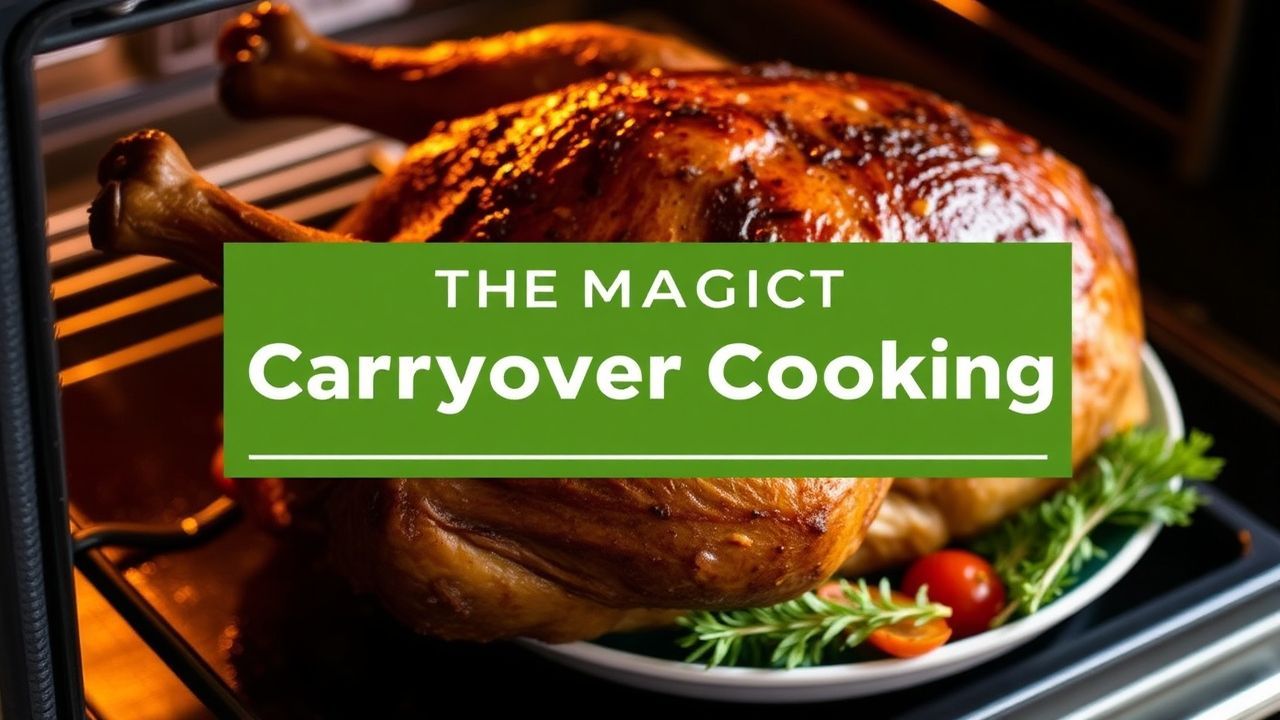

The Magic of Carryover Cooking: Perfect Roasts Every Time
There is a kitchen technique that turns a good roast into a great one: carryover cooking. Remove the meat at the right moment and residual heat finishes the job, locking in juices and sharpening the crust.
- What Is Carryover Cooking?
- Why Carryover Cooking Matters
- How Size, Shape, and Bone Affect Carryover
- Essential Tools and Terms
- Prep and Cook Time
- Yield and Difficulty
- Ingredients
- Step-by-Step Instructions
- Chef’s Notes
- Serving Suggestions
- Practical Troubleshooting
- Related Reading and Internal Resources
- Science Links
- At a Glance
- FAQ
- Carryover cooking raises internal temperature after the roast leaves the oven.
- Rest meat 15–30 minutes to redistribute juices and complete cooking evenly.
- A reliable meat thermometer and correct pull temperature prevent overcooking.
- Large, dense roasts gain more degrees from residual heat than small cuts.
What Is Carryover Cooking?
Carryover cooking describes how stored thermal energy moves from the outside of a roast to its center after you remove it from heat. The outer layers stay hotter, so heat flows inward and raises the core temperature by several degrees.
This effect depends on heat capacity and mass. Larger roasts retain more thermal energy and thus experience a larger temperature rise while resting.
Why Carryover Cooking Matters
Carryover cooking prevents the roast from drying out by allowing a gentle finish without continued oven exposure. When you pull a roast early by a few degrees, residual heat finishes the cook with less moisture loss.
It also evens the internal temperature. The slow inward heat movement reduces hot spots and yields consistent doneness from edge to center, improving both texture and flavor.
How Size, Shape, and Bone Affect Carryover
Mass and shape determine how much residual heat the roast stores. A dense 4–6 lb prime rib retains more energy than a thinner cut, so expect a larger post-oven rise.
Bones act as heat sinks and change heat flow. Bone-in roasts heat differently, so adjust your pull temperature and resting time to compensate for this thermal behavior.
Thermal principles in practice
Heat transfer follows predictable patterns: conduction moves energy from hot outer layers inward. That same physics explains why larger items show greater carryover rise.
Understanding these basics helps you choose target pull temperatures and resting times with confidence. The result: fewer surprises at the carving board.
Essential Tools and Terms
Use a quality digital probe meat thermometer for real-time accuracy and to track the roast as it cools. A thermometer eliminates guesswork and prevents over- or undercooking.
Terminology you should know: pull temperature (the internal temp when you remove the roast), final temp (target after resting), and tenting (loosely covering meat to retain heat).
For reading on the broader cooking process, see roasting techniques and the Maillard reaction for crust formation.
Prep and Cook Time
Preparation Time: 15 minutes of active work plus any overnight dry-salt brining if used. Dry brining changes surface moisture and improves crust formation.
Cook Time: 1 hour to 1 hour 30 minutes at moderate oven temperatures for a 3–4 lb roast; larger roasts need longer. Rest Time: 20 to 30 minutes to allow carryover cooking and juice redistribution.
Yield and Difficulty
Serves 6 to 8 for a 3–4 lb roast. The technique fits home cooks who can monitor temperature and resist carving too soon.
Difficulty: Medium. The main skills are temperature control, correct pull temperature, and proper resting technique.
Ingredients
Use quality ingredients to complement the carryover process: a trimmed 3–4 lb prime rib, kosher salt, pepper, olive oil, garlic, and fresh herbs. These basics enhance both crust and internal flavor.
Optional: beef broth or pan juices for a simple sauce after resting. Reserve juices and deglaze the roasting pan for a concentrated finishing sauce.
Step-by-Step Instructions
Start by preheating the oven to 450°F (230°C) to build an initial sear and encourage crust development. Place the roast fat side up on a rack in a shallow pan for even airflow.
Rub the roast with oil, kosher salt, and freshly ground black pepper. Press minced garlic and herbs onto the surface to add aromatics that persist through resting.
Insert a probe thermometer into the thickest muscle, avoiding fat pockets and bone. Roast at high heat for 15 minutes to brown the exterior, then lower oven to 325°F (160°C) for steady cooking.
Remove the roast when the probe reads about 5–10°F below your desired final temperature. Tent loosely with foil and rest 20–30 minutes; the internal temp will climb to the final target during this time.
Recommended pull temperatures
For medium-rare, pull at roughly 120–125°F and rest to 125–130°F. For medium, pull near 135°F and rest to 140°F. Adjust pull points based on roast size and whether the cut is bone-in.
Always verify final temp with a second quick-read probe before carving to ensure both safety and desired doneness. For food-safety context, consult the food safety guidance.
Chef’s Notes
Dry brining: Salt the roast a day ahead and refrigerate uncovered to dry the surface. This concentrates flavor and helps the crust brown evenly.
Do not slice too soon. Cutting releases juices and reduces succulence. Let resting and carryover cooking complete before carving.
Boneless roasts simplify temperature control. Bone-in cuts add flavor but require practice because bones alter heat distribution.
After you rest the roast, reserve pan drippings. Deglaze the pan with a splash of broth and reduce to concentrate flavor for an easy pan sauce.
Serving Suggestions
Slice against the grain into uniform pieces to maximize tenderness. Serve on a warm platter and spoon pan sauce sparingly to avoid sogginess.
Pair the roast with mashed potatoes, roasted root vegetables, and a robust red wine if desired. Keep side portions moderate so the roast remains the star.
Practical Troubleshooting
If the roast finishes under target after resting, return it to a moderate oven for short bursts, monitoring temperature closely. Avoid high heat; that causes uneven cooking.
If the crust softens after resting, finish slices briefly under a hot broiler just to re-crisp the edges. Do this sparingly so internal temperatures do not climb further.
Related Reading and Internal Resources
For timing charts and alternatives, see our internal guide on perfect roast timings. That page breaks down pull points by weight and desired doneness.
To refine resting technique and tenting methods, check our practical notes at resting guide for roasts. It covers step-by-step tenting and temperature checks.
Science Links
For technical background, review the general practice of cooking methods. For meat-specific context, consult the meat overview and the meat thermometer entry for thermometer types and accuracy considerations.
At a Glance
Carryover cooking gives you consistent, juicy roasts when you plan pull temperatures and resting time. Use the right thermometer and tent loosely to keep a crisp crust.
Large roasts gain more temperature after the oven. Practice and tracking will help you predict exact rises for your equipment and cuts.
FAQ
What exactly is carryover cooking, and why does it matter?
Carryover cooking is the internal temperature increase that occurs after a roast leaves the oven. It matters because it allows you to stop cooking early and avoid drying the meat while ensuring the roast finishes to the desired doneness.
How long should I rest my roast?
Rest most roasts 15–30 minutes, depending on size. Large, dense roasts need the full 30 minutes to let heat distribute and juices stabilize for even slicing.
Can I speed up resting to serve faster?
Avoid rushing. Shortening rest time sacrifices juiciness and evenness. If time is tight, keep the roast tented and warm, but aim for at least 10–15 minutes for smaller cuts.
Do bones change carryover cooking?
Yes. Bones alter heat flow and act as thermal conductors or sinks, changing how quickly the center gains heat. Adjust pull temperatures and allow extra rest for bone-in roasts.
What temperature should I pull a roast for medium-rare?
Pull most roasts at about 120–125°F, then rest to 125–130°F final. Track your specific oven and roast size to refine those numbers over time.
See also: carryover cooking