
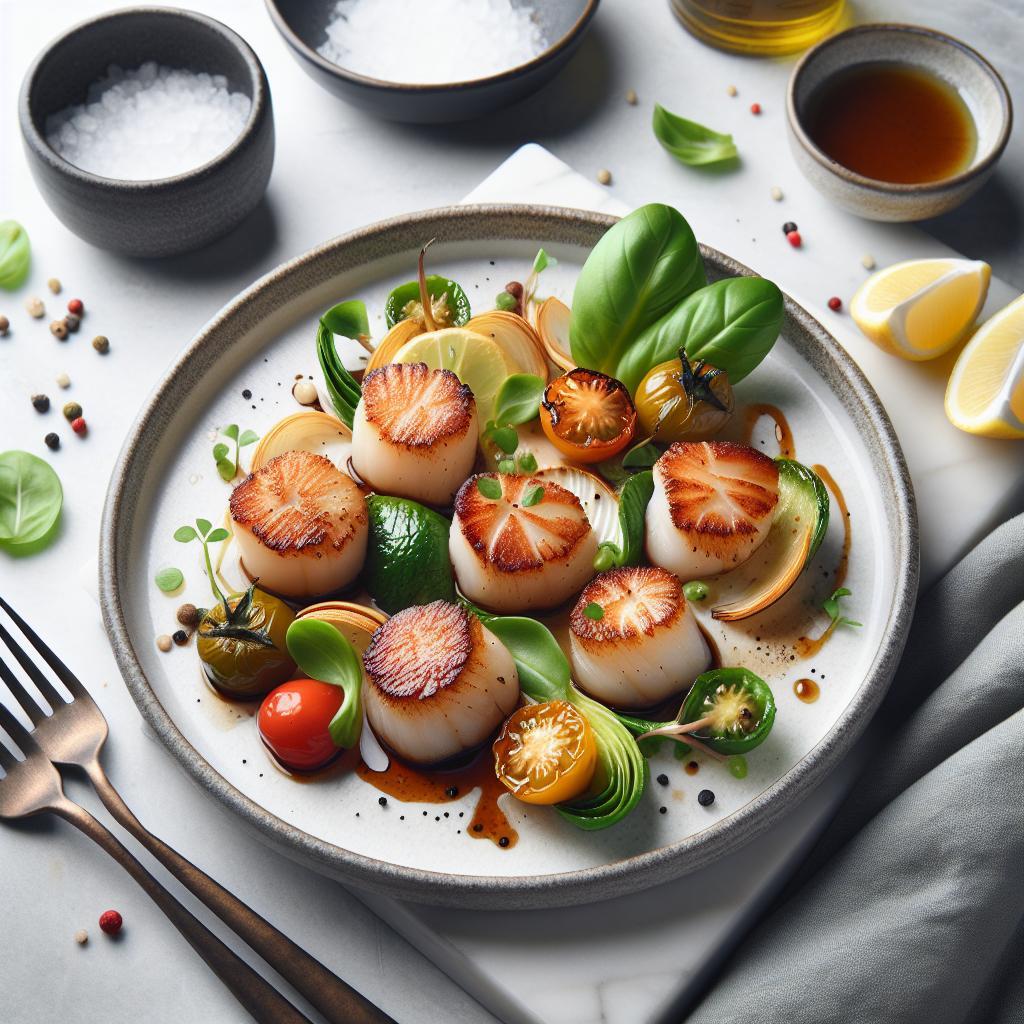

Scallops respond to heat like fine metal to a craftsman’s hammer: transformable, sensitive, and capable of a brilliant finish. The secret to a restaurant-caliber scallop lies in a short, precise sear that creates a crisp, golden shell while leaving the interior soft and buttery.
- Quick heat, short time: High surface temperature sparks the Maillard reaction without overcooking the center.
- Dry surface matters: Remove moisture to prevent steaming and promote browning.
- Right fat and pan: Use a high smoke-point oil and a heat-retaining pan for consistent crust.
- Finish with fat and rest: Add butter late and rest briefly to lock juices and boost flavor.
The science behind the golden crust
The brown, flavorful layer on a perfectly seared scallop forms because of a chemical process that chefs exploit intentionally.
When proteins and reducing sugars hit high heat, they undergo the Maillard reaction, producing dozens of aromatic compounds and the deep color we seek. Maillard reaction
What the Maillard reaction does for scallops
The reaction builds savory, nutty and caramel-like notes on the scallop’s surface, concentrating taste in every bite.
Because scallops contain amino acids and trace sugars, they brown rapidly when dry and exposed to searing temperatures. Amino acids
Why moisture and heat balance matter
Water becomes steam and prevents direct contact between scallop and pan, so surface moisture inhibits browning.
Using intense surface heat sears the exterior quickly and limits heat penetration, preserving a tender center while forming a crust. Cooking
Ingredients and equipment that change outcomes
Choose the right scallops, fat, and cookware before you heat the stove; these choices determine control and final texture.
Service-quality sears come from combining a dry scallop surface, a high smoke-point oil, and a pan that holds temperature steadily. Smoke point
Which scallops to buy
Look for firm, translucent adductor muscles with no ammonia smell; large sea scallops sear more predictably than small bay scallops.
Frozen scallops can work if properly thawed and dried; otherwise, moisture from thawing ice crystals complicates browning.
Best pans and fats
Cast iron and heavy stainless steel transfer and retain heat, creating the stable surface you need for a clean crust.
Use grapeseed, refined avocado, or clarified butter for heat resilience, then finish with a knob of butter for flavor without burning it early.
Step-by-step technique for a flawless sear
Small differences in preparation and timing make the difference between a pale scallop and a spectacular one.
Follow these steps precisely and you’ll reproduce the same golden result consistently, even under busy service conditions.
1. Prep: dry and season
Pat each scallop thoroughly with paper towels until the surface appears slightly tacky rather than wet.
Season lightly on both sides with fine salt and freshly cracked pepper just before searing to avoid drawing out moisture too early.
2. Heat and oil
Preheat your pan until very hot on medium-high to high heat; a drop of water should sizzle and evaporate instantly.
Add just enough high smoke-point oil to coat the base; wait for the oil to shimmer but not smoke before adding scallops.
3. Sear without fuss
Place scallops in a single layer with at least 1 inch between them; overcrowding cools the pan and produces steam instead of a crust.
Let them sear undisturbed for about 1.5–2 minutes per side until a deep golden-brown forms, then flip carefully with tongs. Time, not curiosity, wins here.
4. Finish and rest
After flipping, add a small spoon of butter with a smashed garlic clove and a sprig of thyme if you like aromatics.
Tilt the pan and baste for 30–60 seconds, then transfer scallops to a warm plate and rest for one to two minutes to redistribute juices.
Chef’s notes: common pitfalls and pro fixes
Many home cooks overcook scallops by mistiming or using the wrong pan and fat; avoid these mistakes to get a tender center and crisp edge.
Also, remember that seasoning early can draw moisture; season just before searing to keep the surface dry long enough for the Maillard reaction to begin.
Adding butter too early leads to burn and bitter notes; reserve butter until the second side and baste briefly to boost richness without overheating the fat.
Serving ideas and flavor matches
Serve scallops immediately on a warm plate to preserve the contrast between crust and interior.
Pair them with bright acidic elements—lemon, a vinaigrette, or a tomato relish—and textural sides like smooth purée or crisp vegetables for balance.
Finishing sauces and garnishes
Browned butter with lemon and chives or a simple beurre blanc complements the caramel notes from the sear without overpowering the scallop.
A light dusting of smoked paprika or microherbs adds color and a subtle flavor lift right before serving.
FAQ
How dry should scallops be before searing?
Pat them until the surface feels tacky, not drenched; remove as much visible moisture as possible for a clean sear.
Excess moisture creates steam and prevents the Maillard reaction, so keep towels handy and dry both sides thoroughly.
What temperature should the pan reach?
Aim for a surface temperature that causes oil to shimmer but not smoke—roughly 350–400°F on heavy pans—so the scallops sear quickly.
If the oil smokes immediately, reduce heat slightly; if it sputters and cools, the scallops will steam instead of searing.
Can I use butter for the entire sear?
Pure butter burns quickly at searing temperatures, producing bitter flavors, so use clarified butter or oil for the initial sear.
Add a small amount of whole butter at the end to finish and baste for flavor without exposing butter to prolonged high heat.
How do frozen scallops compare to fresh?
Frozen scallops can sear well if fully thawed and dried, but they often release more moisture from ice crystals, which requires extra drying time.
When possible, buy fresh dayboat or recently thawed scallops for more consistent searing results and texture.
How can I tell when a scallop is perfectly cooked?
The interior should feel firm yet springy, not rubbery; a gentle press will return slightly without collapsing completely.
Visual cues help: the center shifts from translucent to opaque, but the true test is texture—tender and slightly giving.
Mastering the sear turns scallops from ordinary to exceptional. Use heat intentionally, control moisture, and choose the right tools to repeat the result reliably.
See also: seared scallops