
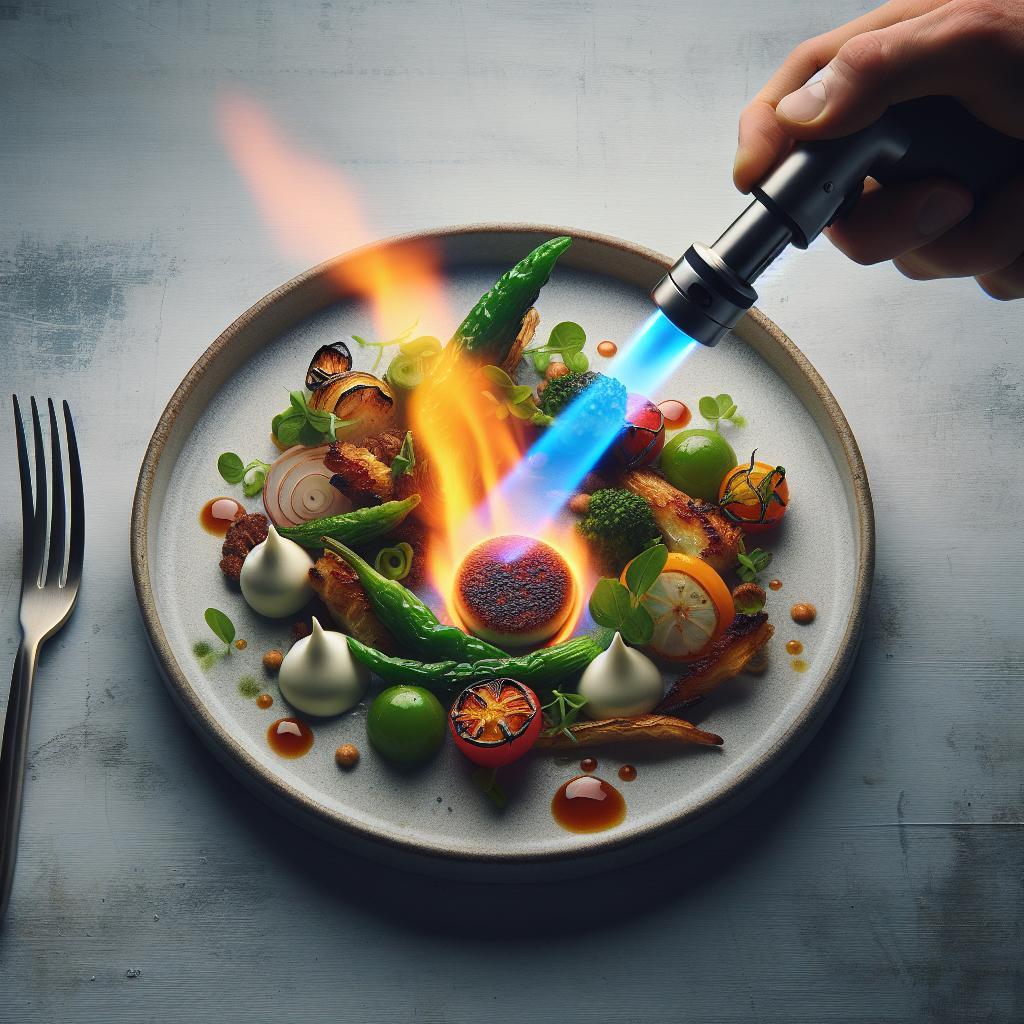

Flaming Flavor begins with a focused flame and trained hand. A culinary torch delivers intense, controllable heat that creates crisp crusts, charred edges, and concentrated flavor without overcooking interiors.
- Key control: distance and motion determine sear quality.
- Safety first: proper storage and extinguisher readiness prevent accidents.
- Technique: combine pan searing with torch finishing for optimal crusts.
- Tool choice: pick a refillable, adjustable torch for repeatable results.
The torch extends classic techniques like pan searing and oven roasting by delivering spot heat where you need it. Culinary professionals use this tool to trigger the Maillard reaction and to add nuanced char to vegetables, seafood, and proteins.
Prep and Cook Time
Preparation: 10 minutes. Preparing steaks and mise en place keeps the torch stage efficient and safe.
Cooking: 15 minutes. Quick searing and a brief torch finish speed service without sacrificing crust quality.
Yield
Serves 4 people. This method suits family service or a small dinner party where each portion gets individualized finishing.
Scale up by torch-finishing in batches, keeping finished steaks on a warm tray to rest before serving.
Difficulty Level
Medium. This technique requires control of flame distance and an understanding of searing basics, but cooks with pan-searing experience pick it up quickly.
Complete beginners can learn safely with supervision and by practicing on non-food items to sense flame behavior before applying it to food.
Ingredients
- 4 thick-cut ribeye steaks (1.5-inch thick, room temperature)
- 2 tablespoons olive oil
- 2 teaspoons kosher salt
- 1 teaspoon freshly cracked black pepper
- 4 sprigs fresh rosemary
- 4 cloves garlic, smashed
- 2 tablespoons unsalted butter
Use high-quality ingredients and allow protein to come to room temperature for consistent results. A dry surface on the meat yields a better initial sear and improves how the torch browns the surface.
If you prefer leaner cuts, reduce torch time and rely more on pan searing to protect the center from overcooking.
Instructions
- Season steaks generously with kosher salt and black pepper on both sides. Pat dry with paper towels to ensure your sear will be crisp and flavorful.
- Heat a heavy skillet (cast iron recommended) over high heat until smoking hot. Add olive oil and quickly place steaks in the pan to sear for 2 minutes per side and build an initial crust.
- Remove steaks from the pan and rest briefly on a cutting board. That pause helps juices redistribute before the finishing torch pass.
- Use your culinary torch about 3 inches from the surface, moving steadily to produce even browning. Keep the torch moving to avoid one-zone burning and to build a deep mahogany crust.
- Flip steaks and repeat torch finishing on the opposite side until the desired crust forms, roughly 2 to 3 minutes total of torching depending on flame setting.
- Return steaks to the skillet with butter, rosemary, and garlic. Baste briefly to infuse aromatics, then rest for 5 minutes before slicing against the grain to serve.
For precise doneness, monitor internal temperature with a probe. Torch finishing adds surface color while preserving the mid-rare interior when used sparingly.
Practice torch movement and distance on a scrap piece of meat to calibrate flame intensity and avoid scorch marks during service.
Tips for Success
Keep the torch moving at a steady rate and maintain a consistent distance. A 45-degree angle often yields even caramelization across a curved surface.
Dry the food surface thoroughly before torching; moisture inhibits browning and creates steam that dulls crust formation.
Use a torch with adjustable flame control; high flame works for fast sears, while a low flame gives gentle toasting for delicate items like meringue or fruit slices.
Practice on vegetables or small proteins before torching premium cuts to build confidence without waste.
Recommended Tools and Fuel
Select a refillable torch with a safety lock and an ergonomic grip. Quality materials and reliable ignition reduce downtime and increase service speed.
Understand fuel properties: many torches use butane, so follow manufacturer refill instructions and handle canisters carefully. Read more on the fuel chemistry at the butane page.
Why tool choice matters
A torch with adjustable flame and a steady nozzle produces a cleaner, more controlled sear. Cheap models can sputter or clog, causing uneven heat application.
For heavy-duty use, prefer models designed for culinary tasks rather than generic hardware blowtorches. See the tool family described at the blowtorch article for context on variations and safety standards.
Essential Safety and Maintenance
Always review the manufacturer’s safety recommendations before first use. Keep a class B/C fire extinguisher or a box of baking soda nearby when torching indoors.
Store fuel canisters in a cool, ventilated area away from direct sunlight and heat sources. Follow refill protocols to prevent leaks and nozzle blockages.
Clean the torch nozzle periodically to prevent residue buildup. A clogged nozzle reduces flame quality and can lead to uneven finishes.
Service your torch according to the manufacturer’s schedule and replace seals or filters if you detect inconsistent ignition or sputtering.
Serving Suggestions
Plate steaks with a simple herb-butter finish and restrained garnishes to let the torch-derived crust shine. A citrusy salad can cut through the richness for balance.
Try crispy roasted potatoes or quick-charred asparagus finished with the torch for matching textures. For a classic pairing, select a bold red wine that complements char and richness.
Presentation and Finishing Uses
Use the torch to finish cheese toppings, char peppers for easy peeling, or add a controlled blaze to desserts like custard toppings. The tool expands finishing options beyond protein alone.
For delicate tasks like toasting meringue, set the flame lower and keep rapid motion to avoid overheating the interior. Professionals often practice on small reserves to tune intensity.
Further Reading and Internal Resources
Expand technique knowledge with our internal guides: see the Guide to Kitchen Flame Techniques for additional recipes and torch applications.
Review safety drills and storage best practices in our internal safety primer at Safety: Torch Basics to ensure compliant workplace habits and home kitchen readiness.
| Nutrient | Per Serving |
|---|---|
| Calories | 520 kcal |
| Protein | 45 g |
| Carbohydrates | 1 g |
| Fat | 38 g |
FAQ
What is a culinary torch and how does it differ from a blowtorch?
A culinary torch is a handheld butane tool designed for culinary finishes and small-scale heating tasks. Unlike industrial blowtorches, culinary torches feature ergonomic grips, finer nozzles, and safety locks tailored for food use.
Consult the blowtorch entry for historical context and distinctions between tool classes.
Can I use a torch on all cuts of meat?
You can torch most cuts, but adjust technique by thickness and fat content. Thick, marbled cuts benefit from combined pan sear and torch to build a robust crust without overcooking the center.
Lean cuts require gentler flame application to avoid drying the protein. Always monitor internal temperature for food safety.
Is using a culinary torch safe at home?
Yes, when you follow safety steps: adequate ventilation, a clear workspace, a fire extinguisher nearby, and manufacturer operating guidance. Training and attention reduce risks significantly.
Store fuel properly and inspect the torch before each use. Replace or service faulty components immediately.
How do I maintain a consistent torch finish?
Control comes from consistent distance, steady sweeping motion, and the correct flame setting. Practice creates muscle memory for uniform results across multiple portions.
Use a thermometer to confirm internal doneness; the torch should modify surface color, not substitute for proper cooking when precise temperatures matter.
Where can I learn advanced torch techniques?
Progress from simple caramelization and cheese melting to controlled charring and aburi-style applications. Our internal guide outlines progression drills and sample recipes for staged learning.
Study the chemistry behind browning via the Maillard reaction to understand how heat and time influence flavor development.
Mastery of the culinary torch hinges on disciplined practice, respect for heat, and consistent safety habits. Use the tool to refine texture and boost aroma, then let balanced plating and sensible seasoning finish the dish.

See also: culinary torch