

Hearty Turkey & Vegetable Soup: Nourish Your Body and Soul
When cold weather demands comfort, a restorative bowl of turkey soup with vegetables answers the call.
- Why This Turkey Soup Works
- Prep and Cook Time for Turkey Soup
- Yield
- Difficulty Level
- Ingredients
- Instructions to Make Turkey Soup
- Chef’s Notes
- Serving Suggestions for Turkey Soup
- Nutrition Snapshot for Turkey Soup
- Storage and Make-Ahead
- Q&A
- What makes this turkey soup stand out?
- Can I swap the turkey for other proteins?
- How do I keep vegetables from getting mushy?
- FAQ
- High-protein, low-fat comfort: Turkey soup supplies lean protein to support muscle maintenance and fullness.
- Vegetable variety: Starchy and leafy vegetables add fiber, vitamins, and texture for a balanced bowl.
- Make-ahead convenience: This turkey soup improves with resting time and stores well for meal prep.
- Simple technique: One-pot cooking concentrates flavor with minimal active time.
Why This Turkey Soup Works
This turkey soup balances macronutrients for a single-bowl meal that promotes satiety and recovery.
Lean turkey brings concentrated protein, while mixed vegetables provide carbohydrates, fiber, and micronutrients that support daily needs.
Prep and Cook Time for Turkey Soup
Preparation: 20 minutes. Cooking: 1 hour 15 minutes. The schedule suits weeknight dinners and batch cooking alike.
Total time including hands-off simmer is roughly 1 hour 35 minutes, with most minutes spent letting the pot develop depth of flavor.
Yield
This recipe yields 6 generous bowls of turkey soup, ideal for family meals or weekly meal prep containers.
Portion into airtight containers for refrigeration or freezing to preserve texture and flavor for later use.
Difficulty Level
Easy to medium. The recipe uses basic sautéing and a controlled simmer suitable for cooks with foundational skills.
Minimal equipment suffices: a large heavy-bottom pot and a sharp knife. Consistent cuts and timing improve results.
Ingredients
Assemble quality ingredients to maximize nutrition and taste in this turkey soup.
Below is a balanced list emphasizing lean protein, aromatic vegetables, and a flavorful liquid base.
- 2 tablespoons extra virgin olive oil
- 1 large yellow onion, finely chopped
- 3 cloves garlic, minced
- 3 medium carrots, sliced into half-moons
- 2 celery stalks, diced
- 1 medium parsnip, peeled and chopped
- 1 small butternut squash, cubed
- 1 lb (450 g) boneless turkey breast, cut into bite-sized pieces
- 8 cups low-sodium stock or broth
- 1 bay leaf
- 1 teaspoon dried thyme
- 1 teaspoon dried rosemary
- 1 cup kale or spinach, roughly chopped
- 1 cup green peas, fresh or frozen
- Salt and freshly ground black pepper, to taste
- Juice of half a lemon, optional
- Fresh parsley, chopped for garnish
Butternut adds sweetness and body; consult the butternut squash entry if you want cultivar or storage details.
Leafy greens like spinach perform best added late to the pot; see spinach for nutrient context and storage tips.
Instructions to Make Turkey Soup
Follow this sequence to build layered flavor: sweat aromatics, lightly brown protein, add stock and herbs, then simmer until vegetables are tender.
Keep a gentle simmer to avoid breaking down delicate vegetables and to extract flavor steadily from solids into the broth.
- Warm the olive oil in a large pot over medium heat. Add the onion and sauté until translucent and slightly golden, about 5 minutes.
- Add garlic, carrots, celery, and parsnip. Cook, stirring, until the vegetables begin to soften, approximately 7 minutes.
- Add cubed butternut squash and turkey pieces. Cook 5–7 minutes until turkey turns opaque, turning pieces gently to encourage even browning.
- Pour in the stock and add bay leaf, thyme, and rosemary. Bring to a simmer, then reduce heat and cover. Simmer gently 45 minutes to meld flavors.
- Remove bay leaf. Add chopped greens and peas; cook uncovered 5–10 minutes until greens are tender and vibrant.
- Season and finish. Adjust salt and pepper, add lemon juice if using, and garnish with parsley before serving.
Work methodically so each step contributes to a clean, layered broth rather than relying on heavy seasoning to mask shortcomings.
For a thicker texture, mash a cup of the cooked squash into the pot and stir; the result enriches mouthfeel without adding fat.
Step-by-step Pro Tips
Cut vegetables uniformly for even cooking. Consistent pieces prevent overcooking small pieces while larger ones remain underdone.
Brown the turkey briefly to develop Maillard flavor, then deglaze the pot with a small splash of stock before adding the full liquid volume.
Reheat gently on the stovetop to maintain texture—bring to a simmer and then reduce heat so vegetables retain structure.
Chef’s Notes
Use a low-sodium stock if you plan to reduce the pot or add salty condiments later. That practice preserves control over final sodium levels.
If you make homemade stock, skim fat after chilling for a cleaner finish. See stock (food) for fundamentals if you want to prepare your own base.
- Broth selection: Homemade or low-sodium store stock gives the most control.
- Vegetable swaps: Sweet potatoes or green beans change texture and nutrients while keeping the soup balanced.
- Protein variation: Turkey thighs or shredded chicken add richer mouthfeel while keeping protein content high.
- Make-ahead: Refrigerate overnight to allow flavors to meld; reheat gently before serving.
Ginger and turmeric can add a subtle immune-supporting edge when added during the final simmer, and they blend well with thyme and rosemary.
For sourcing and cut guidance, review the turkey reference if you want more on poultry types and butchery basics.
Serving Suggestions for Turkey Soup
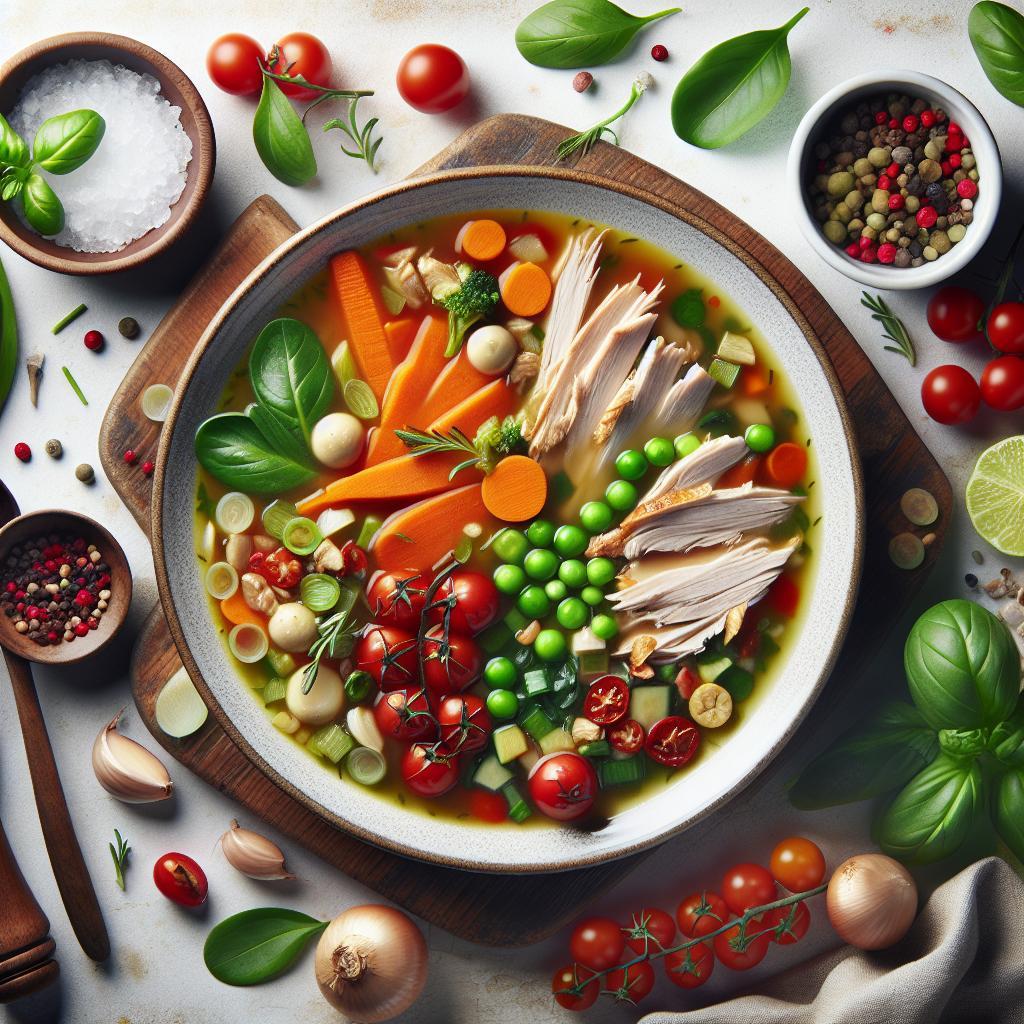
Serve in deep bowls to present the colorful mix of vegetables and tender turkey pieces. Garnish with fresh parsley for aroma and contrast.
Pair with a whole-grain slice or a small side salad for added fiber. A spoonful of plain Greek yogurt provides a creamy finish without excessive fat.
For variety, add cooked grains or small pasta to individual bowls so leftovers remain broth-forward in storage.
Explore more related bowls on internal pages such as turkey soup recipes and vegetable soups collection to plan weekly menus.
Nutrition Snapshot for Turkey Soup
Per serving, this turkey soup emphasizes lean protein and moderate carbohydrates from starchy vegetables and peas.
Using breast meat and measured oil keeps fat low while vegetables supply fiber and micronutrients for a balanced meal.
| Nutrient | Per Serving (1 bowl) |
|---|---|
| Calories | 280 kcal |
| Protein | 28 g |
| Carbohydrates | 25 g |
| Fat | 7 g |
Storage and Make-Ahead
Refrigerate leftover turkey soup in airtight containers for up to four days. Freeze portions for up to three months for long-term meal prep.
Leave headspace when freezing to allow liquid expansion. Thaw overnight in the refrigerator and reheat gently to preserve texture.
To cool quickly, divide into shallow containers before refrigerating; this reduces time in the temperature danger zone.
When reheating pre-cooked turkey, add it near the end of warming to prevent overcooking and dry meat.
Q&A
What makes this turkey soup stand out?
It pairs lean protein with a variety of vegetables and a gentle simmer to extract layered flavor without complicated technique.
The result is a nutrient-dense, comforting bowl that supports satiety and simple meal planning.
Can I swap the turkey for other proteins?
Yes. Turkey thighs, shredded chicken, or cooked lentils work depending on dietary needs and desired texture.
Each swap alters fat and flavor; adjust cooking time and seasoning to match the substitute.
How do I keep vegetables from getting mushy?
Cut vegetables into uniform pieces and add softer greens at the end of the cook. Maintain a low simmer rather than a rolling boil to protect texture.
If you plan to store soup with grains or pasta, cook those separately and add to bowls at service to avoid sogginess.
FAQ
How long does the soup last in the fridge?
Store turkey soup in airtight containers for up to four days. Cool it quickly by dividing into shallow containers before refrigerating.
Label containers with the date and use within the timeframe to ensure quality and safety.
Can I use leftover roasted turkey?
Yes. Add pre-cooked turkey during the final 10 minutes of reheating so it warms without overcooking.
Check seasoning first because roast seasoning may already contain salt and other flavors.
What is the best stock to use?
A low-sodium chicken or vegetable stock provides the most seasoning control. Homemade stock gives deeper flavor if you have it available.
Consult the stock (food) article for simple methods to prepare and store your own base.
How do I make the soup vegetarian?
Replace turkey with cooked beans or lentils and use vegetable stock. Add umami with roasted mushrooms or a small splash of soy sauce if desired.
Ensure texture balance by choosing a mix of starchy and leafy vegetables to maintain body and color.
Should I add grains or pasta?
Cook grains or small pasta separately and add to individual bowls to avoid them soaking up all the broth during storage.
Quinoa, barley, or small pasta shapes each add different mouthfeels—select based on storage plans and desired texture.
For wider context on vegetables and poultry in diets, consult vegetable and poultry resources.
Enjoy this turkey soup as a practical, nourishing option that supports appetite control and nutrient variety. The method rewards patience with a comforting, layered final bowl.
See also: turkey soup
See also: turkey soup