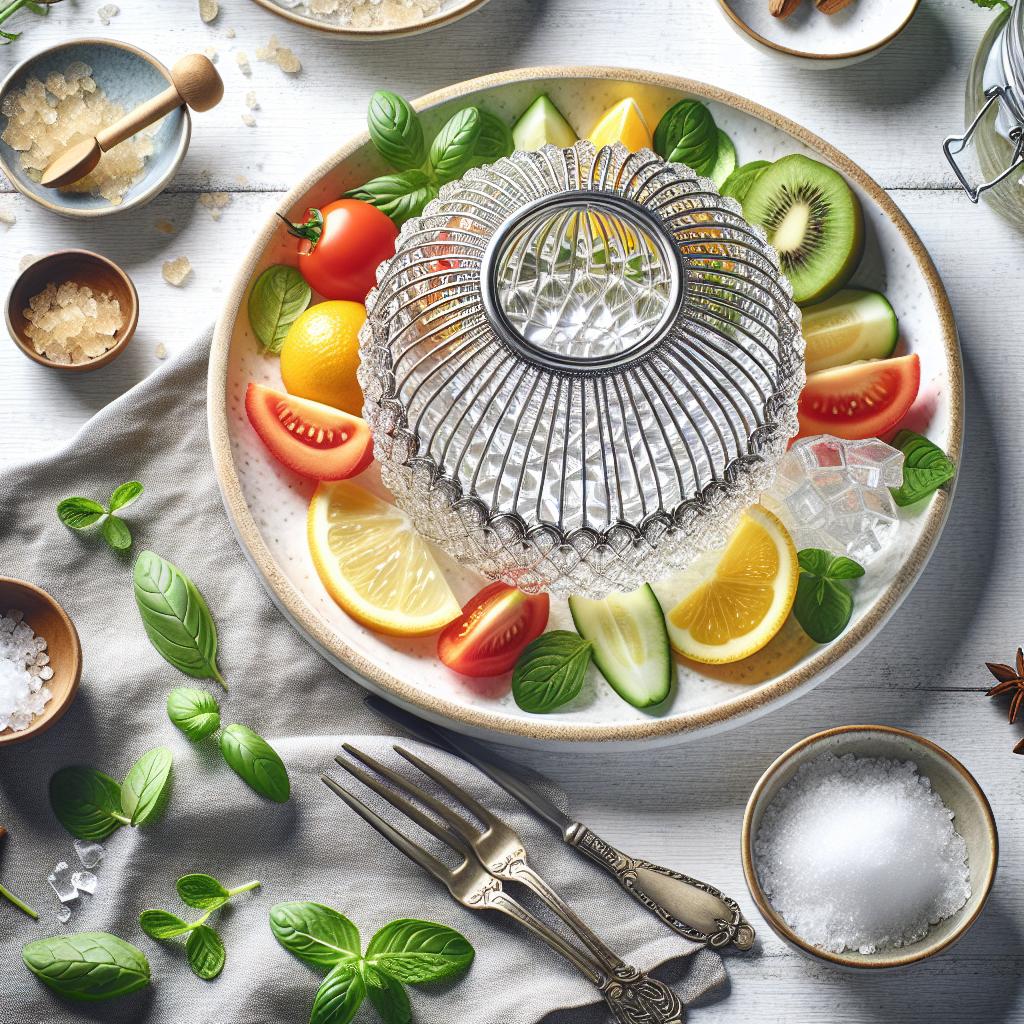



In the intricate world of chemistry and biology, sugar often takes center stage as both a sweetener and a fundamental building block of life. But what happens when we move beyond the familiar realm of sugar’s taste and energy, and delve into its structural potential? Enter the fascinating concept of a “sugar cage”-a molecular architecture where sugar molecules interlock to form protective, cage-like frameworks. This article unravels the science behind crafting such sugar cages, exploring the transformations that occur when regular sugar steps out of the kitchen and into the laboratory. Prepare to discover how everyday sugar molecules don a new identity, weaving complex structures that could reshape fields from medicine to materials science.
- Prep and Cook Time
- Yield
- Difficulty Level
- Ingredients
- Instructions
- Expert Tips for Crafting Durable and Aesthetic Sugar Structures
- Understanding the Chemistry Behind Sugar Cage Formation
- How Regular Sugar Transforms in Heat and Moisture
- Key Factors Influencing the Stability of Sugar Cages
- Serving Suggestions
- Chef’s Notes: Tips for Success
- Q&A
- Insights and Conclusions
Crafting a Sugar Cage: What Happens with Regular Sugar?
Crafting a sugar cage is an intricate dance between heat, moisture, and chemistry, where regular sugar transforms from humble granules into delicate, glistening structures that captivate the eye and delight the palate. Understanding this process not only elevates your presentation game but reveals the art behind sugar’s metamorphosis. I still recall my first attempt at a sugar cage-an ambitious but shaky lattice that taught me the vital chemistry behind sugar’s transformation. This guide will take you through the fascinating science and practical know-how to master durable and stunning sugar cages in your culinary creations.
Prep and Cook Time
- Preparation: 15 minutes
- Cooking (Caramelization & Shaping): 10-15 minutes
- Total: Approximately 30 minutes
Yield
Makes enough sugar cage to decorate 4 individual desserts or one large centerpiece
Difficulty Level
Advanced-requires precise timing, temperature control, and dexterity
Ingredients
- 2 cups granulated sugar (regular sugar is essential for optimal caramelization)
- ½ cup water (to dissolve sugar evenly and encourage smooth melting)
- 1 tsp lemon juice (optional, to prevent crystallization)
- Non-stick spray or neutral oil (for coating work surfaces)
Instructions
- Prepare your workspace: Lightly grease a silicone mat or parchment paper on a flat surface to prevent sticking once the sugar is poured.
- Combine sugar, water, and lemon juice: In a heavy-bottomed saucepan, mix together 2 cups granulated sugar, ½ cup water, and 1 tsp lemon juice.
- Heat sugar syrup: Place the saucepan over medium heat. Stir gently until sugar dissolves completely, then stop stirring. Use a candy thermometer to monitor the temperature carefully as the sugar syrup heats toward the hard crack stage, between 300-310°F (149-154°C).
- Watch caramelization: As the temperature rises, the sugar color changes-from clear to pale yellow, then a warm amber. This transformation happens because heat breaks sugar’s molecular bonds, resulting in new flavor compounds and a rigid structure once cooled.
- Create your sugar threads: Once the syrup reaches the hard crack stage, remove from heat immediately. Allow the sugar to cool slightly so it thickens but remains pliable, about 20-30 seconds.
- Form the cage: Using a fork or whisk, quickly drizzle thin sugar strands over a greased bowl or mold to build your cage. Move swiftly-sugar hardens fast. Layer strands in crisscross or artistic patterns to enhance visual appeal while maintaining structural integrity.
- Let cool completely: Allow your sugar cage to set undisturbed for 10 minutes or until fully hardened prior to lifting or decorating.
- Handle with care: Sugar cages are brittle-store in a dry environment and avoid touching until ready to assemble your dessert.
Expert Tips for Crafting Durable and Aesthetic Sugar Structures
- Humidity can be a sugar cage’s enemy. Sugar is hygroscopic, meaning it absorbs moisture from the air, leading to stickiness or collapse. Work in a dry kitchen, and consider using silica packets nearby if you plan to store your cage.
- Color control: Caramelization depth affects not only flavor but also aesthetic. Lighter amber creates a subtler shine, while a deeper tone yields rich color but risks bitterness.
- Use acid for stability: Adding lemon juice or cream of tartar helps prevent crystallization, ensuring your strands remain smooth and without grainy textures.
- Practice temperature precision: Different candy thermometers vary, so the sugar’s hard crack stage marks the ideal moment for pulling or drizzling. Too low and the structure will be soft, too high and it burns.
- Experiment with molds and tools: Bowls, balloon forms, or even shaped wire frames help achieve consistent shapes with repeatable results.
Understanding the Chemistry Behind Sugar Cage Formation
How Regular Sugar Transforms in Heat and Moisture
When sugar heats, it undergoes caramelization-a complex reaction where sucrose molecules break down, rearranging into hundreds of new compounds that influence taste, color, and texture. Initially, heat dissolves sugar crystals in water to form a syrup. As temperature rises, water evaporates, concentrating the sugar. Beyond 320°F (160°C), dehydration reactions promote polymer formation, hardening sugar upon cooling into strong, glass-like structures perfect for cages.
Key Factors Influencing the Stability of Sugar Cages
Several elements govern the firmness and longevity of your sugar cage. First, moisture is the arch-nemesis: high humidity softens the sugar network, causing stickiness and collapse. Second, temperature during cooking affects molecular alignment; reaching the proper ‘hard crack’ temperature locks sugar into a brittle, durable scaffold. Third, acid additives moderate crystallization, creating smooth, glassy strands instead of grainy textures. Lastly, cooling technique and storage environment finalize the sugar’s strength-rapid cooling locks in structure while avoiding condensation prevents deterioration.
Serving Suggestions
Present your sugar cage as an elegant dome over mousse or panna cotta, adding height and drama to plated desserts. For a festive touch, dust with edible gold leaf or fine cocoa powder inside the cage. Incorporate fresh berries or edible flowers beneath to contrast the sugar’s glossy surface with natural textures. To enhance visual symmetry, pair with a scoop of gelato or whipped cream that complements the caramel notes. When serving, gently lift the sugar cage onto the plate using a flat spatula to preserve its delicate architecture.
Chef’s Notes: Tips for Success
- Substitutions: Regular granulated sugar gives ideal caramelization, but experimenting with superfine sugar can yield finer strands. Avoid brown sugar variations to prevent unexpected moisture content.
- Troubleshooting crystallization: If crystals form, reheat with a small amount of water and acid to dissolve and restart the process.
- Make ahead: Sugar cages can be prepared hours in advance and stored in airtight, moisture-proof containers wrapped in parchment.
- Safety first: Hot sugar syrup reaches temperatures that can cause severe burns-always handle with caution and use protective gloves if needed.
| Nutrient | Per 50g Serving |
|---|---|
| Calories | 194 kcal |
| Carbohydrates | 50 g |
| Protein | 0 g |
| Fat | 0 g |

To delve even deeper into sugar work and decoration techniques, explore our comprehensive guide on sugar art. For detailed scientific insights, visit the ScienceDirect overview on sugar caramelization.
Q&A
Q&A: Crafting a Sugar Cage – What Happens with Regular Sugar?
Q1: What exactly is a sugar cage?
A1: Imagine a delicate, translucent fortress built entirely from sugar crystals – that’s a sugar cage! It’s a mesmerizing, edible structure created by carefully melting and cooling sugar syrup to trap forms or even fruits inside, encasing them in a glistening, crunchy shell.
Q2: Why use regular sugar to craft this cage?
A2: Regular granulated sugar is the perfect candidate because its molecular structure melts predictably, caramelizes at just the right temperature, and solidifies into an appealing, glass-like texture. It transforms from ordinary sweet grains into a magical, brittle canvas for artistic culinary creations.
Q3: What happens chemically when sugar is heated to make the cage?
A3: Heating sugar initiates caramelization – a complex process where sugar molecules break down and recombine, creating deep hues and rich flavors. At the right temperature (around 320°F/160°C), the sugar syrup becomes fluid enough to mold but solidifies quickly upon cooling, locking everything in place.
Q4: Can all sugars create the same effect?
A4: Not quite! While regular white sugar works beautifully due to its purity, other sugars like brown or raw sugar contain molasses, which can alter the melting point and texture. These impurities may result in a less clear, stickier cage, so standard granulated sugar remains the go-to for crisp, clean results.
Q5: What challenges might one face when crafting a sugar cage?
A5: Timing and temperature are tricky dance partners here. Overheating can burn the sugar, giving a bitter taste and dark color, while underheating results in sticky, weak cages that break easily. Also, humidity is a villain – moisture in the air can cause the sugar cage to weep or become tacky over time.
Q6: How durable is a sugar cage?
A6: Surprisingly delicate, a sugar cage is brittle like fine glass. It’s best admired and consumed shortly after creation to enjoy that satisfying snap. Left exposed, it can absorb moisture and lose its crispness, transforming from shining armor into a sticky mess.
Q7: What creative uses does a sugar cage have in culinary arts?
A7: Beyond its visual wow-factor, sugar cages can encase fruits, mousses, or tiny edible scenes, turning desserts into interactive experiences. Breaking open a sugar cage can reveal hidden flavors or textures inside – an edible treasure chest that delights diners with both sight and taste.
Q8: Is crafting a sugar cage achievable for beginners?
A8: With practice, yes! It’s a fantastic gateway into sugar artistry. Starting with simple shapes and mastering temperature control builds confidence before moving to complex cages. Patience and precision unlock the sugary magic, turning humble granules into stunning edible masterpieces.
Crafting a sugar cage showcases how regular sugar transforms under heat, unveiling the sweet science behind a glittering, edible shell. It’s where chemistry meets creativity, creating a feast both for the eyes and the palate!
Insights and Conclusions
As we unravel the sticky threads of sugar’s journey through our bodies, it’s clear that this sweet molecule is far from innocent. Crafting a sugar cage isn’t just a metaphor-it’s a vivid reality of how regular sugar can quietly ensnare our cells, influencing everything from energy spikes to long-term health. Understanding these intricate interactions empowers us to make sweeter choices-not just for our taste buds, but for our well-being. So next time you reach for that sugary treat, remember the invisible cage it might be building, and savor it with mindful moderation. After all, knowledge is the sweetest ingredient in the recipe for a healthier life.