
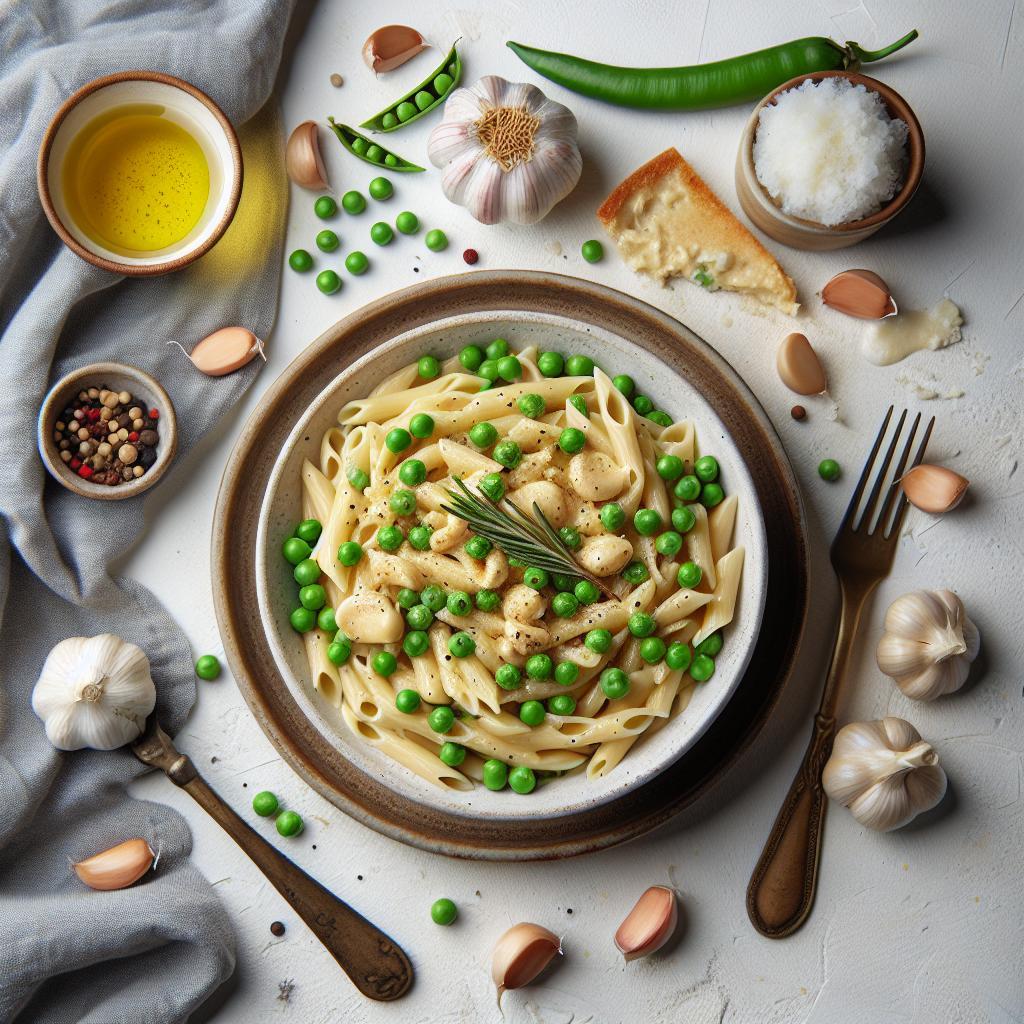

Creamy garlic pasta with peas pairs silky sauce, aromatic garlic, and bright green peas for a quick, satisfying dinner. The recipe relies on simple techniques to produce a rich texture and balanced flavor in about 30 minutes.
- Ready in 30 minutes for four hearty servings.
- Simple pantry staples deliver restaurant-quality creaminess.
- Short blanching keeps peas vibrant and firm.
- Pasta water rescues texture when the sauce tightens.
Prep and Cook Time
Prep: 10 minutes. Cook: 20 minutes. Total time stays close to 30 minutes for efficient weeknight cooking.
Plan a single large pot and one skillet to save time and reduce cleanup. Reserve one cup of pasta water while draining to adjust the sauce later without diluting flavor.
Yield and Difficulty
This recipe yields 4 hearty portions, suitable for a family dinner or two meals for two. The sauce scales well if you double the pasta or halve the cream for lighter portions.
Difficulty: Easy. The methods require basic stovetop skills: blanching, sautéing, and whisking. These techniques form a dependable foundation for many cream-based pasta dishes.
Ingredients
Gather quality ingredients to build deep flavor with minimal effort. Choose fresh garlic, real Parmesan, and good pasta to let each component shine.
Notes: For background on the main components, see pasta, garlic, and peas for context on history and culinary uses.
- 12 oz fettuccine or linguine
- 1 ½ cups fresh or frozen peas
- 4 tablespoons unsalted butter
- 6 cloves garlic, finely minced
- 2 cups heavy cream
- 1 cup freshly grated Parmesan (Parmigiano-Reggiano)
- Salt and freshly ground black pepper, to taste
- 1 tablespoon olive oil
- 2 tablespoons chopped fresh parsley, for garnish
- 1 teaspoon lemon zest (optional)
Step-by-Step Instructions
Work through the steps without rushing: timing matters when you combine hot pasta and cream. Maintain medium heat to prevent the sauce from separating.
Use the reserved pasta water to adjust consistency incrementally. That starchy water helps the sauce cling to the pasta for a glossy finish.
1. Cook the pasta
Bring a large pot of heavily salted water to a rolling boil and add the pasta. Cook to al dente as specified on the package, usually 8–10 minutes, then reserve 1 cup of pasta water and drain.
Do not rinse the pasta; the residual starch helps the sauce adhere. Taste a bite before draining to ensure it retains slight bite for texture.
2. Prepare the peas
If using frozen peas, blanch them 1–2 minutes in the boiling pasta water, then shock in cold water to lock color. Fresh peas blanch similarly for 1–2 minutes until tender-crisp.
Blanching and shocking preserve bright color and a pleasant snap. Overcooking peas makes them mushy and dulls the flavor profile.
3. Sauté the garlic and build the sauce
Heat olive oil and 2 tablespoons butter in a wide skillet over medium heat. Add minced garlic and sauté until fragrant and translucent, about 1–2 minutes; stop before browning to avoid bitterness.
Pour in heavy cream, bring to a gentle simmer, and reduce heat. Whisk in grated Parmesan in small additions until smooth and glossy, about 4–5 minutes. Season with salt, pepper, and optional lemon zest.
4. Combine and finish
Toss drained pasta and blanched peas into the skillet with the sauce. Add reserved pasta water one tablespoon at a time to reach a silky, clingy consistency; the starch will bind the sauce to the noodles.
Stir in the remaining butter off heat for shine and richness. Plate immediately and garnish with chopped parsley and extra Parmesan to taste.
Chef’s Notes: Tips for Success
Choose wider ribbons like fettuccine or linguine to hold the cream effectively. Thinner shapes can work, but wider pasta provides more surface area for the sauce to cling to.
Grate Parmesan fresh from the wedge rather than using pre-shredded cheese. Freshly grated cheese melts more smoothly and adds a clean savory note that balances the cream.
Add acid sparingly. A small amount of lemon zest or a light squeeze of lemon juice brightens the sauce without making it tart. Add acid at the end to taste.
Serving Suggestions
Serve this pasta in warmed shallow bowls to keep the sauce at an even temperature while eating. A scattering of chopped parsley provides fresh color and a herbal lift.
Pair the dish with a crisp green salad or roasted vegetables for contrast. For a lighter finish, choose a citrus-forward vinaigrette to cut through the richness.
Nutrition Information
Per serving (estimate): 520 kcal, 20 g protein, 62 g carbohydrates, 22 g fat. Values vary by exact brands and portion sizes. Use lower-fat dairy or smaller portions to reduce calories.
For context on dairy ingredients, consult the cream overview at Cream (dairy). Substitutions like half-and-half or evaporated milk change texture and require seasoning adjustments.
FAQ
The following questions address common adjustments and troubleshooting when making creamy garlic pasta with peas.
These short answers focus on practical steps you can apply immediately at the stovetop.
Can I use a different pasta shape?
Yes. Ribbon pastas like linguine and fettuccine work best, but penne, shells, or rigatoni also perform well. Choose a shape that will catch the sauce for balanced bites.
How do I boost garlic flavor without overpowering the dish?
Sauté garlic gently in oil and butter until translucent and aromatic. Add a small amount of garlic early and taste; you can always add a touch of raw minced garlic at the very end for a sharper note if you prefer.
Are frozen peas acceptable?
Absolutely. Frozen peas often have excellent flavor and convenience. Blanch them briefly to thaw and brighten the color before folding them into the sauce.
What should I do if the sauce splits?
Lower the heat and whisk in a tablespoon of cold cream or reserved pasta water. Whisking and gentle heat bring the emulsion back. If it fails, remove from heat and stir in a little more cheese to stabilize the texture.
Can I make this vegan?
Yes. Replace butter with olive oil or vegan spread, use a plant-based cream (cashew or soy), and swap Parmesan for nutritional yeast or a commercial vegan cheese. Adjust seasoning and salt since vegan cheeses vary widely.
Finish: Use these techniques repeatedly to refine timing and seasoning for your kitchen. Mastery comes from consistent, focused practice with the small steps outlined above.

See also: Garlic pasta