
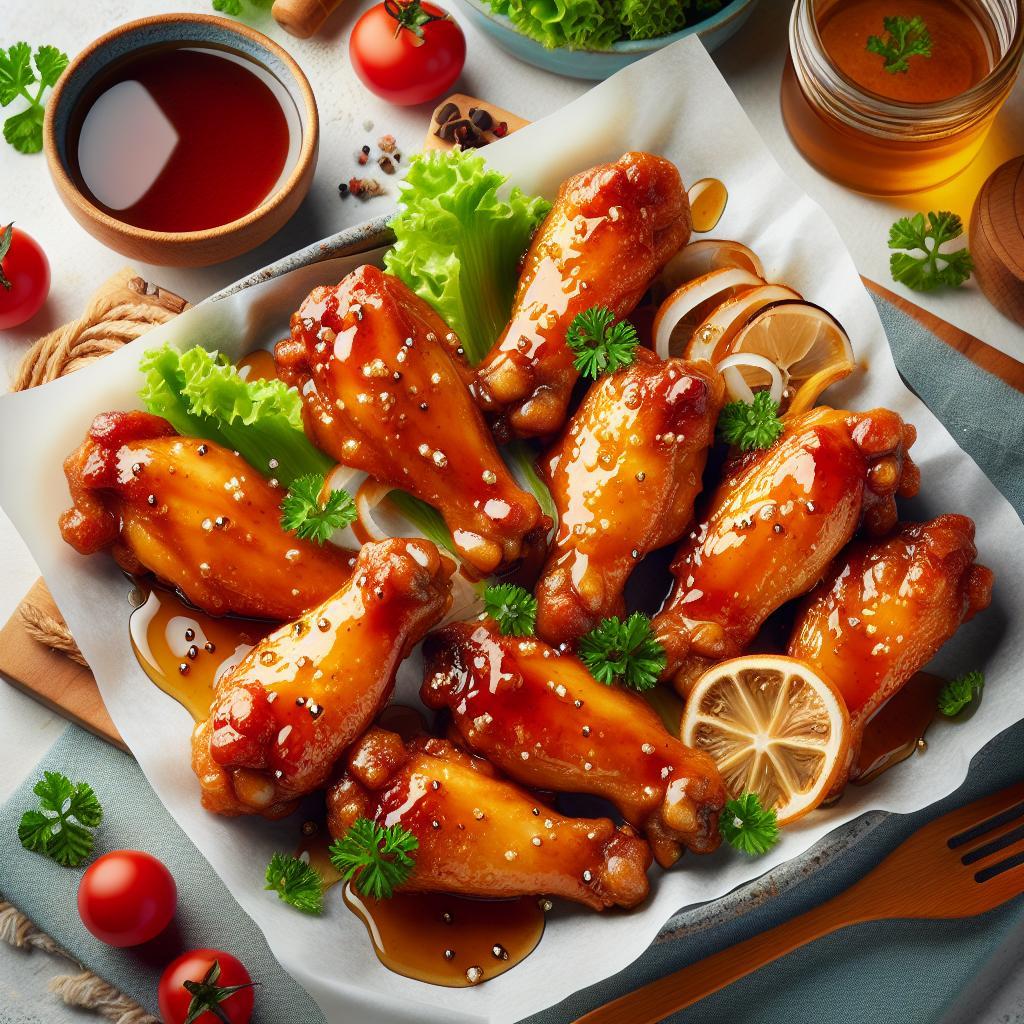

Golden Honey Baked Chicken Wings: Sweet & Crispy Delight
These golden honey wings deliver a crisp exterior and a tender interior with a honey-forward glaze that browns without frying. A dry skin, a balanced glaze, and high oven heat combine to produce sweet, crisp results you can reproduce reliably.
- Quick crisping: Dry wings and a hot oven produce the best skin texture for honey wings.
- Balanced glaze: Acid and soy deepen the honey flavor without cloying sweetness.
- Make ahead: Marinate up to 12 hours for intensified flavor and easy service.
Prep and Cook Time for Honey Wings
Preparation: 15 minutes active work, with an optional 1–4 hour marinade to deepen flavor. Bake: 35–40 minutes at 425°F (220°C), finishing briefly under the broiler if you want extra caramelization.
High initial heat speeds surface browning while the oven holds internal juices, so time and temperature work together. Use a reliable oven thermometer and a wire rack for consistent results.
Yield and Difficulty
This recipe yields about 12–16 wings and serves four as an appetizer or two to three as a main course. The technique rates easy-to-medium for cooks who watch sugar browning and manage oven time.
Most home cooks succeed by following time checkpoints, using a wire rack to promote airflow, and patting wings dry before applying glaze. Small adjustments to honey and vinegar tune the balance to taste.
Ingredients for Honey Wings
Gather quality components: fresh wings, a robust honey, olive oil, soy or tamari, and a touch of vinegar for balance. Choose aromatics such as garlic powder and smoked paprika to provide savory contrast to the honey’s sweetness.
Core ingredients below produce a glaze that caramelizes without becoming overly sticky. Use measured amounts and adjust salt and cayenne to your tolerance for heat.
- 2 pounds chicken wings, tips removed and wings separated into drumettes and flats
- 3 tablespoons high-quality honey — prefer darker varietals for deeper flavor; see honey
- 2 tablespoons olive oil
- 1 tablespoon soy sauce (or tamari for gluten-free)
- 1 tablespoon apple cider vinegar for subtle tang
- 1 teaspoon garlic powder
- 1 teaspoon smoked paprika
- ½ teaspoon ground black pepper
- ½ teaspoon kosher salt, adjust to taste
- Optional: pinch of cayenne pepper
- Fresh parsley, chopped (for garnish)
- Sesame seeds (optional, for garnish)
Instructions for Honey Wings
Follow these steps in order to control moisture, flavor penetration, and surface browning. Each action influences texture: drying, marinating, spacing on the rack, and a final blast of broiler heat if desired.
Preheat the oven to 425°F (220°C). Line a sheet pan with foil and place a wire rack on top so hot air circulates around every wing; that prevents steaming and produces even browning.
Step-by-step
Whisk honey, olive oil, soy sauce, apple cider vinegar, garlic powder, smoked paprika, black pepper, salt, and cayenne (if using). The blend should be smooth and pourable so it coats wings evenly.
Pat wings dry with paper towels to remove surface moisture—this step is critical for crisp skin. Toss wings with the marinade and refrigerate for at least 1 hour or up to 12 hours for deeper flavor.
Marinate and bake
Arrange wings on the wire rack without crowding. Bake 20 minutes, flip, then bake another 15–20 minutes until the skin turns deep gold.
For extra caramelization, broil 1–3 minutes while watching constantly to avoid burning. Reserve a small portion of the marinade to brush the wings in the last five minutes for a glossy finish.
Tips for Honey Wings Success
Choose a honey with clear flavor notes: mild honey produces a different finish than wildflower or buckwheat varieties. Darker honeys typically give richer caramelization and more complex aroma.
Control moisture: dry wings and avoid pooling glaze on the pan. A rack keeps wings elevated above rendered fat and prevents sogginess, so the skin crisps evenly.
Spacing matters. Overcrowded pans trap steam and reduce crisping. Use two sheet pans rather than stacking wings on one rack if cooking a large batch.
Serving Honey Wings
Serve these wings with crisp celery sticks and a cooling dip such as blue cheese or ranch to balance the glaze’s sweetness. A squeeze of lemon brightens the overall profile and cuts richness on the palate.
For gatherings, present on a rustic board and provide small bowls of extra sauce and pickled vegetables to add acid and texture contrast. Pair with roasted sweet potatoes or a bright coleslaw for a plated main course.
Nutritional Notes and Science for Honey Wings
Per serving (four wings) this preparation generally yields around 280 kcal, 23 g protein, 12 g carbohydrates, and 16 g fat, depending on the amount of glaze retained. Baking reduces added fat versus deep frying while preserving protein integrity.
The golden crust forms from Maillard browning and sugar caramelization; both processes increase aroma and color. For technical context, see the Maillard reaction and its role in poultry browning.
| Nutritional Aspect | Per Serving (4 wings) |
|---|---|
| Calories | 280 kcal |
| Protein | 23 g |
| Carbohydrates | 12 g |
| Fat | 16 g |
Use high-quality poultry and follow food-safety guidelines for handling raw chicken. Proper storage and cooking temperatures keep risk low; for context on poultry standards see chicken as food.
Practical Variations for Honey Wings
Swap honey for maple syrup or date syrup for alternate sweetness profiles. Add citrus zest to the glaze to introduce bright top notes that cut richness and refresh the palate.
To create a smoky profile, finish with a light brush of your favorite barbecue sauce in the last five minutes. For a gluten-free option, use tamari instead of soy sauce and verify pantry labels.
Related Recipes and Resources
Explore other oven-baked poultry ideas in our Best Baked Chicken Recipes collection for more crowd-pleasing mains. Try smaller plates and appetizers for party menus that pair well with honey wings.
If you want to refine oven technique, review guidance on heat management and rack placement to consistently reproduce crisp skin and even browning. For broader context on dry-heat cooking and temperature control see baking.
Q&A
Below are concise answers to common execution questions. Each item addresses practical steps to control texture, seasoning, and timing in this recipe.
These quick clarifications help troubleshoot problems like under-browned skin, sticky glaze, or flavor imbalance while preparing honey wings for service.
FAQ
How do I get the skin crisp without frying?
Pat wings thoroughly dry and use a wire rack so hot air circulates around each piece. Bake at 425°F (220°C), flip once, and finish under the broiler for short bursts while watching closely.
Can I prepare these honey wings ahead of time?
Yes. Marinate wings up to 12 hours ahead, then refrigerate on a tray. Remove from the fridge 15 minutes before baking to temper the meat for consistent oven cooking.
What honey works best for baking wings?
Choose a darker honey for more robust flavor and deeper caramel notes; lighter honeys create a subtler glaze. Darker types yield stronger aroma and color when caramelized.
How do I prevent the glaze from burning?
Reserve a portion of the glaze to brush on near the end of baking rather than coating heavily at the start. Monitor any broil step and pull the pan as soon as sugar begins to darken.
Are these wings healthier than fried wings?
Baked wings typically contain less added fat than deep-fried versions because they do not sit in oil. Reheating in a hot oven restores crispness better than a microwave.
Golden honey wings combine technique, ingredient quality, and timing to transform simple poultry into a memorable dish. With a hot oven, a well-balanced glaze, and close attention to timing, you will consistently serve wings that are sweet, crisp, and deeply satisfying.

See also: try related oven-baked chicken recipes to expand your repertoire.
See also: honey wings